




Fitcart Editorial Team Ritu Makhija.
Blog: Sleep & Recovery.
Reading time: 6–7 minutes.
Sleep is one of the most powerful recovery tools for athletes, busy professionals, and anyone trying to improve health, energy, and performance. Yet many people struggle with falling asleep, staying asleep, or waking up feeling refreshed.
One nutrient that has gained significant attention in recent years is magnesium. Research suggests that adequate magnesium intake may help support the body’s natural production of melatonin, assist in maintaining healthy cortisol rhythms, and contribute to deeper, more restorative sleep.
At Fitcart, we believe that recovery starts with strong daily habits: quality nutrition, regular exercise, stress management, and evidence-based supplementation when needed.
Why Magnesium Matters
Magnesium is an essential mineral involved in more than 300 enzymatic reactions in the body. It plays a key role in:
- Muscle relaxation
- Nervous system function
- Energy production
- Heart health
- Stress regulation
- Sleep quality
Modern diets, intense training, high stress levels, and inadequate food intake can all contribute to suboptimal magnesium status.
Magnesium and Melatonin: Supporting the Body’s Sleep Hormone
Melatonin is the hormone that helps regulate the sleep–wake cycle. It naturally rises in the evening as darkness signals the body that it is time to sleep.
Magnesium does not act like a sleeping pill, but it may support the biological processes involved in melatonin production and regulation. Adequate magnesium levels help maintain healthy nervous system function and may improve the body’s ability to transition into a relaxed state before bedtime.
People with low magnesium intake are more likely to report:
- Difficulty falling asleep
- Frequent night-time awakenings
- Poor sleep quality
- Daytime fatigue
For many individuals, correcting a magnesium deficiency can lead to noticeable improvements in sleep comfort and relaxation.
Can Magnesium Help Lower Cortisol?
Cortisol is often called the “stress hormone.” It follows a natural daily rhythm: higher in the morning to help us wake up and gradually decreasing throughout the day.
Chronic stress, excessive training, poor sleep, and irregular lifestyles can disrupt this rhythm.
Elevated evening cortisol is associated with:
- Racing thoughts at night
- Difficulty falling asleep
- Lighter, less restorative sleep
- Feeling tired but unable to relax
Magnesium may help by supporting the body’s stress-response systems, particularly through its influence on the nervous system and relaxation pathways. Some studies have shown improvements in perceived stress and sleep quality when magnesium intake is optimized.
The key point is not that magnesium dramatically “suppresses cortisol,” but rather that it may help promote a healthier balance between stress and recovery, especially when combined with good sleep hygiene.
What the Research Suggests
Clinical studies on magnesium and sleep have found potential benefits such as:
- Improved sleep quality scores
- Reduced time taken to fall asleep
- Longer sleep duration in some individuals
- Better subjective feelings of restfulness
The strongest effects are generally seen in people who have low magnesium intake, increased stress, or existing sleep disturbances.
Magnesium is not a cure for chronic insomnia, sleep apnea, or medical sleep disorders, but it can be a valuable part of a broader recovery strategy.
Signs You May Not Be Getting Enough Magnesium
A true deficiency should be assessed by a healthcare professional, but common signs of inadequate intake may include:
- Muscle cramps or twitching
- Restlessness
- Difficulty relaxing
- Poor sleep quality
- Increased fatigue
- Higher perceived stress levels
Athletes and highly active individuals may have increased magnesium requirements due to losses through sweat and the demands of recovery.
Best Food Sources of Magnesium
Before relying on supplements, aim to include magnesium-rich foods regularly:
- Pumpkin seeds, almonds, cashews
- Spinach, kale, Swiss chard
- Whole grains, legumes, beans
- High-cocoa dark chocolate
- Some fish and seafood varieties
A balanced diet should always be the foundation of any supplementation plan.
Choosing a Magnesium Supplement
Not all magnesium forms are the same. Common options include:
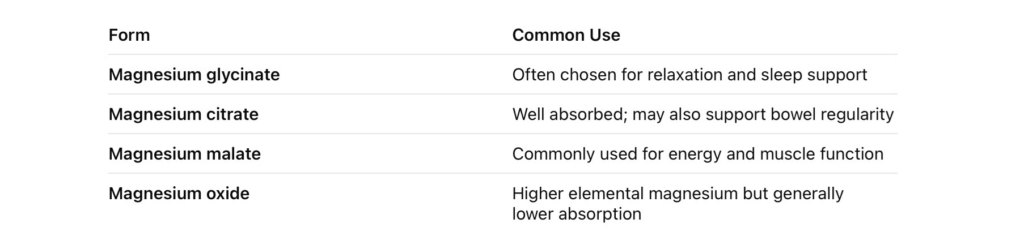
For evening use, magnesium glycinate is frequently preferred because it is gentle on the stomach and contains glycine, an amino acid associated with relaxation.
When Should You Take Magnesium for Sleep?
Many people choose to take magnesium 30–60 minutes before bedtime. Consistency is more important than perfect timing.
To support better sleep, combine supplementation with:
- A regular sleep schedule
- Reduced screen exposure before bed
- A cool, dark sleeping environment
- Limiting caffeine late in the day
- Adequate daytime physical activity
Magnesium works best as part of a sleep-supportive lifestyle, not as a replacement for healthy habits.
A Practical Recovery Routine
For Fitcart readers, a simple evening recovery routine could look like this:
- Simple evening routine
- Finish your last large meal 2–3 hours before sleep.
- Dim lights and reduce phone or laptop use.
- Take a quality magnesium supplement if appropriate for your needs.
- Spend 5–10 minutes stretching, breathing, or practicing mindfulness.
- Aim for 7–9 hours of sleep each night.
This combination is often more effective than relying on any single supplement alone.
The Fitcart Perspective
Recovery is where adaptation happens. Whether your goal is better athletic performance, improved body composition, enhanced energy, or overall wellness, quality sleep is a non-negotiable foundation.
Magnesium supplementation may help support:
Melatonin support
Supports the body’s natural sleep-regulation processes rather than acting as a sedative.
Healthier cortisol rhythms
May help promote a healthier balance between stress and recovery, especially during demanding periods.
Muscle relaxation
Contributes to relaxation and may help reduce night-time restlessness after training or busy days.
Overall sleep quality
Can improve perceived sleep quality and next-day recovery when paired with strong sleep habits.
The biggest benefits are usually seen when magnesium intake is adequate, consistent, and paired with good nutrition and sleep habits.
Final Thoughts
Magnesium is one of the most important minerals for relaxation and recovery. While it is not a miracle solution, research suggests that optimizing magnesium intake may help support melatonin production, promote healthier cortisol balance, and improve overall sleep quality.
For athletes, fitness enthusiasts, and anyone dealing with modern-day stress, that can translate into better recovery, improved performance, and greater day-to-day wellbeing.
Recovery starts before your head hits the pillow.
Focus on magnesium-rich foods, a consistent sleep schedule, regular exercise, and only use high-quality supplements that are batch-tested and verified for purity and label accuracy.
Disclaimer: This article is for educational purposes only and does not constitute medical advice. If you have a medical condition, kidney disease, are pregnant, or take prescription medications, consult a qualified healthcare professional before starting magnesium supplementation.
Follow us on X: https://x.com/fitcartofficial and Instagram: https://www.instagram.com/fitcartofficial/ for the latest updates, health insights, and exclusive content.
Follow Smart Nutrition India X: https://x.com/SmartNutrition1 and Instagram: https://www.instagram.com/smartnutritionindia/ for trusted sports nutrition, supplement education, wellness tips, and the latest news from the world of health and performance.
Fitcart believes in True Play and Clean Sport
#trustedbrandsbetterhealth