




Reading time: 9–11 minutes.
Author: Ritu Makhija.
CEO, Fitcart.com.
Co-Founder, Smart Nutrition India.
Head of Editorial Team, Fitcart Blog.
Introduction: Could Your Gut Bacteria Influence Your Weight?
What if something as simple as eating yoghurt could help support your body’s natural appetite-regulating hormones?
Emerging research into the gut microbiome is revealing fascinating connections between the bacteria living in our digestive system, appetite regulation, metabolism and body weight.
One area attracting particular scientific interest is the relationship between probiotics and GLP-1 (glucagon-like peptide-1), a naturally occurring hormone involved in appetite regulation, blood glucose control and digestion.
GLP-1 has become widely recognised because of prescription medications such as semaglutide and tirzepatide, which have transformed the medical treatment of obesity and type 2 diabetes in appropriate patients.
But an interesting question is emerging:
Can certain probiotic foods, including yoghurt, influence the body’s own GLP-1 production and potentially support weight management?
A clinical trial published in Food Science & Nutrition in 2022 investigated this possibility precisely.
The findings were interesting: probiotic yoghurt consumption during a calorie-restricted diet was associated with changes in fasting GLP-1 levels.
However, this does not mean that eating yoghurt produces the same weight-loss effects as GLP-1 medication.
Let’s examine the science, understand the gut-hormone connection and explore how probiotics, nutrition, exercise, and appropriate supplementation can support a healthier metabolism.
1. Understanding GLP-1: Your Body’s Natural Appetite-Regulating Hormone
GLP-1 is an incretin hormone produced primarily by specialised enteroendocrine L-cells in the intestine.
It is released in response to food intake and performs several important functions.
These include:
- Stimulating insulin secretion when blood glucose is elevated.
- Helping regulate blood glucose levels.
- Reducing inappropriate glucagon secretion.
- Influencing appetite and feelings of fullness.
- Slowing gastric emptying, particularly after meals.
- Communicating with the brain through pathways involved in food intake and satiety.
In simple terms, GLP-1 helps coordinate how the body responds to food.
When we eat, the digestive system communicates with the brain and other organs through several hormonal and neural pathways.
This complex communication network is sometimes called the gut-brain axis.
GLP-1 is one important component of this system.
2. GLP-1 Medications vs Naturally Produced GLP-1: What Is the Difference?
GLP-1 medications have become an important development in obesity and metabolic healthcare.
Medications such as semaglutide act on GLP-1 receptors, mimicking the activity of the natural hormone but with pharmacological properties that allow sustained therapeutic effects.
Tirzepatide acts on both GIP and GLP-1 receptors.
These medications can significantly influence appetite, calorie intake, blood glucose regulation and body weight.
However, naturally occurring GLP-1 and pharmaceutical GLP-1 receptor agonists are not equivalent.
Natural GLP-1 is rapidly broken down by the enzyme DPP-4, giving it a very short circulating half-life.
Prescription medications are specifically designed to produce longer-lasting receptor activity.
Why is this important?
Probiotic yoghurt may influence certain gut-hormone pathways, but it does not reproduce the pharmacological effects of prescription GLP-1 medicines.
Food-based interventions should be viewed as potential components of a healthy metabolic lifestyle, not alternatives to prescribed obesity or diabetes treatment.
3. The Research: Can Probiotic Yoghurt Increase Natural GLP-1 Levels?
One particularly interesting study was published in 2022 in the journal Food Science & Nutrition.
The research, titled:
Consumption of Probiotic Yogurt and Vitamin D-Fortified Yogurt Increases Fasting Level of GLP-1 in Obese Adults Undergoing a Low-Calorie Diet: A Double-Blind Randomized Controlled Trial.
The study involved 140 adults with obesity who were assigned to four groups.
Participants consumed different types of yoghurt alongside a calorie-restricted diet:
- Regular yoghurt.
- Probiotic yoghurt.
- Vitamin D-fortified yoghurt.
- Probiotic and vitamin D-fortified yoghurt.
The intervention lasted 10 weeks, and participants were encouraged to increase physical activity.
Researchers measured several metabolic and appetite-related markers, including:
- GLP-1.
- PYY, another hormone associated with appetite regulation.
- Ghrelin, often referred to as the hunger hormone.
- Fasting blood glucose.
- Insulin and insulin resistance markers.
- Body weight and other anthropometric measurements.
What did the researchers discover?
The probiotic yoghurt group showed a greater favourable change in fasting GLP-1 compared with the regular yoghurt group.
Vitamin D-fortified yoghurt also demonstrated interesting changes in GLP-1.
These findings suggest that certain yoghurt formulations may influence gut-hormone responses during calorie restriction.
However, there are important limitations.
The study did not demonstrate superior weight loss between the yoghurt groups. Changes in GLP-1 should therefore not be interpreted as proof that probiotic yoghurt independently causes weight loss.
The study also investigated specific formulations, not every commercially available probiotic yoghurt.
Nevertheless, it provides an interesting foundation for further research into the relationship between probiotics, gut hormones and metabolic health.
4. How Could Gut Bacteria Influence Appetite and Metabolism?
Our digestive system contains trillions of microorganisms, collectively known as the gut microbiome.
These microorganisms include bacteria, yeasts, and other microbes that interact with the foods we eat and the environment within our digestive tract.
A healthy and diverse gut microbiome contributes to several important physiological processes.
These include:
- Digestion and nutrient metabolism.
- Production of certain vitamins and bioactive compounds.
- Intestinal barrier function.
- Immune system regulation.
- Communication with the nervous system.
- Production of metabolites that can influence gut-hormone signalling.
One particularly interesting mechanism involves short-chain fatty acids (SCFAs).
Short-chain fatty acids and GLP-1
When beneficial gut bacteria ferment certain dietary fibres, they produce short-chain fatty acids, including:
- Acetate.
- Propionate.
- Butyrate.
These compounds are involved in intestinal health and may interact with receptors on intestinal endocrine cells.
Experimental research suggests that some of these pathways can stimulate GLP-1 and PYY secretion.
This provides a possible biological link between dietary fibre, gut bacteria and appetite regulation.
However, the strength and clinical significance of these effects in humans remain under investigation.
This is why a fibre-rich diet and a healthy gut microbiome are important areas of ongoing metabolic research.
5. Probiotic Yoghurt: What Should You Look For?
Not all yoghurt is the same.
Traditional yoghurt is made through fermentation using bacterial cultures, commonly including Streptococcus thermophilus and Lactobacillus delbrueckii subsp. bulgaricus.
Some products contain additional probiotic strains.
These may include members of the genera:
- Lactobacillus.
- Bifidobacterium.
- Lacticaseibacillus.
However, the health effects of probiotics are strain-specific.
A bacterial strain that has demonstrated benefits in one clinical study cannot automatically be assumed to produce the same effects as another strain from the same genus.
What makes a good yoghurt choice?
Look for:
1. Live cultures
Choose yoghurt that contains live and active cultures, where possible.
2. Clearly identified strains
If additional probiotics are included, look for the genus, species and strain designation.
3. Minimal added sugar
Flavoured yoghurts can contain substantial added sugar. Choose plain or unsweetened varieties where possible.
4. Adequate protein
Greek yoghurt and strained yoghurt can provide more protein than many conventional yoghurt products.
5. Appropriate storage
Live bacterial cultures may be affected by storage conditions and shelf life. Follow the manufacturer’s instructions.
6. Suitable fat content
Choose according to your nutritional requirements and overall dietary pattern rather than assuming that fat-free yoghurt is always healthier.
6. Greek Yoghurt, Indian Dahi and Probiotic Yoghurt: Are They the Same?
This is particularly relevant for Indian consumers.
We have access to several fermented dairy foods, but their nutritional and microbial profiles can differ.
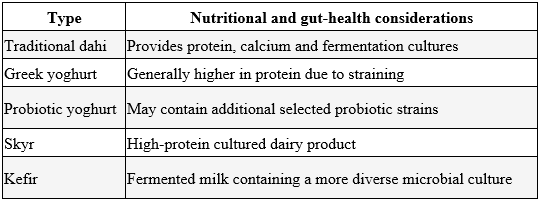
Traditional Indian dahi can be a nutritious addition to a balanced diet.
However, not all homemade or commercial dahi products have the same microbial composition, and they should not automatically be considered equivalent to clinically studied probiotic formulations.
For people interested in metabolic health and weight management, plain yoghurt or dahi without excessive added sugar can be a useful food choice.
7. Beyond Yoghurt: Foods That Support a Healthy Gut Microbiome
Probiotic foods are only one part of gut health.
Another important component is prebiotic fibre.
Prebiotics are substances, generally specific types of dietary fibre, that beneficial microorganisms in the gut can utilise.
A diverse diet containing both fibre-rich foods and fermented foods can help support a healthy dietary environment for the gut microbiome.
Prebiotic-rich foods
Include:
- Onions.
- Garlic.
- Leeks.
- Asparagus.
- Oats.
- Barley.
- Bananas, particularly less-ripe varieties.
- Chickpeas.
- Lentils.
- Beans.
Fermented foods
Consider:
- Plain yoghurt.
- Kefir.
- Some traditionally fermented vegetables.
- Fermented soybean foods such as tempeh.
Remember that fermentation does not automatically mean a food contains proven probiotic strains. Processing and pasteurisation can also affect whether live microorganisms remain.
Why dietary diversity matters
Different microorganisms utilise different dietary substrates.
Eating a variety of plant foods provides a broader range of fibres and other compounds that support microbial diversity.
Rather than relying on one probiotic product, aim to create a consistent dietary pattern that supports your gut microbiome.
8. Can Probiotics Help with Weight Loss?
This is where the research becomes particularly interesting, but also more complicated.
Some clinical studies have reported modest improvements in body weight, waist circumference or body fat following probiotic supplementation.
Other studies have found no meaningful difference.
A systematic review published in 2020 examined 24 randomised controlled trials involving 1,587 participants and concluded that probiotics had minimal overall effects on appetite-related hormones in overweight and obese individuals.
A separate NIH review of the evidence on probiotics and obesity also highlights that outcomes vary depending on the probiotic strain, dosage, duration and individual characteristics.
In other words, probiotics are not a guaranteed weight-loss intervention.
Some formulations may offer modest benefits, but the evidence is not sufficiently consistent to recommend probiotics as a standalone obesity treatment.
What about newer research?
A 2025 clinical trial investigated yoghurt containing Akkermansia muciniphila postbiotic preparations and compared it with yoghurt containing Lactobacillus rhamnosus postbiotic preparations.
The study involved 66 adults with overweight or obesity over eight weeks.
The Akkermansia postbiotic group showed favourable changes in certain measures, including waist circumference, body-fat percentage and appetite scores.
However, this was a relatively small study, and the product contained postbiotic preparations rather than conventional live probiotic cultures.
These findings are promising but preliminary. They do not establish that ordinary probiotic yoghurt produces the same effects.
The distinction between probiotics and postbiotics is important when interpreting this research.
9. Nutrition for Better GLP-1 Function, Satiety and Weight Management
If your goal is healthy weight management, gut health should be considered alongside overall nutrition, muscle preservation and physical activity.
Here are some important dietary principles.
Protein: Improve Satiety and Preserve Muscle
Protein is important for muscle maintenance, recovery and satiety.
Including protein in meals can help support fullness and reduce the likelihood of frequent snacking for some individuals.
Good sources include:
- Eggs.
- Fish.
- Chicken.
- Greek yoghurt.
- Cottage cheese.
- Soy and tofu.
- Lentils and beans.
- Whey or plant protein.
For physically active adults, approximately 1.4–2.0 g of protein per kilogram of body weight daily may be appropriate depending on individual goals and health status.
Fibre: Feed Your Gut Microbiome
Dietary fibre supports bowel function, gut health and satiety.
Include vegetables, whole fruits, oats, legumes, seeds and whole grains.
Increase fibre gradually and maintain adequate fluid intake to minimise digestive discomfort.
Healthy Fats
Include olive oil, nuts, seeds and oily fish.
These foods provide essential fatty acids and contribute to a balanced dietary pattern.
Reduce Excessive Added Sugar
Limit sugary beverages, confectionery and highly processed foods.
Choose plain yoghurt rather than heavily sweetened alternatives.
The objective is not to follow an extreme diet but to create an eating pattern that supports long-term metabolic health.
10. Exercise: Why Strength Training Matters for Weight Management
Weight management is not simply about reducing the number on the weighing scale.
Preserving muscle mass while managing body fat is an important part of maintaining a healthy body composition.
Resistance training supports muscle strength and function and can help preserve lean mass during weight loss.
A combination of:
- Strength training.
- Walking.
- Cardiovascular exercise.
- Mobility work.
- Adequate recovery.
can support long-term metabolic and physical health.
For adults, the World Health Organization recommends 150–300 minutes of moderate-intensity aerobic activity each week, alongside muscle-strengthening activity at least twice weekly.
For women over 40 and those approaching menopause, resistance training and adequate protein intake deserve particular attention because muscle and bone health become increasingly important.
11. Supplements That May Complement Gut Health and Weight Management
At Fitcart, we believe supplementation should be based on scientific evidence, individual nutritional requirements and product quality.
Here are some ingredients and categories worth understanding.
1. Probiotic Supplements
Probiotic supplements contain selected live microorganisms.
Some strains have been studied for digestive health, bowel function and specific metabolic outcomes.
When selecting a probiotic, consider:
- Genus, species and strain identification.
- CFU count through the end of shelf life.
- Storage requirements.
- Clinical evidence for the specific strain.
- Manufacturer quality and transparency.
A higher CFU count does not automatically mean a better product.
There is currently no universally established probiotic supplement that reliably reproduces GLP-1 medication effects or produces clinically significant weight loss.
2. Prebiotic Fibre
Prebiotic fibres such as inulin and fructooligosaccharides can provide substrates for certain beneficial gut bacteria.
They may be useful for people whose diets are low in fibre.
However, introducing them too quickly can cause bloating and gas.
Whole-food fibre should remain the foundation.
3. Psyllium Husk
Psyllium is a soluble fibre that absorbs water and forms a gel in the digestive tract.
It can support bowel regularity and may help improve cholesterol and certain metabolic markers.
It may also support satiety when taken with adequate water.
It is not a GLP-1 stimulant or a medication for obesity.
Psyllium can interfere with the absorption of some medicines, so appropriate timing and professional advice are important.
4. Protein Supplements
Whey, soy and other plant proteins can help individuals meet their protein requirements.
This is particularly useful when managing body weight while trying to maintain muscle mass.
5. Omega-3
EPA and DHA are important fatty acids involved in normal cardiovascular function.
They may be useful for people who do not consume sufficient oily fish, although they are not established weight-loss or GLP-1 supplements.
6. Vitamin D
Vitamin D is important for bone and muscle function.
People with inadequate vitamin D status may benefit from supplementation based on individual assessment.
Vitamin D should not be promoted as a weight-loss supplement.
12. A Practical Daily Gut Health and Weight Management Routine
Here is a simple way to combine these principles.
Morning
- Start with water.
- Include a protein-rich breakfast.
- Add fruit and fibre where appropriate.
- Walk or undertake some light movement.
Lunch
- Include vegetables.
- Add a quality protein source.
- Include whole grains or pulses.
- Include healthy fats.
Afternoon
- Consider plain yoghurt or Greek yoghurt with nuts or seeds.
- Choose fruit rather than highly processed sugary snacks.
Dinner
- Include protein and vegetables.
- Add appropriate portions of carbohydrates.
- Avoid unnecessary restrictive eating.
Throughout the day
- Stay physically active.
- Drink adequate water.
- Include a variety of fibre-rich foods.
- Follow a consistent sleep routine.
- Undertake regular resistance training.
Consistency is more important than following a complicated diet or taking multiple supplements.
The Fitcart Takeaway: Healthy Gut, Healthy Metabolism, Better Weight Management
The emerging relationship between the gut microbiome and metabolic health is one of the most interesting areas of modern nutrition research.
The possibility that certain probiotic strains and fermented foods may influence natural gut-hormone pathways, including GLP-1, deserves further investigation.
The 2022 probiotic-yoghurt clinical trial provides an interesting example of how dietary interventions may influence appetite-related hormones during calorie restriction.
However, probiotic yoghurt is not equivalent to prescription GLP-1 medication, and current evidence does not establish it as a standalone weight-loss treatment.
The best approach remains a combination of:
- A diverse, fibre-rich diet.
- Fermented foods with live cultures where appropriate.
- Adequate protein.
- Regular resistance and cardiovascular exercise.
- Good sleep.
- Appropriate supplementation when needed.
- Sustainable calorie management.
At Fitcart, we believe that understanding the science behind nutrition and supplementation empowers consumers to make better health decisions.
Our focus is on connecting Indian consumers with trusted international health, wellness, fitness and nutrition brands, supported by ingredient transparency, science and responsible supplement choices.
Fitcart – Fuel Your Health. Support Your Gut. Build a Healthier You.
Health, Nutrition and Supplement Disclaimer
This article is intended for general educational and informational purposes only. It does not constitute medical advice, diagnosis, or treatment.
The relationship between probiotics, gut microbiome composition, GLP-1 secretion and body weight is an evolving area of scientific research. Findings from individual clinical trials should not be interpreted as proof of a universal health or weight-loss benefit.
Probiotic products vary in their microbial strains, dosages, formulations and quality. Not all products labelled as probiotic have clinically established benefits.
Probiotic yoghurt and supplements are not substitutes for prescription GLP-1 medications and should not be used to replace or discontinue prescribed treatment for obesity or diabetes.
Individuals with diabetes, gastrointestinal conditions, compromised immune systems or other medical concerns should consult a qualified healthcare professional before making significant dietary changes or using probiotic supplements.
Weight management should be approached through an individualised combination of nutrition, physical activity, sleep and appropriate medical care.
Supplements are not substitutes for a balanced diet or medical treatment. Choose products with transparent ingredient labelling, appropriate manufacturing standards and independent testing where available.
Follow us on X: https://x.com/fitcartofficial and Instagram: https://www.instagram.com/fitcartofficial/ for the latest updates, health insights, and exclusive content.
Follow Smart Nutrition India X: https://x.com/SmartNutrition1 and Instagram: https://www.instagram.com/smartnutritionindia/ for trusted sports nutrition, supplement education, wellness tips, and the latest news from the world of health and performance.
Fitcart believes in True Play and Clean Sport
#trustedbrandsbetterhealth