


Reading Time: 8 minutes.
Author: Ritu Makhija.
CEO, Fitcart.com.
Co-Founder, Smart Nutrition India.
Head of Editorial Team, Fitcart Blog.
Introduction: Not All Protein Powders Are Created Equal.
Protein supplementation has become an important part of modern nutrition, fitness and healthy ageing. Whether you are an athlete looking to improve performance, a woman trying to maintain muscle mass, someone following a vegetarian or vegan diet, or an older adult looking to preserve strength, choosing the right protein supplement can make a meaningful difference.
With so many options, which protein should you choose?
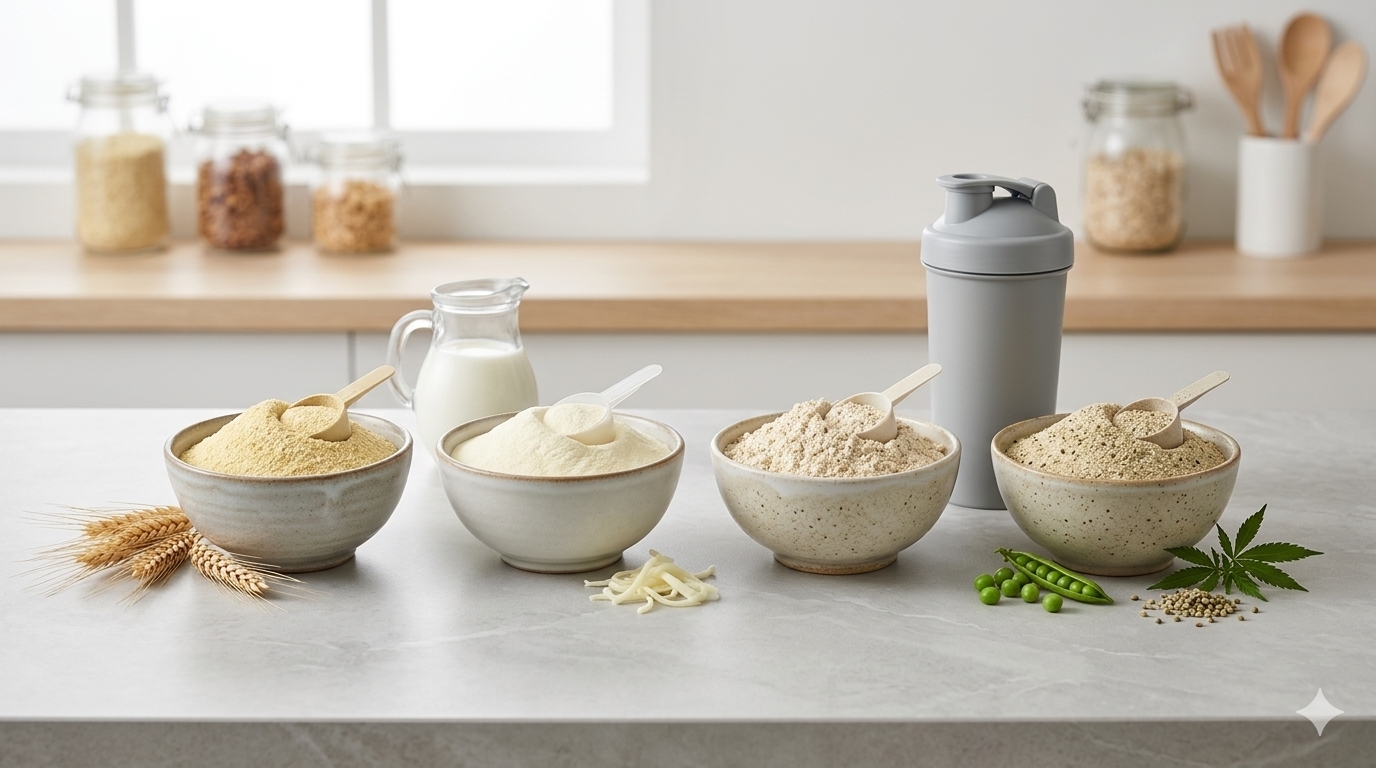
Whey concentrate, whey isolate, plant-based protein, soy, pea and the emerging category of fermented yeast protein all offer different nutritional profiles, benefits and price points.
The biggest question isn’t simply which protein has the most grams per scoop. It is about protein quality, amino acid composition, digestibility, leucine content, research evidence, individual tolerance, and value for money.
At Fitcart, we believe that informed supplementation begins with understanding the science behind the ingredients.
In this guide, we compare four major protein categories and examine which options may be most appropriate for athletes, women, general adults, vegetarians, vegans and seniors.
The quick answer: Whey protein currently has the strongest scientific evidence for muscle development. Soy and pea protein are excellent alternatives, particularly for people avoiding dairy. Yeast protein is an interesting emerging option, although more human research is required. Whey isolate offers higher protein concentration and generally less lactose than whey concentrate, but it has not been shown to build more muscle per gram of protein.
1. Understanding the Different Types of Protein
Before comparing their benefits, it is important to understand what these proteins actually are.
Whey Protein Concentrate
Whey is a dairy-derived protein obtained during cheese production.
Whey concentrate typically contains approximately 34–89% protein, depending on its grade and processing. The commonly used WPC 80 grade contains approximately 80% protein.
It also contains varying amounts of lactose, fats, and other milk components.
Benefits:
- Complete protein containing all nine essential amino acids.
- Naturally rich in leucine.
- Supports muscle protein synthesis.
- Suitable for resistance training and recovery.
- Generally offers a good balance between quality and cost.
Whey concentrate is a popular choice for individuals looking to increase their daily protein intake and support muscle development.
Whey Protein Isolate
Whey isolate undergoes additional filtration and processing to remove more fat, lactose, and other non-protein components.
It generally contains at least 90% protein on a dry basis.
Benefits:
- Higher protein concentration.
- Generally lower lactose than concentrate.
- Lower fat and carbohydrate content.
- Convenient for individuals managing calorie intake.
- Provides a complete amino acid profile.
Whey isolate is particularly useful for people who want a higher protein percentage per serving or experience mild lactose sensitivity.
However, it remains a milk-derived protein and is not suitable for people with a milk protein allergy.
Plant-Based Protein
Plant protein is derived from sources such as soy, pea, rice, and combinations of different plant proteins.
Soy and pea proteins are particularly interesting because they provide all nine essential amino acids.
Rice protein is relatively low in lysine, an essential amino acid, which is why manufacturers often combine rice and pea proteins to create a more balanced amino acid profile.
Benefits:
- Suitable for vegetarian and vegan diets, depending on formulation.
- Naturally lactose-free by source.
- Soy and pea provide complete amino acid profiles.
- Often more affordable than whey isolate.
- Provides an alternative for individuals avoiding dairy.
Plant protein can support muscle development when total protein and essential amino acid requirements are adequately met.
Fermented Yeast Protein
Yeast protein is an emerging category produced through fermentation, commonly using Saccharomyces cerevisiae.
Unlike traditional dairy proteins, yeast protein can offer a non-dairy protein source with a relatively complete amino acid profile.
Early research has shown promising results, including trials in which yeast protein performed similarly to whey for certain muscle-related outcomes.
Potential benefits:
- Dairy-free and naturally lactose-free by source.
- Contains essential amino acids.
- Offers an alternative for people avoiding conventional dairy proteins.
- Can be produced using fermentation technology.
- May have potential applications in sustainable nutrition.
However, yeast protein is still an emerging category. Its long-term evidence base is considerably smaller than that of whey.
2. Nutritional Comparison: Which Protein Offers the Best Quality?
Protein quality is determined by more than the amount of protein listed on the label.
Important considerations include:
- Essential amino acid composition.
- Leucine content.
- Digestibility.
- Amino acid availability.
- Protein quality scoring systems such as PDCAAS and DIAAS.
Leucine is particularly important because it helps activate muscle protein synthesis.
Protein comparison table
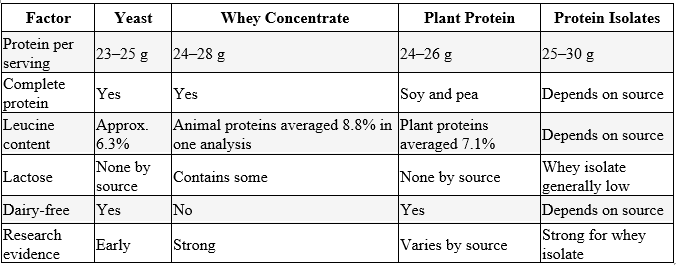
Protein quantities reflect the Indian product labels examined in the source comparison. Actual values vary by brand, formulation, and serving size.
Understanding protein quality scores
Two commonly used methods are PDCAAS and DIAAS.
- PDCAAS: Protein Digestibility Corrected Amino Acid Score.
- DIAAS: Digestible Indispensable Amino Acid Score.
Both assess protein quality using amino acid composition and digestibility, although DIAAS provides a more detailed assessment of amino acid digestibility.
The source comparison reported the following scores:
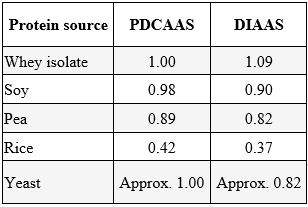
Important: These figures come from different studies and testing models. They are not directly interchangeable or definitive product-specific scores. The yeast figures include results from animal research, not an established human protein-quality score.
Generally, a higher DIAAS indicates better digestible essential amino acid quality.
The takeaway is that whey has a well-established nutritional profile, soy and pea are useful plant alternatives, and yeast protein deserves further investigation.
3. Which Protein Is Best for Muscle Growth?
Muscle growth depends on several factors, including progressive resistance training, adequate protein intake, essential amino acid availability, recovery, and overall energy balance.
Let’s examine the research behind each protein.
Whey: The strongest evidence
Whey has one of the most extensive research backgrounds in sports nutrition.
It contains all essential amino acids and provides a relatively high proportion of leucine.
Research has demonstrated its ability to stimulate muscle protein synthesis following resistance exercise.
The International Society of Sports Nutrition (ISSN) suggests approximately 20–40 g of protein per serving for many exercising adults.
Soy: A strong plant-based alternative
A 2018 meta-analysis comparing soy protein with animal protein found no significant differences in muscle mass and strength improvements when combined with resistance training.
Soy is therefore an excellent option for individuals who prefer plant-based nutrition.
Pea Protein: Promising research
A 12-week study involving 161 men examined pea protein supplementation alongside resistance training.
The researchers found improvements in muscle thickness, with results not significantly different from whey in the relevant comparison.
This suggests pea protein can be a useful alternative for individuals avoiding dairy.
Rice Protein: An alternative for plant-based diets
An eight-week study involving 24 trained men compared rice protein with whey isolate.
Both groups experienced similar changes in body composition and exercise performance.
However, the study was small and did not include a placebo group, so further research is needed.
Rice protein is often combined with pea protein to improve the overall amino acid balance.
Yeast Protein: An emerging area of research
Yeast protein is attracting attention because early human trials have reported promising results.
An eight-week trial involving 79 adults compared yeast protein, whey and placebo supplementation alongside bodyweight training.
Both protein groups demonstrated improvements in lean mass. Among participants with lower baseline protein intake, yeast and whey showed benefits over placebo for certain outcomes.
Another six-month study involving 92 older Chinese adults found no significant differences between yeast protein and whey for muscle mass or grip strength.
A small 2026 study involving 13 adults also suggested comparable whole-body protein synthesis, although this was a preprint and had not undergone peer review.
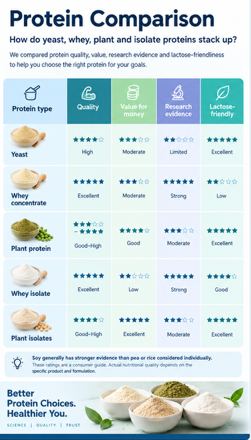
What does this mean?
Yeast protein is promising, but the current evidence is still limited. It is too early to conclude that it is equivalent to whey across all aspects of muscle development and long-term health.
Isolate versus concentrate: Which builds more muscle?
One common misconception is that whey isolate automatically produces better muscle growth than whey concentrate.
Isolate generally contains a higher percentage of protein and less lactose and fat.
However, there is no strong evidence that isolate produces greater muscle gains per gram of protein when total protein intake is equivalent.
The choice should depend on dietary requirements, digestion, serving size and budget.
4. What Is the Cost of Different Proteins in India?
Protein quality is important, but affordability also matters.
When comparing protein powders, consumers often look at the price of a tub rather than the actual cost of the protein they receive.
A more useful calculation is:
Cost per 100 g of protein = Price ÷ Total grams of protein in the product × 100
Based on the nine products examined in the original comparison, the approximate cost differences were:
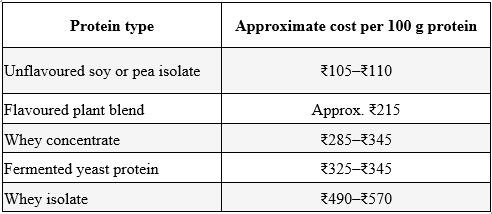
Which offers the best value?
Best budget option: Unflavoured soy or pea isolate.
Best balance of evidence and affordability: Whey concentrate.
Best for lower-lactose dairy protein: Whey isolate.
Emerging alternative: Fermented yeast protein.
The cheapest product is not necessarily the best choice for every individual. Digestibility, amino acid quality, ingredient transparency and product testing should also influence purchasing decisions.
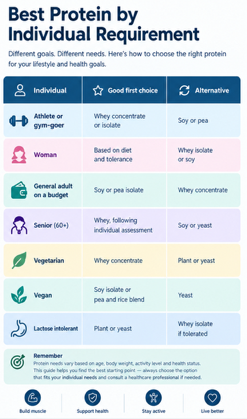
5. Which Protein Is Best for Different Individuals?
Protein requirements are influenced by age, body weight, exercise, health status and dietary patterns.
According to ICMR-NIN, the reference protein requirement for healthy Indian adults is approximately 0.83 g per kg of body weight per day.
For individuals who exercise regularly, ISSN guidance suggests approximately 1.4–2.0 g per kg per day.
For older adults, the PROT-AGE expert group suggests approximately 1.0–1.2 g per kg per day for many healthy individuals.
These are general reference ranges, not universal prescriptions.
Athletes and gym-goers
Recommended first choice: Whey concentrate or whey isolate.
Whey has the strongest body of research supporting muscle development and exercise recovery.
Soy and pea protein are reasonable alternatives for athletes who avoid dairy.
Competitive athletes should prioritise batch-tested supplements with relevant independent sport certification, such as Informed Sport or NSF Certified for Sport.
Athletes remain responsible for assessing the supplements they use and checking the specific batch certification status.
Women: Supporting muscle, strength and healthy ageing
Protein requirements should be calculated according to body weight, activity levels and individual nutritional needs, not simply gender.
Women undertaking resistance training can benefit from adequate protein intake to support muscle repair, strength development and the maintenance of lean body mass.
This becomes particularly relevant as women approach perimenopause and menopause, when changes in hormones, body composition and muscle maintenance can make resistance training and adequate nutrition increasingly important.
Suitable options include:
- Whey concentrate for a cost-effective complete protein.
- Whey isolate for lower lactose and higher protein concentration.
- Soy isolate for a complete plant-based protein.
- Pea protein for dairy-free nutrition.
- Pea and rice blends for a complementary amino acid profile.
The best choice is the one that suits individual dietary preferences, digestive tolerance and nutritional requirements.
General adults
Recommended first choice: A balanced diet, supplemented where necessary.
Whole foods should provide the foundation of daily protein intake.
Good dietary sources include eggs, dairy, fish, poultry, lentils, beans, soy and other protein-rich foods.
For individuals on a budget, unflavoured soy and pea isolates can offer excellent value per gram of protein.
Whey concentrate is another practical option for those who consume dairy.
Seniors: Maintaining muscle and physical independence
Protein becomes particularly important as we age.
Age-related muscle loss, commonly referred to as sarcopenia, can affect strength, mobility, balance and independence.
The PROT-AGE expert group suggests that many older adults may benefit from approximately 1.0–1.2 g of protein per kg of body weight per day.
It also recommends approximately 25–30 g of protein per meal, with around 2.5–2.8 g of leucine, alongside appropriate physical activity.
Whey can be a convenient option because it is easy to incorporate into meals and provides essential amino acids.
Yeast protein and soy are also interesting alternatives, although the evidence base is smaller.
Importantly, older adults with kidney disease require individualised nutritional advice. People with severe kidney disease who are not on dialysis may require protein restriction.
Vegetarians and vegans
For vegetarians who consume dairy, whey concentrate or isolate can be useful options.
For vegans, suitable alternatives include:
- Soy isolate.
- Pea protein.
- Pea and rice protein blends.
- Fermented yeast protein.
Check the complete ingredient declaration, as some flavoured plant-based products may contain milk ingredients.
Individuals with lactose intolerance
Whey concentrate contains some lactose, whereas whey isolate is generally much lower in lactose.
Plant and yeast proteins are naturally lactose-free by source.
However, always check the ingredient list because some flavoured products may contain added milk solids.
People with a milk protein allergy should avoid whey isolate as well as whey concentrate.
6. Fitcart Protein Comparison: Editorial Ratings
The following ratings provide a simplified editorial comparison based on the nutritional information, research and indicative prices reviewed.
These are Fitcart editorial judgements, not independent laboratory scores or clinical rankings.
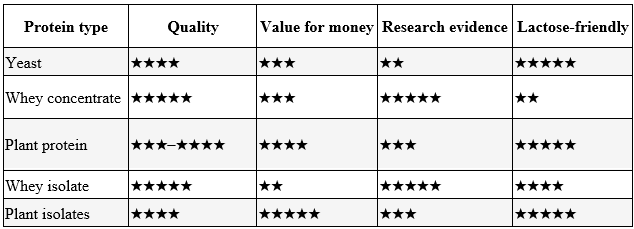
Soy generally has stronger evidence than pea or rice considered individually.
The ratings are intended as a consumer guide. Actual nutritional quality depends on the specific product and formulation.
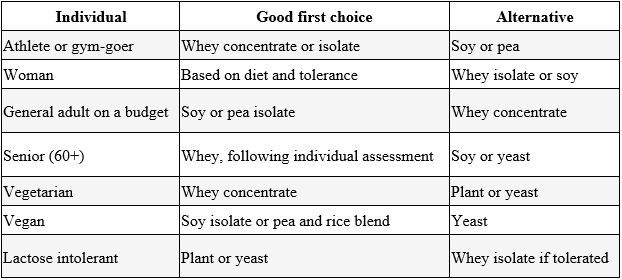
Best protein by individual requirement
7. How to Choose a Safe and Quality Protein Supplement in India
The protein market has expanded rapidly, but consumers should not assume that every product delivers exactly what its label promises.
A 2024 independent analysis of 36 protein supplements sold in India identified discrepancies between labelled and measured protein content in many products.
This highlights the importance of ingredient transparency, product authenticity and independent testing.
At Fitcart, we believe consumers should look beyond attractive packaging, influencer endorsements and exaggerated marketing claims.
Before purchasing, consider the following:
1. Check FSSAI compliance
Look for the applicable FSSAI licence details and verify the licence through the official FoSCoS portal.
Read the complete ingredient and allergen declarations.
2. Look for batch-specific testing
Where available, check independent laboratory reports for the actual batch or lot number.
3. Check independent certification
For competitive athletes, look for relevant certifications such as:
- Informed Sport.
- NSF Certified for Sport.
- Informed Choice.
- Other credible independent testing programmes.
Always verify the individual product and its current certification status.
4. Check authenticity
Purchase through authorised sellers and inspect the seal, batch number, manufacturing information and expiry date.
5. Compare actual protein content
Calculate the cost per 100 g of protein rather than comparing tubs based only on their advertised price.
The Fitcart Approach: Science, Transparency and Trusted Health
At Fitcart.com, our objective is to connect Indian consumers with globally recognised health, fitness and sports nutrition brands.
We believe that good supplementation should be based on:
- Science and evidence-based formulations.
- Clean and transparent ingredient declarations.
- Authentic products from authorised sources.
- Batch testing and independent quality assurance wherever available.
- Responsible supplementation and consumer education.
Our Trusted Health philosophy focuses on helping consumers understand not just what they are buying, but also the quality, testing and authenticity behind the product.
We also encourage consumers to use our Check My Supplement facility to check available supplement authenticity information using a UPC, batch number or brand name.
The goal is simple: better information, informed choices and more responsible supplementation.
8. The Bigger Picture: Protein Is Only One Part of the Equation
Whether you choose whey, soy, pea, rice or yeast protein, remember that supplements are only one component of a healthy lifestyle.
For muscle development, strength and long-term health, focus on:
- Progressive resistance training.
- Adequate daily protein intake.
- Balanced nutrition with sufficient energy.
- Essential vitamins and minerals.
- Quality sleep and recovery.
- Consistent physical activity.
- Appropriate hydration.
For women approaching menopause and older adults in particular, preserving muscle mass is an important part of maintaining metabolic health, mobility and physical independence.
Protein supplementation can help fill nutritional gaps, but it cannot replace exercise, a balanced diet or an appropriate healthcare plan.
Key Takeaways
- Whey protein currently has the strongest scientific evidence for muscle development.
- Soy and pea protein are effective plant-based alternatives, with encouraging research.
- Fermented yeast protein is promising, but more long-term human research is needed.
- Whey isolate offers higher protein concentration and generally less lactose, but is not proven to build more muscle per gram than concentrate.
- Soy and pea isolates generally provide the lowest cost per 100 g of protein in the market comparison.
- Women and men should calculate protein requirements based on body weight, activity and individual needs.
- Older adults should pay particular attention to protein intake and resistance training to help maintain muscle mass.
- Choose authentic, transparent and independently tested supplements wherever possible.
Frequently Asked Questions
1. Is yeast protein as good as whey protein?
Early human trials have reported similar results for certain muscle-related outcomes. However, the research on yeast protein remains limited, and whey has a much larger evidence base.
2. Is plant protein complete?
Soy and pea protein contain all nine essential amino acids. Rice protein is relatively low in lysine, which is why it is often blended with pea protein.
3. Which protein is best for muscle growth?
Whey currently has the strongest research supporting muscle development. Soy and pea are useful alternatives when dairy is unsuitable.
4. Which protein is best for women over 40?
There is no single best protein for every woman. Whey, whey isolate, soy and pea protein can all be suitable depending on dietary preferences, digestion and individual protein requirements. Resistance training and sufficient daily protein are especially important for maintaining muscle with age.
5. Which protein is best for seniors over 60?
Whey is a convenient, leucine-rich option. Soy and yeast may also be suitable alternatives. Older adults with kidney disease should seek individualised professional advice before increasing protein intake.
6. Is whey isolate better than whey concentrate?
Whey isolate generally contains more protein and less lactose and fat. However, when total protein intake is equivalent, there is no strong evidence that isolate produces greater muscle growth.
7. Is plant protein cheaper than whey?
Generally, unflavoured soy and pea isolates can provide considerably more protein per rupee than whey isolate. Compare the actual protein content and total product cost before purchasing.
8. Can vegans use yeast protein?
Yeast protein is naturally dairy-free by source and may be suitable for vegan diets, subject to the complete product formulation and manufacturing process.
Fitcart Health and Supplement Disclaimer
This article is intended for general educational and informational purposes only and should not be interpreted as medical advice, diagnosis or treatment.
Individual protein requirements vary according to age, body weight, activity levels, dietary intake, health conditions and physiological circumstances.
Protein supplements are not intended to diagnose, treat, cure or prevent any disease. Consult a qualified healthcare professional or registered dietitian before introducing protein supplementation, particularly if you have kidney, liver or other medical conditions, take regular medication, are pregnant or breastfeeding, or are under 18.
Individuals with existing kidney disease should not independently increase their protein intake without professional guidance.
Always follow the product’s recommended serving instructions and applicable FSSAI regulations.
Consumers should verify product authenticity, ingredient declarations, batch details and independent testing credentials wherever available. A certification logo alone does not establish the testing status of every product or batch.
Fitcart promotes science-led nutrition, transparent ingredients, responsible supplementation and informed health choices.
Author: Ritu Makhija | Fitcart Editorial Team
Follow us on X: https://x.com/fitcartofficial and Instagram: https://www.instagram.com/fitcartofficial/ for the latest updates, health insights, and exclusive content.
Follow Smart Nutrition India X: https://x.com/SmartNutrition1 and Instagram: https://www.instagram.com/smartnutritionindia/ for trusted sports nutrition, supplement education, wellness tips, and the latest news from the world of health and performance.
Fitcart believes in True Play and Clean Sport
#trustedbrandsbetterhealth