



Fitcart Sports News Blog.
Authored by S. Kannan (Sports Analyst) and Fitcart Editorial Team Ritu Makhija.
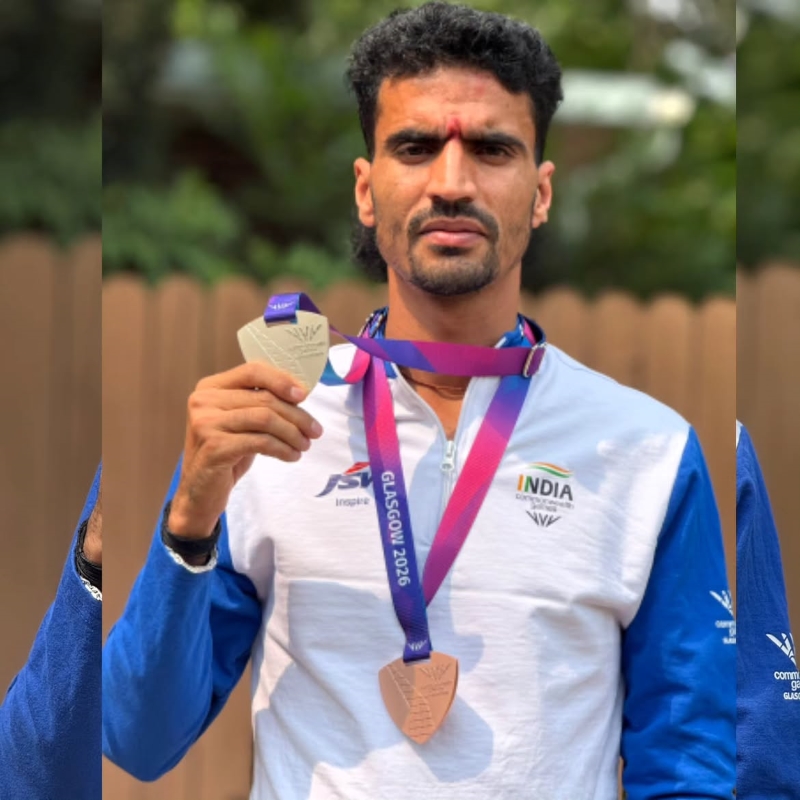
One of the most sensational stories of success at the Commonwealth Games in Glasgow was scripted by Armyman Gulveer Singh. He started running as a hobby, just to clear the fitness criteria which had to be met to join the Indian Army. Now, the 28-year-old from Aligarh, Uttar Pradesh, India, is the toast of the nation. Winning a double, in the 10,000 meters and then the 5,000 meters, is a feat not achieved before by an Indian.
As Rohit Rajpal, chef de mission for Team India, said: “These kinds of performances say so much about talent, tenacity and how an Indian can win big.” As a former tennis player, Rajpal feels India are developing athletes across various sporting disciplines. The path ahead, according to Rajpal, is rosy.
Gulveer, 28, has been a news-maker through this year, bettering records. A first look at the simpleton, he looks chiseled-out, all muscle in his athletic frame. You will not find an extra inch of fat on his body. He trains hard, he runs hard, and the fitness regimen he follows is punitive.
Despite being married, serving the Indian Army, and coming from an agricultural background, Gulveer has impressed repeatedly. “I am concerned about doing well for India and winning medals. My next goal is the Asian Games in Aichi-Nagoya, even though the competition will be fierce,” Gulveer told Fitcart.
From the Army days in 2018 till being taken under the wings of Scott Simmons, a well-known coach, Gulveer has gotten better. His training methods are scientific. People talk of a killer instinct and being strong in the head and heart. As Gulveer has run miles and miles across difficult terrain, he is now India’s star, who ranks in the same class as Neeraj Chopra. Of course, Neeraj has two Olympic medals. That is something Gulveer is training for. The LA 2028 Olympics beckon.
The last three years have been one of improvement for Gulveer. He started with this winning stride at the Asian Games in Hangzhou in 2023 and has changed gears swiftly. Be it training in India or in Colorado Springs, USA, the paradigm shift for Gulveer has been focusing on science. As a strong athlete, he has logged miles in terrain at home which is dusty and twisty. The exposure abroad, and to be pacing himself with overseas middle-distance runners has been a reason for Gulveer to be viewed, now, as sensational.
Rewind to the old days when legend Milkha Singh ran for India. Milkha believed in training so hard, he would vomit blood at the end of a session that was testing his body. Then came Avinash Sable, whose ‘runs’ for India showed Indians could dream and deliver. Perhaps, picking from Sable, Gulveer has emerged, like a seasoned star.
How science helps is also important in middle distance running. If you look at the variety of events Gulveer runs in, from 5,000 m to 10,000 m and even half marathons, the range is massive. His diet is well-planned; he keeps his body in good shape, where training, rest, rehab and stretching come in handy. Coaches who have worked with Gulveer say he is a workaholic, but at the same time does not get burnt out. Ask him about the final 400 meters acceleration, and he smiles. “I have to do what I have been taught by my coaches.” Ask him about medals and laurels, Gulveer is honest, again. “I dedicate my medals to all the Indians and my family. If I can keep going like this, I will be happy. I would say discipline matters,” says Gulveer.
Rigorous high-altitude training, clean protein and complex carbs form part of his diet. His lung capacity is high, which is the reason why he can produce those bursts at the crucial stages of a race. Working on core, strength training with weights and intense cycling helps him get stronger. Gulveer will inspire many more Indians and Asians to take up middle distance running as a passion.
Fitcart Performance Insights: What Endurance Athletes Can Learn from Gulveer Singh
Gulveer Singh’s journey demonstrates how modern endurance running has evolved far beyond simply running more kilometres. Today’s elite distance athletes combine structured training, sports science, nutrition, recovery, biomechanics, and data-driven coaching to consistently improve performance while reducing injury risk.
Training Smarter, Not Just Harder
Elite endurance athletes carefully balance different types of training throughout the week, including:
- Aerobic endurance runs to improve cardiovascular efficiency.
- Threshold sessions to increase lactate tolerance.
- VO₂ max intervals for maximum oxygen uptake.
- Strength training to improve running economy.
- Mobility and flexibility work to maintain movement quality.
- Recovery sessions that allow the body to adapt and become stronger.
Recovery is now viewed as an essential part of training rather than time away from it. Sleep, nutrition, hydration and rehabilitation all contribute significantly to long-term performance.
Nutrition Powers Every Training Session
Distance runners expend enormous amounts of energy and require consistent fuelling throughout training and competition.
A performance-focused nutrition strategy typically includes:
- Complex carbohydrates to replenish glycogen stores.
- High-quality protein to repair and maintain muscle tissue.
- Healthy fats for long-duration energy.
- Colourful fruits and vegetables rich in antioxidants.
- Electrolytes to replace minerals lost through sweat.
- Adequate hydration before, during and after exercise.
Many elite athletes also work closely with qualified sports dietitians to tailor their nutrition according to training load, competition schedule and environmental conditions.
Recovery Creates Faster Athletes
Performance gains occur during recovery—not during the workout itself.
Successful endurance athletes prioritise:
- 7–9 hours of quality sleep each night.
- Active recovery sessions.
- Stretching and mobility routines.
- Sports massage and physiotherapy when required.
- Monitoring training load to avoid overtraining.
- Mental recovery to maintain motivation and focus.
The ability to consistently recover often separates world-class athletes from the rest of the field.
The Role of Sports Nutrition
When daily nutrition is well established, evidence-based sports nutrition products can help athletes conveniently meet their nutritional requirements during demanding training blocks.
Depending on individual needs and guidance from qualified professionals, endurance athletes may consider:
- Whey protein for muscle recovery.
- Carbohydrate gels and drinks during prolonged exercise.
- Electrolyte hydration products.
- Omega-3 fatty acids.
- Vitamin D where deficiency exists.
- Iron supplementation only after appropriate medical assessment.
- Magnesium where dietary intake is inadequate.
- Caffeine used strategically during competition.
Choosing products that have undergone rigorous quality assurance and independent batch testing is particularly important for competitive athletes who are subject to anti-doping regulations.
Clean Sport Matters
Elite athletes dedicate years of training to reach the international stage. Protecting that investment means paying attention not only to training but also to supplement quality.
Whenever possible, athletes competing under anti-doping rules should consider products that have been independently batch tested through internationally recognised programmes that screen for substances prohibited in sport. This provides an additional level of confidence alongside good manufacturing practices, although no testing programme can eliminate risk.
At Fitcart, we believe athletes deserve access to globally recognised sports nutrition brands that emphasise quality, transparency and responsible manufacturing. Our mission is to help connect Indian athletes, teams, coaches and fitness enthusiasts with trusted international sports nutrition products that support performance, recovery and overall wellness.
Gulveer Singh Represents the Future of Indian Distance Running
Gulveer’s achievements highlight what can happen when talent is supported by discipline, scientific coaching, intelligent recovery and consistent nutrition. As India continues investing in high-performance sport, athletes like Gulveer are inspiring the next generation to dream bigger, train smarter and compete confidently on the world stage.
With the Asian Games and the LA 2028 Olympic Games on the horizon, Indian athletics appears to have another genuine endurance star capable of challenging the world’s very best.
Frequently Asked Questions
Why are nutrition and recovery so important for distance runners?
They help replenish energy stores, repair muscle tissue, reduce injury risk and support consistent training adaptations.
What do elite distance runners typically eat?
A balanced diet rich in carbohydrates, lean protein, healthy fats, fruits, vegetables and adequate fluids forms the foundation of endurance performance.
Does strength training benefit runners?
Yes. Proper strength training improves running economy, posture, power, injury resilience and finishing speed.
Should endurance athletes use supplements?
Supplements should complement—not replace—a balanced diet. Individual needs vary, and athletes should consult qualified healthcare or sports nutrition professionals before beginning any supplementation programme.
Why should competitive athletes choose batch-tested supplements?
Independent batch testing reduces the risk of contamination with substances prohibited in sport and provides additional confidence in product quality.
Fitcart Information Disclaimer
The information provided in this article is intended for educational and informational purposes only and should not be considered medical, nutritional or performance advice. Every athlete has unique nutritional, medical and training requirements. Always consult a qualified physician, registered dietitian or accredited sports nutrition professional before making significant changes to your diet, training programme or supplement routine.
Supplement Disclaimer
Food supplements should be used to complement a balanced diet and healthy lifestyle, not replace them. Competitive athletes should choose products from reputable manufacturers that emphasise quality, transparency and, where appropriate, independent batch testing for banned substances. No supplement can substitute for consistent training, adequate sleep, proper recovery and a well-balanced nutrition plan.
Editorial Disclaimer: This article is published for news and informational purposes only. Fitcart strives to provide accurate and up-to-date information; however, facts, statistics and athlete information may change. The content should not be considered medical, nutritional or professional advice.
Image credit to gulveer__singh on Instagram.
Follow us on X: https://x.com/fitcartofficial and Instagram: https://www.instagram.com/fitcartofficial/ for the latest updates, health insights, and exclusive content.
Follow Smart Nutrition India X: https://x.com/SmartNutrition1 and Instagram: https://www.instagram.com/smartnutritionindia/ for trusted sports nutrition, supplement education, wellness tips, and the latest news from the world of health and performance.
Fitcart believes in True Play and Clean Sport
#trustedbrandsbetterhealth