



Fitcart Editorial Team Ritu Makhija.
For many people, dinner doesn’t happen until 9 or 10 pm. Busy work schedules, late gym sessions, family commitments, and long commutes have made late-night eating increasingly common. But does the timing of your meals matter as much as what you eat?
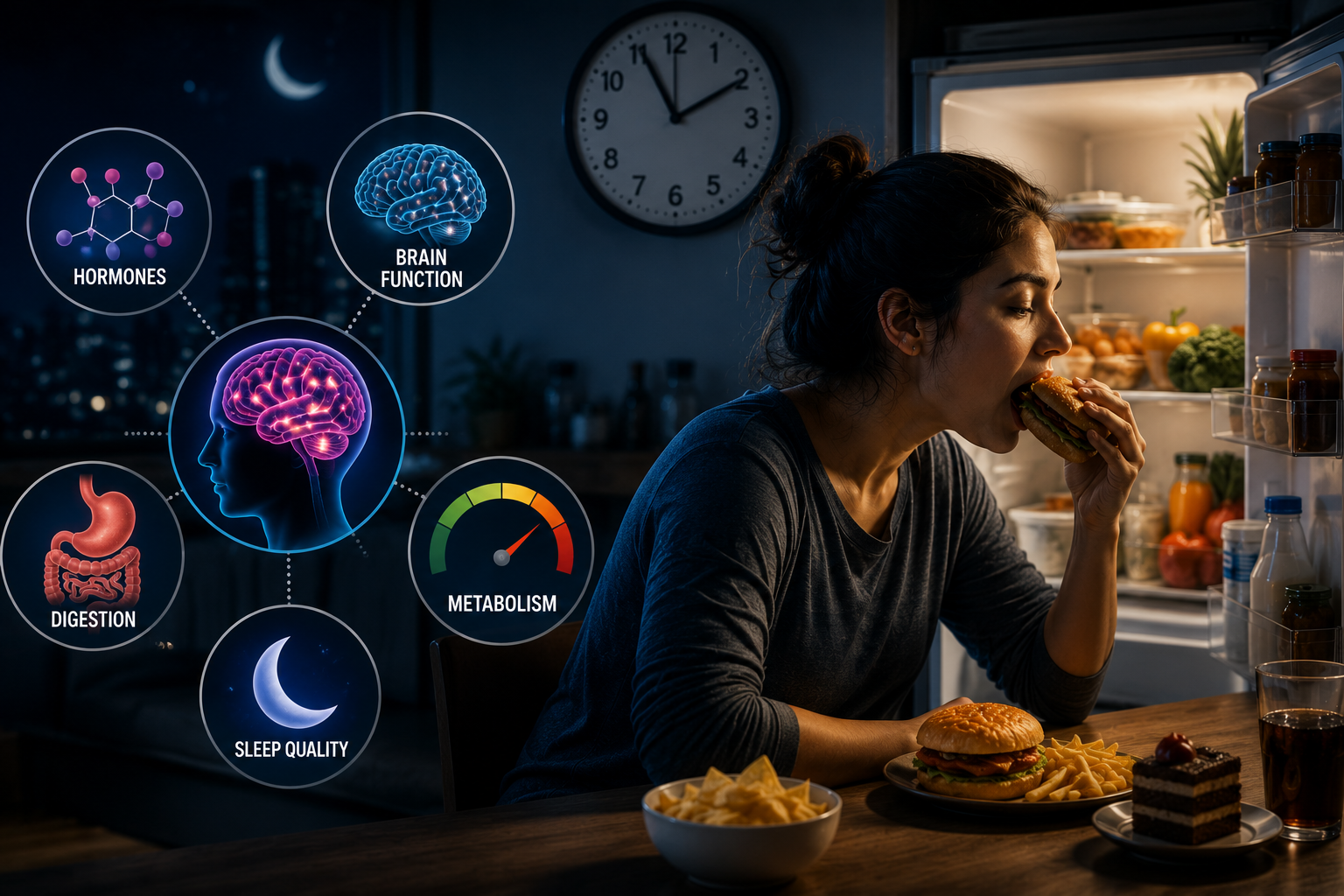
Growing evidence suggests that meal timing plays an important role in metabolic health, hormone regulation, sleep quality, brain function, and even long-term disease risk. While the occasional late dinner isn’t likely to cause harm, consistently eating large meals close to bedtime may negatively impact overall health.
We explore what physicians, nutrition researchers, and chronobiologists have discovered.
Your Body Runs on an Internal Clock
Every cell in your body follows a circadian rhythm—a 24-hour biological clock regulated primarily by daylight. This clock influences:
- Blood sugar control
- Digestion
- Hormone release
- Body temperature
- Brain alertness
- Sleep quality
- Appetite
During daylight hours, your body is generally better prepared to digest food and regulate blood glucose. And as evening approaches:
- Insulin sensitivity decreases
- Digestion slows
- Melatonin rises
- Energy expenditure falls
- Fat oxidation decreases
This means the exact same meal may be processed differently depending on whether it’s eaten at 1 pm or 10 pm.
Can Late Eating Lead to Weight Gain?
Research increasingly suggests that people who regularly consume most of their calories late in the evening are more likely to experience:
- Increased body fat
- Greater waist circumference
- Higher risk of obesity
- Reduced fat burning
- Poorer blood sugar control
Late eating doesn’t automatically cause weight gain. The total number of calories consumed still matters most. However, eating late often encourages:
- Larger portions
- More processed foods
- Higher sugar intake
- Mindless snacking while watching television
- Reduced physical activity after eating
These habits can gradually contribute to excess calorie intake.
Hormones Affected by Late-Night Eating
1. Insulin
Insulin sensitivity naturally declines later in the day. Late meals may therefore produce:
- Higher blood sugar spikes
- Greater insulin release
- Increased fat storage
- Higher risk of insulin resistance over time
2. Cortisol
Although cortisol naturally declines in the evening, poor sleep caused by late eating may disturb this rhythm. Chronically elevated evening cortisol has been associated with:
- Belly fat accumulation
- Increased appetite
- Cravings for sugary foods
- Poor sleep quality
3. Melatonin
Melatonin prepares the body for sleep.
Large meals immediately before bed may interfere with this process, delaying sleep onset and reducing sleep quality.
4. Leptin & Ghrelin
These hormones regulate hunger and fullness. Late eating combined with poor sleep can:
- Increase ghrelin (the hunger hormone)
- Reduce leptin (the satiety hormone)
The following day, people often feel hungrier and consume more calories.
What Happens to Your Brain?
The brain relies heavily on stable blood glucose and quality sleep.
Eating heavy meals late at night may:
- Disrupt deep sleep
- Increase nighttime awakenings
- Reduce REM sleep
- Affect memory consolidation
- Lower concentration the next day
Studies also suggest that circadian disruption may impair cognitive performance and decision-making.
Can Late Eating Affect Mental Health?
Emerging research links disrupted eating schedules with:
- Increased anxiety
- Mood instability
- Depression risk
- Fatigue
- Brain fog
Scientists believe that circadian rhythm disruption may influence neurotransmitters such as serotonin and dopamine while also affecting inflammation.
Although meal timing alone doesn’t determine mental health, maintaining regular eating patterns appears beneficial.
Digestive Problems Associated with Late Eating
Large evening meals may increase the risk of:
- Acid reflux
- Heartburn
- Indigestion
- Bloating
- Poor gastric emptying
Lying down soon after eating makes reflux symptoms significantly worse.
Is There a Best Time to Eat?
There isn’t one perfect eating schedule for everyone, but many physicians recommend:
Breakfast
Within 1–2 hours of waking (if it suits your appetite and lifestyle).
Breakfast: 7–9 am
Lunch
The largest meal for many people, when insulin sensitivity is generally higher.
Lunch: 12–2 pm
Dinner
Ideally 2–3 hours before bedtime. Dinner: 6–8 pm
Bedtime ideally should be between 10-11pm
Shift workers or individuals with medical conditions may require personalised advice.
Is Intermittent Fasting Helpful?
Time-restricted eating (TRE) has shown promising results in research.
Common approaches include:
- 12:12
- 14:10
- 16:8
When combined with a nutrient-rich diet, TRE may help support:
- Weight management
- Blood sugar control
- Insulin sensitivity
- Metabolic flexibility
- Digestive health
However, fasting is not appropriate for everyone, including pregnant women, individuals with eating disorders, certain medical conditions, or those advised otherwise by a healthcare professional.
What Should You Eat in the Evening?
If you’re hungry in the evening, choose lighter, balanced meals such as:
✅ Grilled fish or chicken
✅ Lentils or beans
✅ Greek yogurt
✅ Cottage cheese (paneer)
✅ Eggs
✅ Steamed vegetables
✅ Salad
✅ Oats
✅ Berries
✅ Nuts (small portion)
Avoid frequent consumption of:
- Sugary desserts
- Fried foods
- Large pizzas
- Fast food
- Excess alcohol
- Large portions immediately before bed
Nutrients That Support Healthy Sleep & Evening Recovery
A balanced diet should always come first. Depending on individual needs, the following nutrients may support healthy sleep and recovery:
Magnesium
Supports normal muscle function, relaxation, and nervous system health.
Omega-3 Fish Oil
Supports brain health, cardiovascular health, and normal cognitive function.
Vitamin D
Supports immune function, muscles, and bone health. Low levels have also been associated with poorer sleep in some populations.
Zinc
Supports normal immune function and recovery.
B-Complex Vitamins
Help support energy metabolism and nervous system function.
Protein
Casein or other slow-digesting proteins may support overnight muscle recovery after evening exercise.
Always choose products from reputable brands that undergo rigorous quality testing.
Practical Tips to Avoid Late-Night Eating
- Eat enough protein during the day.
- Don’t skip breakfast or lunch if it leads to evening overeating.
- Stay hydrated.
- Plan healthy evening meals.
- Reduce screen time while eating.
- Finish dinner at least 2–3 hours before sleeping.
- Maintain consistent sleep and wake times.
- Exercise regularly during the week.
The Bottom Line
Occasional late-night meals are unlikely to damage your health. However, consistently eating large, calorie-dense meals close to bedtime may negatively affect metabolism, hormone balance, digestion, sleep quality, brain function, and long-term health. The best dietary pattern combines:
- Whole, nutrient-dense foods
- Regular meal timing
- Adequate protein
- Plenty of fruits and vegetables
- Regular physical activity
- Quality sleep
- Stress management
Remember, what you eat, how much you eat, and when you eat all work together to influence your overall health.
Fitcart.com Recommendations
At Fitcart.com, we believe nutrition extends beyond calories—it’s about supporting your body’s natural rhythms.
Whether you’re an elite athlete, fitness enthusiast, or simply striving for better health, focus on:
- Balanced whole-food meals
- Adequate daily protein
- Hydration
- Consistent sleep
- Smart meal timing
- Evidence-based, quality-tested nutritional supplements when appropriate
Choose supplements from trusted manufacturers that are batch-tested for quality, accurately labelled, and produced in certified facilities following good manufacturing practices. Raw material and content are checked. Competitive athletes should consider products independently tested for banned substances where appropriate.
Medical Disclaimer
This article is intended for educational and informational purposes only and should not be considered medical advice. Individual nutritional needs vary. Consult your physician, registered dietitian, or another qualified healthcare professional before making significant dietary changes, beginning intermittent fasting, or starting any supplement regimen, particularly if you are pregnant, breastfeeding, have diabetes, take medication, or have any underlying medical condition.
Fitcart believes in True Play and Clean Sport
#trustedbrandsbetterhealth