


Fitcart Sports News Blog.
Authored by S. Kannan (Sports Analyst) and Fitcart Editorial Team Ritu Makhija.
Asmita means self-pride, and this judoka defines it – S. Kannan.
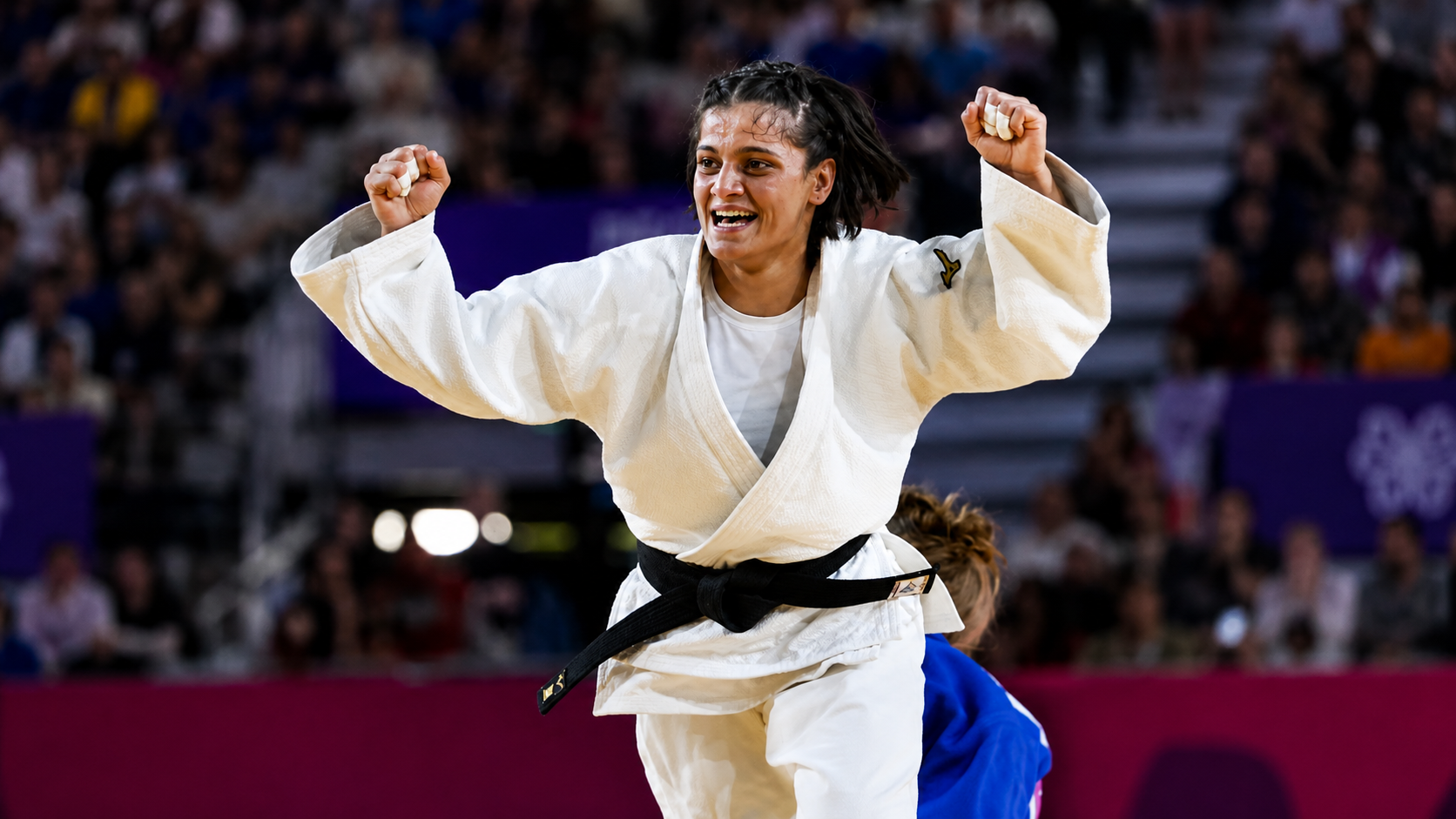
One look at diminutive Asmita Dey, and you cannot make out she is fast and furious, can throw her opponent in a jiffy on the judo mat, and win bouts. The nation rejoices today as the 23-year-old from Tripura, who has adopted Uttar Pradesh as her home, basks in golden glory after her exploits in Glasgow at the Commonwealth Games.
Each mention of Asmita, your eyes swell up in tears. She won gold and then wept, reminiscing about her father, who succumbed to a brain stroke last December. Asmita wept in Glasgow, and when this writer told her that such emotions are precious, she held it back. The face looked blank, and then she recalled all her travails. Hailing from Tripura, the same state which produced top gymnast Dipa Karmakar, famous for her ‘Produnova’ vault which saw her finish fourth in the Rio de Janeiro Olympics in 2016, Asmita is different.
She had talent and wanted to change the narrative. Today if the media and social media is going back to the times when her father worked daily for Rs 300 a day as a cycle mechanic, there is no shame. If you take many Blacks in the United States of America, how they came into professional boxing will tell you about hardships faced and channelising inner energy.
Asmita also dreamt, was ready to work hard in a technical sport, and had emerged as a rising star. Today, if she smiles and is pictured lavishly on social media, its well-deserved. There is strong discipline in her work ethic, which comes from being an officer in the Uttar Pradesh Police. Even Chief Minister Yogi Adityanath had posted a congratulatory tweet for her.
Now comes the dirty phase. Asmita need help, exposure and has to train abroad. In sight, she wants to win medals at the Asian Games in Aichi-Nagoya in Japan this September and also hopes to qualify for the Los Angeles Olympics in 2028. “I come from a small state but there is a champion dream in me. I will work hard and fight my way to glory,” Asmita told Glasgow after an intense gym session at the Moxy Hotel in Glasgow last week.
There is a calmness when you look at Asmita. Sharp reflexes, eyes that are piercing, and the vision; she can bring India glory. Mukesh Kumar, President of the Judo Federation of India, told Fitcart the judo girls in India are far more focused and they can be considered as bright prospects. This is a sport where governance has faced issues. The good part, Mukesh is stabilising the process.
Asmita as an officer in the UP Police, is now caught in negative news, because she will most likely be presented a cash award of Rs 1.5 crores. For those who talk of Asmita not belonging to UP, that is sad. She is a natural treasure and picking on domicile technicality does not work. Asmita has won medals for UP in National events as well. She is an officer and serves as a role model and example for many more lady athletes.
Good part, Asmita is not too concerned about social media and so on. Having trained under Yashpal Solanki at the Bhopal Centre, she is well-honed in her skills. How she showed fire in Glasgow is worth watching again. Hailing from Tripura, she is a morning bird. Waking up at 5am, Asmita hits her daily training sessions hard. The format is long and planned well.
High-intensity cardio training sessions, plus weight training for strength, make Asmita look sculpted when she steps on the mat for the 48kg bouts. This is a sport where body and mind have to be in sync. She has to be fast and at the same time also visualise what her opponent can come up with. In this aspect, she is heavily into mental conditioning, which is not discussed in the public domain.
In her daily diet, sugary stuff is ruled out, for two reasons. She cannot put on weight and there is no need for extra sugar load. Her protein intake is mostly lean, and her carb intake is also calculated well. Asmita adds greens in her meals as well and maintains high hydration.
Her resilience is high, as witnessed several times. This is a sport where not many sponsors come forward for overseas training. Asmita was left out of TOPS (Target Olympic Podium Scheme). Yet, she did not lose heart and has bounced back. One more reason why Asmita is an outright winner.
Fitcart Performance Corner: What Makes an Elite Judoka Successful?
Asmita Dey’s Commonwealth Games triumph highlights the demanding nature of modern judo. Success on the international stage is built on far more than technical skill—it requires explosive strength, lightning-fast reactions, endurance, intelligent nutrition, effective recovery, and exceptional mental resilience.
Strength Without Compromising Speed
Unlike many sports where increasing body mass can be an advantage, judo athletes compete within strict weight categories. Every kilogram matters.
Elite judokas therefore focus on improving relative strength—becoming stronger without unnecessary weight gain. Training programmes typically combine:
- Olympic and functional lifting
- Explosive plyometric exercises
- Grip-strength development
- Core stability training
- Mobility and flexibility work
- Balance and coordination drills
This combination enables athletes to generate powerful throws while remaining agile throughout intense bouts.
Nutrition Designed for Performance
Weight-category sports require athletes to maintain body composition year-round rather than relying on extreme weight cuts before competition.
Performance nutrition often includes:
- Lean protein to support muscle repair and recovery.
- Complex carbohydrates to fuel high-intensity training sessions.
- Healthy fats that support hormonal health.
- Colourful vegetables and fruits providing antioxidants and micronutrients.
- Consistent hydration and electrolyte replacement, particularly during multiple daily training sessions.
Maintaining energy availability is especially important during heavy training periods, allowing athletes to recover effectively while preserving strength and performance.
Recovery is a Competitive Advantage
International judo competitions often involve multiple matches within a single day, making recovery an essential part of performance.
Elite athletes commonly prioritise:
- Quality sleep.
- Active recovery sessions.
- Stretching and mobility.
- Physiotherapy and injury prevention.
- Massage and soft tissue therapy.
- Monitoring training loads to reduce the risk of overtraining.
The athletes who recover most efficiently are often able to perform consistently throughout long tournaments.
Mental Toughness Wins Championships
Judo is often described as physical chess.
Every contest demands:
- Tactical decision-making.
- Split-second reactions.
- Emotional control.
- Confidence under pressure.
- Resilience after setbacks.
Asmita’s ability to overcome personal adversity while continuing to compete at the highest level demonstrates the importance of psychological strength alongside physical preparation.
Sports Nutrition and Clean Sport
Elite combat athletes place tremendous trust in everything they consume. While a balanced diet remains the foundation of performance, some athletes may use sports nutrition products to help meet their nutritional requirements during periods of demanding training.
Depending on individual goals and professional guidance, athletes may consider products such as:
- Whey protein for post-training recovery.
- Electrolyte hydration products.
- Carbohydrate drinks for prolonged training sessions.
- Omega-3 fatty acids.
- Vitamin D where appropriate.
- Creatine monohydrate for strength and power development when suitable.
- Magnesium where dietary intake is insufficient.
For athletes competing under anti-doping regulations, choosing products that have undergone independent batch testing through internationally recognised programmes provides an additional level of confidence in product quality.
At Fitcart, we believe every athlete—from beginners to elite competitors—deserves access to premium sports nutrition from trusted international brands that emphasise quality, transparency and responsible manufacturing. Supporting Indian athletes with informed choices and world-class products remains at the heart of our mission.
Inspiring the Next Generation
Asmita Dey’s journey is about far more than winning medals. It is a story of determination, discipline, resilience and belief despite adversity.
As Indian combat sports continue to grow, athletes like Asmita demonstrate that with scientific coaching, structured nutrition, consistent recovery and unwavering dedication, Indian judokas can compete confidently with the very best in the world.
Her success will undoubtedly inspire countless young athletes—especially girls—to step onto the judo mat believing that international success is within reach.
Frequently Asked Questions
Why is strength training important for judo?
Strength improves throwing power, grip endurance, injury resilience and overall performance while helping athletes remain competitive within their weight category.
Why do judokas carefully monitor their diet?
Athletes compete in fixed weight divisions, so nutrition helps optimise body composition, maintain energy levels and support recovery without unnecessary weight gain.
Does hydration affect judo performance?
Yes. Even mild dehydration can negatively impact strength, reaction time, endurance and decision-making during competition.
Should combat sport athletes use supplements?
Supplements should complement a balanced diet and should only be used when appropriate under the guidance of qualified healthcare or sports nutrition professionals.
Why are independently batch-tested supplements recommended?
Independent batch testing helps reduce the risk of contamination with substances prohibited in sport, offering greater confidence for athletes subject to anti-doping regulations.
Editorial Disclaimer
This article is published for news, editorial and educational purposes only. The opinions and statements expressed by quoted individuals are their own and do not necessarily reflect those of Fitcart. While every effort has been made to ensure accuracy at the time of publication, sporting performances, athlete information and competition results may change over time. Readers should verify official announcements where appropriate.
Supplement Disclaimer
The information in this article is intended for general educational purposes only and should not be considered medical, nutritional or performance advice. Food supplements should complement a balanced diet and healthy lifestyle—not replace them. Athletes should consult a qualified healthcare or sports nutrition professional before using supplements and should choose products from reputable manufacturers that prioritise quality, transparency and independent batch testing where appropriate.
Image credit to asmitadey_48kg on Instagram.
Follow us on X: https://x.com/fitcartofficial and Instagram: https://www.instagram.com/fitcartofficial/ for the latest updates, health insights, and exclusive content.
Follow Smart Nutrition India X: https://x.com/SmartNutrition1 and Instagram: https://www.instagram.com/smartnutritionindia/ for trusted sports nutrition, supplement education, wellness tips, and the latest news from the world of health and performance.
Fitcart believes in True Play and Clean Sport
#trustedbrandsbetterhealth