


Fitcart Editorial Team Ritu Makhija.
Reading time: 8–10 minutes.
There is growing scientific interest in a surprisingly intimate relationship inside the human body: the relationship between the gut and sleep.
We tend to think about sleep as something controlled mainly by the brain, hormones, stress and our daily routine. But researchers are increasingly investigating whether the trillions of microorganisms living in our digestive system—the gut microbiome—may also play a role in how well we sleep.
The connection appears to go both ways.
Our diet, exercise, stress levels and sleep patterns can influence the gut microbiome. At the same time, substances produced by gut bacteria may interact with pathways involved in inflammation, metabolism, the nervous system and the body’s sleep–wake cycle.
One area attracting particular attention is the relationship between short-chain fatty acids, including butyrate, and overall health.
But there is an important caveat: although the science is fascinating, much of the gut microbiome–sleep research is still observational or early-stage. An association between certain bacteria and better sleep does not prove that those bacteria directly cause better sleep.
So what can we realistically do today?
Quite a lot—but the answer isn’t simply to swallow a probiotic before bedtime.
The Gut–Sleep Connection: What’s Happening?
The gut microbiome contains an enormous community of bacteria and other microorganisms that interact with the food we eat and with our bodies.
Some beneficial bacteria ferment dietary fibre and produce compounds called short-chain fatty acids (SCFAs). These include:
- Acetate
- Propionate
- Butyrate
Butyrate has attracted considerable scientific interest because of its role in maintaining the intestinal barrier and its potential effects on immune, metabolic and inflammatory pathways.
Researchers are now investigating whether gut microbial composition and microbial metabolites may also be associated with sleep quality.
Recent research has found associations between certain gut bacteria—including some bacteria capable of producing butyrate—and sleep-related measures. However, these findings do not establish a simple formula of “more of this bacteria = better sleep.”
The microbiome is an ecosystem, not a single ingredient.
Your Diet May Be the First Place to Start
If you want to support both your gut and your sleep, your overall dietary pattern may matter more than any single “sleep food” or supplement.
A gut-friendly diet generally emphasizes a variety of plant foods that provide different types of fibre.
Foods worth including regularly
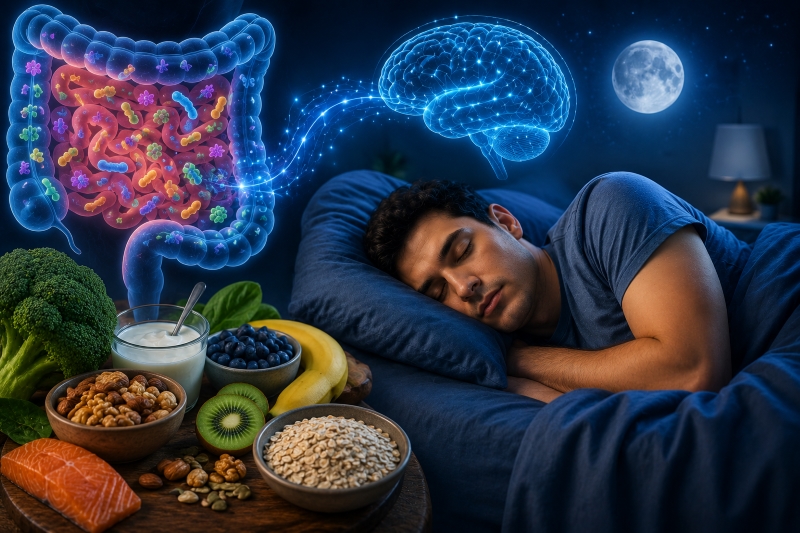
Vegetables: Broccoli, spinach, carrots, cauliflower, peppers, leafy greens and other colourful vegetables provide fibre and plant compounds.
Fruits: Berries, apples, kiwi, oranges, pears and other fruits contribute fibre and polyphenols.
Legumes: Lentils, chickpeas, beans and peas can provide substantial amounts of fermentable fibre.
Whole grains: Oats, barley and other minimally processed whole grains can contribute fibre that gut bacteria can ferment.
Nuts and seeds: Almonds, walnuts, chia and flax provide fibre and beneficial fats.
Fermented foods: Yogurt containing live cultures, kefir, kimchi, sauerkraut and other fermented foods can add microorganisms or fermentation-derived compounds to the diet.
Variety is important.
Rather than searching for one “superfood” capable of fixing the microbiome, think about feeding your gut a diverse menu of plant fibres and minimally processed foods.
Prebiotics: Feeding Your Friendly Bacteria
A probiotic provides live microorganisms.
A prebiotic, broadly speaking, is a substance that is selectively utilized by microorganisms and provides a health benefit.
Many prebiotic compounds are found naturally in foods.
Examples include foods containing:
- Inulin
- Fructooligosaccharides
- Resistant starch
- Certain soluble fibres
Garlic, onions, leeks, asparagus, legumes and some whole grains can contribute prebiotic substrates.
Another interesting food strategy involves resistant starch, which can be found in foods such as legumes and, depending on preparation and cooling, potatoes and rice.
The goal isn’t necessarily to consume enormous amounts of fibre overnight.
Increase fibre gradually and drink enough fluids, because suddenly increasing fibre intake can cause bloating, gas or abdominal discomfort.
What About Probiotics?
This is where supplement marketing can get ahead of the science.
Probiotics are not one single product. Different strains can have different effects, and results from one strain cannot automatically be applied to another.
Some studies have investigated probiotics, prebiotics and combinations of the two for sleep-related outcomes. The evidence is promising enough to justify continued research, but it is not strong enough to say that probiotics are a guaranteed treatment for insomnia.
If choosing a probiotic, consumers should look beyond the word “probiotic” on the label.
Look for:
- Clearly identified strains
- The amount provided through the stated shelf life
- Appropriate storage instructions
- Transparent labeling
- Quality-control information
- Third-party testing where available
And remember: more colony-forming units do not automatically mean a better product.
Fibre May Be One of the Most Underappreciated “Supplements”
Before reaching for a complicated supplement stack, look at your fibre intake.
Adequate dietary fibre supports normal digestive function and provides substrate for fermentation by gut microorganisms.
For people who struggle to obtain enough fibre from food, certain fibre supplements may be useful.
Examples include psyllium and other soluble fibres.
However, fibre supplements are not a replacement for a diverse diet.
A capsule or powder cannot replicate the nutritional complexity of vegetables, fruits, legumes, whole grains, nuts and seeds.
Fermented Foods: An Easy Addition to the Plate
Fermented foods have become a major wellness trend—and for good reason, although they should not be treated as magic.
Regularly eating foods such as yogurt with live cultures, kefir, kimchi or sauerkraut can be an easy way to introduce fermented foods into your diet.
The important distinction is between fermented food and a clinically studied probiotic strain. They aren’t interchangeable.
Some fermented foods may contain live microorganisms, but the organisms and quantities can vary considerably.
Exercise: Another Gut–Sleep Link
Here’s where Fitcart’s fitness philosophy comes in.
Exercise may benefit both sleep and the gut microbiome.
Regular physical activity is associated with improvements in sleep quality, and exercise may also influence microbial diversity and the production of microbial metabolites.
You don’t necessarily need an extreme training programme.
A combination of:
Walking + resistance training + aerobic exercise + adequate recovery
can form an excellent foundation.
Even a daily brisk walk can be useful.
Resistance training is particularly important as we age because maintaining muscle mass and strength supports metabolic health, mobility and independence.
And exercise doesn’t have to happen in a gym.
Walking outdoors, cycling, swimming, climbing stairs, bodyweight exercises and resistance-band training can all contribute to an active lifestyle.
But Don’t Exercise Too Close to Bed If It Disrupts Your Sleep
Exercise is generally beneficial, but timing matters for some people.
A hard workout immediately before bedtime may leave some individuals feeling stimulated rather than relaxed.
If evening exercise interferes with your ability to fall asleep, experiment with moving intense training earlier.
On the other hand, many people can exercise in the evening without any noticeable sleep problems.
The most important factor is finding a routine you can maintain.
Stress Could Be the Missing Piece
The gut and brain communicate continuously through multiple pathways, often referred to collectively as the gut–brain axis.
Stress can affect digestion, appetite, bowel function and sleep.
Poor sleep can also affect appetite, food choices and metabolic regulation.
That creates a potentially frustrating cycle:
Stress → poorer sleep → altered eating patterns → changes in gut environment → more difficulty maintaining healthy routines.
Breaking the cycle doesn’t require a complicated biohacking protocol.
Try:
- Regular meal times
- Daily movement
- Relaxation or breathing exercises
- Limiting excessive evening screen exposure
- A consistent bedtime
- Time outdoors
- Social connection
- Adequate recovery
Light May Matter More Than Your Supplement Cabinet
Your body uses environmental signals to regulate its circadian rhythm.
One of the strongest signals is light.
Getting natural daylight, particularly earlier in the day, can help reinforce the body’s day–night rhythm.
At night, reducing bright light and creating a darker sleeping environment can support healthy sleep habits.
Think of your bedroom as a recovery environment.
Your sleep environment matters
Aim for a bedroom that is:
- Dark
- Quiet
- Comfortable
- Cool enough for you
- Free from unnecessary distractions
Your mattress, pillow, room temperature, noise, light exposure and electronic habits may have a much greater impact on sleep than a fashionable supplement.
Alcohol Is Not a Sleep Supplement
Some people believe alcohol helps them fall asleep.
Although alcohol can make you feel sleepy initially, it can interfere with sleep architecture and lead to poorer-quality or fragmented sleep later in the night.
If improving sleep is the objective, using alcohol as a sleep strategy is counterproductive.
Caffeine: Watch the Clock
Caffeine doesn’t affect everyone equally.
Some people metabolize it relatively quickly, while others remain sensitive for many hours.
If you’re having difficulty sleeping, experiment with moving caffeine earlier in the day.
Remember that caffeine isn’t only found in coffee.
It can also appear in:
- Tea
- Energy drinks
- Pre-workout products
- Cola
- Some performance supplements
- Chocolate
For athletes, pre-workout timing deserves particular attention.
A product that improves training intensity at 7 p.m. may not be worth it if it prevents you from sleeping at 11 p.m.
Can Supplements Help?
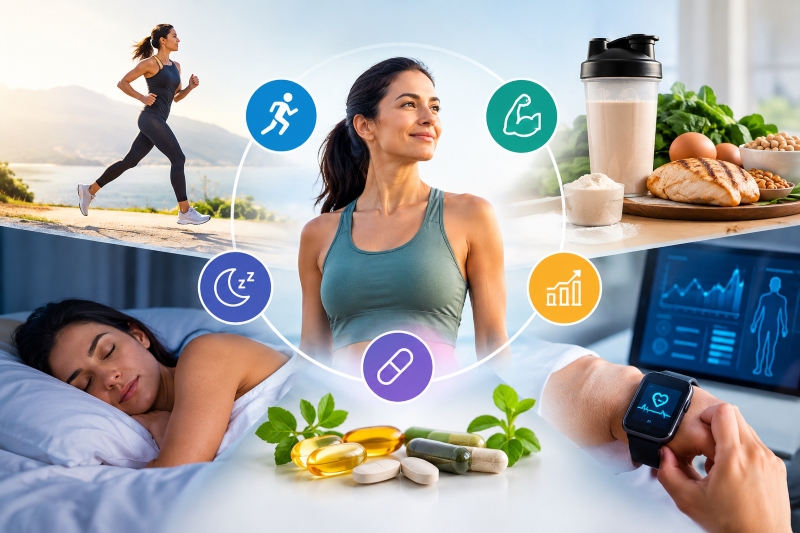
Potentially—but supplements should sit underneath the foundations, not above them.
A sensible Fitcart approach is:
1. Probiotics
Certain probiotic strains may have potential benefits for digestive health and are being investigated for sleep-related outcomes.
However, effects are strain-specific, and probiotics should not be marketed as a guaranteed treatment for insomnia.
2. Prebiotic Fibre
If dietary fibre intake is inadequate, a suitable fibre supplement may help increase total fibre intake.
Start slowly to minimize digestive discomfort.
3. Magnesium
Magnesium is an essential mineral involved in hundreds of physiological processes, including normal muscle and nervous-system function.
Magnesium supplements are popular in the sleep and recovery market, but evidence for improving sleep in otherwise healthy people is mixed.
The key is to avoid assuming that taking more magnesium automatically means better sleep.
4. Omega-3 Fatty Acids
Omega-3 fatty acids are important nutrients with well-established roles in overall health.
Research continues to explore relationships between omega-3 intake, inflammation, brain health and sleep.
However, omega-3 should be considered part of overall nutritional health rather than a dedicated sleeping pill.
5. Protein
Protein isn’t a sleep supplement, but it belongs in the conversation.
Adequate protein supports muscle repair, recovery and healthy ageing.
For active adults, particularly those undertaking resistance training or trying to lose body fat while preserving lean mass, meeting daily protein requirements can be important.
Whey protein or other protein supplements can be convenient when food alone doesn’t provide enough.
6. Glycine and Other Sleep Ingredients
Glycine and several other ingredients are being studied for potential effects on sleep quality.
The evidence varies considerably from ingredient to ingredient.
This is exactly why consumers should examine the actual ingredient, dose, research and quality of the product, rather than relying solely on phrases such as “sleep complex” or “advanced night formula.”
The Fitcart Sleep + Gut Checklist
If you want to improve both gut health and sleep, start with the basics.
Morning
☀️ Get outdoor daylight 🚶 Walk or move 💧 Hydrate 🥣 Eat a balanced, fibre-rich breakfast if it suits your routine
During the day
🥦 Eat a variety of plant foods 🥛 Include suitable fermented foods 💪 Strength train regularly 🏃 Add aerobic activity ☕ Keep caffeine under control
Evening
🍽️ Avoid excessively heavy meals close to bedtime if they disturb your sleep 📱 Reduce stimulating screen use 🧘 Give your brain time to wind down 🍷 Don’t rely on alcohol for sleep 💡 Reduce bright light
Night
🌙 Keep your bedroom dark and comfortable 😴 Maintain a relatively consistent sleep schedule 📵 Keep unnecessary distractions away from the bed
The Bigger Picture: Don’t Chase One “Good” Bacterium
Perhaps the most important lesson from the microbiome revolution is that the gut is an ecosystem.
There probably isn’t one magical bacterium that will solve everyone’s sleep problems.
Instead, think about the environment you create for your microbiome.
A diet rich in fibre and plant diversity, regular physical activity, adequate sleep, stress management and appropriate use of supplements may collectively create a healthier environment for both your gut and your body.
And that’s very much the Fitcart philosophy:
Nutrition + Movement + Recovery + Environment + Quality Supplements = Sustainable Wellness
The Bottom Line
The relationship between the gut microbiome and sleep is one of the most fascinating emerging areas of health research.
Scientists are investigating how gut bacteria, microbial metabolites, inflammation, metabolism and the gut–brain axis may interact with sleep.
But we’re not yet at the stage where we can prescribe a particular probiotic and promise a better night’s sleep.
For now, the strongest practical strategy remains remarkably simple:
Eat more diverse, fibre-rich foods. Move your body. Exercise regularly. Manage stress. Get daylight. Protect your sleep environment. And use supplements strategically rather than blindly.
The future may reveal much more about the microbiome–sleep connection.
Until then, don’t underestimate the basics.
Sometimes the most sophisticated health strategy is simply giving your body the right conditions to do what it already knows how to do.
Fitcart Supplement Quality Advisory
If you choose to use nutritional or sports supplements, look for products that are properly tested and batch verified for identity, purity, potency and contaminants, where applicable. Prefer transparent brands that clearly disclose ingredient quantities, manufacturing information and quality certifications.
For sports nutrition products, athletes should consider products carrying appropriate independent certifications for banned-substance testing where relevant.
Do not assume that a supplement is safe or effective simply because it is marketed as “natural,” “premium,” “clean,” “probiotic,” or “clinically formulated.”
Supplements should complement—not replace—a nutritious diet, appropriate exercise, adequate sleep and professional medical care.
Health Disclaimer: This article is intended for general educational and wellness information and is not medical advice. The gut microbiome–sleep relationship is an evolving field, and associations reported in research do not necessarily establish cause and effect. Individuals with persistent insomnia, significant digestive symptoms, chronic medical conditions, or those taking medications should consult a qualified healthcare professional before starting new supplements or making major dietary changes. Pregnant or breastfeeding individuals should seek appropriate professional advice before using supplements.
Fitcart Editorial Note: Always check the product label, recommended serving size, allergens, storage requirements, country of manufacture and packaging information. Where possible, choose supplements supported by independent quality testing and batch verification.
Follow us on X: https://x.com/fitcartofficial and Instagram: https://www.instagram.com/fitcartofficial/ for the latest updates, health insights, and exclusive content.
Follow Smart Nutrition India X: https://x.com/SmartNutrition1 and Instagram: https://www.instagram.com/smartnutritionindia/ for trusted sports nutrition, supplement education, wellness tips, and the latest news from the world of health and performance.
Fitcart believes in True Play and Clean Sport
#trustedbrandsbetterhealth