


Fitcart Sports News Blog.
Authored by S. Kannan (Sports Analyst) and Fitcart Editorial Team Ritu Makhija.
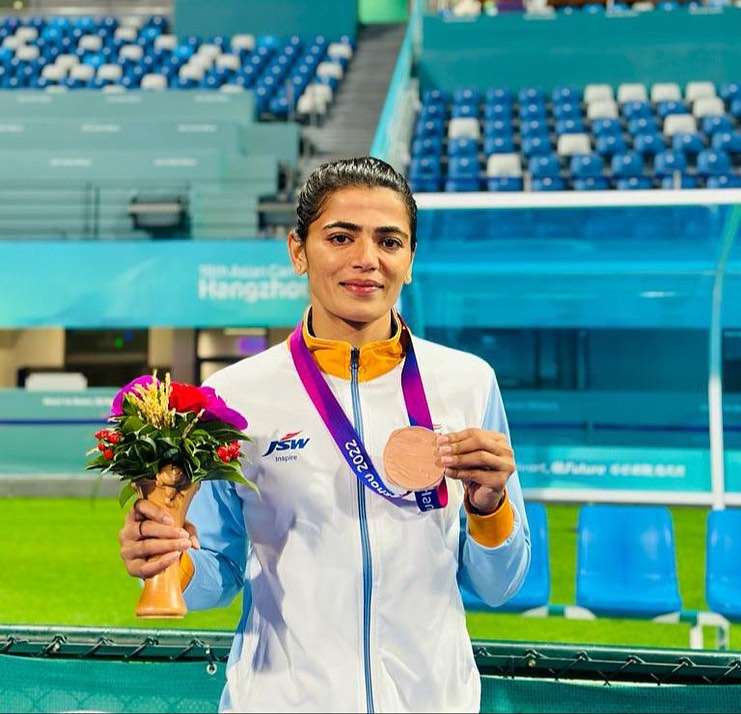
Savita Punia, 36, is a daring Indian hockey goalkeeper.
The job of a goalkeeper in field hockey is thankless. And yet, what pushes an athlete in pursuit of excellence, spending hours at practice, training and being ready to take shots coming at them from various dangerous angles, is risk-laden. Meet Savita Punia, the athletic Team India goalkeeper who refuses to give up.
Standing under the bar, wearing protective gear, including a helmet and visor, waiting in anticipation and then ready to make a quick ‘save,’ Savita has been at it for over two decades plus. The job she has chosen is one driven by passion in pursuit of excellence. As the Salima Tete-led team competes at the FIH World Cup in Belgium and Holland in a day, Savita will be an important cog in the wheel.
At 36, when Savita can be happy at home raising kids, she has broken the stereotype. Married to Ankit Balhara, a Canadian software engineer who also engages in composing music, Savita has chosen to be a ‘married woman’ who will not give up hockey. It’s her zeal, her zest and the crest on her helmet – over 300 caps – that defines her legend status.
Deep dive: no young girl has been able to knock off Savita and barge into Team India, through the highs and lows. Indian women’s hockey is not an easy place to be in. For those who will mention the highs of the Tokyo Olympics in 2021, when the team fell agonisingly short of a bronze medal, stories of tears and jeers are well-documented. At that time, much like Kabir Khan in the famous movie Chak De India, coach Sjoerd Marijne was the coach.
He was dumped by Hockey India after the Tokyo Olympics and has been brought back this year. How and why is not important. For a player like Savita to work under Marijne and specialists who now hold goalkeeping classes for more skills and sharpness is important. Goalkeeping is an art and science. If it looks monotonous from beyond the hockey turf, you got it wrong. This is, indeed, a thankless job.
At five feet and seven inches, Savita is all arms and legs. Her body is capable of stretching further inches as she dives, lunges and flies in the air to make saves. With over 300 international caps, as she prepares to guard India at the World Cup as well as the Asian Games in Aichi-Nagoya in September, Savita has defined age as just a number.
At 36, many athletes are past an active, competitive stage. How Savita wants to keep pushing is motivational and defining for girls who want to take up goalkeeping in hockey. There is no glamour in this job, unlike being a forward, where scoring goals means grabbing headlines. More often, a goalkeeper’s name is mentioned when he or she fails!
Well, Savia is inert to criticism. She has been at it for years. Just to rewind, when I met her after her return from Tokyo after the Olympics, she was emotional. Hockey India had arranged a felicitation for the team, after the team came so close to kissing the bronze medal. Like the proverbial miss by an inch, India lost that match. Savita was not at fault, for she had stood like a tigress. I asked her what more was left for her to achieve.
It was a question which I asked innocently. “If I can be part of one more Olympic cycle, I will be happy,” she said. I agreed. Having watched her at the 2023 Asian Games in Hangzhou, China, I was convinced Savita was not giving up. She will be there in Nagoya as well. If the team is strong and can win gold at the Asian Games, Savita will look at the LA Olympics as well in 2028.
Savita will be 38 by then, which is adding more grey cells. For those who are negative, she will be older. However, Savita does everything it takes to get stronger, fitter, more agile, under the bar, as the saying goes for a goalkeeper who guards the citadel.
The lady has to do squat jumps; she has to hit the gym trail hard and also ensure her body is flexible. There is no point in Savita hitting a gym pattern where she may look bulky but cannot be light on her feet and shuffle feet to save the hockey ball which comes screaming like a bullet.
Savita has used modern science and developed her body. Jump squats, burpees, push-ups- all this is quick when she is outside the AC gym. If she is inside the gym, her training becomes more intense. In this, she will do cardio plus a high-intensity core workout, all aided by recovery through physios available to her. The recovery part for any active athlete is vital, so Savita knows her body well.
Women have to deal with far more complex issues like ‘period.’ Unlike some athletes who will cite it for a performance coming down, Savita will not. She will deal with it naturally, wherein it becomes important to ensure she can ensure her Hb (haemoglobin) levels are still optimised.
As far as her diet goes, Savita is methodical and has not adopted short-cuts. The lady has adopted a sugar-free diet, based on recommendations of Wayne Lombard, when he actively worked with the team. Consuming fruits in the diet is natural and required, but sugary stuff is a no-no for Savita. Her meals contain ample lean protein, complex carbs, and food that can fuel her. The inner instinct to avoid junk food is natural, so that she can be healthy.
Can Savita keep pushing like this for a few more years is a question many ask. As long as she is still the best in the business as a goalkeeper, none dare question her. Watch out for this lady at the World Cup. Her training videos are there in public space to serve as motivation.
The Fitcart Performance Perspective
Longevity in elite sport is rarely about one secret exercise, one supplement or one perfect diet. It is usually the result of years of disciplined training, intelligent recovery, appropriate nutrition and the ability to adapt as the body changes.
Savita Punia’s career is a powerful example of that philosophy.
For a goalkeeper, physical preparation is particularly demanding. The athlete needs explosive power to dive and react, mobility to reach difficult angles, strong legs and core stability, excellent hand-eye coordination, fast lateral movement and the mental ability to respond instantly under pressure.
That means the goal is not simply to become stronger or bigger. It is to become strong, powerful, mobile, agile and capable of recovering repeatedly.
For athletes following a demanding training programme, nutrition should support those objectives.
Protein: building and repairing the athlete
Goalkeepers put considerable stress on their muscles through jumping, diving, lunging, squatting, pushing and repeated high-intensity movements.
Adequate dietary protein provides amino acids required for muscle repair and adaptation. Sources can include eggs, fish, chicken, dairy, Greek yoghurt, paneer, pulses, soy and other protein-rich foods.
A protein supplement such as whey or a plant protein can be convenient when normal meals do not provide enough protein, but supplements should complement a balanced diet rather than replace it.
Carbohydrates are performance fuel
High-intensity hockey training relies heavily on carbohydrate availability.
Complex carbohydrate sources such as oats, rice, potatoes, whole grains, fruits and other minimally processed carbohydrate foods can help replenish glycogen stores and support demanding training sessions.
For an elite athlete, unnecessarily restricting carbohydrates can be counterproductive, particularly around intense training and competition.
The quantity and timing should be individualised according to training load, body composition goals and the advice of a qualified sports nutrition professional.
Hydration matters
Goalkeeping involves explosive movements, protective equipment and intense concentration. Dehydration can contribute to fatigue and may affect physical and cognitive performance.
Water should remain the foundation of hydration. During prolonged or particularly sweaty sessions, electrolytes may also be useful.
Sodium and other electrolytes are lost through sweat, although requirements vary considerably between athletes and environmental conditions.
Recovery is part of training
One of the most important lessons from longevity in sport is that training stress and recovery need to work together.
Sleep, nutrition, hydration, mobility work, physiotherapy when required and appropriately programmed rest all contribute to recovery.
Supplements may have a role in certain circumstances, but they cannot compensate for inadequate sleep, poor nutrition or excessive training.
Strength without sacrificing mobility
Savita’s position illustrates an important principle in athletic training: strength has to serve performance.
For a goalkeeper, excessive muscle mass that compromises movement would not necessarily be beneficial. Training therefore needs to develop usable strength and power while maintaining mobility, coordination and speed.
Exercises such as squats, jump squats, lunges, plyometrics, push-ups, core exercises and agility drills can all form part of a carefully designed programme.
However, exercises should be selected according to the athlete’s sport, position, injury history and current conditioning level.
Women’s sports nutrition deserves individual attention
Female athletes have additional considerations around nutrition and training.
Iron status, energy availability, bone health, menstrual health and adequate intake of protein, calcium, vitamin D and other micronutrients can all be important areas of attention.
Haemoglobin and iron status, in particular, should not simply be assumed to be optimal because an athlete feels fit. Where clinically appropriate, blood testing and professional assessment can identify deficiencies that require dietary intervention or supplementation.
Iron supplementation, however, should not be taken routinely without appropriate assessment and professional advice.
Supplements: useful tools, not shortcuts
The modern sports-nutrition market offers products ranging from whey protein and creatine to electrolytes, omega-3 fatty acids, vitamins and minerals.
Some supplements have evidence supporting specific performance or nutritional purposes, while others have limited evidence.
For competitive athletes, another consideration is product quality and contamination risk. Athletes subject to anti-doping rules should consider products that have credible third-party testing for prohibited substances.
At Fitcart, the emphasis should always be on quality, transparency, evidence, and responsible use rather than the idea that supplements alone create sporting performance. The foundation remains simple:
Train intelligently. Eat adequately. Hydrate. Recover. Sleep. Repeat.
Savita Punia’s longevity demonstrates what can happen when an athlete continues to invest in those fundamentals.
The Fitcart takeaway
Savita Punia’s story is ultimately bigger than hockey.
It is a story about performance longevity, consistency and refusing to let age become an automatic limitation.
For recreational athletes and fitness enthusiasts, the lesson is not to copy an elite goalkeeper’s exact training programme. Instead, it is to understand the principles behind her longevity: progressive strength training, agility, mobility, adequate nutrition, hydration, recovery and professional support when necessary.
Whether you are an international athlete or simply trying to remain active and strong, performance is built one training session, one meal and one recovery period at a time.
Fitcart believes in smart nutrition for smart training — with evidence, quality and responsible supplementation at the centre of the journey.
News & Editorial Disclaimer
This article contains the original editorial feature by S. Kannan along with additional Fitcart commentary intended for general informational and educational purposes. Sporting events, athlete profiles, teams, coaches, training practices and other details may change over time. Readers should independently verify current sporting information from official sources. The Fitcart additions are not intended to represent Savita Punia’s current personal diet, training programme or supplement regimen unless specifically stated and independently verified.
Supplement Disclaimer
Supplements are not a substitute for a balanced diet, appropriate training, adequate sleep or professional medical care. Individual nutritional and supplement requirements vary. Consult a qualified doctor, sports dietitian or other appropriate healthcare professional before beginning supplementation, particularly if you have an existing medical condition, take medication, are pregnant or breastfeeding, or are an athlete subject to anti-doping regulations.
Competitive athletes should use caution when selecting supplements and consider products that undergo credible third-party testing for prohibited substances. Always check the ingredient list, serving size, recommended use, manufacturing information, batch details and applicable certifications before use.
Fitcart recommends choosing supplements that are quality-controlled, transparently labelled and batch-tested/verified for content and manufacturing standards.
This article is not medical advice and should not be used to diagnose, treat or prevent any medical condition.
Image credit to savitapuniahockey on Instagram
Follow us on X: https://x.com/fitcartofficial and Instagram: https://www.instagram.com/fitcartofficial/ for the latest updates, health insights, and exclusive content.
Follow Smart Nutrition India X: https://x.com/SmartNutrition1 and Instagram: https://www.instagram.com/smartnutritionindia/ for trusted sports nutrition, supplement education, wellness tips, and the latest news from the world of health and performance.
Fitcart believes in True Play and Clean Sport
#trustedbrandsbetterhealth