


Fitcart Editorial Team Ritu Makhija.
Red light therapy has moved from being a relatively niche treatment used in clinics and research laboratories to becoming one of the most talked-about technologies in beauty, wellness, recovery and sports performance.
Also known as photobiomodulation (PBM), low-level light therapy (LLLT) or red and near-infrared light therapy, the treatment uses specific wavelengths of non-ionising light to stimulate biological responses in cells.
From supporting skin rejuvenation and collagen production to potentially encouraging hair growth and assisting certain wound-healing processes, researchers are continuing to investigate where red and near-infrared light can genuinely make a difference.
But is red light therapy really a breakthrough—or simply another wellness trend?
The science is becoming increasingly interesting.
What Exactly Is Red Light Therapy?
Red light therapy uses specific wavelengths of red and/or near-infrared light.
A 2025 evidence-based clinical consensus describes photobiomodulation as using red light approximately in the 620–700 nm range and near-infrared light in the 700–1440 nm range.
Unlike ultraviolet light, which can damage skin DNA, PBM uses non-ionising light at substantially lower energy levels.
The idea is not to heat or burn the skin.
Instead, light energy interacts with cellular components and can influence processes involved in cellular energy production, inflammation, blood flow and tissue repair.
That is why PBM is being investigated across several areas of health and performance.
How Does Red Light Therapy Work?
One of the proposed mechanisms involves the mitochondria—the structures inside cells responsible for producing energy.
Photobiomodulation may influence mitochondrial activity and cellular signalling, potentially affecting ATP production, oxidative processes, inflammation and tissue repair.
Research also suggests that PBM can influence processes involved in:
- Cellular energy production
- Blood circulation
- Inflammation
- Collagen production
- Cell proliferation
- Tissue repair
- Angiogenesis
- Cellular signalling
Experimental research into wound healing has found that red and near-infrared light can influence cell migration, proliferation, collagen deposition, blood-vessel formation and inflammatory responses.
However, the biological response depends heavily on the wavelength, intensity, dose, treatment time and frequency. More light does not necessarily mean better results.
Red Light Therapy and Hair Growth
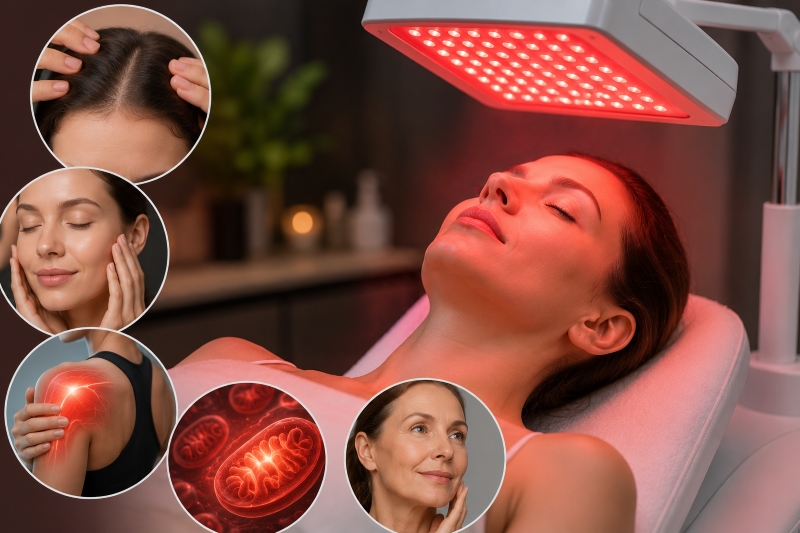
One of the most promising areas of PBM research is hair loss and hair density.
Low-level laser and LED therapy has been investigated particularly for androgenetic alopecia—commonly known as male or female pattern hair loss.
A systematic review and meta-analysis published in 2022 included 36 studies involving 966 patients and found that red and infrared photobiomodulation therapies were effective compared with controls for androgenetic alopecia.
More recently, a 2025 systematic review and meta-analysis included 38 studies and more than 3,000 patients. It found a significant increase in hair density among people with androgenetic alopecia treated with low-level laser/LED therapy compared with placebo.
That doesn’t mean red light therapy will regrow everyone’s hair.
But it does suggest that PBM may have a legitimate role as one component of a hair-loss management strategy.
How Could Red Light Help Hair?
Researchers believe PBM may influence the activity of hair follicles and the surrounding cellular environment. Potential mechanisms include:
- Supporting cellular energy production
- Increasing local circulation
- Modulating inflammation
- Influencing follicular activity
- Supporting the growth phase of the hair cycle
Treatment response can vary considerably.
Factors such as the type and severity of hair loss, treatment dose, device characteristics and consistency of use all matter.
A systematic review examining treatment variables found that energy fluence and treatment duration were associated with changes in hair density, highlighting why device specifications and treatment protocols matter.
Can Red Light Therapy Stop Hair Loss?
This is where consumers need to be realistic.
PBM should not be marketed as a guaranteed cure for baldness.
It is better described as a potential evidence-supported treatment option for certain types of hair loss, particularly androgenetic alopecia.
Hair loss can also result from nutritional deficiencies, thyroid problems, hormonal changes, autoimmune disease, medications, stress and other medical conditions.
Anyone experiencing sudden, severe or unexplained hair loss should first seek a medical assessment.
Red light therapy may be useful for some people, but identifying the cause of hair loss is the first step.
Red Light Therapy for Younger-Looking Skin
Skin rejuvenation is another major reason people are turning towards PBM.
The ageing process involves changes in collagen, elastin, skin thickness, circulation and cellular function.
Photobiomodulation is being studied for its potential effects on these processes.
Research suggests that PBM may influence collagen deposition, cellular activity and inflammatory pathways, making it an area of interest for aesthetic skin rejuvenation.
Potential cosmetic benefits being investigated include:
- Improved skin texture
- Reduction in the appearance of fine lines
- Improved skin elasticity
- Supporting collagen production
- Healthier-looking skin
- Reduced appearance of inflammation
- Improved overall skin quality
The important phrase is “supporting healthier-looking skin.”
Red light therapy is not a replacement for sunscreen, a nutritious diet, adequate sleep or evidence-based dermatological care.
Could Red Light Therapy Support Collagen?
Collagen is one of the major structural proteins in skin.
As we age, collagen production changes and environmental exposure—particularly ultraviolet radiation—contributes to visible skin ageing.
PBM research suggests that red and near-infrared wavelengths may influence fibroblast activity and collagen-related processes.
Experimental wound-healing research has also demonstrated effects involving collagen deposition and tissue repair.
This is one reason PBM has attracted attention in cosmetic dermatology.
However, the results depend on treatment parameters, and home devices may not produce the same results as clinical equipment.
Red Light Therapy and Wound Healing
The idea that light could help the body repair damaged tissue is one of the most fascinating areas of PBM research.
Studies have investigated PBM in different types of wounds and injuries, including chronic wounds and post-procedural healing.
Research suggests possible effects on:
- Cell proliferation
- Cell migration
- Blood-vessel formation
- Collagen deposition
- Inflammatory signalling
- Tissue repair
A recent systematic review of LED photobiomodulation for chronic lower-limb wounds found potential improvements in wound-area reduction, wound-bed quality and microcirculation in some studies, particularly involving diabetic foot ulcers. However, the authors rated the overall certainty of evidence as very low, because of small studies, inconsistent protocols and methodological limitations.
Another 2026 systematic review and meta-analysis examining venous leg ulcers found no statistically significant overall benefit in ulcer-area reduction and highlighted substantial heterogeneity between studies.
So, can red light therapy help healing?
Possibly—but it should currently be viewed as an adjunctive therapy rather than a replacement for proper wound care.
What About the Claim That Red Light Can Improve Healing by 50%?
This is an area where marketing claims can get ahead of the evidence.
There are individual studies and experimental settings in which substantial improvements in healing outcomes have been reported. But there is no scientifically reliable universal figure saying that red light therapy heals wounds “up to 50% faster” for everyone.
Healing depends on:
- Type of wound
- Size and depth
- Blood supply
- Infection
- Diabetes
- Nutrition
- Age
- Medications
- Smoking
- Treatment wavelength
- Light dose
- Treatment frequency
Therefore, a claim such as “50% faster healing” should always be accompanied by the specific study, wound type and treatment protocol behind the number.
For Fitcart readers, evidence matters more than an impressive percentage.
Red Light Therapy and Exercise Recovery
PBM has also attracted interest in sports performance and recovery.
The proposed mechanisms—including effects on inflammation, cellular energy and circulation—have led researchers to investigate whether PBM can help athletes recover from demanding exercise.
Potential areas of interest include:
- Muscle recovery
- Exercise-related soreness
- Fatigue
- Muscle performance
- Local circulation
- Recovery between training sessions
However, results are not uniform across all studies or protocols.
For athletes, red light therapy should therefore be viewed as a potential recovery tool, rather than a substitute for the fundamentals:
Sleep + nutrition + hydration + appropriate training + recovery days.
No light therapy can compensate for chronic sleep deprivation or inadequate nutrition.
Red Light Therapy and Inflammation
Inflammation is an important biological process.
Acute inflammation helps the body respond to injury and infection, while excessive or persistent inflammatory signalling can contribute to disease and tissue problems.
PBM is being studied for its potential to modulate inflammatory pathways rather than simply “turn inflammation off.”
This distinction matters.
Inflammation isn’t automatically bad.
The objective is healthy regulation—not eliminating every inflammatory response.
Can Red Light Therapy Improve Circulation?
PBM research has also investigated changes in microcirculation and vascular responses.
Improved local circulation could potentially help tissues receive oxygen and nutrients and may be one of the mechanisms contributing to some of the observed effects in tissue repair.
Studies involving wound healing have reported improvements in microcirculation in some settings, although clinical outcomes vary by condition and treatment protocol.
Red Light Therapy at Home
The popularity of home-use LED masks, panels, caps and helmets has exploded.
But not all devices are equivalent.
Two products may both be labelled “red light therapy” while delivering very different:
- Wavelengths
- Irradiance
- Energy doses
- Treatment areas
- Treatment times
- Pulsing patterns
This is why consumers should look beyond the colour of the LEDs.
A credible product should clearly state its technical specifications and provide appropriate safety information.
Research into home-use PBM devices has found promising results across several applications, but also noted that more high-quality randomised trials are needed to establish efficacy for many uses.
Red Light Therapy: Consistency Matters
PBM isn’t generally a one-session treatment.
Research protocols often involve repeated treatments over weeks or months.
For hair growth particularly, studies have evaluated treatment over multiple weeks, with measurable changes developing over time rather than overnight.
This means consumers should be wary of products promising:
“Instant hair growth.”
“One treatment for younger skin.”
“Permanent healing.”
Biology rarely works that way. Consistency and appropriate dosing matter.
Red Light Therapy and Nutrition: The Fitcart Connection
Light therapy may influence cellular processes, but the body still needs the raw materials required for repair.
That makes nutrition an important part of any skin, hair, or recovery strategy.
A balanced diet should provide:
Protein
Protein provides amino acids required for tissue repair and the production of structural proteins.
Sources include eggs, fish, chicken, dairy, paneer, legumes, soy and other protein-rich foods.
Vitamin C
Vitamin C contributes to normal collagen formation and can be obtained from citrus fruits, berries, guava, peppers and other fruits and vegetables.
Zinc
Zinc contributes to normal skin maintenance and immune function.
Food sources include meat, seafood, dairy, legumes, nuts and seeds.
Iron
Iron is particularly important when deficiency is present, and iron deficiency can contribute to hair shedding.
However, iron supplementation should not be taken blindly. Testing and professional advice are preferable when deficiency is suspected.
Omega-3 Fatty Acids
Fatty fish, flaxseed, chia seeds and other foods can provide omega-3 fatty acids as part of a balanced diet.
Vitamin D
Vitamin D status can be relevant to overall health, and deficiency should be assessed appropriately rather than assuming that everyone needs high-dose supplementation.
The bigger Fitcart message is simple:
A healthy body provides a better foundation for healthy skin, hair and recovery.
Red Light Therapy Is Not a Magic Wand
The technology is exciting, but responsible use matters.
Red light therapy should not replace:
- Sunscreen
- Medical wound care
- Treatment for significant hair loss
- A balanced diet
- Sleep
- Exercise
- Dermatological treatment
- Treatment of underlying medical conditions
For people with persistent hair loss, chronic wounds, severe skin conditions or unexplained symptoms, professional diagnosis should come first.
The Fitcart Takeaway
Red light therapy is one of the more interesting developments at the intersection of technology, beauty, recovery and wellness.
The evidence is particularly encouraging in areas such as hair density for androgenetic alopecia, while research into skin rejuvenation, tissue repair, wound healing and exercise recovery continues to develop.
But the most important word is photobiomodulation—not miracle.
The right wavelength, the right dose, the right treatment schedule and the right indication all matter.
And when red light therapy is combined with the basics—good nutrition, adequate protein, hydration, sleep, exercise, sun protection and appropriate medical care—it may become a useful addition to a broader health and wellness strategy.
For consumers, the future of red light therapy looks promising.
But better science, better devices and better understanding of dosing will ultimately determine how big a role it plays in everyday health and performance.
Fitcart Wellness & Supplement Advisory
At Fitcart, we believe that technology, nutrition and supplementation should work together—not compete with each other.
Red light therapy may support selected areas of skin, hair and recovery, but nutrition remains fundamental.
Before purchasing supplements marketed for hair, skin, anti-ageing or recovery, consumers should check the ingredient list, dosage, manufacturing information, batch details and quality/testing credentials.
Supplements should be used to complement a balanced diet and should not be marketed as replacements for medical treatment.
For competitive athletes, supplement selection requires additional care because contaminated products can create an inadvertent anti-doping risk. Appropriate independent testing can provide an additional safeguard.
Disclaimer
This article is for general informational, educational, and editorial purposes only. It is not medical advice and does not diagnose, treat, cure or prevent any disease or medical condition.
Photobiomodulation/red light therapy is an evolving field. Evidence varies substantially according to the medical or cosmetic application, device, wavelength, treatment dose, duration and patient characteristics.
Claims regarding wound healing, hair growth, anti-ageing, skin rejuvenation, pain, inflammation, exercise recovery or other benefits should not be interpreted as guarantees of results.
Red light therapy should not be used instead of appropriate medical treatment for wounds, infections, significant hair loss, skin disease or other medical conditions. Anyone with a chronic or non-healing wound should seek appropriate medical care.
People who are pregnant, taking photosensitising medication, have a photosensitive disorder, have an active cancer or cancerous/precancerous lesion in the treatment area, or have another condition that may make light therapy inappropriate should consult their healthcare professional before using PBM.
Follow the manufacturer’s instructions for any home-use device and use appropriate eye protection where recommended.
Supplement information in this article is general educational information only. Do not begin high-dose vitamin, mineral or other supplementation without appropriate professional advice, particularly if you take medication or have an underlying medical condition.
Fitcart recommends choosing supplements that are appropriately batch tested and verified for their stated contents and checking where raw materials are produced and where products are manufactured and packaged.
News, science and editorial disclaimer: Scientific understanding of photobiomodulation continues to evolve. New clinical trials and systematic reviews may change the strength of evidence for particular applications. Readers should consider this article educational content rather than a substitute for individualised medical, dermatological, nutritional or healthcare advice.
Follow us on X: https://x.com/fitcartofficial and Instagram: https://www.instagram.com/fitcartofficial/ for the latest updates, health insights, and exclusive content.
Follow Smart Nutrition India X: https://x.com/SmartNutrition1 and Instagram: https://www.instagram.com/smartnutritionindia/ for trusted sports nutrition, supplement education, wellness tips, and the latest news from the world of health and performance.
Fitcart believes in True Play and Clean Sport
#trustedbrandsbetterhealth