


Fitcart Editorial Team Ritu Makhija.
Explore how red light therapy may support healthy ageing, athletic recovery, skin health, cellular energy, and eye health—including emerging research into age-related macular degeneration (AMD).
Light That Heals? Why Red Light Therapy Is Capturing Global Attention
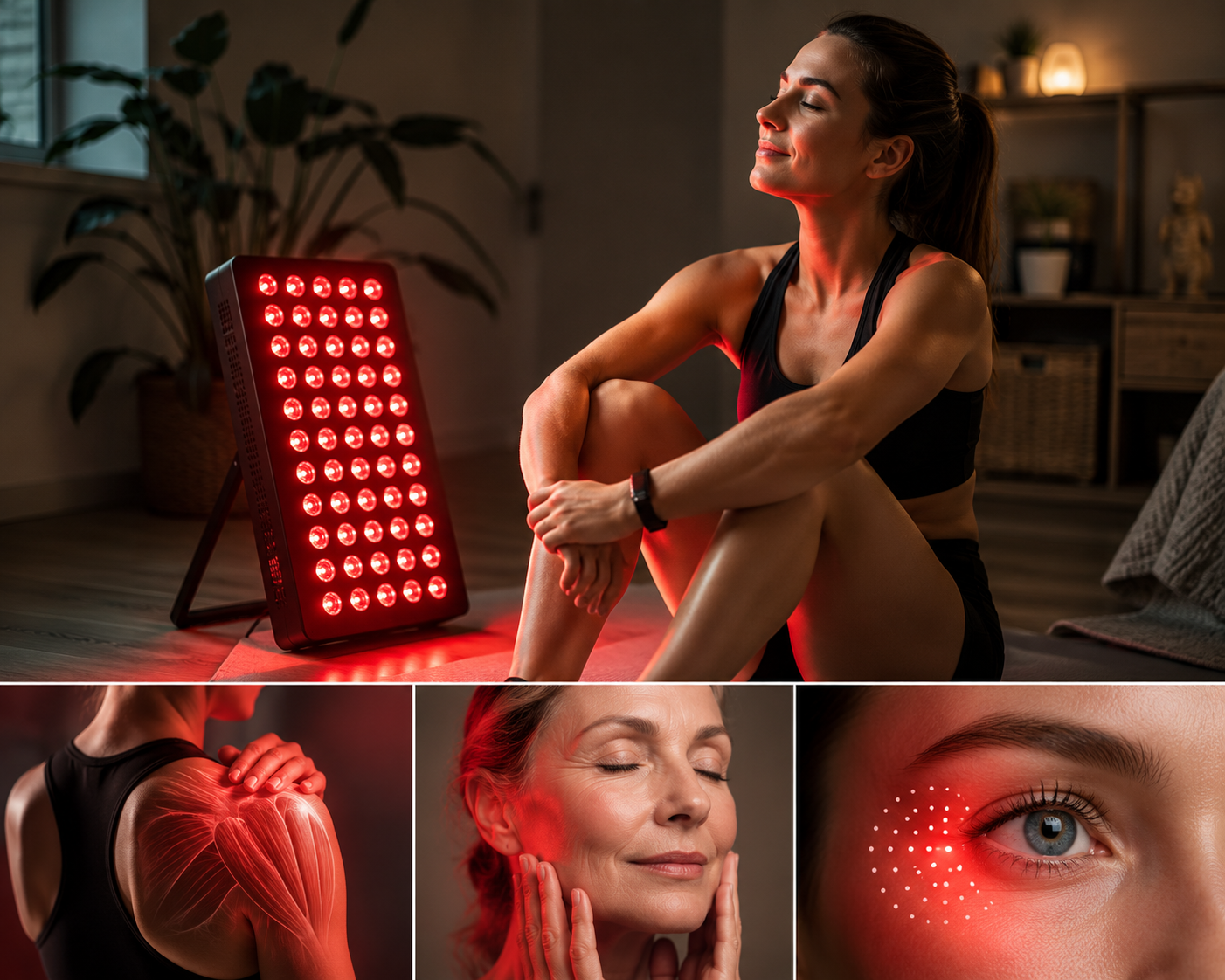
From Olympic training centres and professional sports clubs to physiotherapy clinics and wellness practices, Red Light Therapy (RLT) has become one of the most talked-about health technologies in recent years.
Also known as Photobiomodulation (PBM) or Low-Level Light Therapy (LLLT), red light therapy is attracting interest because it offers a non-invasive, drug-free way to support the body’s natural healing processes.
Researchers are investigating its potential to:
- Support muscle recovery after exercise
- Improve athletic performance
- Promote healthier skin
- Reduce joint discomfort
- Encourage wound healing
- Improve sleep quality
- Support healthy ageing
- Enhance cellular energy production
- Protect eye health, including in people with Age-Related Macular Degeneration (AMD)
Unlike fad wellness trends, red light therapy is supported by a growing body of scientific research. While not every claim has been proven, the evidence continues to expand, particularly in sports medicine, dermatology, rehabilitation, and ophthalmology.
For athletes, active individuals, and anyone interested in healthy ageing, red light therapy is becoming another tool that may complement proper nutrition, regular exercise, quality sleep, and professional healthcare.
What Is Red Light Therapy?
Red light therapy uses specific wavelengths of visible red and near-infrared light that penetrate the body’s tissues without causing damage.
Unlike ultraviolet (UV) light from the sun—which can damage the skin and eyes—red and near-infrared light are non-ionising and are being studied for their ability to stimulate normal cellular function.
Most evidence-based devices use wavelengths between:
- 630–670 nanometres (nm) (visible red light)
- 810–850 nm (near-infrared light)
These wavelengths penetrate different depths within the body.
Visible red light primarily benefits the skin and superficial tissues, while near-infrared light can penetrate more deeply into muscles, tendons, ligaments, and joints.
This makes red light therapy useful across multiple areas of health and performance.
The Science Behind Red Light Therapy
Every cell in your body requires energy to function.
That energy comes from tiny structures called mitochondria, often referred to as the powerhouses of the cell.
Mitochondria produce a molecule called adenosine triphosphate (ATP)—the body’s universal energy currency.
Whether your heart is beating, your muscles are contracting, your skin is repairing itself, or your retina is processing light, ATP powers these essential processes.
As we age—or following illness, injury, poor sleep, or intense exercise—mitochondrial efficiency can decline.
Researchers believe this reduction contributes to:
- Fatigue
- Slower recovery
- Increased inflammation
- Reduced physical performance
- Skin ageing
- Degenerative diseases
- Declining eye health
One of the key mechanisms of red light therapy is its interaction with cytochrome c oxidase, an enzyme within mitochondria.
When exposed to specific wavelengths of red or near-infrared light, this enzyme appears to function more efficiently, allowing mitochondria to produce ATP more effectively.
Scientists believe this may help cells perform their normal repair and maintenance processes more efficiently.
How Red Light Therapy May Benefit Overall Health
Although research is ongoing, the strongest evidence currently supports several important applications.
1. Healthier Skin
One of the earliest and most extensively researched uses of red light therapy is improving skin quality.
Clinical studies suggest it may help stimulate fibroblasts—the cells responsible for producing collagen and elastin. Potential skin benefits include:
- Reduced appearance of fine lines
- Improved skin firmness
- Better skin hydration
- Enhanced collagen production
- Improved wound healing
- Reduced inflammation associated with acne
- Better healing following cosmetic procedures
Unlike lasers that intentionally damage the skin to stimulate repair, red light therapy works by encouraging normal cellular function without causing tissue injury.
2. Faster Recovery After Exercise
Recovery is where athletic performance improves.
Training creates microscopic muscle damage, inflammation, and fatigue. Recovery allows the body to rebuild stronger tissues. Red light therapy is increasingly being incorporated into recovery strategies used by:
- Olympic athletes
- Professional football clubs
- Rugby teams
- Cyclists
- Endurance runners
- Strength athletes
- Sports rehabilitation clinics
Research suggests photobiomodulation may help:
- Reduce delayed onset muscle soreness (DOMS)
- Improve muscle recovery
- Reduce exercise-induced inflammation
- Improve muscle strength recovery
- Reduce perceived fatigue
- Improve training consistency
It should be viewed as one component of a complete recovery strategy that also includes sufficient sleep, hydration, balanced nutrition, and appropriate training load.
3. Red Light Therapy and Inflammation
Inflammation is a natural part of the body’s healing process. After a challenging workout or minor injury, a temporary inflammatory response helps repair damaged tissues. However, when inflammation becomes persistent due to ageing, stress, poor sleep, inactivity, or chronic health conditions, it may contribute to joint discomfort, slower recovery, and reduced physical performance.
Research suggests that red light therapy may help support the body’s normal response to inflammation by improving cellular energy production and encouraging healthy tissue repair. While it is not a treatment for inflammatory diseases, some studies have reported reduced muscle soreness, improved joint comfort, and faster recovery following exercise.
For active individuals, red light therapy may be one of several recovery strategies that work alongside balanced nutrition, adequate hydration, quality sleep, and an appropriate training programme.
4. Red Light Therapy and Collagen Production
Collagen is the body’s most abundant structural protein, providing strength and flexibility to the skin, tendons, ligaments, cartilage, bones, and connective tissues. From our mid-twenties onwards, collagen production gradually declines, contributing to wrinkles, reduced skin elasticity, and slower tissue repair.
One of the most researched applications of red light therapy is its ability to stimulate fibroblasts—the specialised cells responsible for producing collagen and elastin. Clinical studies suggest that regular treatment may help improve skin texture, support elasticity, reduce the appearance of fine lines, and encourage the natural healing of skin following cosmetic procedures or minor injuries.
Although red light therapy cannot stop the ageing process, it may complement a healthy lifestyle by supporting the body’s natural production of collagen.
Collagen production is also influenced by good nutrition. Adequate protein intake, together with nutrients such as vitamin C, zinc and copper, all play an important role in maintaining healthy connective tissues. Many people also choose collagen supplements as part of their wellness routine, although these should complement rather than replace a balanced diet.
5. Joint Health and Mobility
Joint discomfort often results from inflammation, repetitive stress, or age-related wear. Several clinical studies have found that red light therapy may help reduce discomfort associated with:
- Osteoarthritis
- Tendon injuries
- Shoulder pain
- Neck pain
- Lower back pain
- Plantar fasciitis
Researchers believe improvements may occur through reduced inflammatory signalling and improved tissue repair.
Although encouraging, treatment outcomes vary between individuals.
6. Supporting Healthy Sleep
Good sleep is essential for:
- Recovery
- Hormonal balance
- Muscle repair
- Immune function
- Mental wellbeing
Emerging research suggests red light exposure during the evening may support natural melatonin production without the sleep-disrupting effects associated with blue light from electronic devices.
Some athletes use red light therapy as part of their evening recovery routine to promote relaxation and better-quality sleep. More research is needed, but early findings are encouraging.
7. Red Light Therapy and Eye Health
A short, balanced section explaining:
- What macular degeneration is
- Why researchers are interested
- Early studies are encouraging
- It is not a cure
- Continue regular eye examinations
Elite Athletes and Red Light Therapy
Professional sport increasingly embraces technologies that help athletes recover safely and consistently. Many elite training centres now incorporate red light therapy alongside:
- Sports massage
- Compression garments
- Cryotherapy
- Hydrotherapy
- Physiotherapy
- Nutrition support
- Strength and conditioning
Sports scientists continue to investigate whether photobiomodulation may help athletes tolerate higher training loads while reducing recovery time between sessions.
Importantly, red light therapy is not a shortcut to improved performance. The greatest benefits are seen when it complements proven fundamentals such as structured training, adequate sleep, high-quality nutrition, and effective recovery strategies.
Nutrition Is Still the Foundation
This is where the Fitcart message becomes stronger.
No technology replaces:
- Healthy eating
- Regular exercise
- Sleep
- Hydration
Also the supplementation of key nutrients for eye health:
- Omega-3 DHA
- Lutein
- Zeaxanthin
- Vitamins C & E
- Zinc
Supplements: Choosing Quality Clean Tested Matters
This section fits naturally with Fitcart’s philosophy.
Explain that if supplements are used, consumers should look for:
- Evidence-based ingredients
- Transparent labels
- Appropriate dosages
- Independent quality testing where available
- Products from reputable manufacturers
For athletes, choosing supplements that have been independently batch tested for prohibited substances can provide additional reassurance when appropriate.
The Bigger Picture: Small Habits Create Lasting Health
Red light therapy is an exciting area of wellness technology with growing scientific interest. While research continues to explore its potential benefits for recovery, skin health, healthy ageing and eye health, it should be viewed as one part of a much broader approach to wellbeing.
The strongest foundations for lifelong health remain remarkably simple:
- Stay physically active.
- Eat a balanced, nutrient-rich diet.
- Prioritise quality sleep.
- Stay well hydrated.
- Manage stress.
- Allow time for recovery.
- Have regular health and eye check-ups.
- Use evidence-based nutritional supplements where appropriate.
Technology can support these habits—but it cannot replace them.
At Fitcart, we believe sustainable performance and healthy ageing come from making informed choices every day. Whether you’re an elite athlete, a weekend runner, a busy professional or simply someone looking to stay active as you age, combining smart nutrition, effective recovery and healthy lifestyle habits offers the greatest opportunity to feel and perform at your best.
When choosing nutritional supplements, look for products from trusted manufacturers that provide transparent ingredient sourcing, quality assurance and, where appropriate, independent batch testing. For competitive athletes, choosing supplements that have been independently screened for prohibited substances can provide additional confidence.
Ultimately, there is no single product, supplement or therapy that delivers lifelong health. Consistency remains the most powerful performance enhancer. When healthy nutrition, regular exercise, restorative sleep, effective recovery and emerging technologies such as red light therapy work together, they can help support long-term wellbeing, resilience and an active lifestyle.
Supplement Disclaimer
This article is intended for educational purposes only and should not be considered medical advice. Red light therapy is not a substitute for diagnosis or treatment by a qualified healthcare professional. If you have macular degeneration or any other eye condition, consult your optometrist or ophthalmologist before starting new therapies. Food supplements should not replace a varied, balanced diet and healthy lifestyle. Always choose supplements from reputable manufacturers and use them as directed.
Scientific & Educational Disclaimer
The information provided in this article is intended for educational and informational purposes only. It is based on scientific literature, published research, and current understanding of nutrition and supplementation at the time of writing. It is not intended to diagnose, treat, cure, or prevent any disease, nor should it be considered medical advice.
Readers should consult a qualified healthcare professional, such as a physician or registered dietitian, before starting any new supplement regimen, particularly if they are pregnant, nursing, taking medication, or managing a medical condition.
Fitcart.com is committed to promoting evidence-based sports nutrition and wellness education. As scientific research continues to evolve, recommendations and findings may be updated to reflect the latest available evidence.
Follow us on X: https://x.com/fitcartofficial and Instagram: https://www.instagram.com/fitcartofficial/ for the latest updates, health insights, and exclusive content.
Follow Smart Nutrition India X: https://x.com/SmartNutrition1 and Instagram: https://www.instagram.com/smartnutritionindia/ for trusted sports nutrition, supplement education, wellness tips, and the latest news from the world of health and performance.
Fitcart believes in True Play and Clean Sport
#trustedbrandsbetterhealth