


Fitcart Editorial Team Ritu Makhija.
Reading time: 9–10 minutes.
For years, the conversation around longevity has focused on one simple question:
How long can we live?
But a new way of thinking about healthy ageing is becoming increasingly important.
The better question may be:
How many of those years can we spend healthy, strong, mobile, independent and mentally sharp?
This is the idea of healthspan—the number of years we live in good health, rather than simply the number of years we remain alive.
And it could change the way we think about ageing.
Instead of chasing an extreme anti-ageing protocol, a cabinet full of supplements or an expensive collection of wellness gadgets, the healthspan approach focuses on something much more practical:
Build a body that can continue to perform as you get older.
That means maintaining muscle. Protecting cardiovascular fitness. Eating well. Sleeping properly. Keeping the brain active. Managing stress. Staying socially connected. Maintaining mobility.
And, where appropriate, using evidence-based nutritional supplements to fill genuine gaps.
Lifespan vs Healthspan
Lifespan is how long you live.
Healthspan is how long you live in good health and with a high level of physical and mental function.
Someone can live into their 80s or 90s but spend many years dealing with frailty, loss of mobility, poor metabolic health or reduced independence.
The healthspan philosophy asks a different question:
Can we increase the proportion of our lives spent feeling capable, active and independent?
That is a much more meaningful goal for many people.
Muscle May Be One of Your Greatest Longevity Assets
If there is one area of healthy ageing that deserves much more attention, it is muscle. Muscle isn’t just about looking athletic.
Skeletal muscle is involved in movement, strength, glucose metabolism and physical independence.
As we age, muscle mass and strength can decline. This process can be accelerated by inactivity, inadequate protein intake, illness and prolonged periods without resistance exercise.
That’s why resistance training shouldn’t be viewed as something reserved for bodybuilders or young athletes.
It is an important tool for healthy ageing.
Your longevity workout doesn’t need to be complicated
A practical weekly programme can include:
Resistance training: Squats, lunges, rows, presses, hip hinges, carries and other movements adapted to your ability.
Walking: Simple, accessible and extremely useful for maintaining daily activity.
Aerobic exercise: Brisk walking, cycling, swimming, jogging or other activities that challenge the cardiovascular system.
Balance and mobility: Particularly important as we get older.
The objective isn’t necessarily to become an elite athlete. It is to remain capable.
Being able to climb stairs, carry groceries, get up from a chair, walk comfortably and maintain balance are meaningful measures of healthy ageing.
Protein: The Building Block of Healthy Ageing
Protein becomes increasingly important as we age because maintaining muscle requires both adequate protein intake and resistance exercise.
Good sources include:
- Eggs
- Fish
- Chicken
- Lean meat
- Dairy products
- Greek yogurt
- Cottage cheese
- Lentils
- Beans
- Soy foods
- Nuts and seeds
For people who struggle to meet their protein needs through food, protein powders can provide a convenient option.
Whey protein, for example, is rich in essential amino acids and leucine.
But a protein supplement is exactly that—a supplement. It shouldn’t replace a varied diet.
What About Creatine?
Creatine has moved well beyond the bodybuilding world.
It is one of the most extensively studied sports nutrition ingredients and is particularly interesting for healthy ageing because of its role in supporting high-intensity muscular performance and strength when combined with resistance training.
Research has also investigated creatine in areas beyond muscle, including cognitive function and ageing, although the evidence isn’t strong enough to describe creatine as an anti-ageing treatment.
For healthy adults who exercise, creatine monohydrate is one of the better-researched sports supplements.
As always, people with medical conditions or those taking medications should discuss supplementation with an appropriate healthcare professional.
Cardiovascular Fitness Is Another Longevity Superpower
Strong muscles are important.
But so is a healthy cardiovascular system.
Cardiorespiratory fitness reflects how effectively your body can deliver and use oxygen during physical activity.
You don’t need to become a marathon runner.
You can improve cardiovascular fitness through activities such as:
- Brisk walking
- Cycling
- Swimming
- Hiking
- Jogging
- Dancing
- Rowing
- Interval training
The best exercise is often the one you can continue doing consistently.
Don’t underestimate walking
Walking may be one of the most underrated longevity behaviours.
It is accessible, inexpensive and easy to integrate into daily life.
Walking after meals can also be an easy way to increase daily movement.
The goal isn’t to obsess over a particular step count.
Instead, aim to reduce prolonged sitting and build more movement into your day.
Metabolic Health Matters
Healthy ageing isn’t just about the number on the weighing scale.
Blood pressure, blood glucose regulation, cholesterol, waist circumference, fitness and body composition all provide pieces of the metabolic-health picture.
Excess visceral fat, physical inactivity and poor dietary patterns can contribute to metabolic dysfunction.
Fortunately, many of the same behaviours that support longevity also support metabolic health:
Exercise + adequate protein + fibre-rich foods + healthy body composition + quality sleep = a powerful foundation.
Eat for Your Future Self
Longevity nutrition doesn’t have to mean surviving on expensive “superfoods.”
A healthy dietary pattern can be surprisingly ordinary.
Think:
🥦 Plenty of vegetables 🍓 Fruit and berries 🫘 Beans and lentils 🌾 Whole grains 🐟 Fish 🥚 Quality protein 🥜 Nuts and seeds 🫒 Healthy fats 🥛 Nutritious dairy or alternatives
And don’t forget fibre.
A diverse, fibre-rich diet supports digestive health and provides fuel for beneficial gut microorganisms.
Variety matters
Instead of eating exactly the same “healthy meal” every day, aim for dietary diversity.
Different plants provide different fibres, polyphenols, vitamins and minerals.
Your microbiome benefits from dietary diversity too.
Healthy Fats: Quality Over Fear
Fat isn’t the enemy.
The important question is which fats and in what overall dietary pattern?
Foods such as olive oil, nuts, seeds, avocados and oily fish can contribute beneficial unsaturated fats.
Omega-3 fatty acids, particularly EPA and DHA from marine sources, are important nutrients with established roles in normal cardiovascular and brain function.
For people who don’t regularly consume oily fish, an omega-3 supplement may sometimes be considered.
But again, supplementation shouldn’t be viewed as a substitute for an overall healthy diet.
Sleep Is a Longevity Behaviour
We often treat sleep as something we do after everything else is finished.
That may be backwards.
Sleep is a fundamental component of recovery and normal physiological function.
Poor sleep can affect:
Appetite
- Mood
- Concentration
- Exercise performance
- Recovery
- Metabolic health
A good longevity programme therefore needs a sleep strategy.
Aim for a consistent sleep schedule, adequate sleep duration and a bedroom environment that encourages quality rest.
Your sleep environment matters
Make your bedroom:
🌙 Dark 🔇 Quiet 🌡️ Comfortable 📱 Low in distractions
Morning daylight and regular physical activity can also help reinforce healthy circadian rhythms.
Stress: The Invisible Longevity Factor
You can eat perfectly and exercise regularly and still feel terrible if you’re chronically stressed.
Stress isn’t inherently bad. It is a normal biological response.
The problem is prolonged, unmanaged stress.
A sustainable healthspan strategy needs regular opportunities to switch off.
That could involve:
- Walking outdoors
- Meditation
- Breathing exercises
- Reading
- Music
- Time with family and friends
- Hobbies
- Nature
- Vacations
- Simply doing less
Recovery isn’t laziness.
Recovery is part of performance.
Your Brain Needs Exercise Too
Healthy ageing isn’t just physical.
Cognitive stimulation, learning, social interaction and maintaining meaningful activities can all contribute to overall wellbeing.
Learn something new.
Read.
Travel.
Play music.
Learn a language.
Solve problems.
Have conversations.
Stay curious.
Your brain doesn’t need a “biohack” every morning.
It needs stimulation, recovery and engagement throughout life.
Social Connection May Be Part of Longevity
One of the easiest longevity factors to overlook is human connection.
Friends, family, community and meaningful relationships contribute to emotional wellbeing and can help people remain engaged and active.
Longevity shouldn’t become an individual obsession where every meal, workout and biomarker is optimized.
A long life is more valuable when it is connected and meaningful.
Where Do Supplements Fit Into Longevity?
This is where consumers need to be careful.
The supplement industry is full of products marketed with words such as:
Longevity. Anti-ageing. Cellular health. NAD+. Mitochondrial support. Senolytic. Youth formula.
Some ingredients have interesting biological mechanisms and are being actively researched.
But interesting science does not automatically equal proven lifespan extension in humans.
There is currently no supplement stack that can legitimately promise to make someone live decades longer.
Instead, supplementation should have a more practical purpose:
Fill nutritional gaps.
Depending on the individual, this could include nutrients such as:
Vitamin D — particularly when dietary intake or sun exposure is inadequate.
Omega-3 — potentially useful for people who don’t consume sufficient oily fish.
Magnesium — an essential mineral involved in numerous physiological processes.
Protein — useful when dietary protein intake is insufficient.
Creatine monohydrate — particularly interesting for active adults seeking to support strength and exercise performance.
Fibre — potentially useful when dietary fibre intake is consistently inadequate.
Probiotics — selected strains may have specific applications, although effects are strain-specific and shouldn’t be generalized.
The right supplement depends on the person.
More supplements do not automatically mean better health.
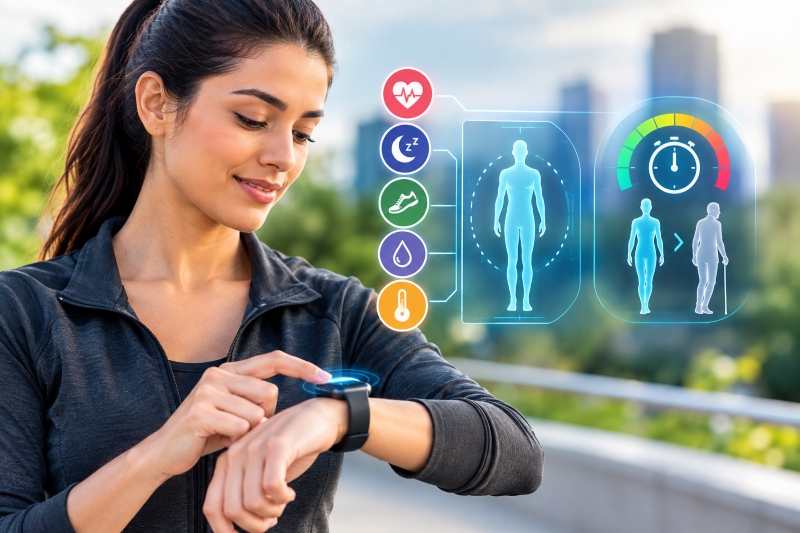
Don’t Confuse Biomarker Optimization With Health
Wearables, blood tests and biological-age calculators can provide interesting information.
But a lower biological-age score isn’t necessarily the same thing as being healthier.
Likewise, having an impressive collection of health metrics doesn’t guarantee that you can climb stairs comfortably at 80.
The ultimate test of healthspan is function.
Can you move?
Can you maintain strength?
Can you recover?
Can you think clearly?
Can you participate in the activities you enjoy?
Can you remain independent?
These questions may be more meaningful than chasing a perfect number on an app.
The Environment Around You Matters
Longevity isn’t created solely inside a gym or kitchen.
Your environment shapes your behaviour.
If healthy food is readily available, you’re more likely to eat it.
If you live in an environment where walking is easy, you’re more likely to walk.
If your bedroom is dark and quiet, sleep may be easier.
If you surround yourself with active people, exercise can become normal.
Make healthy choices easier.
Build a health-supporting environment
Keep nutritious foods visible.
Keep exercise equipment accessible.
Schedule workouts.
Take walking breaks.
Get outdoor light.
Reduce unnecessary noise and light at night.
Create boundaries around work.
Make recovery part of your calendar.
Your environment should make the healthy choice the easy choice.
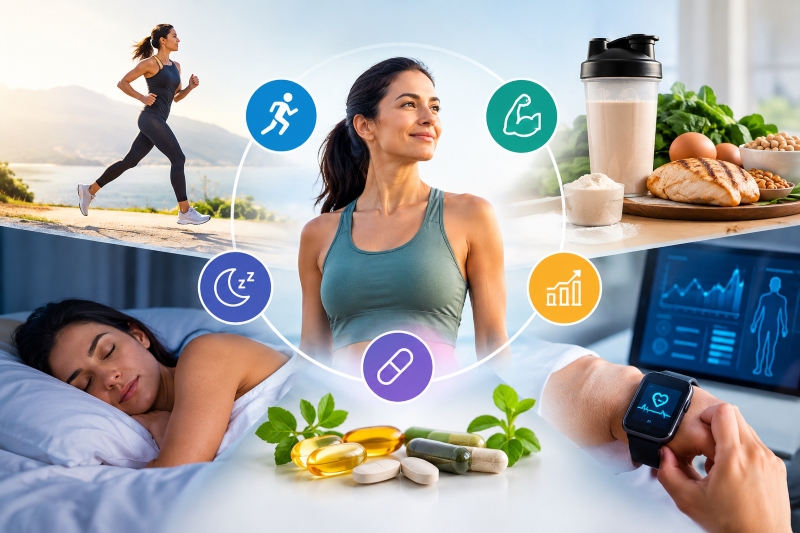
The Fitcart Healthspan Formula
Forget complicated longevity stacks.
Start here:
🥗 Nutrition
Prioritize protein, vegetables, fruit, legumes, whole grains, healthy fats and adequate fibre.
💪 Strength
Train your muscles consistently.
❤️ Cardio
Keep your heart and lungs working.
🚶 Movement
Walk more and sit less.
😴 Sleep
Protect your nightly recovery.
🧠 Brain
Keep learning and challenging yourself.
🧘 Stress
Create time to recover.
👥 Relationships
Stay socially connected.
🌞 Environment
Use light, movement, food and your surroundings to support healthy habits.
💊 Supplements
Use evidence-based products to complement—not replace—the fundamentals.
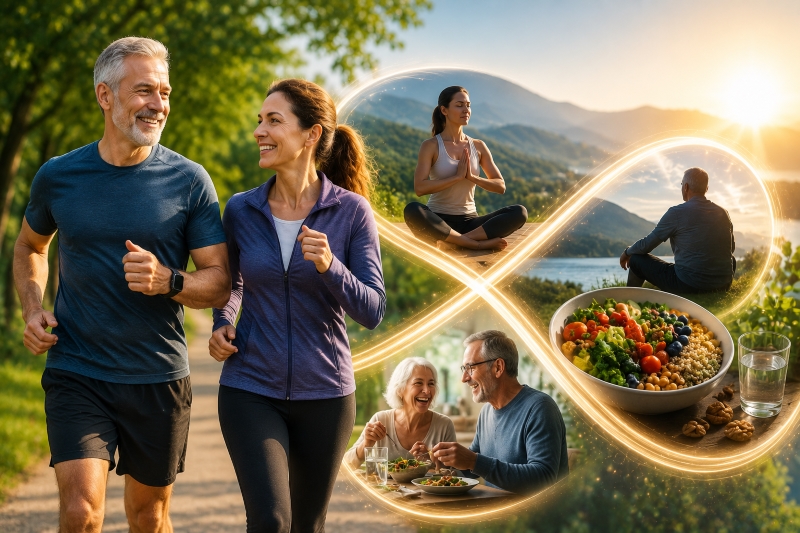
The New Definition of Longevity
Perhaps longevity shouldn’t mean desperately trying to defeat ageing.
Ageing is part of being human.
The goal should be to age as well as possible.
To reach your 60s with strength.
Your 70s with mobility.
Your 80s with independence.
And, hopefully, as many years as possible with the ability to do the things that make life meaningful.
That’s the real promise of healthspan.
Not simply more years.
But more good years.
Fitcart’s Take
The most exciting longevity strategy may not be a futuristic pill.
It may be the combination of things we already understand:
Eat well. Lift something. Walk. Build cardiovascular fitness. Sleep. Manage stress. Stay connected. Keep learning. And use supplements intelligently when they genuinely add value.
The future of longevity may be less about finding one magical anti-ageing molecule—and more about building a body and lifestyle capable of supporting a high quality of life for decades.
**Don’t just aim to live longer.
Aim to live better for longer.**
FITCART SUPPLEMENT & HEALTH DISCLAIMER
This article is intended for general educational and wellness information and is not medical advice. Claims surrounding longevity, biological ageing, anti-ageing compounds and nutritional supplements are areas of ongoing scientific research. No supplement should be interpreted as a guaranteed method of extending lifespan or preventing disease.
Before beginning a new supplement, exercise programme or significant dietary change, consult a qualified healthcare professional, particularly if you have an existing medical condition, take prescription medication, are pregnant or breastfeeding, or have other individual health considerations.
Supplement quality matters. Fitcart recommends choosing products from reputable manufacturers with transparent ingredient labeling and appropriate quality-control practices. Where possible, consumers should look for batch-tested and independently verified supplements, with testing for identity, potency, purity and relevant contaminants.
For athletes, consider products carrying recognized independent sports-nutrition or banned-substance testing certifications where appropriate.
Always check where the raw materials are produced, where the finished product is manufactured and packaged, serving size, ingredients, allergens, expiry information and storage requirements.
Supplements should complement a healthy diet and lifestyle—not replace nutritious food, exercise, sleep, medical care or professional advice.
Follow us on X: https://x.com/fitcartofficial and Instagram: https://www.instagram.com/fitcartofficial/ for the latest updates, health insights, and exclusive content.
Follow Smart Nutrition India X: https://x.com/SmartNutrition1 and Instagram: https://www.instagram.com/smartnutritionindia/ for trusted sports nutrition, supplement education, wellness tips, and the latest news from the world of health and performance.
Fitcart believes in True Play and Clean Sport
#trustedbrandsbetterhealth