


Fitcart Editorial Team Ritu Makhija.
For years, the conversation around longevity has often focused on individual “anti-ageing” supplements, special diets or the latest molecule promising to slow the ageing process.
But longevity science is becoming considerably more sophisticated.
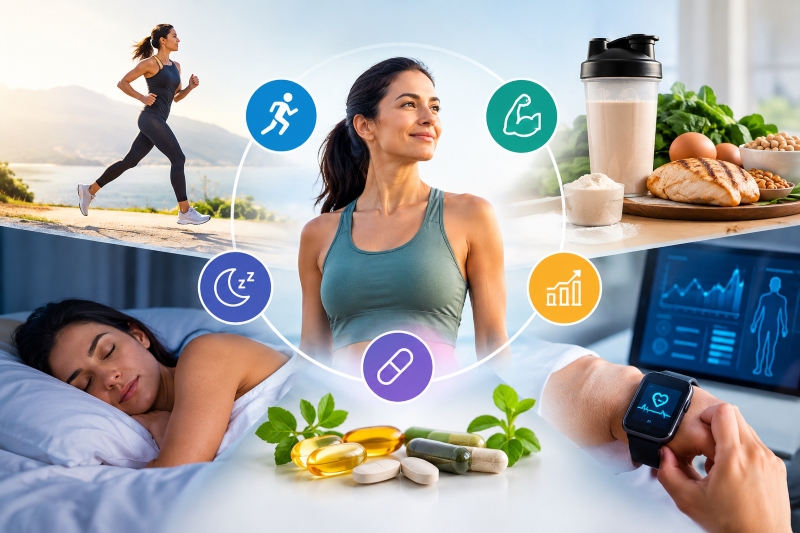
The emerging approach is less about finding one magic pill and more about building a longevity stack — a combination of everyday behaviours, nutrition, exercise, sleep, targeted supplementation and, increasingly, health and biological-age measurements.
The goal is not simply to add more years to life. It is to preserve the things that make those years healthier: muscle, strength, cardiovascular fitness, metabolic health, cognitive function, mobility, sleep quality and independence.
Importantly, not every component of a longevity stack has been proven to extend human lifespan. Some have strong evidence for improving health outcomes, while others remain areas of active research.
Exercise: Still the Foundation
Despite the excitement around new longevity drugs and biological-age technologies, exercise remains one of the most consistently supported pillars of healthy ageing.
As we get older, maintaining muscle mass, strength, balance and cardiovascular fitness becomes increasingly important.
Resistance training can help preserve muscle and strength, while aerobic activity supports cardiovascular fitness and metabolic health. Walking, cycling, swimming and other forms of regular movement can also contribute to maintaining physical function.
For longevity, the question therefore isn’t simply:
“How much do you exercise?”
It is increasingly:
“Can you maintain your physical capacity as you age?”
Strength, aerobic fitness, balance, mobility and the ability to perform everyday activities may ultimately be more meaningful indicators of functional ageing than body weight alone.
A practical longevity exercise routine can therefore include a combination of:
- Resistance training
- Regular walking and daily movement
- Aerobic exercise
- Mobility and flexibility work
- Balance and coordination exercises
The precise combination should be appropriate for an individual’s age, fitness, health status and training experience.
Protein: Protecting the Muscle Behind Healthy Ageing
Muscle is one of the most important tissues to protect as we age.
Age-related loss of muscle and strength can affect mobility, independence and physical resilience. This makes adequate protein intake an important part of a healthy-ageing strategy.
Rather than simply asking whether someone eats “enough calories,” longevity nutrition increasingly considers protein quality, total intake, distribution across meals and the individual’s level of physical activity.
High-quality protein sources can include:
- Eggs
- Fish
- Lean meat
- Dairy
- Soy and other plant proteins
- Legumes and pulses
- Protein powders where appropriate
For people exercising regularly, protein can also support recovery and muscle maintenance.
However, more protein is not automatically better. Individual requirements depend on factors such as age, body size, physical activity, dietary pattern and health status.
This is particularly relevant as people move through midlife and older age, when preserving muscle may become more important than simply maintaining a particular number on the weighing scale.
Sleep: The Often-Overlooked Longevity Behaviour
Sleep has moved from being viewed as simply “rest” to being recognised as an important component of overall health.
Poor or insufficient sleep is associated with a range of adverse health outcomes, including impaired metabolic health, cardiovascular risk, mood disturbances and cognitive problems.
During sleep, the body undertakes a variety of physiological processes involving the brain, immune system, metabolism and tissue recovery.
This makes sleep an important part of any longevity strategy.
Rather than immediately reaching for a sleep supplement, the foundations should generally include:
consistent sleep and wake times + a suitable sleep environment + sufficient sleep opportunity + regular daytime activity + management of factors that interfere with sleep.
Supplements may have a role in specific circumstances, but they should not substitute for healthy sleep habits.
Supplements: From “More” to “Smarter”
This may be one of the biggest changes in the longevity conversation.
The traditional supplement approach has often been:
“What should I take for longevity?”
The emerging approach is closer to:
“Do I have a reason to take this, and is there evidence that it is appropriate for me?”
That distinction matters.
Vitamin D may be appropriate when intake or status is inadequate. Iron can be important when deficiency exists. Omega-3 fatty acids may have a role depending on diet and individual circumstances. Protein supplements can be useful when dietary protein is difficult to obtain.
Other compounds—including creatine, magnesium, certain polyphenols and other bioactive ingredients—continue to be studied in healthy ageing and performance research.
But promising research does not automatically mean that an ingredient has been proven to extend human lifespan.
This is where evidence, dose, product quality and individual context become important.
Creatine and Healthy Ageing
Creatine is a particularly interesting example.
It is widely known as a sports-nutrition ingredient, but researchers are increasingly studying its potential relevance to ageing, particularly in relation to muscle, strength and physical function.
This makes creatine an interesting bridge between sports nutrition and healthy ageing.
However, the strongest rationale for creatine in an ageing strategy should not be presented as “taking creatine will make you live longer.”
A more evidence-conscious approach is to ask whether creatine, combined with resistance training, can help support outcomes that matter for healthy ageing—such as maintaining muscle and physical performance.
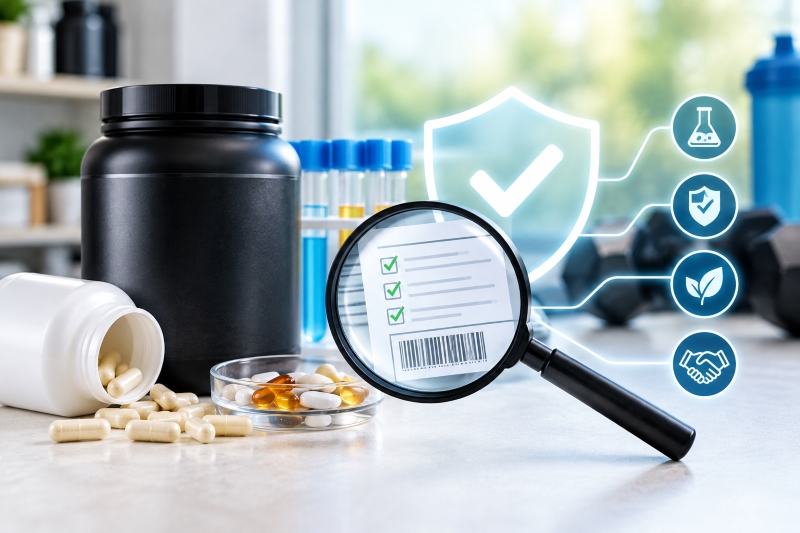
For athletes and competitive sports participants, supplement quality is also important because contamination with prohibited substances can create risks. Choosing products with appropriate independent batch testing can provide an additional layer of quality assurance.
Biomarkers: Measuring More Than Your Birthday
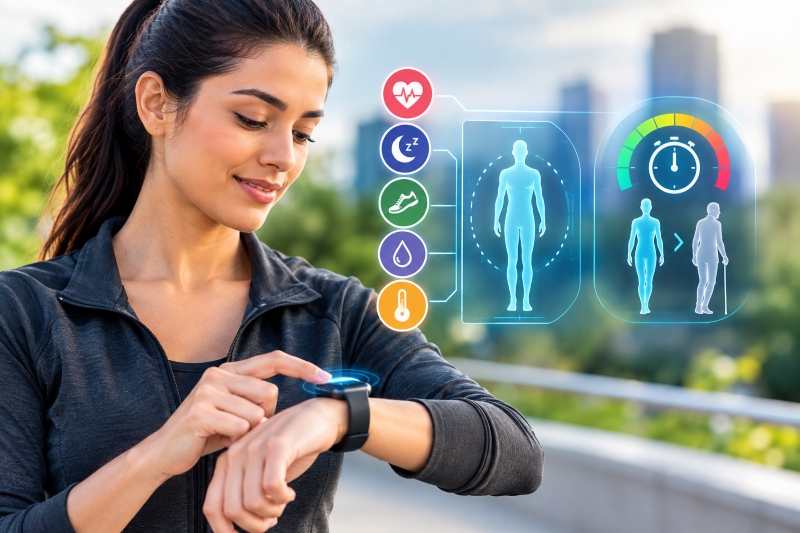
One of the most exciting developments in longevity research is the attempt to measure biological ageing.
Chronological age tells us how many years have passed since birth.
Biological-age research asks whether biological systems appear to be ageing at the same rate.
Researchers are investigating measurements involving:
- DNA methylation
- Blood biomarkers
- Inflammation
- Metabolic health
- Proteomics
- Immune function
- Physical performance
- Cardiovascular measurements
- Multi-omics data
There are now numerous “biological clocks” and ageing algorithms, but they should be interpreted carefully.
A biological-age score is not the same thing as a prediction of how long someone will live.
Different tests measure different biological characteristics, and their ability to predict future health outcomes varies.
The future may therefore be less about finding one perfect biological-age number and more about understanding which aspects of health are changing over time.
The Longevity Stack Is Becoming Personalised
This is where the concept becomes particularly interesting.
Imagine two people who are both 50 years old.
One may have excellent cardiovascular fitness but poor sleep.
Another may sleep well but have low muscle mass and poor strength.
A third may have good fitness and nutrition but have a documented vitamin deficiency.
They don’t necessarily need the same health strategy.
This is why longevity is gradually moving toward personalisation.
Instead of giving everyone the same list of supplements, future health strategies could increasingly integrate:
Age + diet + exercise + sleep + body composition + blood markers + family history + lifestyle + physical performance + potentially biological-age measurements.
Artificial intelligence may eventually help integrate these large amounts of information and identify patterns that are difficult to see from individual measurements.
But AI-generated recommendations still need to be interpreted within the limits of the underlying evidence.
The New Longevity Stack
The emerging model can therefore be thought of as a hierarchy.
1. Move
Build cardiovascular fitness, strength, mobility and balance.
2. Eat Well
Prioritise nutrient-dense foods and adequate protein while maintaining an appropriate overall dietary pattern.
3. Sleep
Protect sleep duration, regularity and quality.
4. Recover
Allow the body to recover from exercise and manage chronic lifestyle stress.
5. Measure
Use appropriate health measurements to identify areas that may require attention.
6. Supplement When There Is a Reason
Use supplements strategically rather than automatically building an increasingly large stack.
7. Reassess
Health changes with age, lifestyle, training and circumstances. A strategy that makes sense at 35 may not be appropriate at 55.
Where Does This Leave the “Anti-Ageing” Supplement?
Perhaps the most important lesson is that there may never be a single longevity supplement.
Ageing is a complex biological process involving multiple systems.
Muscle ageing, cardiovascular ageing, metabolic health, immune function, brain health, sleep and cellular ageing are interconnected but not identical.
That means the future of longevity may be less about discovering one product that slows ageing and more about developing personalised strategies that help preserve multiple aspects of health simultaneously.
The Fitcart Perspective: Quality Matters
At Fitcart, we believe supplementation should sit alongside training, nutrition, sleep and lifestyle, rather than replace them.
For people who choose to use supplements, product quality and transparency are important considerations.
This includes looking for clearly disclosed ingredients, appropriate manufacturing standards and, where relevant, independent batch testing.
For athletes, supplement contamination is an additional consideration because athletes can be responsible for prohibited substances detected in their samples. Independent certification and batch-level verification can therefore be particularly relevant when selecting sports-nutrition products.
A “longevity stack” should not mean taking the maximum possible number of supplements.
It should mean understanding what your body needs, identifying where evidence exists, avoiding unnecessary mega-dosing and choosing products from transparent, quality-focused sources.
The Future: From Longevity to Precision Longevity
The next phase of healthy-ageing research may be increasingly personalised.
Instead of asking:
“What is the best longevity supplement?”
we may increasingly ask:
“What are the biggest modifiable factors affecting my healthspan, and how can I measure whether my strategy is working?”
That could mean combining exercise data, nutrition, sleep, body composition, blood biomarkers and other measurements with increasingly sophisticated biological-age research.
The longevity industry may therefore be moving away from the idea of a universal anti-ageing formula and toward something much more individual:
precision longevity.
And perhaps that is the most important shift of all.
The objective isn’t simply to make people live longer.
It is to help people remain stronger, healthier, more mobile, metabolically healthier and functionally independent for as much of their lives as possible.
Absolutely. I’d add a combined health, longevity and supplement disclaimer at the end, particularly because the article discusses biomarkers, supplements and emerging longevity research.
Disclaimer
Health & Longevity Disclaimer:
The information provided in this article is for general educational and informational purposes only and is not intended to diagnose, treat, cure or prevent any disease or medical condition, nor should it be considered medical advice. Longevity and healthy-ageing research is an evolving field, and findings from laboratory, animal or early-stage human studies do not necessarily establish that an intervention will extend human lifespan or healthspan.
Individual nutritional and health requirements vary according to factors such as age, diet, physical activity, lifestyle, existing health conditions and medications. Readers should consult a qualified healthcare professional, registered dietitian or other appropriately qualified practitioner before making significant changes to their diet, exercise programme or supplement routine.
Supplement Disclaimer:
Dietary and sports-nutrition supplements should complement, not replace, a balanced diet, appropriate exercise, adequate sleep and a healthy lifestyle. Do not assume that a supplement is necessary simply because it is associated with longevity or healthy ageing. Avoid unnecessary mega-dosing and consider individual nutritional needs and potential interactions with medications or health conditions.
For athletes, supplement selection requires additional care because athletes may be responsible for prohibited substances detected in their samples. Where relevant, choose products that have undergone independent, batch-level testing and verify the specific product and batch/lot through the relevant certification programme.
FitCart supports informed supplement choices based on ingredient transparency, quality manufacturing, appropriate testing and evidence-aware use. The presence of a product or ingredient on FitCart does not constitute a medical recommendation or guarantee of a particular health, performance or longevity outcome.
Always check the most current scientific evidence and seek professional advice where appropriate.
Follow us on X: https://x.com/fitcartofficial and Instagram: https://www.instagram.com/fitcartofficial/ for the latest updates, health insights, and exclusive content.
Follow Smart Nutrition India X: https://x.com/SmartNutrition1 and Instagram: https://www.instagram.com/smartnutritionindia/ for trusted sports nutrition, supplement education, wellness tips, and the latest news from the world of health and performance.
Fitcart believes in True Play and Clean Sport
#trustedbrandsbetterhealth