


Fitcart Editorial Team Ritu Makhija.
Reading time: 7–8 minutes.
For years, the conversation around better sleep has focused on familiar advice: reduce caffeine, exercise regularly, keep your bedroom cool and dark, manage stress and maintain a consistent bedtime.
But scientists are increasingly looking somewhere else too — the gut.
The trillions of microorganisms living inside our digestive tract, collectively known as the gut microbiome, are now being studied for their potential relationship with sleep, circadian rhythms, brain function, metabolism and immune health.
The emerging science suggests that the relationship may work in both directions:
Sleep can influence the gut microbiome — and the gut microbiome may influence processes involved in sleep.
That does not mean that taking a probiotic before bed will automatically give you better sleep. The science is considerably more complicated than that.
But it does suggest that what we eat, how we support our gut and how well we recover may be more interconnected than previously appreciated.
The gut–brain–sleep connection
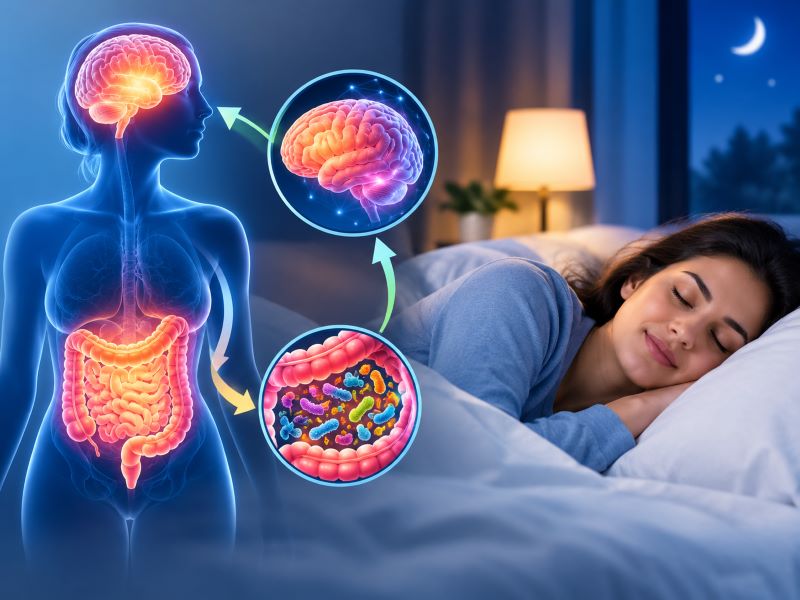
The gut and brain are in constant communication through what scientists call the gut–brain axis.
This communication involves the nervous system, immune system, hormones, metabolism and substances produced by gut microorganisms.
One of the areas receiving increasing attention is the possibility that gut bacteria can influence compounds involved in brain and nervous-system signalling.
These include microbial metabolites such as short-chain fatty acids (SCFAs), as well as pathways involving tryptophan and other signalling molecules.
Researchers are investigating whether these mechanisms could influence processes involved in:
- Sleep regulation
- Circadian rhythms
- Stress responses
- Inflammation
- Brain signalling
- Metabolic health
- Cognitive function
A 2026 scoping review examining 54 studies found associations between sleep and circadian disturbances and changes in microbial diversity, microbial composition, short-chain-fatty-acid-producing bacteria and other metabolic pathways. However, the researchers emphasised that the evidence remains heterogeneous and that causality has not yet been established. That distinction is important.
An association is not the same as proof that changing the microbiome will improve sleep.
Sleep and the microbiome may influence each other
The relationship appears to be potentially bidirectional.
Poor or disrupted sleep may affect eating behaviour, stress hormones, circadian rhythms, physical activity and other factors that can subsequently influence the gut microbiome.
At the same time, changes in the microbiome may potentially affect metabolic, immune, inflammatory and neurochemical pathways associated with sleep.
A 2026 systematic review of 41 human studies found that sleep restriction, sleep disturbances and circadian misalignment were associated with changes in gut microbial composition and function, although results were inconsistent across studies. The researchers highlighted diet, physical activity, age, health status and methodology as important factors that can influence the findings.
This is why the gut–sleep story should not be reduced to one particular probiotic or one particular bacterial species. It is a much bigger picture.
Where does fibre fit into the story?
If there is one nutritional area that deserves much more attention in the microbiome conversation, it is fibre.
Many beneficial gut bacteria use components of dietary fibre as substrates.
Some types of fibre can be fermented by gut microorganisms, producing short-chain fatty acids such as:
- Acetate
- Propionate
- Butyrate
These metabolites are being studied for their potential roles in intestinal health, immune regulation, metabolism and communication along the gut–brain axis.
This makes a fibre-rich diet an important part of a microbiome-supportive lifestyle.
Good sources include:
Vegetables: broccoli, carrots, leafy greens, beans and other vegetables
Fruit: berries, apples, pears and other whole fruits
Whole grains: oats, barley and whole-grain cereals
Pulses: lentils, chickpeas, beans and peas
Nuts and seeds: almonds, walnuts, chia and flax
For people increasing fibre, doing so gradually and maintaining adequate fluid intake can help minimise digestive discomfort.
Prebiotics: feeding the microbiome
There is an important distinction between probiotics and prebiotics.
Probiotics are live microorganisms that, when consumed in adequate amounts, may provide a health benefit in specific circumstances.
Prebiotics are substrates that are selectively utilised by host microorganisms and can support beneficial microbial activity.
Prebiotic fibres can therefore become an important part of a food-first approach to gut health.
Foods containing fermentable fibres and prebiotic compounds include onions, garlic, leeks, asparagus, legumes, oats and certain fruits.
Again, the objective should not be to “feed one perfect bacteria”.
A diverse, fibre-rich diet is generally a more sensible long-term strategy than chasing a single microbiome trend.
What about probiotics and sleep?
This is where things get particularly interesting for the sports-nutrition and supplement industry.
A number of human studies have investigated whether probiotic supplementation can influence sleep.
A 2026 systematic review and meta-analysis of 13 randomised controlled trials involving 890 adults found that probiotic supplementation was associated with a modest improvement in Pittsburgh Sleep Quality Index scores compared with control groups. However, the studies differed in probiotic strains, interventions and participants, so the findings should not be interpreted as proof that probiotics treat insomnia.
A separate review of controlled probiotic studies similarly concluded that there is promising evidence but that the mechanisms remain unclear and that more long-term research involving different strains is needed.
This leads to an important point:
Probiotics are not all the same.
A product containing one bacterial strain cannot automatically be assumed to have the same effect as another product containing a different strain.
Strain, dose, formulation, viability, duration and the health status of the individual all matter.
For consumers considering probiotic supplements, quality and transparency therefore matter more than simply choosing the product with the largest number of CFUs on the label.
Can supplements support the gut–sleep connection?
Potentially — but supplements should complement, rather than replace, the foundations of good sleep and nutrition.
For FitCart consumers, several categories may be relevant.
1. Probiotics
A properly formulated probiotic may be considered as part of a broader gut-health strategy.
Look for products that clearly identify the specific strains, provide transparent dosing information and have appropriate quality-control and testing standards.
The science around probiotics and sleep is promising but not definitive.
2. Prebiotic fibre
Prebiotic fibre can help provide substrates for beneficial gut microorganisms.
For someone whose diet is consistently low in fibre, improving the overall diet may be more meaningful than immediately adding multiple supplements.
Some people may also consider a targeted fibre or prebiotic supplement when dietary intake is inadequate.
3. Magnesium
Magnesium is another popular supplement in the sleep and recovery category.
Magnesium is involved in hundreds of physiological processes, including normal nervous-system and muscle function.
However, it is important not to turn magnesium into a “sleep cure”.
Supplementation is most rational when dietary intake is inadequate or there is a specific reason to use it, rather than assuming that increasingly high doses will produce increasingly better sleep.
4. Omega-3 fatty acids
Omega-3 fatty acids are widely studied for cardiovascular, neurological and inflammatory health.
Their relationship with sleep is also being investigated, although evidence does not justify presenting omega-3 supplements as a treatment for insomnia.
For many people, oily fish such as salmon, sardines and mackerel can be an excellent food-first source.
5. Protein and recovery nutrition
For athletes, active adults and people involved in strength training, sleep is only one part of recovery.
Adequate energy and protein intake are also important.
A well-designed recovery strategy may include:
Training + adequate protein + carbohydrate availability + hydration + micronutrient adequacy + sleep + stress management.
A protein shake can be convenient when dietary protein is difficult to achieve, but supplements should fill nutritional gaps rather than become substitutes for a balanced diet.
What athletes should know?
The gut–sleep relationship could be particularly interesting for athletes.
Training places physiological demands on the body, while inadequate sleep can affect recovery, mood, performance and decision-making.
Athletes also frequently experience factors that may influence gut health, including:
- High training loads
- Travel
- Competition stress
- Changes in meal timing
- Different foods while travelling
- Dehydration
- Insufficient energy intake
- Disrupted sleep schedules
This makes the gut–sleep connection relevant not just to general wellness but also to sports nutrition and recovery.
However, athletes should be especially careful about supplement quality.
When supplements are used, choosing third-party tested and batch-tested products can help reduce the risk of contamination and provide greater confidence around ingredient identity and banned-substance screening.
Don’t forget the circadian clock
The gut microbiome does not exist in isolation.
Our bodies operate according to biological rhythms, including the circadian rhythm.
Sleep timing, light exposure, meal timing, physical activity and daily routines can all interact with these biological rhythms.
That means supporting sleep health is unlikely to come down to taking a single capsule at bedtime.
A more comprehensive approach might look like:
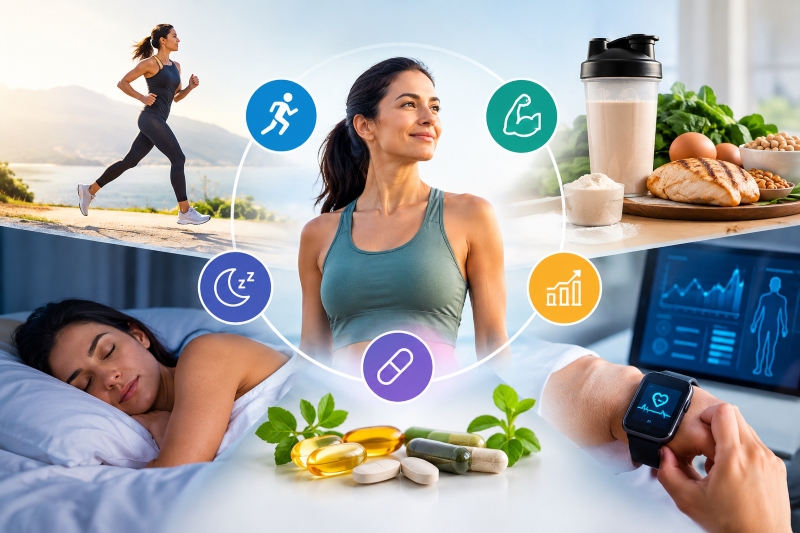
Morning light → regular activity → balanced nutrition → adequate fibre → sensible meal timing → hydration → stress management → consistent bedtime → quality sleep.
The microbiome may be one piece of this much larger system.
Fermented foods: food before supplements?
Fermented foods are another area attracting attention in microbiome research.
Depending on the food and preparation method, examples include:
- Yoghurt containing live cultures
- Kefir
- Fermented vegetables
- Traditional fermented foods
They can contribute microorganisms or fermentation-derived compounds to the diet, although their effects are highly dependent on the specific food, processing and individual.
For many people, incorporating suitable fermented foods alongside a diverse, fibre-rich diet can be a sensible food-first strategy.
The big mistake: thinking one supplement fixes sleep
Perhaps the most important message from the emerging research is that sleep is multifactorial.
Gut health is important.
Nutrition is important.
Physical activity is important.
Stress is important.
Circadian rhythm is important.
And the sleeping environment matters too.
Taking a probiotic while continuing to sleep five hours a night, eating a highly processed diet, and consuming caffeine late in the day is unlikely to overcome all those other factors.
The same principle applies to magnesium, omega-3, herbal products and other sleep-support supplements.
Think systems, not single supplements.
What does the science actually tell us?
The research has reached an exciting stage, but it is not yet at the point where we can say:
“Change your gut microbiome, and you will sleep better.”
What we can say is that a growing body of research identifies a relationship between sleep, circadian health, and the gut microbiome.
Recent systematic reviews have reported associations between sleep disturbances and alterations in microbial diversity and composition. Research is also investigating microbial metabolites, including short-chain fatty acids and tryptophan-related metabolites, as potential biological links between the gut and brain.
But researchers still need larger, longer, and better-controlled human studies to determine exactly which interventions work, for whom, at what dose, and through which mechanisms.
That is the exciting part of the story.
The Fitcart approach: build the foundations first
At FitCart, we believe supplementation works best when considered alongside training, nutrition, lifestyle and environmental factors.
For gut and sleep health, the fundamentals remain remarkably simple:
Eat a diverse diet.
Prioritise fibre-rich plant foods.
Include adequate protein and healthy fats.
Stay hydrated.
Exercise regularly.
Manage training and recovery.
Keep caffeine away from bedtime.
Maintain a consistent sleep schedule.
Create a sleep-friendly environment.
And where supplementation is appropriate, consider products with transparent ingredients, appropriate dosing and credible third-party or batch testing.
The future of nutrition may not be about finding one magic supplement.
It may be about understanding how food, microbiome, brain, sleep, exercise and individual biology interact — and then using nutrition and supplementation more intelligently.
Your gut may not simply be helping you digest your dinner.
It may be part of a much bigger conversation about how your body communicates, recovers, and sleeps.
And the science is only beginning to understand it.
Fitcart Supplement & Health Disclaimer
This article is intended for general education and informational purposes only and is not a substitute for medical advice, diagnosis or treatment. Research into the relationship between the gut microbiome, nutrition and sleep is evolving, and associations reported in studies do not necessarily establish cause and effect. Probiotics, prebiotics, magnesium, omega-3 fatty acids and other supplements should not be considered treatments for insomnia or other sleep disorders unless specifically recommended by a qualified healthcare professional.
Supplement requirements vary according to diet, age, training, lifestyle, medications, health status and individual nutritional needs. Consider discussing supplementation with a qualified healthcare professional or registered dietitian, particularly if you have a medical condition or take medication.
For athletes, supplement contamination can present a particular concern. Where supplements are used, consumers and athletes should consider products with transparent ingredient information and appropriate independent third-party or batch testing, particularly where testing for prohibited substances is relevant.
A balanced diet, regular physical activity, adequate recovery, stress management and good sleep habits remain the foundations of health and performance.
Follow us on X: https://x.com/fitcartofficial and Instagram: https://www.instagram.com/fitcartofficial/ for the latest updates, health insights, and exclusive content.
Follow Smart Nutrition India X: https://x.com/SmartNutrition1 and Instagram: https://www.instagram.com/smartnutritionindia/ for trusted sports nutrition, supplement education, wellness tips, and the latest news from the world of health and performance.
Fitcart believes in True Play and Clean Sport
#trustedbrandsbetterhealth