


Fitcart Editorial Team Ritu Makhija.
Reading time: 8–10 minutes.
For years, the supplement industry has operated on a fairly simple formula:
This supplement is good for you—so take it.
Vitamin D. Magnesium. Omega-3. Probiotics. Protein. Creatine. Multivitamins.
The list keeps growing.
But a more sophisticated approach to supplementation is beginning to emerge.
Instead of asking:
“What supplements should everyone take?”
the better question may be:
“What nutrients, if any, does this particular person actually need?”
Welcome to the idea of precision supplementation.
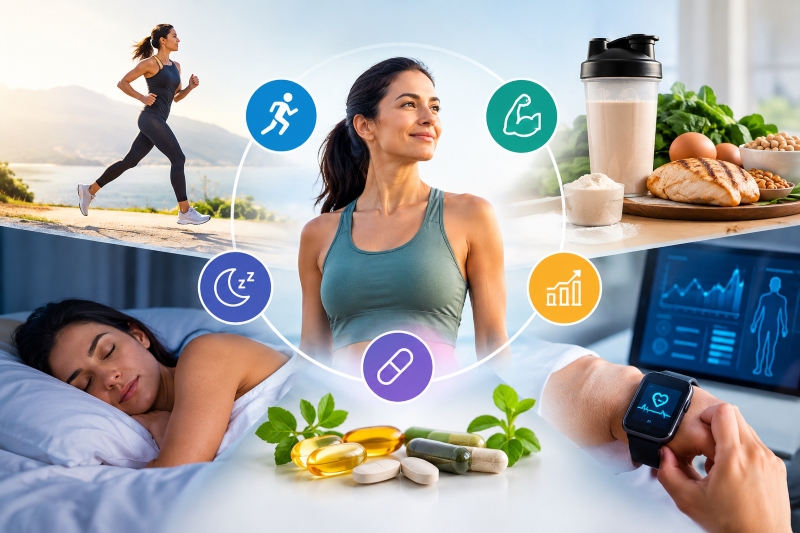
The concept is simple: supplementation should increasingly take into account an individual’s diet, age, lifestyle, exercise, goals, nutritional status, deficiencies and, where appropriate, laboratory results.
It is a potentially important shift—from taking the biggest supplement stack possible to taking the right supplement, at the right dose, for the right reason.
But there is an important reality check.
Personalized nutrition is developing rapidly, but the science isn’t yet advanced enough to justify every “personalized supplement” claim appearing online.
The future may be personal. But it still needs to be evidence-based.
What Exactly Is Precision Supplementation?
Precision supplementation is not simply buying a supplement labelled “personalized.”
At its best, it means considering the individual before deciding whether supplementation makes sense.
For example, two people could have completely different nutritional needs.
Person A
A person who eats a varied diet, consumes fish regularly, exercises moderately and has no identified nutritional deficiencies may have little reason to take a large supplement stack.
Person B
An endurance athlete with high training volume, limited dietary variety and a documented nutritional deficiency may have very different requirements.
And then there is Person C:
Someone who follows a restrictive diet, has limited sun exposure, takes medication that affects nutrient absorption, or has a medically confirmed deficiency.
Their supplementation needs could be completely different again.
One-size-fits-all supplementation doesn’t always make sense.
Your Diet Comes First
Precision supplementation begins with something surprisingly unglamorous:
Look at what you eat.
Supplements are designed to supplement the diet—not replace it.
Before building a supplement programme, consider:
- How much protein do you consume?
- Are you eating enough vegetables and fruit?
- Do you regularly consume whole grains or legumes?
- Do you eat oily fish?
- Are you getting sufficient calcium?
- How much fibre do you consume?
- Do you consume a wide variety of foods?
- Are you following a vegetarian, vegan or restrictive diet?
- Are you regularly skipping meals?
Food provides much more than isolated vitamins and minerals.
It contains protein, fibre, healthy fats, phytonutrients and thousands of other compounds that work together within an overall dietary pattern.
A capsule can’t reproduce all of that.
Age Changes the Conversation
Nutritional requirements and priorities can change throughout life.
A teenager has different nutritional considerations from a 40-year-old.
A recreational athlete has different needs from an elite endurance competitor.
And healthy ageing brings another set of priorities.
As we get older, maintaining muscle mass, strength, bone health, cardiovascular health and adequate protein intake becomes increasingly important.
That doesn’t mean older adults automatically need dozens of supplements.
It means their nutritional strategy should be individualized.
For some people, protein supplementation may help meet dietary protein requirements.
For others, vitamin D, calcium or another nutrient may be relevant depending on dietary intake, sun exposure, health status and professional assessment.
The important word is depending.
Training Changes Nutritional Requirements
An active person can have very different nutritional requirements from someone who is sedentary.
Training increases the importance of:
- Adequate calories
- Protein
- Carbohydrates
- Hydration
- Electrolytes
- Recovery
- Micronutrient adequacy
But even among athletes, needs vary.
A marathon runner, powerlifter, swimmer, footballer and recreational gym-goer don’t necessarily need the same supplement programme.
Your supplement strategy should follow your training—not the other way around.
For example:
Strength training: Protein and creatine may be particularly relevant to some individuals.
Endurance training: Carbohydrates, fluids and electrolytes can become more important, particularly during prolonged or intense exercise.
High-sweat environments: Electrolyte replacement may be relevant depending on sweat losses and exercise duration.
Recovery: Adequate calories, protein, carbohydrates, sleep and hydration remain the foundation.
The supplement should solve a specific problem.
Blood Tests Could Help—but They Aren’t a Shopping List
Laboratory testing can be extremely useful when there is a genuine clinical reason to investigate nutritional status.
Depending on the individual and medical context, a healthcare professional may consider markers related to nutrients, blood counts, metabolic health or other aspects of health.
If a deficiency is identified, supplementation may be appropriate.
But there is a major distinction between:
“My blood test suggests I am deficient.”
and
“A wellness company tested 100 biomarkers and recommended 25 supplements.”
More data doesn’t automatically mean better advice.
Some biomarkers fluctuate naturally. Some have uncertain links to supplementation. And not every value outside a company’s preferred “optimal” range represents a nutritional deficiency.
Medical interpretation matters.
Don’t Turn Genetics Into a Supplement Shopping List
Genetic testing has created another exciting—and sometimes confusing—area of personalized nutrition.
You may have seen claims suggesting that your DNA can tell you exactly which vitamins you need.
Genetics can influence how individuals metabolize certain nutrients and respond to dietary factors.
But most nutritional decisions are not determined by a single gene.
Your diet, environment, exercise, sleep, age, health status and other factors all matter.
Genetic information may eventually become increasingly useful in personalized nutrition, but consumers should be skeptical of services that turn a DNA report into an enormous supplement shopping list.
What About Microbiome Testing?
The gut microbiome is another area attracting enormous interest.
Researchers are learning more about relationships between gut microorganisms, diet, metabolism, immune function and other aspects of health.
But commercial microbiome testing has moved faster than our ability to translate every microbial finding into a precise nutritional prescription.
Seeing a particular bacterial species—or the absence of one—doesn’t necessarily mean you need a particular probiotic.
The microbiome is complex.
A healthy strategy remains remarkably simple:
Eat a diverse, fibre-rich diet and maintain a healthy lifestyle.
Targeted probiotic use may have a role in particular circumstances, but probiotic effects are generally strain-specific.
Precision Doesn’t Mean More Supplements
This may be the most important point in this entire article.
Personalization should reduce unnecessary supplementation—not increase it.
Imagine someone taking:
- A multivitamin
- Vitamin D
- Magnesium
- Zinc
- Calcium
- Iron
- Vitamin C
- B-complex
- Omega-3
- Probiotic
- Prebiotic
- Creatine
- Protein
- Three “longevity” formulas
That isn’t necessarily a precision health programme.
It could simply be supplement accumulation.
More is not automatically better.
Beware of Mega-Dosing
The supplement market often rewards impressive numbers.
1,000 mg.
5,000 IU.
10,000 mg.
50 billion CFU.
But bigger numbers don’t automatically produce better outcomes.
Some vitamins and minerals can cause adverse effects when consumed in excessive amounts.
For example, excessive intake of certain nutrients can interfere with other nutrients or produce toxicity.
This is particularly relevant for fat-soluble vitamins and minerals such as iron, where unnecessary supplementation can be problematic.
The objective should be adequacy—not excess.
The Supplement Label Matters
If you’re buying a supplement, the label should tell you what you’re actually getting.
Look for:
- Clearly listed ingredients
- Exact amounts per serving
- Serving size
- Allergen information
- Manufacturer information
- Batch or lot information
- Expiration date
- Storage instructions
- Country of manufacture where disclosed
Be cautious with proprietary blends that hide the amounts of individual ingredients.
If you don’t know how much of an ingredient you’re consuming, it’s difficult to evaluate whether the product makes sense.
Third-Party Testing: An Important Quality Check
Two products can contain the same ingredient on paper but differ substantially in manufacturing quality and quality control.
That’s why independent testing and certification can be valuable.
Depending on the product category, look for appropriate third-party verification covering areas such as:
Identity — Is the ingredient actually what the label says?
Potency — Is the amount consistent with the stated specification?
Purity — Are unwanted contaminants controlled?
Microbiology — Are relevant microbial contaminants within acceptable limits?
Heavy metals and other contaminants — Where relevant to the product and raw materials.
For competitive athletes, independent sports-nutrition certifications that assess products for prohibited substances can provide an additional layer of reassurance.
Batch Testing Matters
“Tested” is a useful word.
But consumers should ask:
Tested when?
Tested how?
What was tested?
Was the finished batch tested?
A manufacturer may test incoming raw materials and also perform testing on finished products.
For consumers, transparency around batch or lot identification and quality testing can provide greater confidence than vague statements such as “laboratory tested.”
At Fitcart, we believe consumers should have access to sports nutrition and wellness products where quality, sourcing and manufacturing information are transparent.
Where Were the Ingredients Made?
Another question worth asking is:
Where did the raw materials come from?
The country where a product is packaged isn’t necessarily the country where every raw material originated.
For consumers who care about quality and traceability, understanding the supply chain can be useful.
Look for manufacturers willing to provide clear information about:
- Raw material sourcing
- Manufacturing location
- Packaging location
- Quality-control procedures
- Testing
- Certifications
Transparency builds trust.
Precision Supplementation for Fitness
For active people, supplementation can be particularly useful when it addresses a clearly defined requirement.
Protein
If your diet doesn’t provide enough protein, a protein powder can be a convenient solution.
Creatine
Creatine monohydrate is one of the most extensively researched sports supplements and can support high-intensity exercise performance and strength when combined with appropriate training.
Electrolytes
For prolonged exercise or heavy sweating, electrolyte products can sometimes help replace electrolytes lost through sweat.
Carbohydrate products
During long-duration endurance exercise, sports drinks, gels and other carbohydrate products can provide readily available fuel.
Omega-3
For people who don’t consume oily fish, omega-3 supplementation may be worth discussing depending on individual dietary patterns and health goals.
The common theme?
The supplement has a job.
It isn’t being taken simply because someone on social media recommended it.
Precision Supplementation for Healthy Ageing
As people become more interested in longevity, the supplement industry has responded with increasingly elaborate “anti-ageing stacks.”
Some ingredients are genuinely fascinating areas of research.
But there is a difference between:
“This compound affects a pathway associated with ageing.”
and
“This supplement will make you live longer.”
That distinction is crucial.
A responsible health strategy should prioritize:
Muscle + cardiovascular fitness + healthy body composition + nutrition + sleep + mental wellbeing + social connection
before experimental longevity stacks.
The Future Could Be More Personalized
The future of nutrition could become considerably more sophisticated.
Imagine combining:
- Dietary information
- Exercise patterns
- Blood biomarkers
- Medical history
- Wearable data
- Body composition
- Nutritional intake
- Lifestyle information
to identify where nutritional support may actually be useful.
Artificial intelligence could potentially help organize and interpret enormous quantities of personal health data.
But technology shouldn’t eliminate human judgment.
The goal isn’t to create the world’s most complicated supplement protocol.
The goal is to identify what matters and what doesn’t.
The Fitcart Precision Supplementation Framework
Before buying a new supplement, ask five questions.
1. WHY am I taking it?
What problem is it supposed to solve?
2. DO I actually need it?
Can I obtain the nutrient through food?
Is there a demonstrated deficiency or a clearly defined performance goal?
3. WHAT does the research say?
Look for human evidence rather than relying solely on laboratory studies, testimonials or influencer claims.
4. HOW MUCH do I need?
More isn’t automatically better.
5. IS THE PRODUCT QUALITY VERIFIED?
Look for transparent labeling, appropriate quality control, batch testing where applicable and credible third-party certification when relevant.
If you can’t answer these questions, pause before buying.
The Future of Supplementation May Be Smaller, Not Bigger
The supplement industry has spent years selling the idea of the perfect stack.
But perhaps the future lies in something very different.
A smaller, smarter and more individualized supplement routine.
Someone may need vitamin D.
Someone else may benefit from additional protein.
An athlete may have a legitimate reason to use creatine.
Another person may need no supplements at all.
And someone with a genuine nutritional deficiency may require medically supervised supplementation.
That’s not boring.
That’s precision.
The Bottom Line
Precision supplementation doesn’t mean having your blood tested every month or taking a supplement for every biological pathway.
It means asking better questions.
What does my diet provide?
What does my body need?
What are my goals?
What does the evidence show?
Is there a genuine nutritional gap?
Can I verify the quality of the product?
The future of wellness may not belong to the person with the biggest supplement cabinet.
It may belong to the person who understands which supplements they need—and why.
At Fitcart, that’s the direction worth supporting:
Less hype. More evidence. Better quality. Smarter supplementation.
FITCART SUPPLEMENT QUALITY & HEALTH DISCLAIMER
This article is intended for general educational and wellness information and does not constitute medical advice, diagnosis or treatment. Individual nutritional requirements vary according to age, diet, training, health status, medications, lifestyle and other factors.
Blood tests, genetic testing, microbiome testing and wearable data should be interpreted appropriately and do not automatically determine which supplements an individual needs. Consult a qualified healthcare professional or registered dietitian for personalized nutritional or medical advice, particularly if you have a medical condition, take medication, are pregnant or breastfeeding, or suspect a nutritional deficiency.
Fitcart recommends choosing supplements from reputable manufacturers that provide transparent ingredient information and appropriate quality-control documentation. Where possible, choose products that are independently verified or batch tested for identity, potency, purity and relevant contaminants.
For athletes, consider appropriate independent sports-nutrition certification and banned-substance testing where relevant to competitive sport.
Consumers should check the product label, serving size, ingredients, allergens, batch/lot information, expiry date and storage instructions. Where available, investigate where raw materials are produced and where the finished product is manufactured and packaged.
Do not exceed recommended serving sizes unless specifically advised by a qualified healthcare professional. Supplements should complement a balanced diet, regular physical activity, adequate sleep and a healthy lifestyle—not replace them.
Follow us on X: https://x.com/fitcartofficial and Instagram: https://www.instagram.com/fitcartofficial/ for the latest updates, health insights, and exclusive content.
Follow Smart Nutrition India X: https://x.com/SmartNutrition1 and Instagram: https://www.instagram.com/smartnutritionindia/ for trusted sports nutrition, supplement education, wellness tips, and the latest news from the world of health and performance.
Fitcart believes in True Play and Clean Sport
#trustedbrandsbetterhealth