



Fitcart Editorial Team Ritu Makhija.
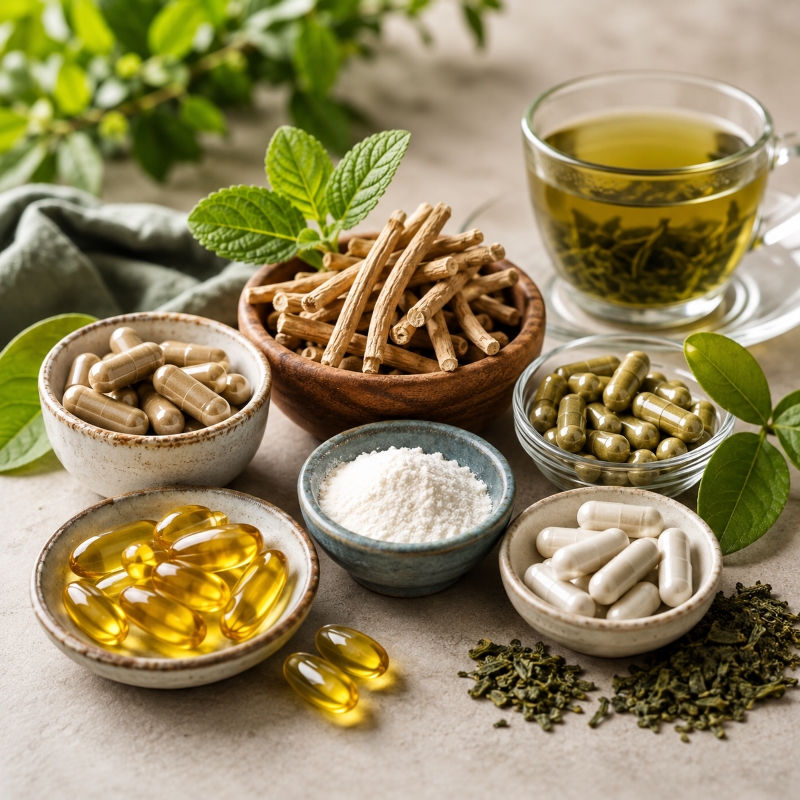
Ashwagandha, Magnesium, Omega-3, Probiotics & Green Tea EGCG.
Stress is often thought of as something that affects the mind alone. But the body’s stress response is much more complex.
When stress becomes persistent, it can influence sleep, appetite, energy levels, recovery, inflammation and the way the body handles glucose and fats. This is why stress management and metabolic health are closely connected.
Alongside a nutritious diet, regular exercise, adequate sleep and good daily routines, certain supplements may provide additional nutritional support.
Five ingredients that have attracted considerable scientific interest are:
- Ashwagandha
- Magnesium
- Omega-3 fatty acids
- Probiotics
- Green tea extract, particularly EGCG
Each works differently, and none should be considered a magic solution for stress, weight loss or metabolic disease. However, when used appropriately, they may complement a healthy lifestyle.
1. Ashwagandha: Supporting the Body’s Response to Stress
Ashwagandha (Withania somnifera) is an adaptogenic herb traditionally used in Ayurvedic wellness practices.
Today, it is one of the most researched herbal ingredients for stress management.
The body’s stress response involves several interconnected systems, including the nervous system and the hypothalamic-pituitary-adrenal (HPA) axis. Cortisol is one of the hormones involved in this response.
Research suggests that Ashwagandha supplementation may help support a healthier stress response.
A 2024 systematic review and meta-analysis of nine randomised controlled trials involving 558 participants found improvements in perceived stress, anxiety measures and cortisol levels compared with placebo. The researchers also noted that more information is needed regarding long-term safety.
Why this may matter for metabolic health
Chronic psychological stress can influence eating behaviour, sleep and physical activity. Poor sleep and persistent stress can, in turn, make healthy weight management more difficult.
Therefore, supporting stress resilience may indirectly support a healthier metabolic lifestyle.
Ashwagandha should not, however, be viewed as a cortisol-lowering or weight-loss supplement.
Fitcart tip
When choosing Ashwagandha, look for:
- Clearly identified Withania somnifera
- Standardised extracts where appropriate
- Transparent information about the extract and active compounds
- Batch testing and quality verification
- Clear manufacturing and sourcing information
2. Magnesium: The Mineral for Relaxation, Energy & Recovery
Magnesium is an essential mineral involved in hundreds of biochemical reactions throughout the body.
It contributes to normal energy metabolism, muscle and nerve function and many processes involved in maintaining normal physiological function.
Magnesium is particularly interesting when discussing stress, sleep and recovery.
A systematic review published in 2024 examined clinical studies investigating supplemental magnesium for anxiety and sleep. Most of the included studies showed improvement in at least one sleep- or anxiety-related measure, although the researchers highlighted the small size and heterogeneity of many studies and called for larger clinical trials.
This is an important distinction: magnesium is not a treatment for anxiety or insomnia. But maintaining adequate magnesium intake may be part of a broader nutritional strategy supporting normal nervous-system function and recovery.
Magnesium and metabolic health
Magnesium is also involved in glucose metabolism and insulin-related processes.
For people whose dietary intake is inadequate, correcting nutritional insufficiency is particularly important. However, taking more magnesium does not necessarily mean better metabolic health if magnesium status is already adequate.
Which form of magnesium?
Different magnesium compounds have different characteristics, including differences in absorption and gastrointestinal tolerance.
Common forms include:
- Magnesium glycinate
- Magnesium citrate
- Magnesium malate
- Magnesium oxide
The appropriate form and amount depend on the individual’s nutritional needs and tolerance.
Fitcart tip
Don’t simply look for the largest number on the label.
Look at the amount of elemental magnesium, the form of magnesium used and the quality standards of the manufacturer.
3. Omega-3: Supporting Cardiometabolic Health
Omega-3 fatty acids, particularly EPA and DHA, are among the most extensively studied nutritional fats.
They are naturally found in oily fish and are also available through supplements such as fish oil and algae-derived omega-3.Omega-3s have attracted particular attention for cardiovascular and metabolic health.
A large systematic review and meta-analysis of 48 randomised controlled trials involving 8,489 participants found that omega-3 supplementation was associated with reductions in triglycerides, as well as modest changes in blood pressure and several inflammatory markers.
Another recent meta-analysis of marine-derived EPA/DHA in people with metabolic-syndrome-related characteristics also found meaningful triglyceride reductions, particularly with higher doses.
Why triglycerides matter
Triglycerides are a type of fat circulating in the bloodstream. Elevated triglycerides can be associated with an unfavourable cardiometabolic profile.
Omega-3 supplementation can therefore be particularly relevant for people whose dietary intake is low or whose healthcare professional has identified elevated triglycerides.
But omega-3 is not a fat-burning supplement.
Its value lies more in supporting cardiovascular and lipid health than in directly producing weight loss.
EPA and DHA matter
When comparing omega-3 products, don’t look only at the total amount of “fish oil.”
Check how much EPA + DHA the product actually provides.
Also consider:
- Purity testing
- Oxidation testing
- Source of the oil
- Sustainability
- Third-party or batch testing
- Storage and packaging quality
For vegetarians and vegans, algae-derived DHA and EPA can provide an alternative source.
4. Probiotics: The Gut–Metabolism Connection
The gut is increasingly recognised as an important part of overall metabolic health.
The trillions of microorganisms living in the gastrointestinal tract interact with dietary components and produce metabolites that can influence the wider body.
This has led to significant interest in the relationship between the gut microbiome, metabolic health and stress.
Probiotics are live microorganisms that, when consumed in adequate amounts, can provide a health benefit.
But there is an important point consumers should understand:
Not all probiotics are the same.
The benefits of probiotics are often strain-specific.
Different strains can have different effects, which means that simply choosing a product with a very large number of CFUs does not automatically make it a better product.
Research has suggested potential benefits for several metabolic markers.
For example, a meta-analysis of randomised controlled trials found that probiotic supplementation was associated with modest improvements in fasting glucose, fasting insulin and HOMA-IR, although results across studies have not always been consistent.
Another meta-analysis involving adults with overweight or obesity found small improvements in several anthropometric and metabolic measures, but the researchers emphasised the need for more research before probiotics can be considered a therapeutic strategy for weight management.
Probiotics and stress
The gut and brain communicate through multiple pathways, often referred to as the gut-brain axis.
This is an exciting area of research, but consumers should be cautious about exaggerated claims that probiotics can “cure stress” or “fix cortisol.”
The science is promising, but individual responses vary considerably.
Fitcart tip
When buying probiotics, look beyond the CFU number.
Consider:
- Specific genus, species and strain
- CFU guaranteed through the stated shelf life where applicable
- Storage requirements
- Stability
- Research supporting the particular strain or combination
- Transparent manufacturing and quality testing
5. Green Tea Extract & EGCG: A Powerful Polyphenol With an Important Safety Message
Green tea contains a family of naturally occurring compounds called catechins.
One of the most studied is:
EGCG — Epigallocatechin gallate
EGCG has attracted interest because of its antioxidant and metabolic effects.
Research has investigated green tea catechins in areas including energy metabolism, fat oxidation, glucose regulation and cardiovascular health.
However, there is a major difference between drinking green tea and taking a concentrated green tea extract.
This distinction is extremely important.
Green tea is not the same as high-dose EGCG supplements
Brewed green tea contains relatively modest amounts of catechins distributed within a beverage.
Some supplements, on the other hand, can provide highly concentrated doses of EGCG in a single capsule.
Systematic safety research has found that concentrated, catechin-rich green tea preparations can occasionally be associated with liver-related adverse effects, particularly when taken as large bolus doses. The risk appears considerably lower with brewed tea and food-based consumption.
This is why more EGCG is not necessarily better.
A particularly important Fitcart recommendation
Consumers should be cautious about taking concentrated green tea extract:
- In very high doses
- On an empty stomach
- Alongside multiple stimulant products
- Without checking the EGCG content
- If they have liver problems or take medications without first consulting a healthcare professional
Anyone developing symptoms such as unusual fatigue, nausea, abdominal discomfort, dark urine or yellowing of the skin or eyes after taking a concentrated botanical supplement should stop using it and seek medical advice.
The Bigger Picture: Stress & Metabolic Health Are Connected
These five supplements may look completely different, but they can fit into a broader approach to health.
Stress management
Ashwagandha → may support the body’s response to stress
Magnesium → supports normal nervous-system and muscle function and may help some people with sleep or anxiety-related symptoms
Omega-3 → provides essential fatty acids involved in normal physiological processes and has been studied for inflammatory and cardiovascular markers
Probiotics → support specific aspects of gut health and are being investigated for gut-brain and metabolic interactions
EGCG → provides concentrated green-tea catechins that have been studied for metabolic and antioxidant effects
Metabolic health
A healthy metabolism is not simply about burning more calories.
It involves the body’s ability to:
- Handle carbohydrates appropriately
- Regulate blood glucose
- Manage circulating fats
- Produce and use energy
- Maintain healthy body composition
- Recover from exercise
- Respond appropriately to stress
- Maintain healthy cardiovascular function
Supplements may support some of these processes, but they cannot replace the fundamentals.
The Fitcart Foundation: Build the Lifestyle First
Before adding a shelf full of supplements, establish the basics.
1. Eat enough protein
Protein supports muscle maintenance, recovery and satiety.
Include quality protein sources such as eggs, fish, poultry, dairy, legumes, soy or other suitable sources according to individual dietary preferences.
2. Prioritise fibre
Vegetables, fruits, whole grains, legumes, nuts and seeds provide fibre and a wide range of micronutrients and plant compounds.
Fibre is also important for digestive and metabolic health.
3. Strength train
Muscle is metabolically active tissue.
Regular resistance training helps preserve and build lean muscle while supporting strength, physical function and healthy body composition.
4. Keep moving
Walking, cardiovascular exercise, sport and everyday movement all contribute to metabolic health.
5. Protect sleep
Sleep is one of the most underestimated components of stress management and metabolic health.
A supplement should never become a substitute for consistently poor sleep habits.
6. Manage stress
Breathing exercises, meditation, yoga, time outdoors, social connection, hobbies and structured routines can all form part of a practical stress-management strategy.
Should You Take All Five?
Not necessarily.
The best supplement strategy is personalised.
Someone with a low dietary intake of omega-3 may have very different needs from someone whose diet already contains several servings of oily fish each week.
Someone with inadequate magnesium intake may benefit from supplementation, while another person may obtain sufficient magnesium through food.
Similarly, probiotic requirements depend on the specific health objective and strain, while Ashwagandha and concentrated EGCG require additional consideration because they are bioactive compounds rather than basic nutrients.
The goal shouldn’t be “more supplements.”
The goal should be better nutrition, better recovery and better health — with supplements used intelligently where they add value.
Fitcart’s Supplement Quality Checklist
When choosing a supplement, the ingredient itself is only one part of the equation.
Look for brands that provide:
✓ Clear ingredient quantities
✓ Transparent sourcing
✓ Appropriate manufacturing standards
✓ Batch testing
✓ Verification of ingredient identity and purity
✓ Testing for contaminants where relevant
✓ Clear labelling
✓ Appropriate storage information
✓ No unnecessary proprietary blends that hide individual ingredient quantities
For sports nutrition products, independent certification and banned-substance testing can also be particularly important for competitive athletes.
Fitcart believes consumers should know not only what is inside a supplement, but also where the raw materials come from, where the product is manufactured and packaged, and whether the finished product has been independently tested.
The Bottom Line
Stress and metabolic health are deeply interconnected.
Ashwagandha, magnesium, omega-3, probiotics and green tea catechins such as EGCG each have different mechanisms and different levels of scientific evidence behind them.
Some may help support stress resilience. Others may support nutritional adequacy, gut health, lipid metabolism or cardiovascular health.
But there is no single supplement that can compensate for poor nutrition, inadequate sleep, inactivity or chronic stress.
The most effective strategy is to build the foundation first — nutritious food, adequate protein and fibre, regular exercise, strength training, quality sleep and effective stress management — and then use evidence-informed supplementation to fill specific nutritional or performance needs.
At Fitcart, the focus should always be smart supplementation, not excessive supplementation.
Supplement Disclaimer
Supplements are intended to complement a healthy diet and lifestyle and are not intended to diagnose, treat, cure or prevent any disease.
Individual responses to supplements vary. Ashwagandha, magnesium, omega-3, probiotics and green tea extract/EGCG may not be appropriate for everyone and can interact with medicines or medical conditions.
Pregnant or breastfeeding individuals, people with liver, kidney, cardiovascular, endocrine or other medical conditions, and anyone taking prescription or regular medication should consult a qualified healthcare professional before using these products.
Particular caution is advised with concentrated green tea extracts/EGCG, especially at high doses or when taken fasting, because concentrated extracts have been associated with rare liver-related adverse effects.
Do not exceed the manufacturer’s recommended serving unless advised by a qualified healthcare professional.
For athletes subject to anti-doping rules, supplements should be selected carefully and, where possible, independently tested/certified for banned substances.
Choose supplements that are batch tested and verified for content, purity and quality, and check where the raw materials are produced and where the finished product is manufactured and packaged.
Information Disclaimer
This article is provided for general educational and informational purposes only. It is not medical advice, nutritional therapy or a substitute for consultation with a doctor, registered dietitian, pharmacist or other qualified healthcare professional.
Scientific evidence continues to evolve, and the effects of supplements can vary according to the individual, dose, formulation, duration of use, diet, medications and underlying health status.
The information in this article should not be used to diagnose or treat a medical condition or as a reason to discontinue prescribed medication.
Fitcart encourages consumers to make informed supplementation decisions based on reliable evidence, product quality and individual nutritional needs.
Follow us on X: https://x.com/fitcartofficial and Instagram: https://www.instagram.com/fitcartofficial/ for the latest updates, health insights, and exclusive content.
Follow Smart Nutrition India X: https://x.com/SmartNutrition1 and Instagram: https://www.instagram.com/smartnutritionindia/ for trusted sports nutrition, supplement education, wellness tips, and the latest news from the world of health and performance.
Fitcart believes in True Play and Clean Sport
#trustedbrandsbetterhealth