



Fitcart Sports News Blog.
Authored by S. Kannan (Sports Analyst) and Fitcart Editorial Team Ritu Makhija.
Estimated Reading time: 7–9 minutes.
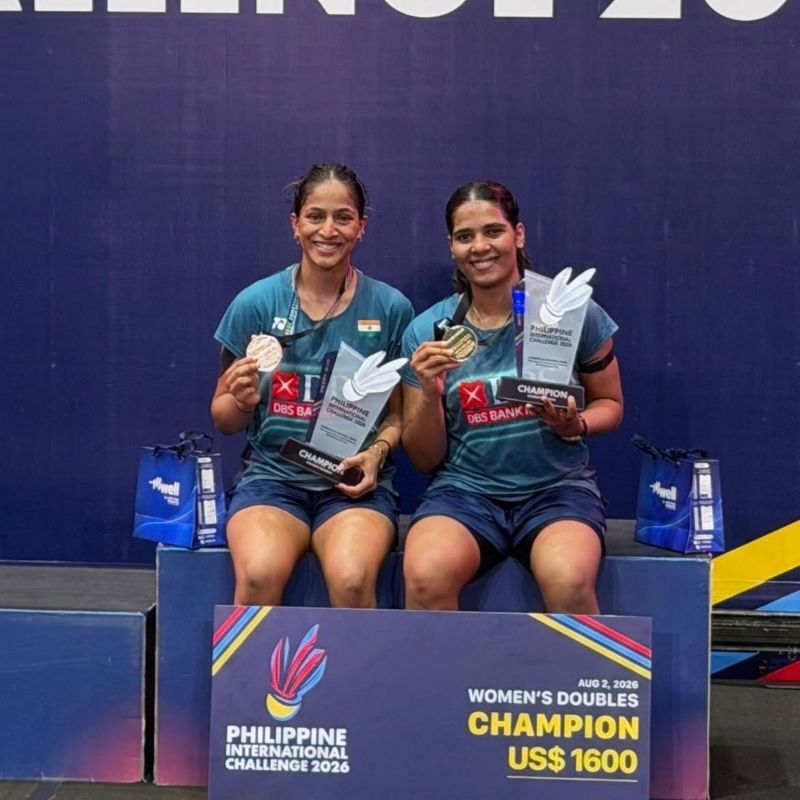
Treesa and Gayatri, Indians badminton’s shining jewels.
In badminton, doubles is a mix of art and science. Connoisseurs of the shuttle sport were treated to a veritable feast in the Capital in the week gone by as Treesa Jolly and Pullela Gayatri Gopichand raised the bar and broke the roof. Crowds thronged the arena, as the thwack sound of the badminton racquet smashing the shuttle in flight made sweet noise.
Racquet sport is fast, be it squash, tennis, or badminton. In terms of mobility on court, where the flight and path of the shuttle is so hard to predict, Treesa and Gayatri have spent hours mastering the way they jam up on court.
How they are able to anticipate, attack, defend and also shuffle their feet on court, be it for lateral movement, back and front, or even the lunge and dive, the Indian divas caught the eye. Reward for the duo was a bronze medal at the BWF World Championship.
As a nation, India is still obsessed with cricket, from Tests to white-ball and even state T20 leagues. So, all those who showed up at the IG Stadium and cheered for Treesa and Gayatri need to be complimented. There is nothing like crowd support and audible levels of cheering going through the roof. As it were, this venue is a tricky one. It’s indoor, typical for badminton, and the air conditioning is on at all times. Net effect, the shuttle drift is not easy to deal with. In fact, the Indian duo had mastered it, as winning a bronze medal is a big deal at a championship of such big stature.
A bit, first about Gayatri, daughter of Pullela Gopichand and his wife PVV Lakshmi. Just to jog the readers’ memory, Lakshmi, and her sister PVV Sarada played decent doubles in the 90s. Lakshmi also did represent India at the 1996 Olympics. So, somewhere the gene pool does come into play as Gopichand realised his daughter was not going to progress too far in singles. When the strategic shift was made, Gayatri focused only on doubles. An interesting decision.
As the 23-year-old Gayatri, standing at 5 feet and 4 inches showed promise and poise, it is worth recalling her rise to stardom. At 55 kg, Gayatri is full of meat in her body. She is athletic, fast on her feet and has a great game sense on court, near the net. This visualisation in doubles field in badminton requires hours of practice with her partner.
To be sure, to be a second-generation athlete in India is not easy. Weighed against legacy and pressure of expectation, Gayatri has done well. Her ethics, efforts are in sync as someone coming from the Pullela family. It’s now established, Gayatri dedicates quality time to fitness, where shuttle run, shadow drills and building on cardio capacity is important. She uses the gym route lavishly, for the sheer speed in this sport is a delight.
As one who is advised by Gopichand, her father and also the other experts on board, Gayatri uses modern science in her diet planning and fueling her journey. To work hard in the gym, the diet is structured in such a way she eats adequate protein, incorporates complex carbs, fat in required amount and uses hydration to great effect. Blessed to have in her own father as a coach, there is method in madness when Gayatri trains and delivers. As for the tango with Treesa, it is about trust and respect – doubles is very special.
Treesa Jolly is a committed athlete. She has had her share of injuries, but her present state in New Delhi is a high. Treesa is 23, and hails from Cherupuzha, Kerala. Having started early in her sport, Treesa started playing in her own village before making the shift to the SAI-Gopichand Academy in Hyderabad. She is 5 feet and 9 inches tall, so she makes up for her partner’s relative short height. As Treesa has decided to keep her weight low at 49kg, she is fast on her feet.
Doubles badminton is about two players sharing the court with commitment and respect. Treesa uses her height to great effect when she uncorks the midcourt smashes. So, her job is more in the middle of the court and rear, even as Gayatri guards the net with vigil. Treesa also trains under Gopi, so her ensures she is put through the paces in a scientific way. For the record, Treesa has to work hard on foot speed, use the trunk-rotation and whole body for weight transfer as well. All this is so speedy, Treesa looks dangerous.
Behind the visual treat, enormous amount of simulation also goes in, wherein Treesa has to prepare for shuttles which will come back to her at various angles and speeds. Needless to mention, Treesa also has a work ethic where the training is manic in the gym. Most important, to avoid injuries and have peaked with Gayatri at the World Championship is a great success story. Treesa has ensured her diet chart is prepared by top nutritionists. Heavy protein load, zero sugar policy, a hydration policy which factors on electrolyte balance and being smart, all this defines Treesa Jolly as a modern athlete who will put in a 100 per cent.
The Fitcart Take: What Badminton Teaches Us About Fitness
The story of Treesa Jolly and Gayatri Gopichand is about much more than medals. It is a fascinating example of how speed, strength, agility, nutrition, recovery and teamwork come together in elite sport.
Badminton is deceptively demanding. A player may spend relatively little time moving continuously compared with a distance runner, but the sport repeatedly demands explosive acceleration, braking, jumping, lunging, twisting and rapid changes of direction.
For recreational players, this is an important lesson: fitness isn’t simply about how much weight you can lift or how many kilometres you can run. Movement quality matters.
1. Strong legs are the foundation
Every badminton rally places enormous demands on the lower body.
Lunges, split steps, lateral movements, sudden acceleration and deceleration require strong:
- Quadriceps
- Hamstrings
- Glutes
- Calves
- Hip muscles
- Core stabilisers
Exercises such as squats, split squats, lunges, step-ups and calf raises can help build the strength required for court movement.
However, strength training should be progressive and technically sound. More weight is not automatically better, particularly for athletes whose sport already places considerable stress on the knees, ankles and hips.
2. Agility is a fitness skill
One of the most impressive aspects of elite doubles badminton is the ability to react almost instantly.
A player must recognise the opponent’s movement, anticipate the shuttle’s trajectory and reposition the body within fractions of a second.
This is where agility drills, shuttle runs, shadow badminton and reaction exercises become valuable.
For non-elite players, even 10–15 minutes of structured movement drills can complement conventional cardio and resistance training.
3. The core is more than six-pack abs
Treesa’s ability to transfer force through trunk rotation illustrates an important sporting principle.
The core helps connect the upper and lower body. During a powerful badminton stroke, force generated through the legs and hips can be transferred through the torso and into the shoulders, arms and racquet.
A useful athletic core programme can include:
- Planks
- Side planks
- Dead bugs
- Pallof presses
- Bird dogs
- Controlled rotational exercises
The objective isn’t simply abdominal definition. It is stability, force transfer and movement control.
4. Protein supports training and recovery
The original article highlights the importance of adequate protein in the diets of elite athletes.
Protein provides amino acids required for muscle repair and adaptation following training. Athletes undertaking frequent resistance and high-intensity training often need more protein than sedentary individuals.
Good food-first sources include:
- Eggs
- Fish
- Chicken
- Lean meat
- Milk and yoghurt
- Paneer
- Soy
- Lentils and beans
- Whey or other protein supplements where appropriate
A protein supplement should be viewed as a convenient food supplement, not a replacement for a balanced diet.
For competitive athletes, supplement selection deserves additional caution because contamination with prohibited substances can create serious consequences.
5. Carbohydrates are fuel—not the enemy
The modern tendency to demonise carbohydrates can be particularly unhelpful for athletes.
Badminton involves repeated high-intensity bursts, and carbohydrate availability can contribute significantly to training and competition performance.
Rice, potatoes, oats, fruits, whole grains and other carbohydrate-rich foods can all have a place in an athlete’s diet.
The quantity and timing can be adjusted according to training load, body composition goals and competition schedules.
6. Hydration deserves a strategy
Sweating during training or competition means athletes lose both fluid and electrolytes.
The right hydration strategy depends on:
- Exercise duration
- Sweat rate
- Environmental temperature
- Humidity
- Individual physiology
- Training intensity
For shorter, lower-intensity sessions, water may be sufficient. During prolonged or particularly sweaty training sessions, electrolytes and carbohydrates may become useful.
Rather than automatically consuming large quantities of electrolyte products, athletes should develop a hydration strategy based on their actual requirements.
7. Recovery is part of training
The work doesn’t end when the racquet is put away.
Elite athletes need recovery to adapt to training. Sleep, nutrition, hydration, mobility and appropriate rest days all contribute.
For recreational athletes, one of the easiest upgrades can be surprisingly simple: sleep more consistently.
Adequate sleep supports physical recovery, cognitive performance, reaction time and general wellbeing—all highly relevant to a fast sport such as badminton.
8. Supplements: useful tools, but not shortcuts
Sports nutrition has become increasingly sophisticated, with products such as whey protein, creatine monohydrate, electrolytes, carbohydrate powders, omega-3 products and selected performance supplements being used by athletes.
But the fundamentals remain unchanged:
Training + nutrition + hydration + recovery + consistency come first.
Supplements should fill a genuine nutritional or performance requirement rather than compensate for poor eating or inadequate sleep.
For competitive athletes, an additional consideration is third-party testing. Products carrying recognised sport-testing certifications can provide an additional layer of reassurance, although athletes should still check the current status of every product and ingredient with their sports nutritionist or governing body.
The bigger lesson from Treesa and Gayatri
Perhaps the most inspiring part of the Treesa Jolly-Gayatri Gopichand partnership is the combination of two different skill sets.
One athlete can bring height and power. Another can bring speed, anticipation and net play.
But doubles badminton ultimately demands something that cannot be purchased in a supplement tub or built entirely in a gym: trust.
The pair must know where the other player will move, understand when to attack, recognise when to defend and constantly communicate through movement.
That makes their story particularly relevant beyond badminton.
Whether someone is training for a national championship or simply trying to become fitter at 40, 50 or beyond, performance is rarely produced by one magic exercise, one diet or one supplement.
It is the cumulative result of good training, good nutrition, intelligent recovery and consistency over time.
Treesa Jolly and Gayatri Gopichand offer an impressive reminder of what can happen when those elements come together.
Fitcart Editorial Note
The views expressed in the original article are those of the author. Fitcart’s additional material is intended for general education around sports nutrition, fitness, recovery and healthy lifestyle practices and is not intended to suggest that any particular athlete uses or endorses a specific supplement unless explicitly stated.
News & Supplement Disclaimer
This article contains editorial discussion of athletes, sporting performance, nutrition and supplements. It should not be interpreted as medical advice or as a claim that any supplement can reproduce an elite athlete’s performance.
Individual nutritional and supplement requirements vary according to age, health status, training volume, diet and competition demands. Athletes subject to anti-doping regulations should consult their qualified sports nutritionist, physician or governing body before using supplements.
Where supplements are used, consumers should look for products from reputable manufacturers with appropriate quality controls and independent batch testing, and should verify ingredient quantities, manufacturing and packaging information and applicable sport-certification status. No supplement should be considered a substitute for a balanced diet, appropriate training, adequate hydration and sufficient sleep.
Image credit to jolly_treesa on Instagram.
Follow us on X: https://x.com/fitcartofficial and Instagram: https://www.instagram.com/fitcartofficial/ for the latest updates, health insights, and exclusive content.
Follow Smart Nutrition India X: https://x.com/SmartNutrition1 and Instagram: https://www.instagram.com/smartnutritionindia/ for trusted sports nutrition, supplement education, wellness tips, and the latest news from the world of health and performance.
Fitcart believes in True Play and Clean Sport
#trustedbrandsbetterhealth