


Fitcart Editorial Team Ritu Makhija.
Reading time: 8–10 minutes.
Walk into any supplement store or browse an online marketplace and you will see thousands of products making increasingly sophisticated promises.
More energy. Better recovery. Improved performance. Muscle growth. Better sleep. Healthy ageing. Metabolic support.
But another question is becoming just as important as “Does this supplement work?”
“What is actually inside the product?”
As the supplement industry grows larger and more sophisticated, consumers are paying closer attention to ingredient transparency, manufacturing quality, and independent testing.
The NIH Office of Dietary Supplements recently highlighted an important point: laboratory testing can identify differences between the amounts declared on a supplement label and the amounts actually measured, and in some cases can detect substances that are not declared on the label.
For everyday consumers, this reinforces the importance of choosing reputable products.
For competitive athletes, the issue can be even more significant because contamination or undeclared prohibited substances can create anti-doping risks.
At Fitcart, this is why we believe tested standards, transparency and product quality should be part of the conversation from the beginning—not an afterthought.
The Label Is the Starting Point — Not the Whole Story
A supplement label is important.
Consumers should be able to see what ingredients are present, the quantity per serving, and other relevant product information.
But a label is a declaration of what a manufacturer says is in the product. It does not, by itself, constitute laboratory verification of every ingredient, concentration or potential contaminant.
The NIH Office of Dietary Supplements maintains resources such as its Dietary Supplement Label Database, while its recent work also highlights the role of analytical science in understanding what dietary supplements contain.
This creates an important distinction:
Labelling tells you what the product is supposed to contain.
Testing can help establish what the product actually contains.
Those are related—but different—things.
Why Supplement Testing Matters
Modern dietary supplements can contain a wide range of ingredients, including vitamins, minerals, amino acids, botanical extracts, proteins, probiotics, and other bioactive compounds.
The chemistry can also be complicated.
Different raw materials can vary in composition, and manufacturing, storage and handling can affect the finished product.
NIH’s Office of Dietary Supplements has highlighted the importance of rigorous analytical methods and reference materials to improve the accurate characterisation of dietary supplements and their ingredients.
Testing can therefore serve several purposes.
Depending on the product and testing programme, laboratory analysis may be used to assess:
- Whether specified ingredients are present
- Whether ingredient quantities are consistent with specifications
- Whether contaminants are present
- Whether unwanted substances are detected
- Whether certain prohibited substances are absent within the scope of the test
- Whether a particular batch meets defined specifications
Importantly, not every test checks for everything.
A test designed to measure creatine content is not automatically an anti-doping screen. A microbiological test is not the same as a heavy-metal analysis. A certificate of analysis for one parameter does not automatically validate every aspect of a finished product.
That is why consumers should look beyond the word “tested.”
The next question should be:
Tested for what, by whom, and at what stage?
What Does “Batch Tested” Actually Mean?
One of the most useful concepts for supplement consumers to understand is batch testing.
A supplement manufacturer produces products in batches or lots. A batch can be subjected to laboratory analysis to assess whether it meets specified quality criteria.
This creates a much stronger connection between a test result and the actual product being supplied.
For example, a certificate or testing record may identify:
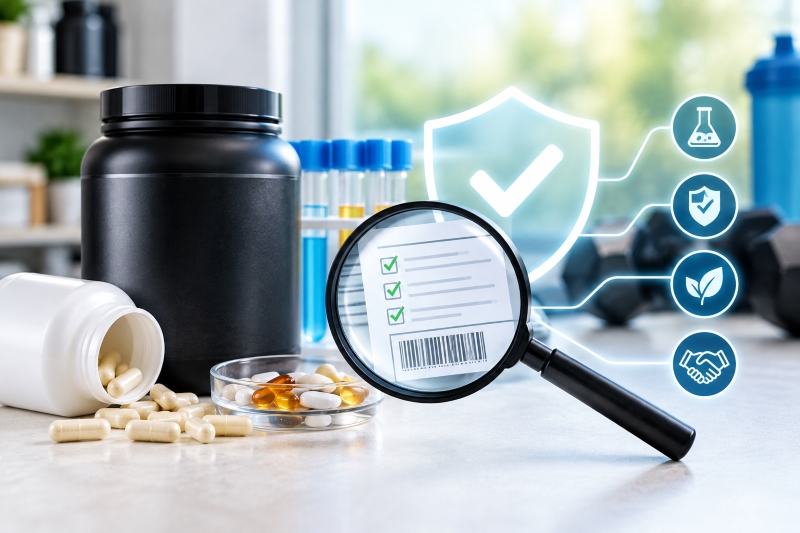
Product → Batch/Lot Number → Testing Laboratory → Tests Performed → Results
This is considerably more informative than simply placing the word “tested” on a website or package.
Where batch testing is available, consumers should ideally be able to understand what was tested and how the relevant batch can be identified.
For competitive athletes, batch or lot traceability can be particularly valuable.
Third-Party Testing: Why Independence Matters
There is an important difference between a company testing its own product and an independent laboratory testing that product.
Internal quality-control testing can be an important part of responsible manufacturing.
Independent third-party testing can provide an additional layer of quality assurance because the analysis is performed outside the manufacturer’s own testing operation.
But even here, consumers should ask sensible questions.
Who performed the testing?
What exactly was tested?
Was the finished product tested or only a raw ingredient?
Which batch or lot was tested?
What analytical method was used?
Are the results available or independently verifiable?
These questions don’t mean consumers need to become laboratory scientists.
They simply encourage a more informed approach to supplement quality.
Clean Label Does Not Automatically Mean Tested
The term “clean label” has become increasingly popular.
It can be useful when it refers to straightforward ingredient disclosure and avoiding unnecessary complexity.
But “clean label” is not, by itself, a laboratory testing standard.
A product can have a simple ingredient list and still require appropriate quality testing.
Similarly, terms such as:
- Natural
- Pure
- Premium
- Clean
- Professional
- Athlete-friendly
- High quality
are not substitutes for evidence of manufacturing and testing standards.
At Fitcart, we believe transparent labelling and testing should complement each other—not replace each other.
Raw Materials Matter Too
Quality doesn’t begin when the finished product reaches the packaging line.
It starts with the raw materials.
The identity, purity, specification, and sourcing of ingredients can influence the quality of the final product.
For example, a protein powder, creatine product, botanical extract or vitamin formulation may involve multiple stages between the original raw material and the finished consumer product.
A robust quality system therefore considers the supply chain as well as the final product.
Important questions include:
- Where did the raw material come from?
- Does it meet an established specification?
- Is the supplier appropriately qualified?
- Are incoming materials tested where appropriate?
- Is the manufacturing process controlled?
- Is the finished product tested?
- Can the product be traced back to its batch or lot?
Quality is a chain.
If one link is weak, confidence in the final product can be affected.
Manufacturing Facilities Matter
The quality of a supplement also depends on where and how it is manufactured.
Good manufacturing practices and appropriate facility controls are designed to help ensure that products are consistently produced and controlled according to defined standards.
This can involve controls around:
Raw materials → Manufacturing → Hygiene → Equipment → Testing → Packaging → Storage → Traceability
A reputable manufacturer should have systems designed to reduce risks such as contamination, mix-ups, and deviations from product specifications.
For consumers, this is one reason why the identity and reputation of the manufacturer matter.
Packaging Is Part of Product Quality
Packaging is sometimes treated as purely cosmetic. It isn’t.
Appropriate packaging can help protect a product from environmental factors such as moisture, oxygen, light, and contamination, depending on the formulation.
Packaging should also provide important information such as:
- Product identity
- Ingredients
- Serving information
- Batch or lot number
- Expiry or best-before information where applicable
- Storage instructions
- Manufacturer information
- Relevant warnings or usage information
A product that cannot be properly identified or traced is harder to evaluate from a quality perspective.
What About Contamination?
Contamination is one of the reasons testing matters.
A supplement may potentially be exposed to unwanted substances during raw-material sourcing, manufacturing, handling or storage.
The issue is particularly relevant to sports nutrition.
A competitive athlete may be taking a perfectly legitimate product for a legitimate purpose, yet contamination or an undeclared ingredient can potentially create an anti-doping problem.
This is why athletes should not assume that a product is suitable for sport simply because its front label looks clean.
Why Athletes Need an Extra Level of Caution
The World Anti-Doping Agency’s 2026 Prohibited List identifies substances and methods that are prohibited in sport, either at all times, in competition or in particular sporting contexts.
Under the anti-doping framework, athletes have a personal responsibility regarding prohibited substances found in their samples. This is known as the principle of strict liability.
That makes supplement selection an important part of an athlete’s risk-management strategy.
For athletes, a sensible supplement-quality hierarchy can include:
Transparent ingredients
↓
Reputable manufacturer
↓
Strong manufacturing controls
↓
Independent quality testing
↓
Batch/lot testing where available
↓
Appropriate screening for prohibited substances
↓
Verification of the specific product and batch where possible
The important point is that these are layers of risk reduction.
No label, logo or single test should be presented as an absolute guarantee.
WADA Does Not “Approve” Commercial Supplements
This is an important distinction.
Consumers sometimes see products described as “WADA approved.”
That wording can be misleading.
WADA maintains the Prohibited List and the broader anti-doping framework; it does not simply approve individual commercial supplement products for athletes.
Athletes should therefore look for appropriate independent certification or testing programmes and verify the specific product and batch where that information is available.
The 2026 WADA Prohibited List is currently in force and should be treated as the relevant reference for athletes subject to the 2026 anti-doping framework.
“Tested Clean” Should Mean More Than a Marketing Phrase
This is where the supplement industry needs greater transparency.
If a product is described as tested clean, consumers should be able to ask:
Clean from what?
Tested by whom?
Was the finished product tested?
Which batch was tested?
What substances were included in the testing panel?
Can the testing or certification be verified?
The phrase becomes much more meaningful when supported by specific, transparent information.
For athletes, this distinction can be particularly important.
What Should Consumers Look For?
You don’t need to investigate every supplement like a laboratory scientist.
But before buying a product, consider looking for:
1. Transparent ingredients
The product should clearly identify its ingredients and quantities rather than relying heavily on vague proprietary blends.
2. Reputable manufacturing
Look for established manufacturers with appropriate quality systems and manufacturing controls.
3. Clear batch or lot identification
A batch number provides traceability and can be important when checking testing information.
4. Independent testing
Where available, look for credible third-party testing rather than relying solely on manufacturer claims.
5. Batch testing
For products where batch testing is important, check whether testing relates to the actual batch or lot being purchased.
6. Appropriate sports testing
Competitive athletes should consider products that have undergone suitable independent screening for prohibited substances.
7. Good packaging and traceability
The product should be properly packaged, identifiable and supported by clear manufacturer information.
8. Evidence behind the ingredient
Testing tells you what is in a product.
It does not automatically tell you whether an ingredient is effective for your particular goal.
That is a separate question.
Testing Quality and Product Effectiveness Are Two Different Questions
This distinction is important.
A supplement can contain exactly what its label says—and still provide little benefit for a particular person.
Conversely, an ingredient may have strong scientific evidence for a specific use, but that doesn’t tell you whether every product containing that ingredient has been manufactured or tested to the same standard.
There are therefore two questions:
Question 1: Is the ingredient appropriate and supported by evidence?
Question 2: Is the product itself manufactured and tested to an appropriate quality standard?
Good supplementation considers both.
Supplements Should Complement — Not Replace — Good Nutrition
Testing and transparency are important, but supplements are still supplements.
They should complement a broader approach that includes:
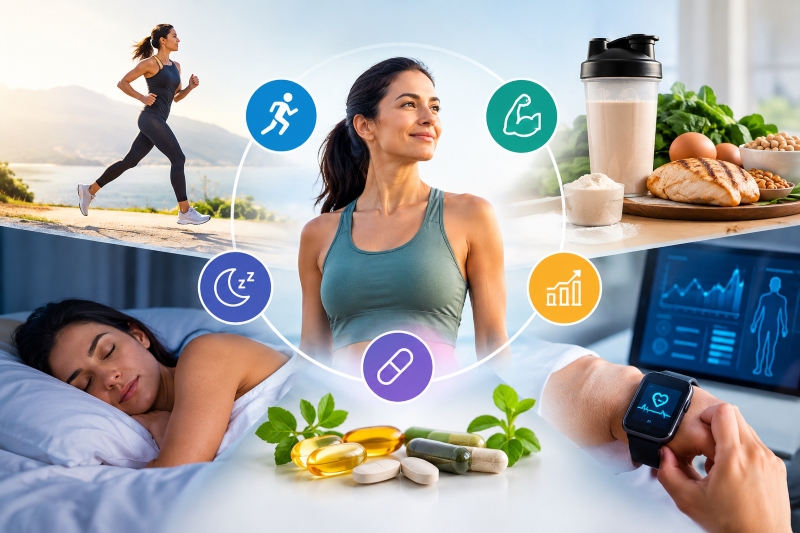
Nutrition + Training + Recovery + Sleep + Lifestyle + Appropriate Supplementation
The goal should not be to accumulate the largest possible supplement stack.
It should be to identify what is actually relevant to the individual.
That could mean correcting a nutritional gap, supporting a specific training goal or using a well-researched supplement where there is a clear reason for doing so.
More products do not necessarily mean better health.
The Rise of Precision Supplementation
This is where the supplement industry is heading.
Rather than asking:
“What supplements should everyone take?”
the better question may increasingly become:
“Which supplement, for which person, for what reason, at what dose—and with what quality assurance?”
Personalised supplementation can potentially consider:
- Diet
- Age
- Training
- Lifestyle
- Goals
- Nutritional requirements
- Relevant blood markers
- Deficiencies
- Health status
- Medication and supplement interactions
But personalisation should never become an excuse for taking unnecessary products.
Precision should mean more appropriate—not more supplements.
The Fitcart Approach: From Ingredient to Finished Product
At Fitcart, we believe supplement quality should be considered across the entire product journey. That means looking beyond the front of the bottle.
Our approach focuses on the principles that matter:
Clean, clearly disclosed ingredients
Quality raw materials
Responsible manufacturing
Appropriate facility and quality controls
Secure and compliant packaging
Independent quality assurance
Batch testing where available
Tested-clean sports nutrition where appropriate
For athletes, this also means recognising the additional importance of prohibited-substance screening and batch/lot traceability.
We believe consumers should be able to make informed choices based on what a product contains, how it is made and how its quality is established.
What Does “Trusted Health” Mean?
At Fitcart, trusted health is not simply about putting a premium-looking label on a bottle.
It is about creating confidence through transparency, quality, and appropriate testing.
We believe the modern supplement consumer should expect:
Clearly labelled ingredients.
Quality raw materials.
Responsible manufacturing.
Tested facilities and appropriate quality controls.
Proper packaging and traceability.
Independent testing and batch testing where available.
And for athletes:
Appropriate screening for prohibited substances and informed supplement selection.
The Future of Supplement Quality Is Transparency
The supplement industry is evolving.
Consumers have access to more products, more information and more personalised health recommendations than ever before.
But more choice also creates a greater need for transparency.
The future of supplementation should not simply be about more products.
It should be about better information, better manufacturing, better testing and better-informed choices.
The question is no longer only:
“What does this supplement claim to do?”
It should also be:
“What is actually in it, how do we know, and can that information be verified?”
That is the direction FitCart believes the industry should move towards.
Better ingredients. Better transparency. Better testing. Better-informed supplementation.
Fitcart — Trusted Health. Tested Standards. Smarter Nutrition.
Trusted Health – https://www.fitcart.com/trusted-health
FAQs
1. Why is supplement testing important?
Testing can help determine whether specified ingredients and quantities meet product specifications and can identify certain contaminants or undeclared substances within the scope of the test.
2. What is batch testing for supplements?
Batch testing involves testing a specific production batch or lot rather than relying only on general claims about a product or manufacturer.
3. What does third-party tested mean?
It generally means testing has been performed by an independent laboratory or organisation rather than solely through the manufacturer’s internal quality-control process.
4. Does a clean label mean a supplement has been tested?
No. Terms such as “clean,” “natural,” “pure” or “premium” are not, by themselves, evidence that a finished product has undergone independent laboratory testing.
5. Why is supplement testing especially important for athletes?
Athletes can face additional risks from prohibited substances or contamination because anti-doping rules can make athletes responsible for substances found in their samples.
6. Does WADA approve supplements?
WADA maintains the Prohibited List and anti-doping framework but does not generally approve individual commercial supplements. Athletes should consider appropriate independent certification and batch-testing information.
7. Does testing guarantee a supplement is completely safe?
No. Testing is performed for specified substances and within defined analytical methods and limits. No single test can guarantee that a product contains no possible contaminant or prohibited substance.
Disclaimer
This article is provided for general educational and informational purposes only and is not intended to constitute medical, nutritional, legal, or professional advice. Supplement quality, composition, and testing can vary between products, manufacturers, and individual batches. Laboratory testing can provide important information about specified ingredients, contaminants or other substances within the scope of a particular test, but no single test can guarantee that a product is completely free from every possible contaminant or prohibited substance.
Consumers should review product labels, ingredient information, batch or lot details, manufacturing information and available independent testing documentation before using a supplement. Individual nutritional requirements, health conditions, medications, allergies and other factors can affect whether a supplement is appropriate. Where appropriate, consult a qualified healthcare or nutrition professional before starting supplementation.
For athletes subject to anti-doping rules, supplements carry additional considerations. Athletes are responsible for what they consume under the applicable anti-doping rules, and contamination or undeclared prohibited substances can present a risk. Where available, athletes should consider independently certified or batch-tested sports supplements and verify relevant batch or lot information through the applicable certification system. No certification or testing process can be interpreted as a guarantee of zero risk.
FitCart supports transparent ingredient disclosure, quality manufacturing practices, appropriate packaging and traceability, independent quality assurance and batch testing where available. Our approach is to encourage informed supplement use alongside appropriate nutrition, training, recovery, sleep and lifestyle practices—not to promote unnecessary supplementation or excessive dosing.
Follow us on X: https://x.com/fitcartofficial and Instagram: https://www.instagram.com/fitcartofficial/ for the latest updates, health insights, and exclusive content.
Follow Smart Nutrition India X: https://x.com/SmartNutrition1 and Instagram: https://www.instagram.com/smartnutritionindia/ for trusted sports nutrition, supplement education, wellness tips, and the latest news from the world of health and performance.
Fitcart believes in True Play and Clean Sport
#trustedbrandsbetterhealth