



Fitcart Sports News Blog.
Authored by S. Kannan (Sports Analyst) and Fitcart Editorial Team Ritu Makhija.
Estimated time: 9–10 minutes.
Return of miracle man Rishabh Pant.
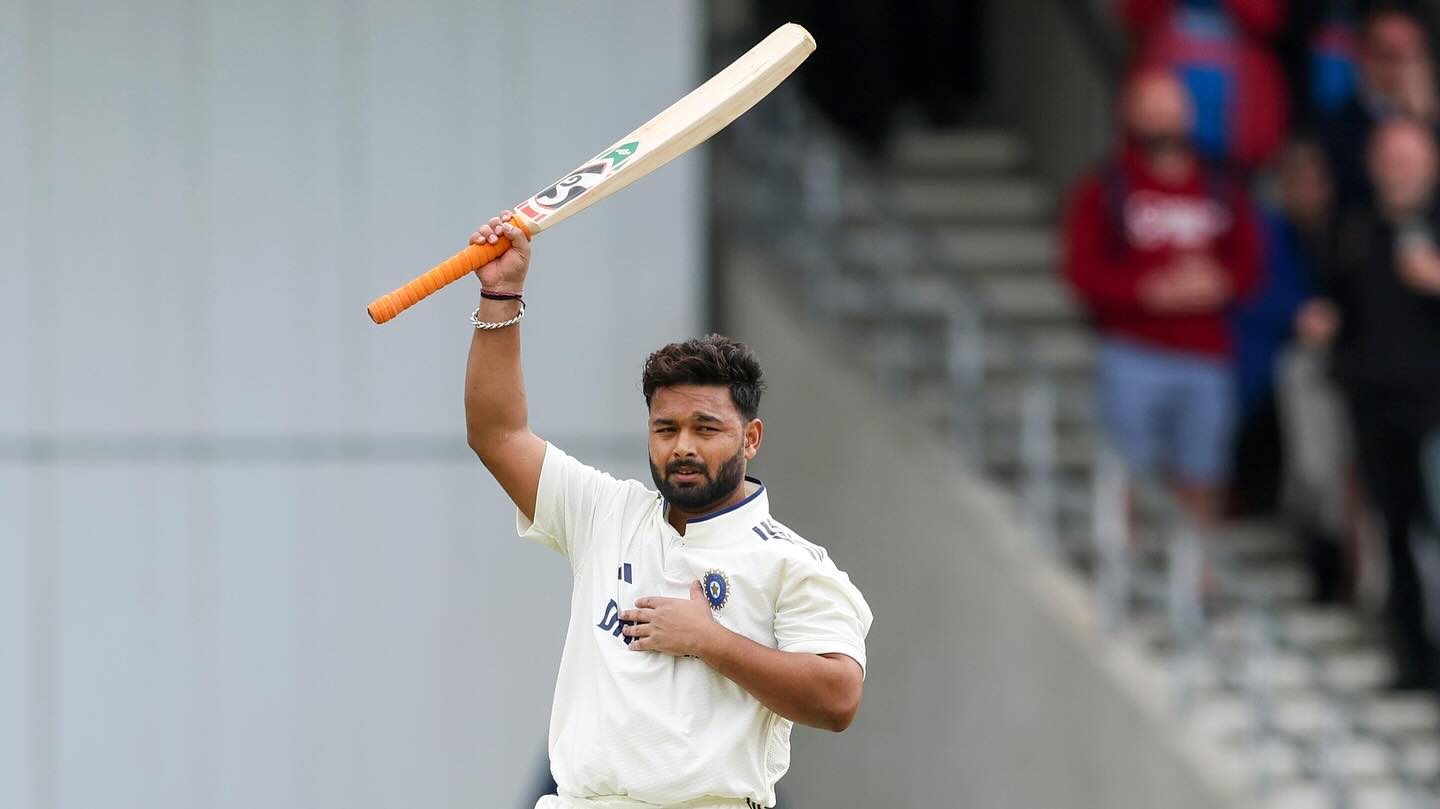
Rishabh Pant, mention the name- and folks are ready to lampoon and lambast him. Why? People hate him for his audacity. If criticism is a catalyst, Pant showed in the first Test against Sri Lanka in Galle that he can mock the critics. Imagine, in this Test, three men could have donned the wicketkeeper gloves: Pant, KL Rahul and Dhruv Jurel. In the end, as India won the first Test with ease on the final day – Wednesday — Pant had set many records.
From the fans’ point of view, given the thirst and greed for sixes, even in a Test, Pant showed that he is bold and beautiful. There have been many batsmen, now batters, before, who have shown a rich vein of form. But if there is one man who has raced to the record of 100 sixes in Test cricket in a time which can be measured at the speed of a Formula One car eating miles on the track, it is Rishabh Pant.
Sample this: folks spend a lifetime getting to 100 sixes. Nobody expects that to be a template in red ball cricket. On a snake-pit of a pitch in Galle, Pant showed will and guile to blast the rival attack. Holy smoke, this was Pant on fire, creating a geometry of shots which would make a student of math proud. He created the angles; he showed that he could whack the ball. What one saw from Pant’s broad bat blade was shots being hit with near contempt.
Watch the replays, where the 28-year-old uses his body. The shoulder, arm, bat speed, swing in different directions, all point toward a man in control. He reads the ball well, picks it early, does not even let it pitch. In less than a second, the ball is in orbit even as the bowler and the fielders hold their heads in sheer disbelief. There can be only one bloke who does this dude stuff, pull off cricketing shots which were not taught in the manual by the high priests of the MCC in the United Kingdom.
Pant’s success story is all about a damaged body, his knee being reconstructed, literally, to bounce back. When Pant’s speeding car crashed in December 2022 on a misty night near Roorkee, his escape was more than a miracle. How he was rescued, it was God’s own plan. Then, Pant was shifted to New Delhi, stabilised, and then flown to Mumbai. Good ortho surgeon Dinshaw Pardiwala, who has worked on so many Indian sports stars, did the job on Pant. His knee was almost gone. From repairing it, then reconstructed it so carefully that he ensured Pant would be back on his feet.
The big question: would Pant ever show that flexibility, since wicket-keeping is so hard? Pant inched back. He had put on weight, almost 10kg extra. Understandable that, as he was on medicines, steroids included, to heal, which would add weight. Plus, the workout had ceased. The return of Pant is a medical treatise for those who followed his arduous grind at the hands of physios, strength and conditioning experts, and experts who saw spark in him.
From near death to a return to cricket in the ICC T20 World Cup in 2024, and then the IPL, Pant mocked his critics. He was back at hammering the ball, keeping wickets, sharp and agile. Now, it’s a template: his sixes, where he has got to 100 of them in just 51 Tests and 89 innings. Even legends like Viv Richards did not race so fast.
Dr Pardiwala spoke on the Rishabh Pant return to fit cart. “His injury was serious, but how we did the repair job and put him back on track was time-consuming. It is a credit to the wonders of medicine, surgery, and Pant’s own desire to heal fast that he is back as a fit cricketer,” said Dr Pardiwala. If you still have doubts on Pant, watch him further. He loves being abused and bounces back like a maverick.
The Fitcart Fitness Lesson: A Comeback Is Built, Not Wished For
Rishabh Pant’s story is much bigger than a cricketing comeback.
For sports-performance enthusiasts, it is a case study in what can happen when medical treatment, rehabilitation, strength and conditioning, nutrition, psychology and an athlete’s determination come together.
The severity of Pant’s injuries made his return particularly remarkable. The BCCI confirmed in March 2024 that Pant had undergone an extensive 14-month rehabilitation and recovery process following the December 30, 2022 road accident before being declared fit as a wicketkeeper-batter for IPL 2024.
Reports detailing his rehabilitation describe a prolonged process involving physiotherapy, hydrotherapy, strength development, flexibility and running progression. His medical team also faced extensive ligament and muscle damage around the knee.
That is where the FitCart story begins.
1. Rehabilitation comes before performance
One of the biggest lessons for everyday athletes is that rehabilitation is not simply about getting out of pain.
The objective after a serious injury is to progressively restore:
- Joint mobility
- Muscle strength
- Balance
- Coordination
- Stability
- Flexibility
- Power
- Sport-specific movement
- Confidence
For a wicketkeeper, the demands are extraordinary.
The athlete must repeatedly squat, rise, accelerate, decelerate, change direction, dive, land, rotate and react to a ball travelling at high speed.
Simply being able to walk again is only the beginning.
2. Strength had to be rebuilt from the ground up
After a major lower-limb injury, strength cannot simply be switched back on.
It has to be progressively rebuilt.
That can mean moving through stages such as:
Mobility → activation → basic strength → unilateral strength → dynamic movement → power → sport-specific conditioning.
Exercises may eventually include squats, lunges, step-ups, hamstring work, calf strengthening, hip strengthening, balance drills, running mechanics, jumping and controlled change-of-direction exercises—but the exact programme must be prescribed according to the injury and rehabilitation stage.
This is why athletes should never copy another player’s rehabilitation programme from social media.
What works for Pant was designed around his injuries, surgery, body and sporting demands.
3. Nutrition becomes part of rehabilitation
When an athlete is injured, nutrition can become just as important as training.
The body requires energy and nutrients to repair tissue, maintain muscle and support the immune system.
Adequate protein is particularly important during periods of reduced activity because inactivity can contribute to loss of muscle mass.
High-quality protein sources can include:
- Eggs
- Fish
- Chicken
- Lean meat
- Milk and dairy products
- Greek yoghurt
- Whey protein
- Soy
- Lentils
- Beans
- Other protein-rich foods
For athletes recovering from serious injury, protein intake should be individualised according to body size, training status, injury, total calorie intake and medical advice.
4. Don’t forget carbohydrates
Carbohydrates sometimes receive unfair treatment in fitness culture.
For an elite cricketer, however, carbohydrates are an important source of training fuel.
As Pant moved from rehabilitation to running, gym work, cricket drills and eventually competition, his nutritional requirements would have changed with his workload.
The general lesson is important:
Nutrition should change with training.
A person doing very little physical activity during an early injury phase does not necessarily need the same carbohydrate intake as an athlete completing several hours of high-intensity training.
5. Healthy fats and micronutrients matter too
Protein and carbohydrates get most of the attention, but rehabilitation requires a complete diet.
Healthy dietary fats provide energy and essential fatty acids, while vitamins and minerals support numerous physiological processes. Important nutrients include:
- Vitamin D
- Calcium
- Magnesium
- Zinc
- Iron
- Vitamin C
- Vitamin B12
- Folate
But there is an important Fitcart principle here:
More supplements do not automatically mean faster healing.
A deficiency should be identified and addressed appropriately. Supplementation should not replace a nutrient-dense diet or medical treatment.
6. Collagen and connective tissue: where supplements fit
Collagen and gelatin have attracted attention in sports nutrition because collagen provides amino acids involved in connective-tissue structure.
Some research has investigated whether gelatin or collagen consumed alongside vitamin C before exercise could influence markers of collagen synthesis.
But this should not be confused with saying that collagen supplements can repair a reconstructed ligament or guarantee faster recovery.
For an injured athlete, the priority remains:
Surgery where required + rehabilitation + progressive loading + adequate nutrition + sleep + medical supervision.
Supplements are potentially supportive—not miraculous.
7. Sleep is part of the training programme
A professional athlete recovering from a major injury cannot afford to treat sleep as an afterthought.
Sleep supports:
- Physical recovery
- Muscle recovery
- Cognitive function
- Reaction time
- Mood
- Immune function
- Training readiness
For a cricketer who has to react to a ball in fractions of a second, cognitive sharpness matters just as much as physical fitness.
Pant’s comeback is therefore also a reminder to recreational athletes:
You don’t recover while you’re training. You recover between training sessions.
8. Bodyweight is not the whole story
The original article highlights Pant’s weight gain during his rehabilitation.
This is an important lesson for anyone trying to return to exercise after injury.
A temporary increase in body weight does not automatically mean an athlete has become unhealthy or unfit.
During recovery, changes in:
- Activity
- Muscle mass
- Fluid balance
- Medication
- Appetite
- Training volume
- Body composition
can all influence body weight.
The objective should be functional recovery and healthy body composition, rather than obsessing over the number on the weighing scale.
9. The psychological comeback matters
There is another component that doesn’t show up on a fitness tracker.
Confidence.
After a major injury, an athlete may physically be capable of performing a movement but psychologically hesitate to do it.
That is why the transition back to competition must be gradual.
An athlete has to regain confidence in:
- Sprinting
- Jumping
- Turning
- Landing
- Squatting
- Diving
- Contact
- Competitive pressure
Pant’s return therefore wasn’t simply a physical transformation.
It was a psychological one too.
10. The wicketkeeper’s body is a special case
Wicketkeeping places enormous repetitive demands on the lower body.
Think about the number of times a keeper gets into a crouched position, rises, moves laterally and reacts to the ball.
Add batting, sprinting, throwing and fielding, and the workload becomes substantial.
That means Pant’s ability to return to wicketkeeping after such a serious knee injury is particularly significant.
The body doesn’t just have to tolerate movement.
It has to tolerate repeated movement under fatigue.
Pant’s 100-Test-six milestone: power after reconstruction
And now comes the extraordinary cricketing part.
During India’s first Test against Sri Lanka in Galle in August 2026, Pant became the first Indian batter to reach 100 sixes in Test cricket and the fastest player to reach that landmark, doing so in his 51st Test.
That achievement is especially striking because Pant’s game depends heavily on explosive movement, bat speed, balance and the ability to generate power from the ground up.
His 100th Test six therefore represents more than a statistical milestone.
For sports-performance fans, it is another reminder of the physical preparation required to produce elite power after a devastating injury.
What everyday athletes can learn from Pant
You don’t need to be an international cricketer to learn from this comeback.
Train progressively
Don’t increase training volume dramatically overnight.
Strengthen the basics
Strong legs, hips, core and upper body create the foundation for athletic movement.
Respect injuries
Pain that persists should not simply be trained through.
Eat for recovery
Adequate protein, carbohydrates, micronutrients and total energy matter.
Prioritise sleep
Recovery is training.
Don’t chase supplements
Use supplements strategically and only when there is a clear rationale.
Work with professionals
Serious injuries require qualified doctors, physiotherapists and strength-and-conditioning professionals.
Be patient
Elite rehabilitation can take months—or years.
The Fitcart takeaway
Rishabh Pant’s comeback is one of the most extraordinary rehabilitation stories in modern Indian sport.
From a life-threatening accident in December 2022 to being declared fit for competitive cricket after an extensive 14-month rehabilitation, his journey demonstrates what can happen when medical expertise, rehabilitation science, physical preparation and an athlete’s determination come together.
And now, in 2026, Pant is producing another chapter.
His record-breaking 100 Test sixes in Galle are a reminder that comeback fitness isn’t just about returning to the field—it is about rebuilding the capacity to perform at the highest level.
For every athlete, weekend warrior and fitness enthusiast, the lesson is simple:
Injury may interrupt the journey. It doesn’t necessarily have to end it.
The comeback is built one rehabilitation session, one strength session, one nutritious meal, one night’s sleep, and one small improvement at a time.
Sports Nutrition & Supplement Disclaimer
This article is intended for general educational and editorial purposes only and is not medical advice. Rishabh Pant’s injury, surgery and rehabilitation were managed by qualified medical and sports-performance professionals, and his programme should not be copied or used as a rehabilitation protocol by other athletes.
Anyone recovering from an injury, surgery or serious medical condition should work with an appropriately qualified doctor, physiotherapist and/or sports rehabilitation professional before returning to training or competition.
Information about protein, collagen, vitamins, minerals and other supplements is provided for general sports-nutrition education and should not be interpreted as a recommendation that any individual needs these products. Supplements cannot replace appropriate medical care, rehabilitation, a balanced diet, adequate hydration, sleep or progressive training.
Fitcart recommends choosing sports-nutrition supplements that are appropriately batch-tested and verified for their contents and checking where raw materials are produced and where finished products are manufactured and packaged. Athletes subject to anti-doping rules should use appropriately certified products and check ingredients against applicable anti-doping regulations.
Image credit to rishabpant on Instagram.
Follow us on X: https://x.com/fitcartofficial and Instagram: https://www.instagram.com/fitcartofficial/ for the latest updates, health insights, and exclusive content.
Follow Smart Nutrition India X: https://x.com/SmartNutrition1 and Instagram: https://www.instagram.com/smartnutritionindia/ for trusted sports nutrition, supplement education, wellness tips, and the latest news from the world of health and performance.
Fitcart believes in True Play and Clean Sport
#trustedbrandsbetterhealth