



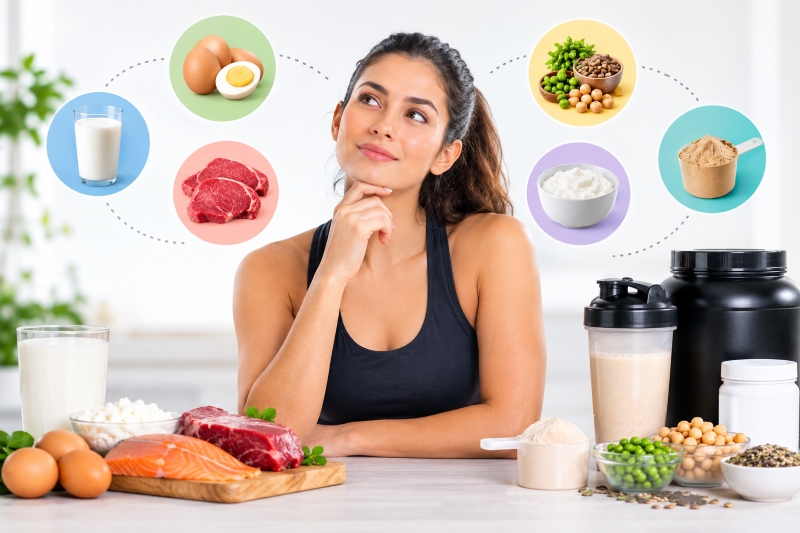
Fitcart Editorial Team Ritu Makhija.
Whey Concentrate vs Whey Isolate vs Fermented Yeast vs Plant Protein.
Protein is one of the most important nutrients for maintaining muscle, supporting recovery and helping the body repair and adapt to exercise. But choosing a protein supplement is not simply about finding the product with the highest number of grams on the label.
The source of the protein, essential amino-acid profile, leucine content, digestibility, dietary preferences, tolerance and quality of the finished product can all matter.
That is why FitcartIQ looks beyond the front of the tub.
In this comparison, we look at four increasingly popular protein categories:
- Whey concentrate
- Whey isolate
- Fermented yeast protein
- Plant protein
The goal isn’t to declare one protein universally “best.” It is to understand how each type differs and which characteristics may make it suitable for different people and different goals.
Protein Quality: More Than Just Grams
Two products can both provide 25 g of protein but still differ in amino-acid composition and digestibility.
The body needs nine essential amino acids (EAAs) from the diet. Leucine is particularly important for stimulating muscle protein synthesis, while the overall amino-acid profile and digestibility determine how effectively the protein can provide those building blocks.
Research comparing protein sources has generally found that dairy proteins such as whey have very high digestibility and strong essential-amino-acid profiles. Plant proteins can also provide high-quality protein, but their amino-acid composition and digestibility vary considerably between sources and processing methods. (FAO AGRIS)
This is one reason a well-formulated plant protein blend can be useful: combining complementary protein sources can help create a broader amino-acid profile.
The Four Protein Categories Compared
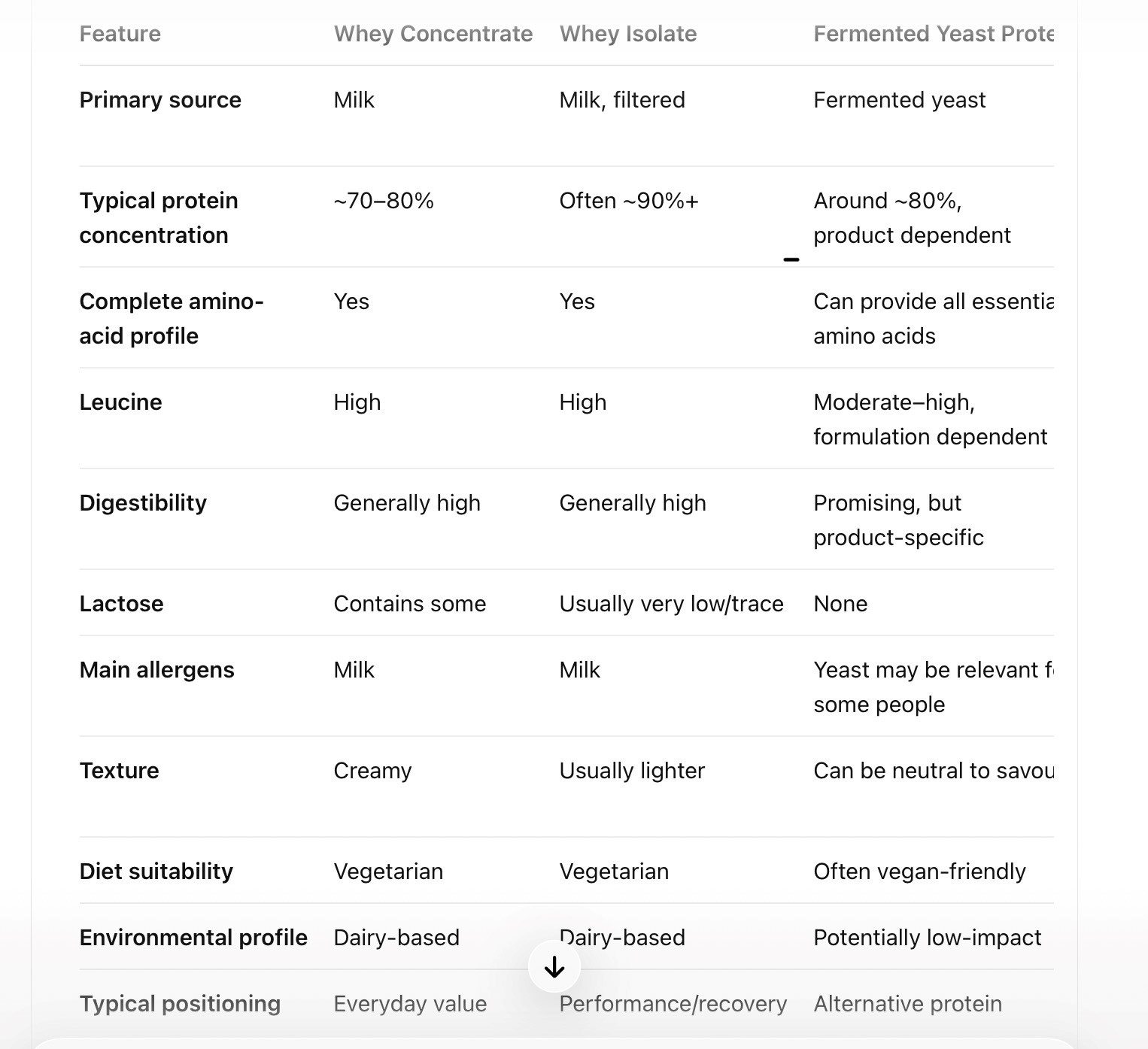
Values are indicative rather than universal. Actual nutrition depends on the individual product, processing method and formulation.
1. Whey Concentrate: Everyday Protein Support
Whey concentrate is produced from milk and typically retains more of the naturally occurring components of whey than whey isolate.
For many people, it provides an effective combination of:
Protein + essential amino acids + good taste + mixability + value.
It can be a practical choice for people who tolerate dairy and want to increase their daily protein intake without paying the premium associated with more highly filtered products.
Potential advantages
- High-quality complete protein
- Naturally rich in essential amino acids
- Good source of leucine
- Usually excellent taste and mixability
- Often more economical than isolate
Things to consider
Because it retains more of the milk components, whey concentrate generally contains more lactose than whey isolate. People who are sensitive to lactose may therefore find isolate easier to tolerate.
2. Whey Isolate: A More Concentrated Dairy Protein
Whey isolate undergoes additional filtration to remove more of the non-protein components.
The result is generally a protein powder with a higher protein concentration and very little lactose.
For athletes and people who prioritise protein quality around training, whey isolate is attractive because whey naturally provides a high proportion of essential amino acids and leucine.
Research comparing protein sources has consistently demonstrated strong digestibility and amino-acid availability for whey proteins. (FAO AGRIS)
Potential advantages
- High protein concentration
- Complete essential amino-acid profile
- High leucine content
- Very low lactose in many products
- Useful when a high protein intake is required without adding much carbohydrate or fat
Things to consider
Whey isolate is still a milk-derived protein and is therefore unsuitable for people who need to avoid dairy proteins because of allergy or other dietary requirements.
3. Fermented Yeast Protein: An Emerging Alternative
One of the most interesting developments in protein nutrition is the use of microbial or fermented proteins, including yeast-derived protein.
Yeast protein is produced through fermentation rather than directly from an animal or conventional plant crop.
Research into yeast protein is still developing, but early studies are encouraging. One recent comparison found that yeast protein could provide a strong essential-amino-acid profile and higher protein-quality scores than several plant proteins, although its digestibility remained below that of the animal proteins tested. (PubMed)
Another study using an in-vitro digestion model found yeast protein concentrate had relatively high true ileal indispensable-amino-acid digestibility compared with several alternative protein sources. (FAO AGRIS)
That makes fermented yeast protein particularly interesting for the future of sports nutrition and sustainable protein.
Potential advantages
- Dairy-free
- Suitable for many vegan diets
- Can provide all essential amino acids
- Interesting emerging protein technology
- Potentially lower environmental impact than dairy proteins
What to remember
“Yeast protein” is not one single ingredient with identical characteristics across all products.
The specific yeast species, processing method, amino-acid profile, digestibility and formulation matter.
This is an area where looking beyond the marketing label becomes particularly important.
4. Plant Protein: Flexible and Increasingly Sophisticated
Plant protein has moved far beyond the early days of grainy, difficult-to-mix powders.
Today’s products can contain pea, soy, rice, hemp, potato and other plant proteins — either individually or in blends.
The main consideration is that plant proteins differ significantly in amino-acid composition and digestibility.
For example, research comparing protein sources has found that whey generally has higher digestible indispensable amino-acid values than pea and some other plant proteins, while soy can perform relatively strongly among plant proteins. (FAO AGRIS)
Why blends can be useful
A carefully designed blend can combine proteins with complementary amino-acid profiles.
For example:
Pea + rice
can provide a broader amino-acid balance than relying on either protein alone.
Potential advantages
- Vegan and vegetarian friendly
- Dairy-free
- Wide variety of formulations
- Can fit environmentally conscious diets
- Useful for people who don’t tolerate dairy
Things to consider
Check the actual protein source and amino-acid profile, rather than assuming every plant protein powder has the same nutritional quality.
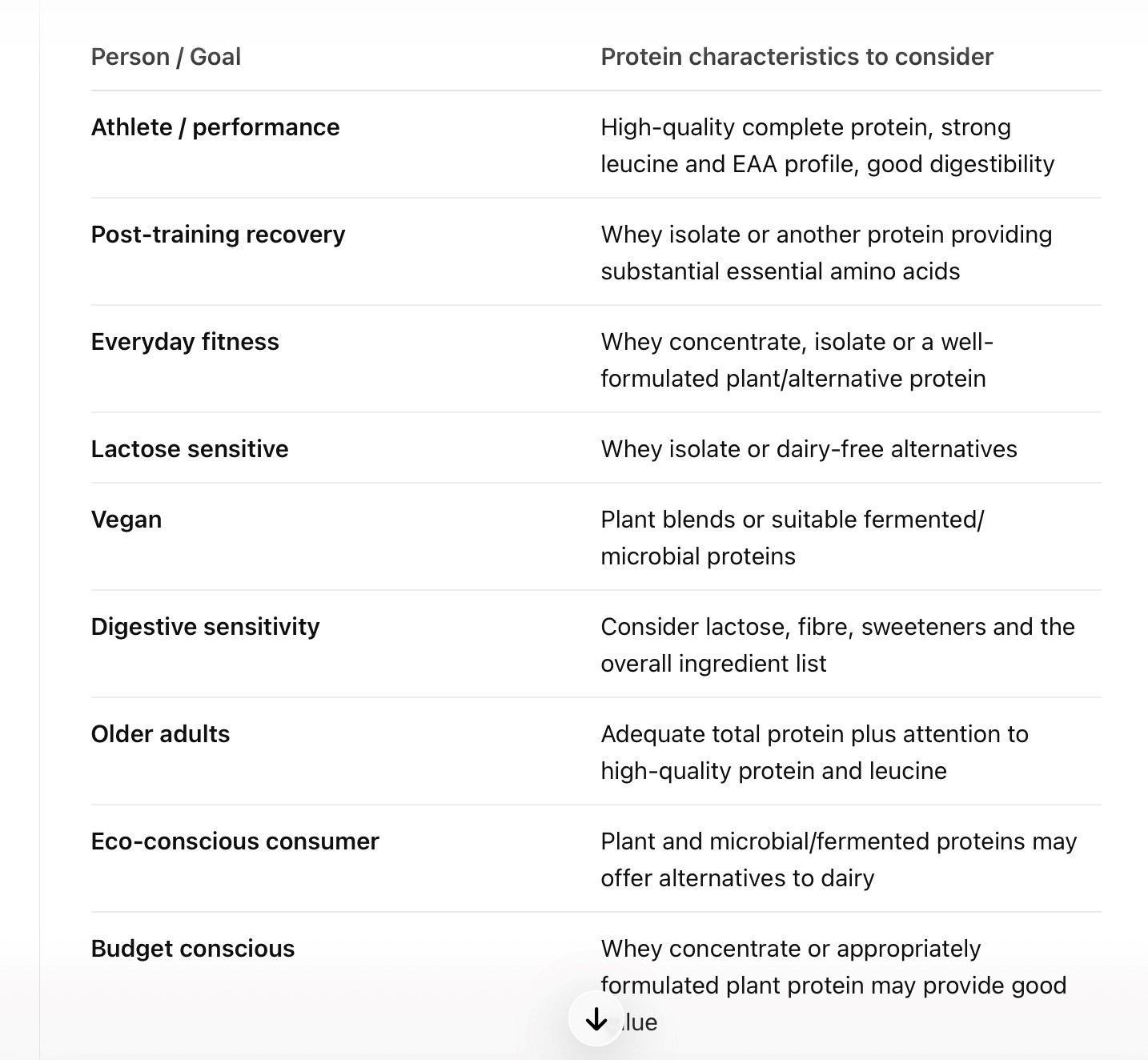
Which Protein Might Fit Different Goals?
There is no single protein that is right for everybody.
Protein for Healthy Ageing
Protein becomes particularly important as we age because maintaining muscle mass and physical function becomes increasingly important.
European expert guidance has suggested that healthy older adults generally need around 1.0–1.2 g of protein per kilogram of body weight per day, with individual needs varying according to health, activity and nutritional status. (Espen)
For someone who exercises regularly, protein quality and distribution across the day can become especially relevant.
Rather than thinking only about the protein powder, consider the bigger picture:
Total daily protein + resistance exercise + adequate calories + sleep + recovery.
A protein supplement should complement this foundation rather than replace it.
Protein Powder Is Not Automatically a Better Protein
One of the biggest misconceptions in sports nutrition is that protein powder is inherently superior to whole food.
It isn’t.
Eggs, dairy, fish, poultry, meat, soy, lentils, beans, peas and other foods can all contribute valuable protein.
Protein powders are primarily a convenience tool.
They can be useful when:
- A meal is inconvenient
- Protein requirements are higher
- Appetite is low
- Post-training nutrition needs to be practical
- A person struggles to reach their protein target through food alone
The quality of the overall diet remains more important than the choice between two protein powders.
The FitcartIQ Approach: Look Beyond the Label
A protein powder can look impressive on the front of the package while leaving important questions unanswered.
Before choosing a product, consider:
1. What is the actual protein source?
Whey, pea, soy, rice, yeast and protein blends have different nutritional characteristics.
2. How much protein does the product actually provide?
Look at the protein per serving, not simply the size of the scoop.
3. What is the amino-acid profile?
For athletes, leucine and the broader essential-amino-acid profile can be particularly relevant.
4. What else is in the product?
Look at:
- Added sugars
- Sweeteners
- Fillers
- Flavouring agents
- Allergens
- Unnecessary proprietary blends
5. Has the product been independently tested?
This is especially important for competitive athletes.
A supplement label alone does not establish that every batch is free from prohibited substances or contaminants.
For athletes subject to anti-doping rules, appropriate third-party testing and batch-level verification can provide an additional layer of confidence.
6. Is the product traceable?
Where available, consumers should look for information about the manufacturer, production standards, testing and batch or lot identification.
For Athletes, Supplement Safety Matters
Athletes have an additional consideration that ordinary consumers may not: contamination risk.
Even when a product is marketed as “clean,” the label itself is not a laboratory test.
Competitive athletes should consider products that have undergone credible third-party testing appropriate to their sport and anti-doping requirements.
Fitcart’s approach is to encourage consumers to look for tested, transparent and traceable sports nutrition, rather than choosing products based solely on marketing claims.
So, Which Protein Should You Choose?
Think about protein selection as a matching exercise rather than a competition.
Whey concentrate may make sense when value, taste and everyday protein intake are priorities.
Whey isolate can be attractive when a highly concentrated dairy protein with very little lactose is preferred.
Fermented yeast protein represents an exciting emerging category for people looking for dairy-free, microbial protein with a potentially strong nutritional profile.
Plant protein blends offer flexibility for vegan, vegetarian and dairy-free consumers, particularly when complementary protein sources are combined.
The most appropriate choice ultimately depends on your diet, tolerance, training demands, nutritional requirements, preferences and the quality of the individual product.
The Bottom Line
Protein is not simply about the number printed on the front of a tub.
Source matters. Amino acids matter. Digestibility matters. Formulation matters. Testing matters. And the individual matters.
As the protein market continues to evolve, consumers are gaining more choices than ever — from traditional whey to sophisticated plant blends and next-generation fermented proteins.
The smartest approach is not to ask:
“Which protein is the best?”
Instead ask:
“Which protein provides the characteristics I need — from a product I can trust?”
That is the idea behind FitcartIQ: Protein Intelligence.
Tested. Trusted. Certified
Fitcart Trusted Health
Fitcart disclaimer
This article is for general educational and informational purposes only and is not medical, nutritional or dietary advice. Protein requirements vary according to age, body size, activity level, health status and individual goals. The nutritional characteristics of protein supplements can vary significantly between brands and formulations. Always read the product label and consider independent quality and batch testing where available. Competitive athletes should check that supplements are appropriately tested for prohibited substances and remain responsible for what they consume under applicable anti-doping rules. People with food allergies, kidney disease, other medical conditions or specific dietary requirements should consult a qualified healthcare or nutrition professional before using protein supplements.
Follow us on X: https://x.com/fitcartofficial and Instagram: https://www.instagram.com/fitcartofficial/ for the latest updates, health insights, and exclusive content.
Follow Smart Nutrition India X: https://x.com/SmartNutrition1 and Instagram: https://www.instagram.com/smartnutritionindia/ for trusted sports nutrition, supplement education, wellness tips, and the latest news from the world of health and performance.
Fitcart believes in True Play and Clean Sport
#trustedbrandsbetterhealth