



Fitcart Sports News Blog.
Authored by S. Kannan (Sports Analyst) and Fitcart Editorial Team Ritu Makhija.
Any talk of longevity in sports and endurance, the name of hockey star Manpreet Singh Pawar has to figure high on the list. Even as a needle storm rages over the colour of the outfit Team India will sport at the FIH World Cup, to be held in Belgium and the Netherlands from August 15 to 30, Manpreet evokes awe and inspiration.
Hockey is not a sport where fans dabble with too many records and data-driven stats. At best, people will be able to reel off when India won Olympic medals and how Dhyan Chand mesmerised the world, including Germany, when tyrant Adolf Hitler wanted him to stop playing for India. And yet, there are stories which make you wonder what keeps Manpreet the maverick going.
Born in Mithapur, a village on the outskirts of Jalandhar in Punjab, Manpreet took to hockey on the same turf where former India captain Pargat Singh lives. The Punjabi flavour in Indian hockey has existed for decades, despite changes from natural grass to synthetic turf. It is well-known that competing on any artificial surface is hard on the ankles, knees and hips.
Tribute to Manpreet, the maestro who has played as a midfielder and overlapping back line players has created a legacy of turning up in 413 international matches. The passion to keep pressing, the desire to be part of Team India based on performance, and having changed with the flow, like river water, has defined Manpreet. Durable and devout to his sport, you will not see macho images of Manpreet, even though hockey is a tough sport.
Each player spends 60 minutes in four quarters on the field. This is a newer concept, for the old pattern was playing two halves spread over 70 minutes each. As much as Manpreet has kept emotions in check and plays for India with the same passion and zeal, he has run into problems with the powers-that-be. As Team India under coach Craig Fulton attempts to change the narrative at the FIH World Cup, this will be a new high for Manpreet.
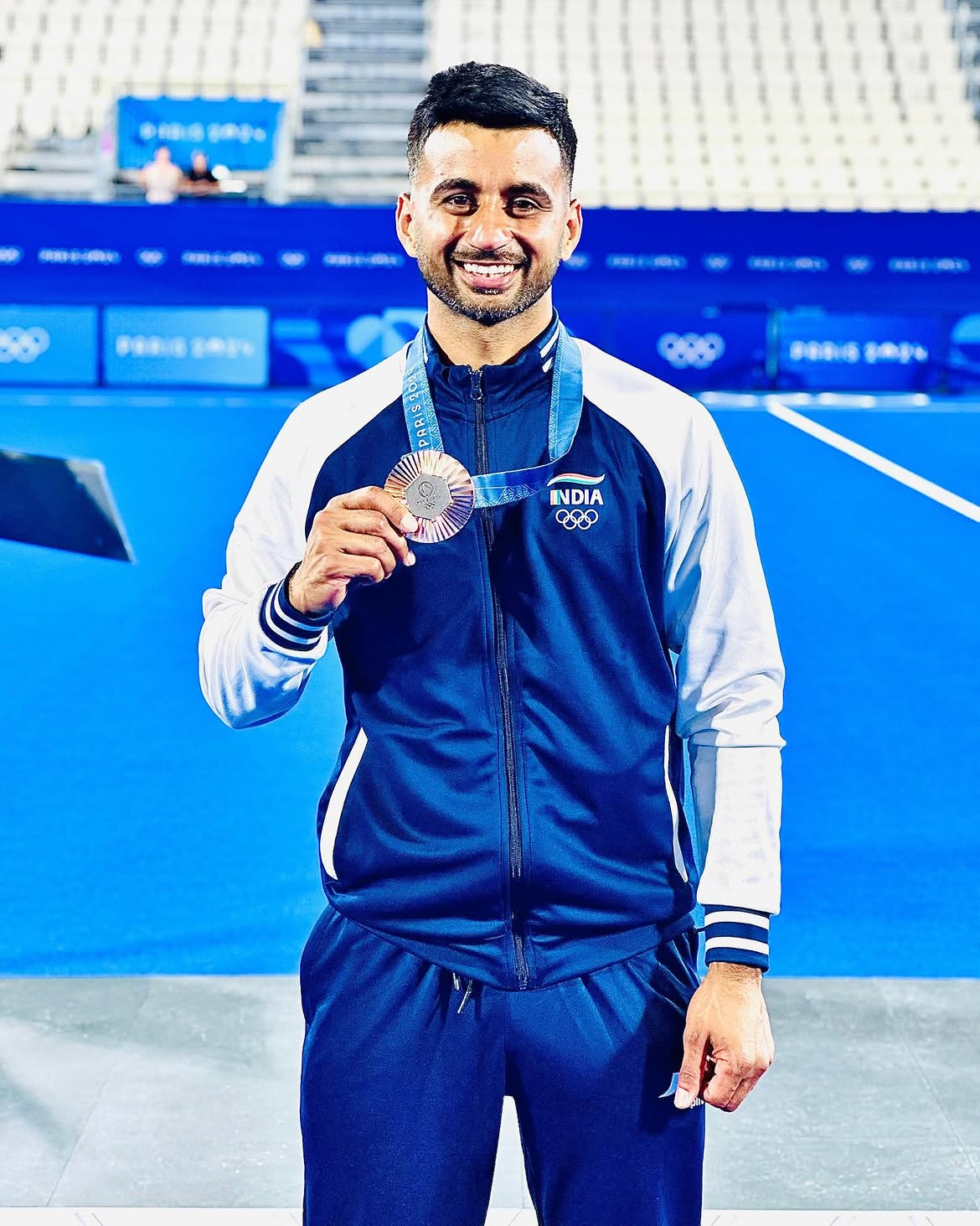
He was captain when India won a bronze medal at the Tokyo Olympics in 2021. Manpreet had confessed, in an interview with this writer at that time in New Delhi, that he wanted to play one more Olympics. One Olympics and a medal around the neck is enough for a lifetime. But then, Manpreet changed gears, was content to give up captaincy and play just as a team member. He still contributes, and was the proud winner of the team which again won a bronze medal at the Paris 2024 Olympics. “I hope I can now go for the LA 2028 Olympics,” said Manpreet. This is his manic desire!
Manpreet knows he is no longer the cynosure. The Sardar is also aware in a sport where there is not too much room for individual creativity, to be in the middle and still serve India is something which gives him joy. When he married a Malaysian-Pakistani girl in 2021, there was, again, a needless controversy. Manpreet handled that as well with calmness. This kind of maturity, where he is now a father of two daughters, defines him,
Standing at five feet and seven inches with an optimal weight of 69kg, Manpreet‘s training sessions are energetic. He burns close to 3200 calories per session, which is massive. How he does good recovery, stays fit, and pushes the intensity levels is fascinating. Common public will tell you every detail about the diet plan of Virat Kohli. Manpreet, too, believes in eating the right way.
His breakfast comprises oatmeal, portions of fresh fruit and four egg whites. He avoids the cholesterol-heavy yellow. This is not a heavy breakfast and keeps him energised for a strong and intense training session. At lunch, the Sardar has clean carbs, which are brown rice, chicken, green vegetables, which serve as antioxidants, and boiled potatoes.
Manpreet is not known to be too much of a snack guy. He does love black coffee, which is now mentioned as good for health, a banana for quick energy, and a bread portion which is made of wheat.
Elite athletes do not indulge in heavy dinners. So, Manpreet mixes a salad which has vegetables, chicken which is minus any grease/oil, boiled veggies and a minimal amount of roti, at times half. He does take a glass of milk, which is a good source of calcium to keep his bones strong.
In terms of fitness, Manpreet drills hard in the lower body workout as he spends massive time on the hockey field. His gym workout includes the hamstrings, quads, and glutes. He has to push hard, and to avoid any injury, his training methods are scientific. Manpreet does not look strong, but if you pinch his skin, there will not be half an inch of fat. High-intensity interval training, shuttle ball run, meshed with weight training keeps Manpreet going. Can he win that elusive World Cup medal for India and go full tilt at the Asian Games in Nagoya, this September? Time will tell!
Manpreet Paaji, to juniors, is, indeed, a role model.
What Manpreet Singh’s Longevity Can Teach Every Athlete
Manpreet’s remarkable career highlights an important lesson in modern sport: longevity isn’t simply about training harder—it is about recovering smarter and consistently giving the body what it needs.
For athletes involved in hockey and other high-intensity field sports, performance depends on a combination of aerobic fitness, repeated sprint ability, strength, mobility, nutrition, hydration and recovery.
A training programme can be extremely demanding, but without adequate recovery, performance can eventually suffer.
1. Protein: The Building Block of Recovery
Repeated sprinting, acceleration, deceleration and strength training place significant demands on muscle tissue.
Adequate daily protein intake helps support muscle repair and maintenance. Athletes can obtain protein from foods such as eggs, dairy, chicken, fish, lean meat, legumes and other protein-rich foods.
For athletes whose schedules make whole-food protein difficult to consume consistently, a quality protein supplement can be a convenient option.
Whey protein, for example, provides a concentrated source of essential amino acids and can be particularly useful after training or when a meal is delayed.
The Fitcart approach: supplements should complement a well-structured diet—not replace it.
2. Carbohydrates Fuel High-Intensity Hockey
One of the most important lessons from an athlete such as Manpreet is that carbohydrates should not automatically be viewed as something to eliminate.
Hockey involves repeated bursts of acceleration, sprinting, changes of direction and high-intensity activity. Muscle glycogen is an important fuel source during this type of exercise.
Foods such as oats, rice, potatoes, fruit and whole grains can provide useful carbohydrate sources around training.
The amount and timing should be adjusted according to training load, match schedules and individual requirements.
3. Hydration Matters More Than Many Athletes Realise
A hockey player can lose considerable fluid through sweat, particularly during prolonged training sessions or matches in hot and humid conditions.
Even relatively small levels of dehydration can make demanding exercise feel harder and may affect physical performance.
Water is often sufficient for shorter or lower-intensity sessions. During prolonged, high-intensity training or heavy sweating, an electrolyte-containing sports drink may be useful for replacing fluids and key electrolytes such as sodium.
This is particularly relevant for Indian athletes training and competing in warm conditions.
4. Strength Training Supports Athletic Longevity
Manpreet’s emphasis on the hamstrings, quadriceps and glutes is particularly relevant to field-sport athletes.
A strong lower body can support sprinting, acceleration, deceleration and changes of direction. Strength and conditioning programmes can also incorporate mobility, balance, core stability and movement quality.
The goal isn’t simply to build bigger muscles.
For an elite hockey player, the objective is to develop usable strength, power, speed and resilience without compromising movement or hockey-specific performance.
5. Recovery Is Part of Training
One of the biggest differences between recreational exercise and elite sport is the attention paid to recovery.
Sleep, nutrition, hydration, rest days, mobility work and appropriate training loads all contribute to an athlete’s ability to return to the next session ready to perform.
Supplements may have a role in a structured recovery strategy, but they should never be considered a substitute for adequate sleep, calories, protein, carbohydrates, fluids and professionally designed training.
The Fitcart Perspective: Train for the Long Game
Manpreet Singh’s story is ultimately about much more than 413 international appearances.
It is about adaptability.
Athletes evolve. Training methods change. Surfaces change. Competition becomes faster. The body changes with age. The athletes who remain at the highest level are often those who learn to adapt their training, nutrition and recovery rather than simply repeating what worked years earlier.
For young athletes, Manpreet’s career offers an important message: longevity isn’t created in one spectacular training session. It is built through thousands of consistent decisions—training intelligently, eating well, recovering properly and respecting the body.
At Fitcart, we believe sports nutrition should support that long-term approach.
Whether it is protein for daily nutritional needs, carbohydrates and electrolytes for demanding training, or carefully selected recovery products, the priority should always be quality, transparency and suitability for the athlete.
Look beyond the label. Understand the ingredients. Check manufacturing standards and, for competitive athletes, consider products carrying credible third-party testing or certification designed to reduce the risk of prohibited-substance contamination.
Because performance is not just about going harder. It is about being able to keep going.
Fitcart Sports Nutrition Advisory
Competitive athletes should take particular care when choosing supplements. Products should ideally come from reputable manufacturers with strong quality-control systems and appropriate batch testing.
Where relevant, athletes should look for recognised third-party sport certification, such as Informed Sport, which is designed to help reduce the risk of inadvertent exposure to prohibited substances through contaminated supplements.
Always check the current status of a product and certification before use, particularly when competing under anti-doping regulations.
Disclaimer
The information in this article is for general educational and informational purposes only and is not medical, nutritional or professional sports-performance advice. The original feature and athlete-specific information are presented as part of the article and should not be interpreted as a recommendation that readers copy an elite athlete’s diet, training programme, calorie expenditure or supplement routine.
Individual nutritional and training requirements vary according to age, body composition, training volume, health status, sport and performance goals. Consult a qualified sports nutritionist, dietitian, physician or other appropriate healthcare professional before making significant changes to your diet, training or supplementation.
Supplement disclaimer:
Supplements are intended to complement a balanced diet and appropriate training—not replace either. Competitive athletes should use caution when selecting supplements and should choose products from reputable manufacturers with appropriate quality controls and independent batch testing where possible. Always check ingredients and applicable anti-doping requirements before use.
Image credit to manpreetsingh07 on Instagram
Follow us on X: https://x.com/fitcartofficial and Instagram: https://www.instagram.com/fitcartofficial/ for the latest updates, health insights, and exclusive content.
Follow Smart Nutrition India X: https://x.com/SmartNutrition1 and Instagram: https://www.instagram.com/smartnutritionindia/ for trusted sports nutrition, supplement education, wellness tips, and the latest news from the world of health and performance.
Fitcart believes in True Play and Clean Sport
#trustedbrandsbetterhealth