



Fitcart Sports News Blog.
Original article by S. Kannan (Sports Analyst) and Fitcart Editorial Team | Additional Fitcart.com performance and nutrition information.
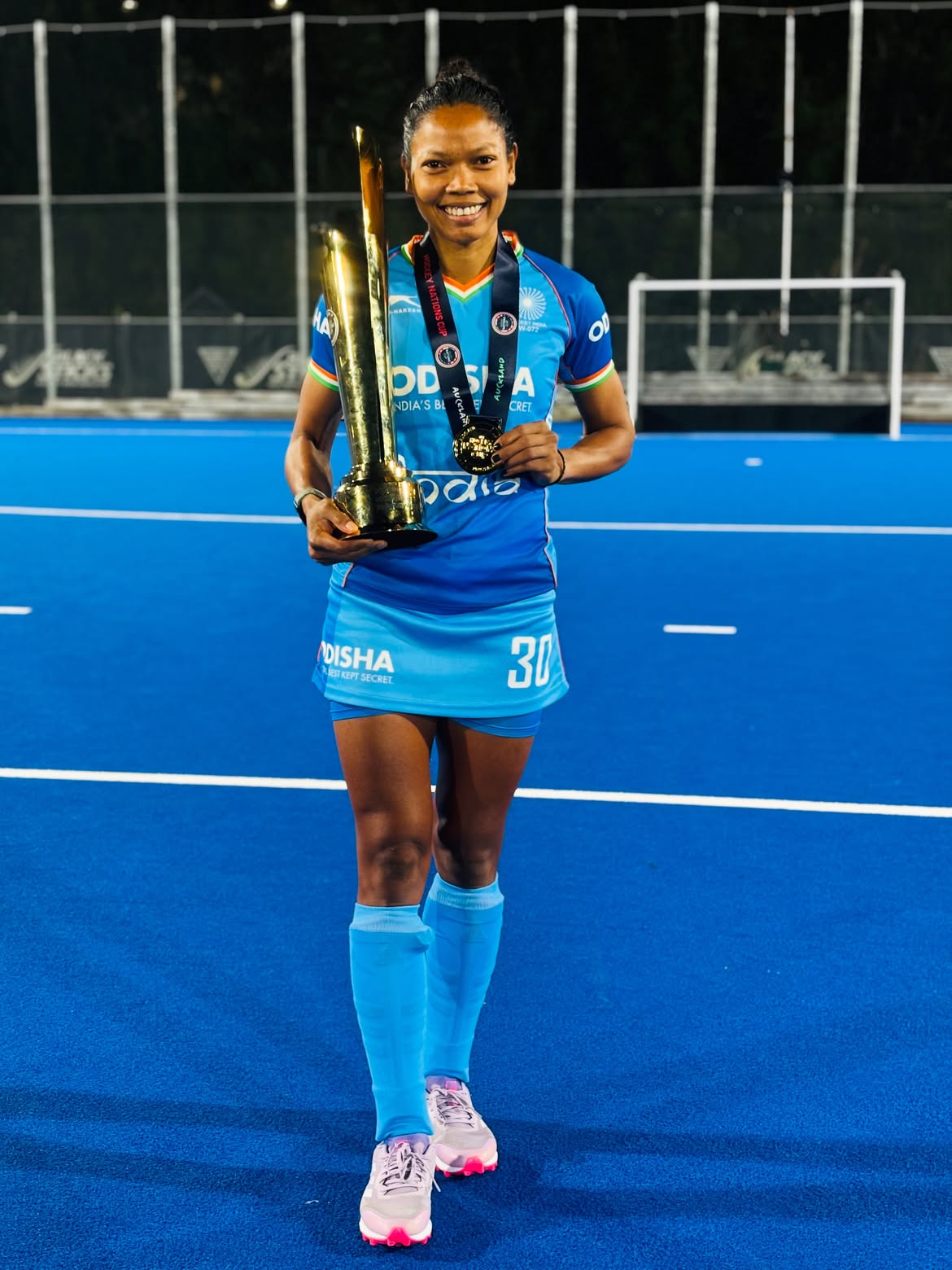
Jai Ho Salima Tete, India’s mercurial hockey captain -S. Kannan.
Indian hockey stories are inspiring. On the 80th Independence Day, it is worth raving about young hockey captain Salima Tete. Like the proverbial rise like a phoenix, this diminutive lass from Jharkhand has snaked her way up the ladder by sheer dint of hard work, self-belief, and an attitude to be proud of.
Salima knows leading India is a privilege as well as a burden on her shoulders. Short, at five feet and two inches, she is still a livewire, commands the midfield and has been on national duty for nine years. The good part, she has made use of her shorter frame to be able to move fast and snappy, show that bending knees, use the hockey stick with tricks, and work her way around is natural.
A hockey player’s movements on the field are not easy to emulate. The standing position is rare. For all of the 60 minutes, barring the period when they are at rest, which is rare, players have to move with the ball. That whole posturing is such, back bent forward, pressure on knees and forward thrust calls for energy and being strong in the whole body. But the best part, no hockey player complains of the rigours in the midfield. It is a job which Salima chose as a midfielder, to be ready all the time in the thick of action.
To be sure, hockey is not as rewarding as an individual sport like shooting, track and field, tennis or even golf. Yet, those girls who play for India, know what it is to play when the national anthem is sung, how they shout ‘Bharat Mata Ki Jai’ when they assemble inside the turf and then go flat out. In a day’s time, Salima Tete will be leading India in the FIH World Cup, and expectations are this side will win hearts if not medals.
Having begun her career with bamboo sticks in bucolic settings in Jharkand, Salima Tete fell in love with hockey. She was born in 2001, knew what the movie Chak De Chake De India symbolised, and wanted to don the Indian colours. Salima’s game is compact, and to emerge as a leader/captain is a tribute. Unlike cricket, where most of of the leadership stuff is done by the captain, in hockey, the captain has to show leadership more by way of playing her heart out and setting an example. Of course, there are quick words exchanged with fellow mates, as the game is played at such a snappy pace, to view the ‘field’ in entirety is not possible. Here, Salima the captain uses her vision to shout out to teammates, tells them to surge forward or funnel back and bolster the defence.
To be a robust hockey player, fitness is something which has to be treated as a passion than a duty. A 100 per cent fitness, ensuring the body is supple and avoiding injuries, Salia Tete has to slog crazily. How she does it is by using her own body structure, which is compact and athletic. In an age where science, diet, nutrition goes in sync, Salima stands out.
If you have watched Salima Tete in action, her speed is eye-catching. This is a girl moving so fast and accelerating like a Ferrari on the speedway, she leaves others behind. For those who feel speed is genetic and the quick bursts are natural, that is not always true. Salima’s training methods are gruelling. For those who know about cardio capacity, building on it, how to accelerate and decelerate, lung capacity is built by way of fitness. Even when the Yo-Yo scale is used to measure how good a player is in Indian women’s hockey, the way Salima stands out is well-known. Her training has been referred to as a ‘military grind’ for its intensity and being punishing. But then, it’s a way of life, to push like this and tear through the hockey turf.
Her speed comes in handy, not just in the field. Even when the penalty corner drills are awarded in a match, Salima has to show speed, skill and coordination which is of importance to the team. This is not repetitive by nature, but training where skill and will come together. Penalty corner conversion is hard work and any mistake can cause grief.
Villagers have watched Salima the star go for running in the morning at 5AM. This is a clean habit, even when she is on a break from national duty and long camps. The kind of weight training she has incorporated to be strong involves heavy squats, weight training to keep the lower body strong. After all, to race, stop, again burst into action, turn the body at various angles, hold the stick and still maintain balance is not easy. Salima has also enjoyed the Army style boot-camps, where the training is rigorous.
How does Salima fuel her body? In hockey, players burn loads of calories. The meals are planned in a way she has enough energy to carry her through a match and also make recovery in good time.
A zero-junk food policy, no sugar, ingesting proteins from dal, eggs and also lean chicken have been advised by the nutritionists. Salima also adds complex carbs in her diet, where brown rice, oats and low glycemic food is consumed. In hydration, Salima focuses on maintaining electrolyte balance. Running on the field can lead to burn-out, loss of electrolytes and even cramps due to heat produced inside the body and the heavy astro-turf. She ensures the sodium, potassium levels do not drop, which is through consuming the right, aqua-based fluids. Today, an elite hockey player like Salima Tete leads India by example to keep the tricolour aflutter overseas.
Fitcart.com Performance & Nutrition: What Elite Hockey Teaches Us
Salima Tete’s journey highlights something that applies to every athlete — elite performance is built from the combination of training, nutrition, recovery, discipline and consistency.
Hockey is an exceptionally demanding field sport. Players repeatedly accelerate, decelerate, change direction, sprint, stop, bend, tackle and maintain technical control while under pressure.
For a midfielder, the physical demands can be particularly significant because the player must contribute to both attack and defence while maintaining awareness of what is happening across the field.
1. Speed Is More Than Just Running Fast
A hockey player’s speed is a combination of:
- Acceleration
- Maximum sprint ability
- Deceleration
- Agility
- Change of direction
- Reaction time
- Balance and coordination
- Lower-body strength
- Technical skill
This means speed training should not simply involve running long distances.
A well-designed hockey conditioning programme can incorporate short sprint intervals, acceleration drills, shuttle runs, change-of-direction exercises, plyometric movements and sport-specific drills.
The important principle is quality over quantity. Sprint training is highly demanding and needs adequate recovery between high-intensity efforts.
2. Strength Training Builds the Foundation
The heavy squats and strength work mentioned in S. Kannan’s article highlight the importance of lower-body strength.
For hockey players, strong legs help support:
- Acceleration
- Deceleration
- Sprinting
- Changes of direction
- Stability
- Balance
- Powerful movements
- Injury resilience
A complete strength programme should not focus exclusively on the legs.
The core, hips, glutes, hamstrings, calves, back and upper body all contribute to athletic performance.
Resistance training should be progressively structured around the athlete’s age, experience, competition schedule and individual needs, ideally under the supervision of a qualified strength and conditioning coach.
3. Hockey Needs Both Endurance and Explosive Power
Hockey is not simply an endurance sport and it is not simply a sprint sport.
Players need the ability to repeatedly perform high-intensity actions while maintaining performance throughout the game.
This creates a need for a combination of:
Aerobic fitness — supporting sustained activity and recovery between intense efforts.
Anaerobic capacity — supporting short, high-intensity bursts.
Repeated-sprint ability — allowing players to repeatedly accelerate and recover.
Strength and power — supporting explosive movements.
This is why elite hockey conditioning can involve running, interval training, sprint work, resistance training and technical drills.
4. Nutrition Is Part of the Training Programme
Training creates the stimulus.
Nutrition provides the fuel and building blocks that allow the body to adapt.
For an elite hockey player, insufficient energy intake can compromise training quality, recovery and overall performance.
A performance-focused diet generally needs adequate:
Carbohydrates
Carbohydrates are an important fuel source for high-intensity exercise.
Useful sources can include:
- Rice
- Oats
- Potatoes
- Whole grains
- Fruits
- Chapati and other grain-based foods
Carbohydrate requirements can increase around heavy training and competition.
Protein
Protein provides amino acids needed for muscle repair and adaptation.
Food sources can include:
- Dal
- Eggs
- Milk and dairy products
- Fish
- Chicken
- Lean meats
- Soy and other plant proteins
For athletes who struggle to meet their protein requirements through food, a quality protein supplement can sometimes provide a convenient option.
Healthy Fats
Healthy fats contribute to overall energy intake and provide essential fatty acids.
Sources include:
- Nuts
- Seeds
- Olive oil
- Avocado
- Nut butters
- Fatty fish
The overall diet matters far more than any individual food or supplement.
5. Hydration and Electrolytes Matter in Indian Conditions
S. Kannan’s article highlights the importance of hydration and electrolyte balance.
This is particularly relevant when athletes train and compete in hot and humid conditions.
Sweating results in fluid loss as well as electrolyte loss, particularly sodium.
A hydration strategy should therefore take into consideration:
- Training duration
- Exercise intensity
- Temperature
- Humidity
- Individual sweat rate
- Sodium losses
- Fluid availability
For shorter sessions, water may be sufficient for many athletes.
For prolonged or particularly intense training sessions, especially in hot conditions with substantial sweating, an appropriately formulated electrolyte or carbohydrate-electrolyte drink may be useful.
Athletes should avoid assuming that more electrolytes are always better. Individual requirements differ.
6. Recovery Is Where Adaptation Happens
The training session is only part of the performance equation.
The body needs time to recover and adapt.
A hockey player’s recovery strategy should include:
Sleep
High-quality sleep supports physical recovery, concentration, reaction time and overall performance.
Post-training nutrition
A combination of carbohydrates and protein after demanding training can help replenish energy stores and support muscle recovery.
Hydration
Replacing fluids and electrolytes lost through sweating is important, particularly following long or intense sessions.
Mobility and recovery work
Appropriate mobility and recovery strategies can help athletes maintain movement quality.
Training-load management
Elite athletes cannot train maximally every day.
Hard sessions need to be balanced with lighter sessions, rest and recovery.
7. Where Can Sports Supplements Fit In?
Supplements should never be considered a replacement for good nutrition.
However, they can have a role when there is a specific nutritional or performance requirement.
Depending on the individual athlete and sport, evidence-based sports nutrition options may include:
Protein
Protein powders can offer a convenient source of protein after training or when whole-food protein is difficult to consume.
Creatine Monohydrate
Creatine is one of the most researched sports nutrition ingredients and can support high-intensity exercise performance, strength and training adaptations.
It is not a substitute for training, but may complement a properly structured strength and conditioning programme.
Electrolytes
Electrolyte products can be particularly useful during prolonged training, competition or heavy sweating.
Carbohydrate Sports Nutrition
Sports drinks, gels or other carbohydrate products may be useful during prolonged high-intensity exercise when rapid carbohydrate availability is beneficial.
Caffeine
Caffeine can improve alertness and exercise performance in some athletes. However, dose, timing, individual tolerance and total daily intake all need consideration.
Vitamins and Minerals
Micronutrient supplementation should ideally be based on dietary intake, individual requirements and, where appropriate, professional assessment.
More supplements do not automatically mean better performance.
The priority should always be:
Food → Training → Hydration → Sleep → Recovery → Targeted supplementation where appropriate.
8. Clean Sport: The Extra Responsibility of Elite Athletes
For an international athlete, supplement selection carries an additional responsibility.
Competitive athletes can be subject to anti-doping regulations, and contaminated or improperly labelled supplements can create significant risks.
This makes quality assurance, manufacturing standards, batch testing and appropriate certification particularly important for elite athletes.
Athletes should always consult their team’s doctor, sports nutritionist or other qualified support professional before introducing a new supplement.
They should also check the latest applicable anti-doping guidance and verify products through appropriate independent resources.
At Fitcart.com, our sports nutrition philosophy is built around trusted brands, clean-label products, responsible supplementation and informed choices for athletes.
9. The Salima Tete Lesson: Consistency Beats Shortcuts
Perhaps the biggest lesson from Salima Tete’s journey is that there is no shortcut to elite performance.
The journey from playing hockey with bamboo sticks in Jharkhand to representing India demonstrates the importance of:
Discipline.
Consistency.
Training.
Nutrition.
Recovery.
Self-belief.
Supplements can support an athlete’s programme, but they cannot create the determination, skill, tactical awareness or years of practice required to compete at the highest level.
That is what makes stories like Salima Tete’s so inspiring.
Fitcart.com Athlete Takeaway
Whether you are an aspiring hockey player, a competitive athlete or simply someone who wants to improve fitness, the fundamentals remain remarkably consistent:
Train with purpose.
Fuel your body properly.
Stay hydrated.
Build strength.
Develop speed and endurance.
Prioritise recovery and sleep.
Use supplements intelligently rather than unnecessarily.
Choose trusted, sports-conscious nutrition products.
And above all, remember that performance is built over time.
From the hockey turf to everyday fitness, Fitcart.com believes in helping athletes and active individuals make better-informed nutrition and supplementation choices.
News & Editorial Disclaimer
This article contains sports news, commentary and general information relating to Indian hockey and the career, training and performance of Salima Tete. The original article by S. Kannan has been retained as supplied. Any additional Fitcart.com commentary is intended to provide general educational information around sports training, nutrition, hydration, recovery and supplementation.
Information relating to athletes, competitions, training practices and sporting events may change over time. Readers should verify current competition information, athlete updates and official announcements through the relevant sporting authorities and official sources.
Fitcart.com does not claim that Salima Tete personally uses, endorses or recommends any particular food, supplement, training method or commercial product unless specifically stated and independently verified.
Sports Supplement & Clean Sport Disclaimer
Sports supplements are not a substitute for a balanced diet, appropriate training, adequate hydration, sleep or recovery. The potential benefits of any supplement vary between individuals and depend on factors including diet, training load, age, health status and individual nutritional requirements.
Athletes competing under WADA or other anti-doping regulations have an additional responsibility when using supplements. Even products that appear safe or contain permitted ingredients may carry a risk of contamination or inaccurate labelling. Athletes should therefore choose appropriately batch-tested and quality-assured products, check the latest applicable anti-doping rules and consult their team doctor, sports nutritionist or other qualified professional before using supplements.
No supplement can be guaranteed to be completely risk-free from an anti-doping perspective.
Fitcart.com does not provide medical advice and does not guarantee that any supplement will improve athletic performance. Always use supplements responsibly and according to professional guidance where appropriate.
Image credit to salima_tete_ on Instagram
Follow us on X: https://x.com/fitcartofficial and Instagram: https://www.instagram.com/fitcartofficial/ for the latest updates, health insights, and exclusive content.
Follow Smart Nutrition India X: https://x.com/SmartNutrition1 and Instagram: https://www.instagram.com/smartnutritionindia/ for trusted sports nutrition, supplement education, wellness tips, and the latest news from the world of health and performance.
Fitcart believes in True Play and Clean Sport
#trustedbrandsbetterhealth