




Fitcart Editorial Team Ritu Makhija.
As the seasons change and cooler weather arrives, our routines often change too. We may spend more time indoors, sleep differently, become less active, travel more, or reach for more comfort foods.
For athletes, active adults, and anyone focused on long-term health, this seasonal transition is a good reminder to look at the basics: nutrition, sleep, exercise, stress management, hydration, and sensible supplementation.
Rather than looking for a single “immune-boosting” food or supplement, the better approach is to build a lifestyle that gives the immune system the nutrients, energy and recovery it needs to function normally.
The immune system is an extraordinarily complex network. Adequate nutrition matters, but more is not necessarily better. Deficiencies in certain vitamins and minerals can impair immune function, while routine high-dose supplementation in people who are already well nourished may provide little additional protection against infections.
So, as fall turns into winter, think foundations first, supplements second.
1. Start With the Plate
One of the simplest ways to support immune health is to consistently eat a varied, nutrient-dense diet.
Think of your meals as providing the raw materials your body needs for energy, recovery, muscle maintenance, and normal immune function.
Build meals around:
Protein
Include protein regularly through foods such as eggs, fish, chicken, lean meat, Greek yogurt, dairy, beans, lentils, tofu and other legumes.
Protein becomes particularly important for active people because training creates a continual need for tissue repair and recovery.
Colourful vegetables
Aim for a wide variety of vegetables rather than focusing on one “superfood.”
Leafy greens, broccoli, peppers, carrots, tomatoes, pumpkin, sweet potatoes and other colourful vegetables provide vitamins, minerals, fibre and plant compounds.
Fruit
Citrus fruits, berries, kiwi, guava, apples, pomegranate and other fruits provide vitamin C, polyphenols, fibre and other nutrients.
Vitamin C-rich foods include citrus fruits, peppers, kiwi, broccoli, strawberries, tomatoes and potatoes.
Whole grains and quality carbohydrates
Oats, brown rice, quinoa, whole-grain breads, millets and other minimally processed carbohydrates can provide energy, fibre and micronutrients.
This is particularly relevant for athletes. Under-fuelling can compromise training quality and recovery, so cutting carbohydrates unnecessarily during the winter is not a good strategy for everyone.
Healthy fats
Include foods such as nuts, seeds, olive oil, avocado and oily fish.
Fat is also important for absorbing fat-soluble vitamins and supporting normal physiological functions.
2. Don’t Forget Vitamin D
Vitamin D deserves particular attention during the colder months, particularly for people who spend more time indoors or have limited sun exposure.
Vitamin D plays several roles in the body, including supporting normal immune function.
But supplementation should be based on individual circumstances rather than automatically taking very high doses throughout winter.
If you have concerns about vitamin D status, speak with a healthcare professional about whether testing is appropriate.
The goal isn’t “more vitamin D.” The goal is adequate vitamin D.
3. Vitamin C: Food First
Vitamin C is one of the most familiar nutrients associated with immune health.
It contributes to normal immune function and acts as an antioxidant. A varied diet can provide substantial amounts through fruits and vegetables.
Good food sources include:
- Oranges and other citrus fruits
- Guava
- Kiwi
- Strawberries
- Bell peppers
- Broccoli
- Tomatoes
- Potatoes
Vitamin C supplementation can be useful in certain circumstances, particularly where dietary intake is inadequate, but it shouldn’t be viewed as a guarantee against colds or respiratory infections.
4. Zinc: Important, But Don’t Overdo It
Zinc is involved in numerous biological processes and is important for normal immune function.
Good food sources include meat, seafood, dairy products, eggs, legumes, nuts and seeds.
Zinc supplements can be useful when intake is inadequate or when recommended by a healthcare professional. However, chronic excessive intake can cause problems, including interfering with copper status.
This is a good example of why precision supplementation is better than indiscriminate supplementation.
5. Selenium, Iron, B Vitamins & Other Micronutrients
Immune health doesn’t depend on one nutrient.
Vitamin A, vitamin B6, vitamin B12, folate, vitamin C, vitamin D, vitamin E, selenium, zinc, iron, magnesium, copper and other micronutrients all have important physiological roles.
The NIH notes that inadequate intake or deficiency of several vitamins and minerals can adversely affect immune function.
This doesn’t mean everyone needs a large multivitamin or an extensive supplement stack.
Instead, consider:
Diet → lifestyle → symptoms/risk factors → appropriate testing → identified gaps → targeted supplementation.
That is a much more rational approach than taking ten different products simply because winter has arrived.
6. What About Probiotics?
The gut and immune system are closely connected, and the gut contains a large and complex microbial ecosystem.
However, probiotics shouldn’t be marketed as a universal solution for immunity.
Different probiotic strains have different characteristics and evidence. Some may have specific benefits in particular situations, but that doesn’t mean every probiotic product will prevent winter infections.
For most people, a better starting point is a diverse diet containing:
- Vegetables
- Fruits
- Whole grains
- Legumes
- Nuts and seeds
- Fermented foods where tolerated
Think microbiome diversity and overall diet quality, rather than simply buying the highest-CFU probiotic.
7. Sleep Is Part of Your Immune Strategy
Sleep is one of the most overlooked components of seasonal health.
During sleep, the body gets an opportunity to recover from physical and psychological stress. Adequate sleep also supports normal immune responses.
The CDC currently recommends that most adults get at least 7 hours of sleep per night, noting that sleep supports immune function.
For athletes, this becomes even more important.
Hard training + inadequate calories + insufficient sleep + high stress can create a very different physiological environment from:
training + adequate nutrition + recovery + quality sleep.
Try to make sleep more predictable during the winter months:
- Keep a consistent sleep and wake time.
- Reduce bright screens close to bedtime.
- Avoid excessive caffeine late in the day.
- Keep the bedroom cool, dark and comfortable.
- Allow sufficient time for recovery after demanding training.
8. Keep Exercising Through Winter
Cold weather is not a reason to stop moving.
Regular physical activity supports cardiovascular health, metabolic health, mood and overall wellbeing. WHO recommends that adults accumulate at least 150 minutes of moderate-intensity activity or 75 minutes of vigorous activity per week, together with muscle-strengthening activities on at least two days.
For many people, a simple winter routine could look like:
Walking: 30–45 minutes most days
Strength training: 2–3 sessions per week
Mobility: 5–10 minutes daily
Cardiovascular exercise: cycling, running, swimming or another activity you enjoy
Outdoor activity: whenever weather and air quality allow
For athletes, the objective is more nuanced. Training should be balanced with adequate fuelling and recovery rather than simply adding more exercise.
9. Don’t Train Through Illness
More exercise isn’t always better.
If you’re genuinely unwell, particularly with fever, significant fatigue, chest symptoms, breathing difficulty or other concerning symptoms, pushing through a hard workout isn’t a strategy for better immunity.
Rest, hydration, nutrition and appropriate medical advice may be more important.
Returning to training should be gradual and appropriate to the illness and individual circumstances.
10. Hydration Still Matters When It’s Cold
People often associate dehydration with hot weather and exercise, but hydration remains important during cooler months.
You may simply notice thirst less when temperatures fall.
Water should remain the foundation, while athletes undertaking longer or more intense sessions may also need electrolytes depending on sweat losses, duration and environment.
Warm drinks can also make it easier to maintain fluid intake during colder weather.
Think:
Hydration + electrolytes when appropriate + adequate food.
11. Use Food as Your First Wellness Tool
Winter is a great time to make nutritious food more enjoyable.
Think warming, nutrient-dense meals:
Breakfast
Oats with berries, nuts, and seeds or Eggs with whole-grain toast and vegetables
Lunch
Lentil or chicken soup with vegetables and whole grains
Snack
Greek yogurt with fruit and nuts
Dinner
Fish or chicken with roasted vegetables and quinoa/brown rice
Plant-based option
Lentils, beans or tofu with vegetables and whole grains
You don’t need complicated “immune-boosting” recipes.
Good nutrition repeated consistently beats a superfood consumed occasionally.
12. Don’t Underestimate Stress
Winter wellness isn’t just about food. Chronic psychological stress can affect sleep, appetite, training behaviour and recovery.
Build simple recovery practices into your day:
- Walking outdoors
- Yoga
- Meditation or breathing exercises
- Stretching
- Reading
- Time with family and friends
- Limiting excessive screen time
- Spending time in nature
- Maintaining hobbies outside work and training
Wellness isn’t a single intervention. It is the cumulative effect of everyday behaviours.
13. Supplements: Where Do They Fit?
Supplements can have a role — but they should complement a good diet rather than replace it.
Depending on the individual, a healthcare professional may consider nutrients such as:
Vitamin D — particularly where intake or blood levels are inadequate.
Vitamin C — when dietary intake is insufficient.
Zinc — where dietary intake is inadequate or supplementation is otherwise appropriate.
Multivitamin/mineral — in selected individuals with dietary gaps.
Omega-3 fatty acids — where dietary intake of oily fish is low and supplementation is appropriate.
Iron, B12, folate or other nutrients — where deficiency or increased requirements have been identified.
The important distinction is between correcting a nutritional gap and taking high doses in the hope of creating “super immunity.”
The NIH notes that when a person is not deficient, increasing vitamin and mineral intake through supplements generally does not prevent infections or make them recover faster.
14. For Athletes, Supplement Quality Matters Even More
For athletes, the question isn’t simply:
“Does this supplement contain the ingredient I want?”
It is also:
“Can I trust what is actually in the product?”
Contamination, undeclared ingredients, inaccurate labelling, and manufacturing quality can all matter.
Athletes may be responsible for prohibited substances found in their samples, even when those substances came from a contaminated supplement.
That is why a sensible supplement-selection framework should consider:
Ingredient → formulation → manufacturer → certification → independent testing → batch testing → traceability.
Look for credible third-party testing or certification where appropriate, and check the specific product and batch/lot information rather than relying solely on a logo on the label.
For athletes subject to anti-doping rules, supplement choices should be particularly conservative and carefully verified.
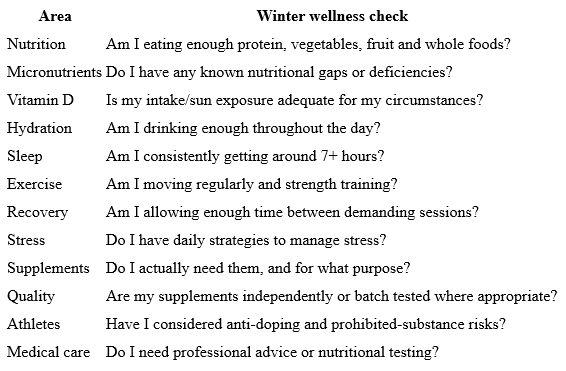
15. The Fitcart Winter Wellness Checklist
Before winter gets fully underway, ask yourself:
The Bottom Line
There is no magic winter supplement. There is no single “immune-boosting” food.
And there is no reason to build an enormous supplement stack simply because the weather is changing. The strongest strategy is much simpler:
Eat well. Get enough protein and micronutrients. Sleep. Stay active. Manage stress. Stay hydrated. Recover properly. Address genuine deficiencies. And choose supplements carefully when they are appropriate.
Your immune system is designed to work as a complex network — and supporting it is best approached as a whole-health strategy rather than a single-product solution.
As fall moves into winter, this is a good time to strengthen the foundations of health that support you all year round.
Fitcart Supplements & Health Disclaimer
This article is provided for general health, nutrition, and educational purposes only and is not intended to diagnose, treat, cure, or prevent any disease or medical condition. Individual nutritional requirements vary according to age, diet, training load, health status, medications, lifestyle and other factors.
Supplements should complement a balanced diet and healthy lifestyle, not replace them. Speak with a qualified healthcare professional, registered dietitian or appropriately qualified sports nutrition professional before starting supplementation, particularly if you are pregnant, have a medical condition, take medication, have a known nutrient deficiency or are considering supplementation for a child or young person.
More is not necessarily better. High doses of vitamins, minerals, herbs or other ingredients can be inappropriate or potentially harmful.
For athletes, supplement selection requires additional care. Where possible, choose products manufactured to appropriate quality standards and independently tested and/or batch tested by credible third-party organisations. Do not rely solely on a label or certification logo. Where certification is available, verify the specific product and batch/lot number through the relevant certifier or testing organisation.
Athletes subject to anti-doping rules should take particular care because contaminated or incorrectly labelled supplements may contain substances prohibited under applicable anti-doping rules. Always check current rules and seek appropriate professional guidance.
Fitcart supports informed, evidence-led sports nutrition and encourages athletes and consumers to look beyond the label — considering ingredient quality, manufacturing standards, independent testing, batch testing and traceability wherever possible.
Fitcart — Trusted Brands. Better Health.
Follow us on X: https://x.com/fitcartofficial and Instagram: https://www.instagram.com/fitcartofficial/ for the latest updates, health insights, and exclusive content.
Follow Smart Nutrition India X: https://x.com/SmartNutrition1 and Instagram: https://www.instagram.com/smartnutritionindia/ for trusted sports nutrition, supplement education, wellness tips, and the latest news from the world of health and performance.
Fitcart believes in True Play and Clean Sport
#trustedbrandsbetterhealth