



Reading Time: 7 minutes.
Author: Ritu Makhija.
Co-Founder, Fitcart.com Head of Editorial Team, Fitcart Blog.
Ashwagandha has become one of the most talked-about herbs in the modern wellness world.
Traditionally used in Ayurvedic medicine, this plant is now widely available as capsules, powders, and extracts. It is commonly promoted for stress, sleep, energy, hormonal health, and overall well-being.
But how much of the hype is actually supported by research?
Ashwagandha, scientifically known as Withania somnifera, contains naturally occurring compounds called withanolides. Modern research has investigated several possible health effects, with some of the more promising evidence relating to stress and sleep.
However, not every claim made about ashwagandha is supported by strong evidence.
What Is Ashwagandha?
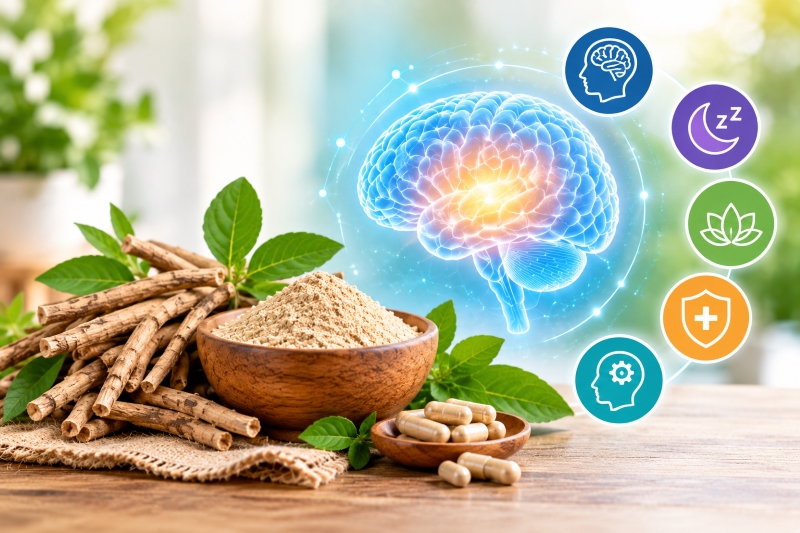
Ashwagandha is a shrub native to parts of India, Africa, and the Middle East. Its roots and leaves have traditionally been used in herbal preparations.
Today, supplements may contain root extracts, leaf extracts, or combinations of the two. This matters because different products can contain different concentrations and types of active compounds.
The term “adaptogen” is often used to describe ashwagandha and other herbs that are thought to help the body respond to stress. However, adaptogen is a broad wellness term rather than a medical diagnosis or treatment category.
1. Ashwagandha May Help With Stress
Stress is one of the areas where research on ashwagandha is particularly interesting.
Some clinical studies have reported improvements in perceived stress among adults taking certain ashwagandha preparations.
Researchers have also investigated its effect on cortisol, a hormone involved in the body’s response to stress.
This does not mean that ashwagandha eliminates stress or should replace professional treatment for anxiety or other mental-health conditions.
Instead, it may be considered a possible addition to a broader stress-management routine that includes adequate sleep, regular exercise, nutritious food and relaxation practices.
2. It May Support Sleep
Sleep is another area where ashwagandha has shown promise.
Some studies suggest that particular preparations may help improve aspects of sleep, including sleep quality and the ability to fall asleep.
However, the research is still developing and studies have used different extracts and doses.
If poor sleep is affecting your daily life, it is worth addressing the basics first:
- Maintain a consistent sleep and wake time.
- Limit caffeine later in the day.
- Reduce bright-screen exposure close to bedtime.
- Exercise regularly.
- Keep the bedroom cool, dark, and comfortable.
- Speak with a healthcare professional if insomnia is persistent.
Ashwagandha should not be viewed as a substitute for identifying and treating the underlying cause of chronic sleep problems.
3. What About Cortisol?
Cortisol has developed a somewhat negative reputation in wellness culture.
But cortisol is not a “bad” hormone.
It plays important roles in blood-pressure regulation, metabolism, immune function and the body’s response to stress.
Some research suggests that certain ashwagandha preparations may influence cortisol levels.
That does not mean everyone should try to lower cortisol. Healthy cortisol follows a natural daily pattern, and abnormal cortisol levels can be associated with medical conditions.
The goal is healthy regulation, not simply having the lowest possible cortisol level.
4. Can Ashwagandha Increase Testosterone?
This is one of the most heavily marketed claims surrounding the herb.
There is limited evidence suggesting that taking some ashwagandha preparations for two to four months may increase testosterone levels and improve sperm quality in certain men.
However, the evidence is limited, and ashwagandha should not be treated as a universal testosterone booster.
If someone has symptoms of low testosterone, such as persistent loss of libido, erectile problems, unexplained fatigue or loss of muscle mass, proper medical assessment is more appropriate than relying on supplements.
5. What About Brain Health?
Ashwagandha is increasingly marketed for memory, focus, and cognitive performance.
There is scientific interest in these potential effects, but the evidence is not strong enough to recommend ashwagandha as a treatment for cognitive decline or neurological disease.
At present, the evidence is considerably more established around stress and sleep than broad claims about brain health.
6. How Should You Use Ashwagandha?
If you are considering an ashwagandha supplement, remember that products can differ substantially.
Look at:
- The form of extract used
- Whether the product specifies the plant part used
- Standardisation of active compounds
- Serving size
- Third-party quality testing where available
- Manufacturer transparency
More is not necessarily better.
There is also no universally established “best dose” that applies to every person and every product.
Is Ashwagandha Safe?
This is an important part of the conversation.
Short-term use appears to be reasonably well tolerated for many adults, but long-term safety has not been adequately established.
Possible side effects include:
- Stomach upset
- Diarrhoea
- Nausea
- Vomiting
- Drowsiness
Rare cases of liver injury have also been reported.
Ashwagandha may interact with some medicines, including medicines for diabetes and blood pressure, sedatives, immunosuppressants, anticonvulsants and thyroid medications. It is also not recommended during pregnancy or breastfeeding and is generally discouraged for people with certain thyroid or autoimmune conditions. Anyone taking medication or managing a medical condition should speak with a healthcare professional before using it.
The Fitcart Takeaway
Ashwagandha is an interesting traditional herb with modern research showing potential benefits, particularly around stress and sleep.
But it is not a cure-all.
The quality of the evidence varies by health outcome, and different products can contain very different preparations.
The best approach is to view ashwagandha as a possible supplement to a healthy lifestyle—not a replacement for good nutrition, regular movement, sufficient sleep, or appropriate medical care.
Health & Wellness Disclaimer
This article is provided for general educational and informational purposes only. It is not intended to diagnose, treat, cure, or prevent any disease or medical condition. Dietary supplements can affect individuals differently and may interact with medicines or existing health conditions. Consult a qualified healthcare professional before starting ashwagandha or any other supplement, particularly if you are pregnant, breastfeeding, taking medication, preparing for surgery, or have an existing medical condition.
For athletes, supplements should be selected carefully because contamination with prohibited substances can present a sporting risk. Product labels and certification logos should not be the sole basis for decision-making.
Where available, consumers and athletes should verify appropriate **third-party certification, independent testing, and the specific batch/lot number**.
Follow us on X: https://x.com/fitcartofficial and Instagram: https://www.instagram.com/fitcartofficial/ for the latest updates, health insights, and exclusive content.
Follow Smart Nutrition India X: https://x.com/SmartNutrition1 and Instagram: https://www.instagram.com/smartnutritionindia/ for trusted sports nutrition, supplement education, wellness tips, and the latest news from the world of health and performance.
Fitcart believes in True Play and Clean Sport
#trustedbrandsbetterhealth