



Fitcart Sports News Blog.
Authored by S. Kannan (Sports Analyst) and Fitcart Editorial Team Ritu Makhija.
Estimated reading time: 8–10 minutes.
August 11, 2008 — Beijing. A day that changed Indian Olympic history forever.
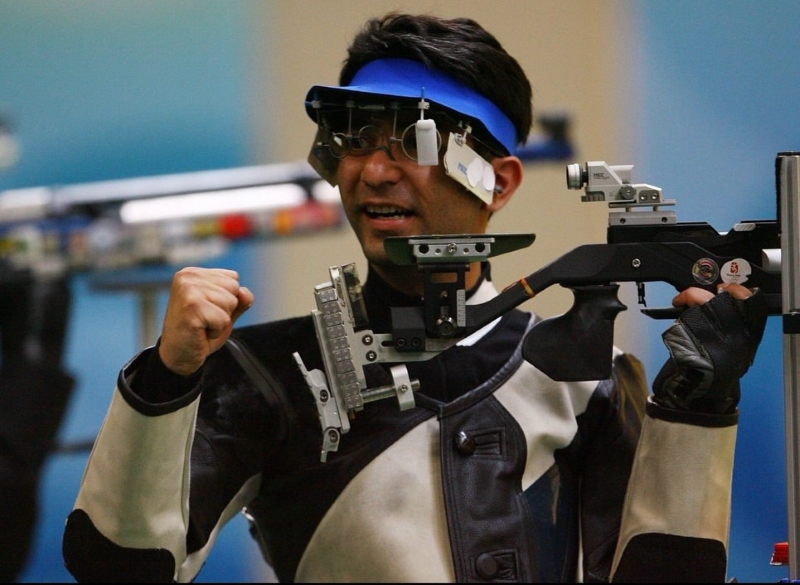
Golden Day forever: August 11, 2008, as Abhinav Bindra shoots for Olympic gold medal.
Celebrate Abhinav Bindra. On this day, August 11, 2008, the boy from Chandigarh made history, gunning down gold with his air rifle at the Beijing Olympics. History was made, a first individual gold for independent India, even as sports lovers went berserk. Bindra, himself, smiled, and hardly spoke much on his victory. That was AB, way back, 18 years ago. Today, he is one of the best motivational speakers, a man who will never refuse a media interaction.
I am privileged to know the golden man for over 26 years, since my first interlude with him at the Sydney Olympics in 2000. Those days, Abhinav Bindra was raw. Yet, it was bad luck, or what we call as fate, he was denied a medal at the Athens Olympics in 2004, as the floor below his feet was shaky in Athens.
Never mind, Bindra did not complain. He again rebooted, prepared for Beijing. There has always been a method in madness when AB was training. Today, we talk of athletes avoiding distraction, shutting off from social media. Well, Bindra would close out all external noise. His was monk-like serenity at shooting, poise, penance and purpose.
No exaggeration, when he had made the final in Beijing, all hell broke loose. I was seated in the Media Tribune, wanting to catch the thrilling final action. Five minutes before the final began, the Doordarshan production head came and yanked me off the chair. The order was, jump into the commentary booth and ‘call’ out the final as they did not have a shooting-literate commentator. My pulse raced, and I was calm. Time flew, and I was calling “Gold for Abhinav Bindra” on air. My cell phone was on silent, yet ringing non-stop, people back home had heard my voice.
I would reckon, emotions went wild as the tricolour went up, the Indian national anthem rent the air. Bindra stood there, proud, his emotions so well-wrapped. When he spoke to the media, there was calm. And, again, when he met the media and Nirupama Rao, the Indian Ambassador to China in Beijing, the next day, Bindra was calm to the point of being boring. He felt, a medal won was no big deal, even as the average sports fan was ecstatic!
That Abhinav Bindra went on to shoot two more Olympics, in London 2012 and Rio de Janeiro 2016, was sheer dedication. He was craving for excellence, a workaholic with a massive appetite for hard work. Yet, when one bad shot in the final in Rio saw him finish fourth, he packed his bag and flew to Germany, his home away from home and dumped his shooting kit. He was done, no looking back.
If Beijing was magic for India, an individual Olympic medal, how many know how Bindra dealt with health problems. Hours of shooting, the back taking load, he had subjected his body to harshness. He had pain, scans suggested he had problems. The best part, Abhinav Bindra did not publicise it. Hours of practice sessions, some days eight hours daily, had put a huge stress on his spine. Medical jargon defined his condition as damage to lumbodorsal vertebrae, plus a ligament under trauma.
Surgery was an option Abhinav Bindra refused. Based in Germany, he opted for a lay-off in 2006, come back with his back ‘repaired’ minus any surgical intervention. Specialists in Germany nursed the Indian, icing on back, special therapy, and a spinal cast. He had virtually rebuilt his frame, changing his shooting stance. All this was science, even as he shot in Beijing without fear. When he took the ‘sighter shots’ before the final in Beijing, his air rifle had been tampered with. How Bindra adjusted the ‘clicks’ in the weapon and bounced back defines his mindset, a killer instinct.
Back to his fitness measures, and strengthening technique, Bindra endured pain. Yet, he gained strength from belief, he would train with changes needed. The wonder of physics, gravity, physios and rehab specialists ensured he changed his stance. The shooting standing stance with rifle in hand and the heavy jacket weighing him down, Bindra had to alter his stance. To avoid pressure being exerted on his back, he made changes, so that the vector forces would travel to his legs. He balanced all this out, beautifully. And what we watched in Beijing was symphony in Beijing.
What all Abhinav Bindra did to eat healthy, sleep well and recover is a wonderful story. He believed in a diet where sugar intake was kept to a zero level. A diet low in fat, high in protein, vegetables, his nutrition plan was designed by experts. This is a sport where intense concentration, good vision despite spectacles, keeping a low heart rate, and much more had to be factored. He had experts to guide him on the mental aspect but to achieve optimum performance levels, his diet and fitness plans were kept a secret.
Stability, balance and core strength, Abhinav Bindra worked on all this with a team of experts who knew science and sports science. Perhaps, that is the reason why he set up the Abhinav Bindra High Performance Centres to give back to the sport. How much emphasis Bindra placed on discipline needs to be highlighted. It is work ethic and focus which defined his intensity. August 11, 2008, Beijing is always special, 18 years hence. Rejoice this day.
The Fitcart Perspective: What Athletes Can Learn From Abhinav Bindra
Abhinav Bindra’s story is not simply about an Olympic gold medal. It is also a remarkable example of how performance is built through the interaction of training, nutrition, recovery, rehabilitation, biomechanics and mental preparation.
Shooting may appear less physically demanding than running, swimming or weightlifting, but elite shooting requires extraordinary control over the body. Stability, posture, breathing, concentration, visual focus, balance and the ability to remain composed under enormous competitive pressure all contribute to performance.
For recreational athletes as well as elite competitors, Bindra’s journey highlights an important principle: performance is not created by one workout, one food or one supplement. It is built through consistency.
Core strength and stability matter
For sports that require an athlete to remain in a fixed position for extended periods, core stability can be extremely important.
A strong and well-conditioned trunk can help an athlete maintain posture and control while transferring force efficiently through the body. For shooters, this can be particularly relevant because even small unwanted movements can affect precision.
Strength training, mobility work, balance exercises and sport-specific conditioning should therefore be viewed as complementary components of athletic preparation.
Nutrition is part of performance
The article highlights the importance of Bindra’s nutrition plan and the role of expert guidance.
For athletes, adequate nutrition provides the building blocks required for training, recovery and adaptation. Protein supports muscle maintenance and repair, while carbohydrates can provide an important source of energy for many forms of training. Healthy fats, vegetables, fruits, whole grains and adequate fluids can contribute to an overall balanced performance diet.
Rather than looking for a single “perfect” food, athletes should focus on overall dietary quality, adequate energy intake and consistency.
Recovery deserves the same attention as training
Bindra’s experience with injury and rehabilitation also provides an important lesson.
Training places stress on the body. Recovery allows the body to adapt to that stress.
Sleep, appropriate rest days, mobility, physiotherapy when required, adequate nutrition and hydration are all part of the recovery equation.
Athletes should not view recovery as time away from training. Recovery is part of training.
Where can supplements fit?
Sports supplements can have a role in an athlete’s nutrition strategy, but they should complement—not replace—a well-planned diet.
Depending on an athlete’s individual requirements, training programme and dietary intake, products such as protein supplements, electrolytes, creatine or selected micronutrients may sometimes be useful.
However, supplementation should be based on individual needs and evidence, rather than marketing claims.
For competitive athletes, another consideration is particularly important: contamination and prohibited substances.
Athletes subject to anti-doping regulations should take great care when selecting supplements. Third-party testing and certification programmes can provide an additional layer of confidence regarding product quality and banned-substance risk, although no certification can replace an athlete’s responsibility to check ingredients and applicable anti-doping rules.
At Fitcart, our focus is on connecting Indian consumers with quality sports nutrition brands and encouraging informed choices around performance nutrition.
The mindset behind the medal
Perhaps the biggest lesson from Bindra’s story is psychological.
His ability to shut out external noise, maintain focus and continue rebuilding after disappointment demonstrates the value of discipline and mental resilience.
Athletes cannot control every result. They can control preparation, consistency, recovery, nutrition, attention to detail and their response to setbacks.
That philosophy extends beyond competitive sport.
Whether someone is preparing for an Olympic final, training for their first 10K, lifting weights, improving body composition or simply trying to become healthier, the fundamentals remain remarkably similar:
Train consistently. Eat intelligently. Recover properly. Stay focused. Repeat.
August 11 — remembering a landmark moment
On August 11, 2008, Abhinav Bindra became the first individual Olympic gold medallist for independent India.
But the gold medal was only the visible moment.
Behind it were years of preparation, setbacks, rehabilitation, physical conditioning, nutrition, technical refinement, mental discipline and an extraordinary commitment to excellence.
That is what makes the story continue to inspire.
The medal lasted a moment. The discipline behind it lasted a lifetime.
Fitcart Editorial Note
Fitcart celebrates athletes, coaches and sports professionals whose dedication helps inspire the next generation of Indian sport.
Our approach to sports nutrition is centred on quality, transparency, evidence-informed choices and responsible supplementation. Athletes should always consider their individual requirements, sport-specific regulations and the quality and testing status of any supplement they use.
News & Editorial Disclaimer
This article contains original editorial content and a historical sports feature. Information relating to sporting events, athletes, training, nutrition and performance is presented for general informational and editorial purposes. Details concerning historical events and athlete experiences should not be interpreted as medical, professional or personalised advice. Readers should independently verify current information where appropriate.
Supplement Disclaimer
Supplements are not a substitute for a balanced diet, adequate sleep, appropriate training or professional medical care. Individual responses to supplements can vary. Before starting any supplement, particularly if you have a medical condition, take medication, are pregnant or are preparing for competitive sport, consult a qualified healthcare professional or sports nutrition professional.
Competitive athletes should check every supplement and ingredient against the rules applicable to their sport and consider products carrying credible independent third-party testing or certification for sports use. Always read the product label, follow the recommended serving instructions and purchase from reputable sources.
Fitcart encourages consumers to choose sports nutrition products that are transparently labelled, quality controlled and appropriately tested.
Image credit to abhinav_bindra on Instagram.
Follow us on X: https://x.com/fitcartofficial and Instagram: https://www.instagram.com/fitcartofficial/ for the latest updates, health insights, and exclusive content.
Follow Smart Nutrition India X: https://x.com/SmartNutrition1 and Instagram: https://www.instagram.com/smartnutritionindia/ for trusted sports nutrition, supplement education, wellness tips, and the latest news from the world of health and performance.
Fitcart believes in True Play and Clean Sport
#trustedbrandsbetterhealth