




Reading Time: 9-11 minutes.
Author: Ritu Makhija.
Co-Founder, Fitcart.com.
Head of Editorial Team, Fitcart Blog.
Introduction: Longevity Is About More Than Living Longer
Live longer. Feel stronger. Age better.
What if the real goal of longevity were not simply to add more years to life, but to make those years healthier, stronger, and more independent?
Longevity has become one of the most discussed topics in health and wellness. From nutritional science and resistance training to sleep optimisation and personalised supplementation, research increasingly explores how our everyday choices shape the way we age.
Although genetics play a role in how we age, many key aspects of health depend on factors we can influence: physical activity, dietary quality, sleep, stress management, social connection, and appropriate preventive healthcare.
The exciting part is that healthy ageing does not require an expensive routine or a cupboard full of supplements. It begins with consistent habits, supported by good evidence and tailored to individual needs.
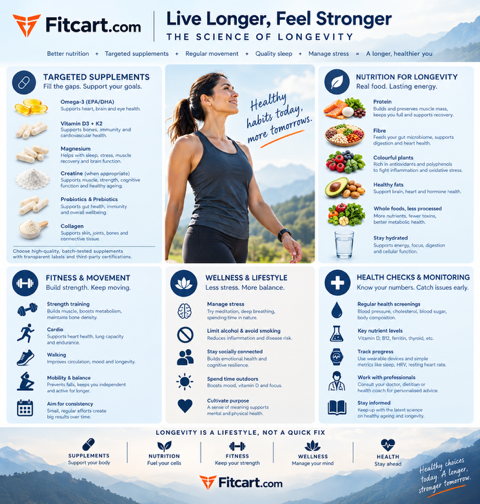
At Fitcart, we believe that better nutrition, informed supplementation, regular movement, and responsible product testing should work together to support long-term health.
1. Nutrition: Build Your Longevity Foundation
A nutrient-rich diet is one of the most practical foundations of healthy ageing. Rather than focusing on a single superfood, aim for a varied eating pattern that provides protein, fibre, healthy fats, vitamins, minerals, and beneficial plant compounds.
Prioritise protein
Maintaining muscle becomes increasingly important as we age. Muscle supports mobility, balance, strength, metabolic health, and independence.
Include protein-rich foods such as eggs, fish, poultry, dairy, lentils, beans, chickpeas, tofu, and other suitable protein sources throughout the day. Your individual protein needs depend on your age, activity level, health, and goals.
Protein powders can be convenient when ordinary food does not provide enough protein, but they are not essential for everyone.
Make fibre a daily priority
Fibre supports digestive health, regular bowel movements, and a healthy gut microbiome. Certain types of fibre can also help support cholesterol management and more stable post-meal blood glucose levels.
Build your meals around vegetables, fruits, legumes, whole grains, nuts, and seeds. Increase fibre gradually and drink enough fluids to help your digestive system adapt.
Eat a variety of colourful plants
Berries, leafy greens, tomatoes, carrots, citrus fruits, beans, and other colourful plant foods provide vitamins, minerals, fibre, and polyphenols.
These compounds are being studied for their roles in cellular health, inflammation, and healthy ageing. However, no individual food has been proven to stop ageing, and the benefits of an overall dietary pattern are more important than relying on a single ingredient.
Include healthy fats
Nuts, seeds, olive oil, and appropriate sources of omega-3 fats can contribute to a balanced diet. Oily fish provides EPA and DHA omega-3 fatty acids, while walnuts, chia seeds, and flaxseeds provide the plant-based omega-3 ALA.
Choose fats as part of a varied diet rather than treating any single fat or oil as a longevity cure.
The Fitcart takeaway: Start with real food, adequate protein, a variety of plants, fibre, and healthy fats. Supplements should complement a good diet, not replace it.
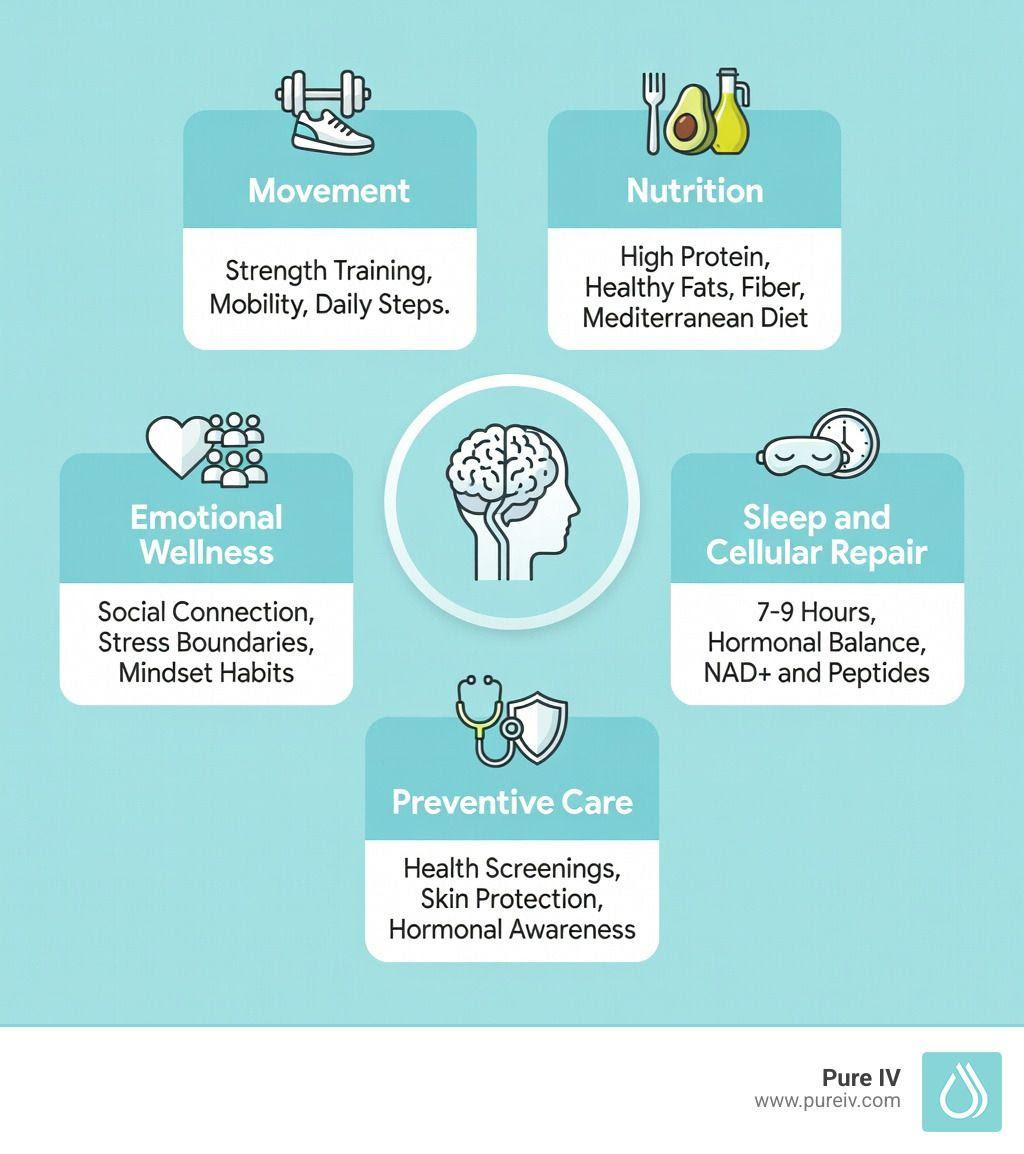
Image source: AI & www.pureiv.com.
2. Fitness: Protect Muscle, Strength, Balance and Mobility
Exercise is one of the most valuable investments in healthy ageing. Its benefits extend beyond appearance or body weight to include cardiovascular fitness, muscle function, bone health, balance, and psychological wellbeing.
Resistance training
Strength training helps build and maintain muscle and supports physical function as we age. Exercises can include weights, resistance bands, machines, or appropriately adapted bodyweight movements.
For many adults, a useful starting point is strength training at least twice a week, covering the major muscle groups and allowing recovery between challenging sessions.
Beginners and people with health concerns should start at an appropriate level and increase gradually.
Cardiovascular exercise
Brisk walking, cycling, swimming, dancing, and other aerobic activities help support heart and lung health.
For most adults, public health guidance recommends working towards at least 150 minutes of moderate-intensity aerobic activity each week, or an equivalent amount of vigorous activity, according to ability and medical circumstances.
Short bouts of movement also count. Consistency matters more than attempting an unrealistic routine and abandoning it.
Balance and mobility
The ability to stand from a chair, climb stairs, get up from the floor, and maintain balance can become increasingly important with age.
Incorporate suitable mobility work, balance exercises, and functional movements into your routine. If you are at risk of falls or have joint, neurological, or other medical concerns, seek guidance before attempting challenging balance exercises.
Remember: There is no single movement test that can predict how long you will live. Strength, mobility, and balance are useful indicators of physical function, but longevity depends on many interacting factors.
3. Sleep and Stress: Give Your Body Time to Recover
Sleep is an essential part of health, not a luxury to be sacrificed for productivity.
Regular, sufficient sleep supports attention, mood, metabolic regulation, immune function, and recovery from exercise. Many adults do well with around seven to nine hours a night, although individual needs vary.
To support better sleep:
- Keep a reasonably consistent bedtime and wake-up time.
- Get natural daylight during the day.
- Exercise regularly, while adjusting intense late-evening sessions if they interfere with sleep.
- Create a cool, comfortable and dark sleeping environment.
- Reduce late-day caffeine if it affects your sleep.
- Establish a relaxing wind-down routine.
Stress management also deserves attention. Walking outdoors, breathing exercises, meditation, enjoyable hobbies, and meaningful social connections can help support emotional wellbeing.
Persistent insomnia, severe stress, or ongoing fatigue should not automatically be treated with supplements. These symptoms can have several causes and may warrant professional assessment.
4. Longevity Supplements: What Is Worth Considering?
Supplements can be useful when they address a specific nutritional gap, support a defined health or performance goal, or provide nutrients that are difficult to obtain adequately through diet.
However, no supplement has been proven to extend human lifespan reliably in healthy people. Evidence varies considerably by ingredient, dose, population, and intended outcome.
Here are several categories worth discussing with a qualified healthcare professional.
Omega-3 fatty acids
EPA and DHA contribute to normal physiological functions, and prescription omega-3 products have specific medical uses. The benefits of ordinary fish oil supplements depend on the person, formulation, dose, diet, and health objective.
Eating oily fish as part of a balanced diet is one option. Supplements may be considered when dietary intake is low or a clinician identifies a suitable reason to use them.
People taking anticoagulants or other medicines should discuss supplementation with their healthcare professional.
Vitamin D
Vitamin D supports calcium absorption, bone health, and normal muscle function. Supplementation may be appropriate for people with low vitamin D status, inadequate intake, limited sun exposure, or other recognised risk factors.
More is not necessarily better. Excessive vitamin D intake can cause harm, so avoid high doses without an appropriate clinical reason.
Magnesium
Magnesium contributes to normal muscle and nerve function, energy metabolism, and bone health. Food sources include nuts, seeds, legumes, whole grains, and leafy greens.
Supplementation may be useful when intake is inadequate or when a healthcare professional identifies a specific need. Evidence does not establish magnesium supplements as a universal treatment for poor sleep, anxiety, cognitive decline, or ageing.
People with impaired kidney function and those taking certain medicines should obtain professional advice before supplementing.
Creatine monohydrate
Creatine is among the better-studied sports nutrition ingredients, particularly for high-intensity exercise and improvements in strength and training performance when combined with appropriate exercise.
Research is also investigating its potential effects on muscle function during ageing and on aspects of cognition. These areas are promising but should not be confused with proof that creatine prevents dementia or extends lifespan.
Creatine monohydrate is a common form used in research. Suitability, dosage, medical history, and product quality should be considered, especially for people with kidney conditions or those taking relevant medicines.
Protein supplements
Protein powders can help people meet their protein needs when food intake is insufficient or convenience is important. Whey, casein, soy, and other plant-based options may suit different dietary preferences.
The best option depends on total daily protein intake, food allergies, digestive tolerance, dietary pattern, and personal goals. A protein supplement is not automatically superior to protein-rich food.
Probiotics and prebiotics
Prebiotics are substances, often specific types of fibre, that can be used by beneficial gut microorganisms. Probiotics are live microorganisms that may provide a benefit when the strain, dose, and intended use are appropriate.
Their effects are not interchangeable: evidence for one strain or condition does not establish benefits for every probiotic product. A varied, fibre-rich diet is a sensible foundation for supporting gut health.
Collagen
Collagen supplements are marketed for skin, joints, and connective tissue. Some studies report modest benefits for certain outcomes, but study quality, formulations, and results vary.
Collagen is not a complete replacement for high-quality dietary protein, and it has not been shown to reverse biological ageing or extend lifespan.
The principle of precision supplementation
Rather than taking every popular product, use a more considered approach:
- Assess your diet, lifestyle, training, and health goals.
- Identify potential nutrient gaps and relevant risk factors.
- Discuss symptoms, medical conditions, and medicines with a qualified professional.
- Use appropriate testing where clinically indicated.
- Select supplements with a clear purpose and suitable evidence.
- Review the dose, tolerability, usefulness, and need for continued use.
The goal is not to take more supplements. It is to make better-informed choices.
5. Supplement Safety: Look Beyond the Label
A professional-looking label or a long list of ingredients does not, by itself, prove that a supplement is safe, effective, or free from contamination.
Quality assurance matters because the identity, purity, strength, and contamination risk of a product may not be fully apparent from its packaging.
At Fitcart, we encourage consumers to pay attention to product quality and transparent verification.
What to look for when choosing a supplement
Independent testing: Look for credible third-party testing or certification relevant to the product and its intended use.
Batch or lot verification: Where a certification programme offers a searchable database, check whether the exact product and batch are covered. Certification scope and verification procedures vary.
Transparent ingredients: Review the ingredient list, quantities, serving size, allergens, warnings, and manufacturer details.
Manufacturing quality: Look for appropriate manufacturing controls and quality systems. Good manufacturing practices are important, but they do not automatically establish that every finished batch has been independently tested.
Traceability: Prefer products with clear batch identification and accessible information about the manufacturer and product origin.
Appropriate claims: Be cautious of products promising to reverse ageing, detoxify the body, cure disease, or deliver dramatic results in a short period.
For competitive athletes, the stakes can be especially high. Certain supplements carry a risk of contamination with substances prohibited under anti-doping rules. Athletes should check relevant independent certification databases and verify the exact product and batch where applicable. No certification can guarantee zero risk, and athletes remain responsible for understanding their anti-doping obligations.
A tested product is a useful part of a safety strategy, but it does not replace sound judgement, professional guidance, or appropriate use.
6. Preventive Healthcare: Know Your Personal Health Picture
Longevity is not only about lifestyle optimisation. Preventive healthcare helps identify risks early and makes it easier to act on meaningful changes.
Depending on your age, medical history, family history, and risk factors, discuss appropriate monitoring with your healthcare professional. This may include:
- Blood pressure.
- Cholesterol and other lipid measures.
- Blood glucose or HbA1c when indicated.
- Bone health assessment where appropriate.
- Screening for age- and risk-related conditions.
- Evaluation of persistent fatigue or other symptoms.
- Nutrient testing when symptoms, diet, medical history, or other factors justify it.
Not everyone needs every blood test or a large panel of biomarkers. Unnecessary testing can lead to confusion, expense, and follow-up procedures without clear benefit.
Wearables can help some people monitor activity, sleep patterns, and exercise trends, but their measurements are estimates and should not be treated as medical diagnoses.
A personalised health plan should focus on useful information and actionable findings rather than chasing every new biological-age score.
7. Everyday Habits That Support Healthy Ageing
Longevity is shaped by the combination of habits maintained over months and years.
Move regularly. Reduce long periods of sitting and find forms of exercise you enjoy.
Eat consistently well. Build meals around minimally processed foods, adequate protein, fibre, and variety.
Protect sleep. Give recovery the same importance as exercise and nutrition.
Avoid tobacco. Not smoking is an important step in reducing preventable disease risk.
Limit alcohol. Lower consumption generally means lower exposure to alcohol-related health risks; avoiding alcohol eliminates those risks from alcohol consumption.
Maintain relationships. Social connection, meaningful activities, and a sense of purpose can contribute to wellbeing.
Keep healthcare up to date. Follow appropriate screening, vaccination, and preventive-care recommendations for your circumstances.
Be sceptical of miracle claims. No capsule, powder, wearable, or restrictive routine can replace the fundamentals of good health.
Your Practical Longevity Checklist
Use this simple checklist to begin building a more sustainable routine:
- Eat protein-rich foods and a variety of plant foods.
- Include fibre-rich foods every day.
- Perform appropriate strength training at least twice weekly, if able.
- Build towards regular cardiovascular activity.
- Practise balance and mobility exercises suited to your ability.
- Aim for sufficient, consistent sleep.
- Manage stress and maintain meaningful social connections.
- Review supplements for evidence, suitability, dose, and quality.
- Use batch verification or credible third-party certification where available.
- Discuss preventive health checks and persistent symptoms with a qualified professional.
You do not have to change everything at once. Choose one or two realistic habits, practise them consistently, and build from there.
The Fitcart Perspective: Longevity Through Informed Choices
The future of healthy ageing is likely to involve a more personalised understanding of nutrition, physical activity, recovery, preventive healthcare, and supplementation.
But personalisation should be grounded in evidence, not simply in the number of products someone takes or the complexity of a wellness routine.
At Fitcart, we believe that responsible sports nutrition and supplementation begin with transparent ingredients, appropriate quality assurance, credible testing, and clear information about what a product can and cannot do.
Whether your goal is to maintain muscle, support an active lifestyle, improve dietary adequacy, or make more informed supplement choices, start with your individual needs and the fundamentals of health.
Longevity is not a quick fix. It is the cumulative result of informed decisions, repeated consistently over time.
Healthy choices today. A stronger tomorrow.
Health, Nutrition and Supplement Disclaimer
This article is intended for general educational and informational purposes only and does not constitute medical advice, diagnosis, or treatment. It is not a substitute for consultation with a qualified healthcare professional.
Individual nutritional requirements vary according to age, diet, activity level, medical history, medications, and other personal factors. Supplements are not intended to replace a balanced diet, regular physical activity, adequate sleep, or appropriate medical care. Not every supplement is necessary or suitable for every individual.
Consult a qualified healthcare professional before starting, stopping, or changing a supplement, particularly if you have an existing medical condition, take medication, are pregnant or breastfeeding, or have specific nutritional concerns. Seek professional advice regarding appropriate testing, dosage, and potential interactions.
Supplement quality and safety: Choose products with transparent ingredient information, appropriate manufacturing controls, and credible independent testing or certification where available. Batch-testing claims should be verified against the relevant certification programme and product or lot number where applicable. Testing reduces certain quality risks but cannot guarantee that a product is entirely risk-free or suitable for every person.
Athlete advisory: Athletes subject to anti-doping rules should assess supplement risks carefully and verify applicable product and batch certifications. No supplement certification eliminates all risk of contamination or guarantees compliance with anti-doping regulations.
Evidence disclaimer: Scientific evidence on longevity, healthy ageing, and supplementation continues to evolve. References to potential benefits do not imply that a supplement prevents, treats, or cures disease, reverses ageing, or extends lifespan. Individual results may vary.
Fitcart encourages evidence-informed nutrition, responsible supplementation, transparent product information, and professional healthcare guidance.
— Ritu Makhija, Co-Founder of Fitcart and Head of the Fitcart Editorial Team.
Follow us on X: https://x.com/fitcartofficial and Instagram: https://www.instagram.com/fitcartofficial/ for the latest updates, health insights, and exclusive content.
Follow Smart Nutrition India X: https://x.com/SmartNutrition1 and Instagram: https://www.instagram.com/smartnutritionindia/ for trusted sports nutrition, supplement education, wellness tips, and the latest news from the world of health and performance.
Fitcart believes in True Play and Clean Sport
#trustedbrandsbetterhealth