



Suggested reading time: 7-8 minutes.
Fitcart Healthy Eating Series.
Author: Ritu Makhija.
Co-Founder, Fitcart.com.
Head of Editorial Team, Fitcart Blog.
Two terms, one important distinction
People often mention prebiotics and probiotics together when talking about gut health. They are related, but they are not the same.
Probiotics are specific live microorganisms that provide a health benefit when consumed in adequate amounts. Prebiotics are substances—often specific types of fibre—that microorganisms in the body use selectively and that provide a health benefit.
In simple terms, some probiotics are beneficial microorganisms, while prebiotics are food for selected microorganisms already living in the gut.
Understanding the difference can help you make better choices about yoghurt, fermented foods, fibre-rich meals and supplements.
What are probiotics?
Probiotics are live microorganisms that have been shown to provide a health benefit when administered in adequate amounts. They may be found in certain fermented foods and in supplements.
Some fermented foods include:
- Live-culture yoghurt and curd.
- Kefir.
- Certain fermented vegetables such as sauerkraut and kimchi.
- Some traditional fermented foods.
However, an important distinction is that not every fermented food is a proven probiotic. Fermentation does not automatically establish that a food contains a specific live microorganism in a dose that has demonstrated a health benefit.
Probiotic effects are often strain-specific. Evidence for one strain in a particular condition cannot automatically be applied to every product containing the same species or to all digestive complaints.
What are prebiotics?
Prebiotics are selectively utilised substances that support beneficial microorganisms in the body. Many well-known prebiotics are types of fermentable carbohydrates or dietary fibre.
Food sources include:
- Onion and garlic.
- Leeks and asparagus.
- Chicory root.
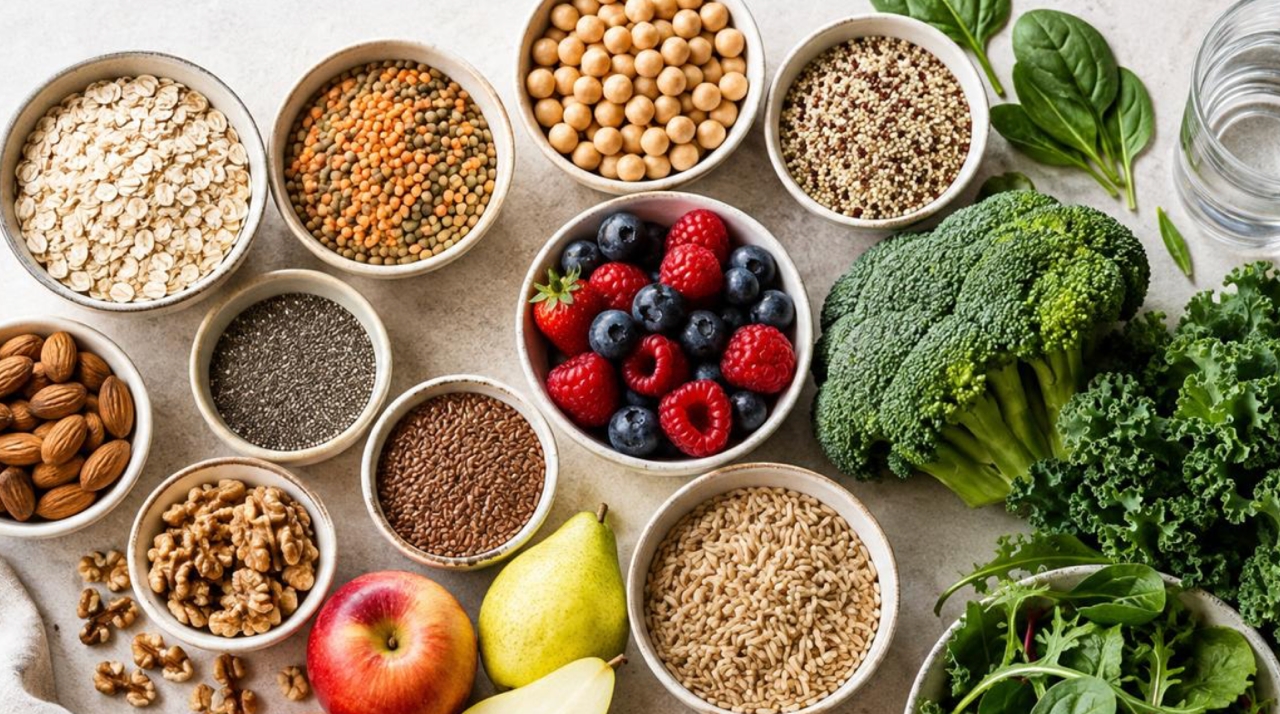
- Legumes such as chickpeas, lentils and beans.
- Oats and barley.
- Slightly green bananas.
- Some cooked and cooled starchy foods, which can contain resistant starch.
Prebiotic fibres are not digested in the same way as ordinary starches and sugars. Some reach the large intestine, where selected gut microorganisms can use them.
You do not need to buy a specialist prebiotic powder to include these foods in your diet.
Prebiotics vs probiotics: the difference
Probiotics: Specific live microorganisms that provide a demonstrated health benefit when consumed in adequate amounts.
Prebiotics: Substrates selectively used by microorganisms in the body, resulting in a health benefit.
Synbiotics: Products or combinations that include live microorganisms and substrates that are selectively utilised by host microorganisms, with the aim of providing a health benefit.
The terms are not interchangeable, and a product should not be assumed to work simply because it uses one of these words on its packaging.
Why the gut microbiome matters
The gut microbiome is a complex community of bacteria, fungi and other microorganisms. It contributes to digestion, fermentation of dietary components, production of metabolites and interactions with the immune system.
A diverse, balanced eating pattern can help support a healthy gut environment. This includes:
- Eating a variety of plant foods.
- Including different sources of dietary fibre.
- Consuming adequate protein and overall nutrition.
- Including fermented foods if tolerated.
- Limiting reliance on highly refined, low-fibre food patterns.
There is growing research into connections between the microbiome and metabolic health, immune function and other aspects of wellbeing. However, the science is complex. Claims that a particular probiotic will improve immunity, reduce body fat, reverse ageing or treat a disease should be approached carefully.
Is yoghurt a probiotic?
Yoghurt made with live cultures can contain beneficial microorganisms. It can also provide protein, calcium and other nutrients.
However, not every yoghurt has the same live-culture content. Heat treatment after fermentation, processing and storage can affect whether live cultures remain in the finished product.
For a practical choice, look for plain yoghurt or curd with live cultures, check the ingredient list and choose a product that fits your overall diet. Unsweetened options can help avoid unnecessary added sugar.
For more on this topic, read our Fitcart article on probiotic yoghurt and gut health.
Can you take prebiotics and probiotics together?
Yes. Some products combine a probiotic microorganism with a prebiotic ingredient and are described as synbiotics.
But combining the two does not automatically make a product more effective. The specific strain, ingredient, dose, formulation, intended use and supporting clinical evidence all matter.
For example, a probiotic studied for antibiotic-associated diarrhoea should not automatically be expected to improve bloating, constipation or weight management.
Do you need a probiotic supplement?
Not necessarily. Many healthy people can support their gut microbiome through a varied, fibre-rich diet and fermented foods they tolerate.
A probiotic supplement may be considered for a specific reason, but it is important to choose one with a clearly identified strain, an appropriate amount, storage instructions and evidence relevant to the intended use.
Probiotics are not suitable for everyone. People who are severely ill, immunocompromised or have certain underlying medical conditions should consult a healthcare professional before using them.
Persistent diarrhoea, blood in the stool, unexplained weight loss, severe abdominal pain or ongoing digestive symptoms require medical assessment rather than self-treatment with supplements.
Five practical ways to support your gut
- Include different vegetables, fruits, pulses and whole grains across the week.
- Add fibre-rich foods such as oats, beans, lentils and vegetables gradually.
- Include plain yoghurt or other fermented foods if you tolerate them.
- Drink adequate fluids and maintain regular physical activity.
- Avoid assuming that a high-priced probiotic is necessarily better than a well-chosen food-first approach.
The Fitcart perspective: evidence matters more than the label
At Fitcart, we believe consumers should understand what they are buying. A product labelled “probiotic” should identify its microorganisms clearly, including strain information where applicable, and provide meaningful usage and storage directions.
For prebiotic products, check the actual fibre source and quantity per serving. Consider tolerance, because some fermentable fibres can increase gas or bloating, especially when introduced quickly.
Fitcart’s approach is to prioritise transparent ingredients, responsible product information and evidence-led education. A supplement should complement a healthy diet—not replace it.
Final Takeaway
Prebiotics and probiotics work in different ways, but both are part of the wider conversation about gut health. A varied diet rich in plant foods provides a strong foundation. Fermented foods and targeted supplements may have a role, but the right choice depends on the individual and the evidence for the specific product.
Fitcart Healthy Eating Series: Continue with Eating for Fat Loss Without Losing Muscle.
Health and supplement disclaimer
This article is for general educational purposes only and does not diagnose, treat, cure or prevent any disease. Probiotic effects are strain- and condition-specific. Fermented foods are not necessarily proven probiotic products, and supplements are not suitable for everyone. People who are immunocompromised, seriously ill, pregnant, or managing a medical condition should seek individual professional advice before using probiotic or prebiotic supplements.
Follow us on X: https://x.com/fitcartofficial and Instagram: https://www.instagram.com/fitcartofficial/ for the latest updates, health insights, and exclusive content.
Follow Smart Nutrition India X: https://x.com/SmartNutrition1 and Instagram: https://www.instagram.com/smartnutritionindia/ for trusted sports nutrition, supplement education, wellness tips, and the latest news from the world of health and performance.
Fitcart believes in True Play and Clean Sport
#trustedbrandsbetterhealth