



Fitcart Sports News Blog.
Authored by S. Kannan (Sports Analyst) and Fitcart Editorial Team Ritu Makhija.
It takes one spark to light a flame. On August 7, celebrated as National Javelin Day, Neeraj Chopra will always be remembered for providing that impetus to a ‘field’ discipline which is now super-specialised. The Athletics Federation of India chose August 7 to commemorate Chopra’s historic Olympic achievement and promote javelin at the grassroots level.
When Neeraj won gold on August 7, 2021, in Tokyo, it sent the nation into a tizzy. Here was a young man competing in his first Summer Olympics, full of spring and zing. And when he hurled the javelin to a distance of 87.58 metres, on his second attempt, India erupted in joy. This was Independent India’s first Olympics medal in a track and field event, when the entire city of Tokyo was under lockdown.
It is worth recalling, how Tokyo was shut for the public due to the raging Covid 19 Virus pandemic. The city was dark under lockdown, even as the Games had been postponed by a year. Even in 2021, Tokyo played it extra safe. They shut off public and city, and each athlete had to deal with an opponent who was not there in the field of play, but the air – Novel Corona Virus.
Each athlete was nervous, for they were subjected to SAT – Saliva Antigen Testing – twice daily. Neeraj was fit, healthy, yet, he could have been laid low by the crazy Virus. That Neeraj Chopra took good care of himself, maintained a high level of immunity, ate right and hydrated well and slept comfortably, showed he could win a gold medal.
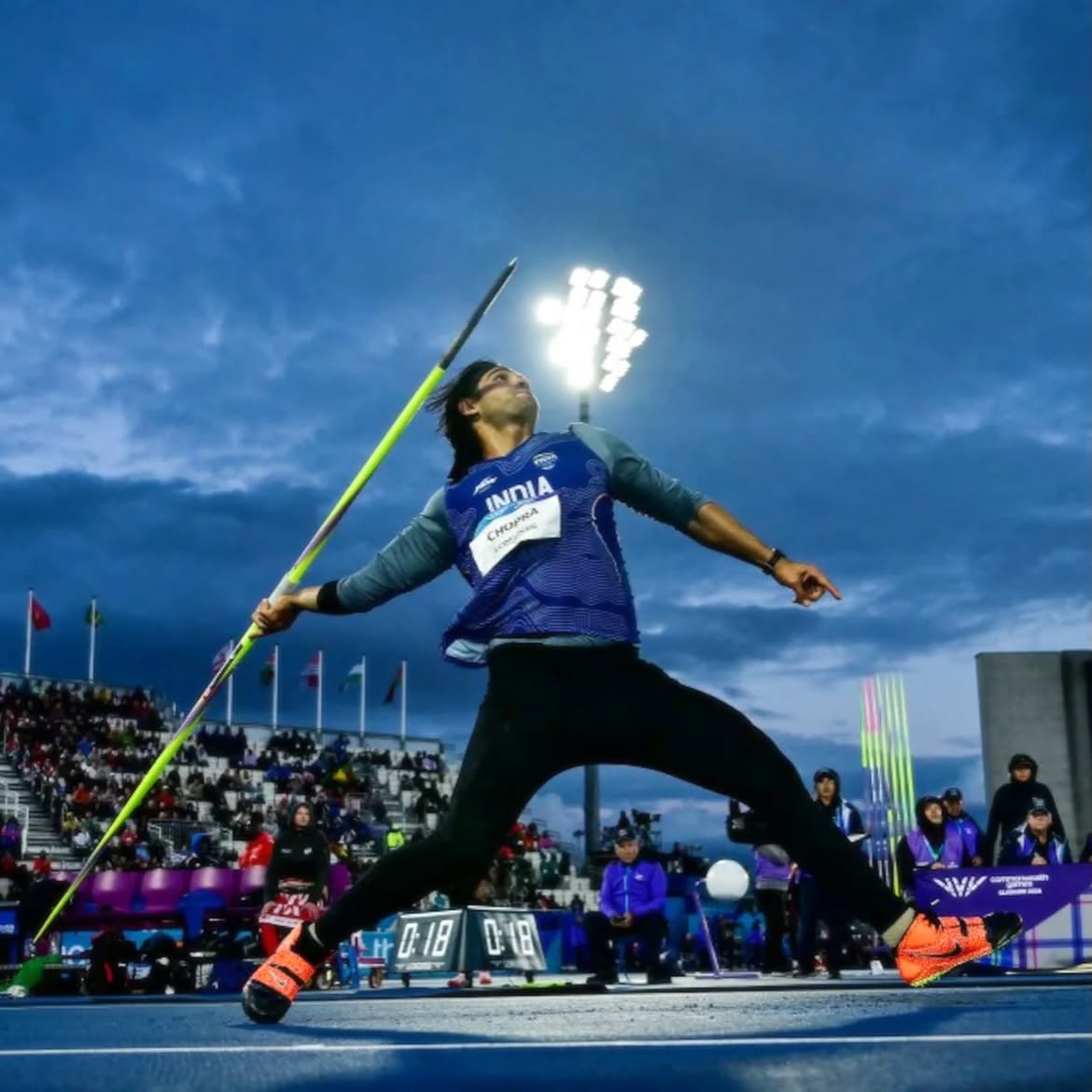
When Neeraj returned to India, the nation celebrated. I still remember the felicitation function which had been organised by the AFI – Athletics Federation of India – when Neeraj and the athletes were honoured at a South Delhi hotel. Neeraj spoke of effort, then staying healthy, and how fitness mattered. Even today, when we celebrate Neeraj’s sixth Olympic gold anniversary, it is an emotional one. Yes, he went on to win silver at the Paris 2024 Olympics, and he won silver at the Commonwealth Games in Glasgow. Fact is, Neeraj has inspired so many to take up javelin as a competitive sport, which saw Yashvir win bronze as well in Glasgow.
Fitcart editorial note: August 7, 2026 marks the fifth anniversary of Neeraj Chopra’s Tokyo Olympic gold, rather than the sixth. His Paris 2024 silver is also part of his Olympic legacy. More recently, Chopra competed at the Glasgow 2026 Commonwealth Games, where he won silver, while Yashvir Singh took bronze, giving India a memorable men’s javelin double podium.
How much Neeraj has emphasised the importance of fitness is, has been elaborated in detail. As a paragon of fitness, a man who eats well, sleeps well and rests plenty, he still had fitness issues. Today, no athlete can be a 100 per cent fit. There will be a niggle and there will be a twitch or strain. Yet, when Neeraj Chopra had to cry off from the field at the World Championship in Tokyo last September, it was a scary moment.
Neeraj went off for over 10 months, a period when he was uncertain, unsure. He bounced back in 2026, fit, prepared. Yet, the cobwebs of uncertainty clinging to his grey cells lingered. Neeraj has opened up on it. And there is no shame he won ‘only silver’ in Glasgow. Conditions in Scotland were tricky to a point of being treacherous. Cold, windy, the body warmth had to be preserved.
Fitcart perspective: The javelin athlete is a complete athlete
Javelin is sometimes perceived simply as a sport of explosive arm strength. In reality, elite javelin requires a remarkable combination of speed, strength, power, mobility, coordination, technical precision and recovery.
World Athletics has itself described Chopra’s success in terms of the combination of strength and speed required for javelin. His development also demonstrates how an athlete can progress through years of structured coaching, competition and injury management.
A high-level javelin programme can involve:
- Explosive strength training – developing the ability to produce force rapidly.
- Lower-body strength – particularly important for the run-up, blocking action and transfer of force.
- Core and rotational strength – helping transfer energy through the hips, trunk and throwing arm.
- Sprint and speed work – because approach speed contributes to the overall throwing sequence.
- Mobility and flexibility – particularly around the shoulders, hips, thoracic spine and ankles.
- Technical throwing sessions – where timing and mechanics are refined rather than simply adding more throws.
- Recovery sessions – including rest, mobility work, physiotherapy and appropriate load management.
The lesson for recreational athletes is equally important: more training is not necessarily better training. Adaptation occurs when training stress is balanced with recovery.
Neeraj’s career also illustrates why injury management is an essential part of elite sport. Before his Tokyo breakthrough, he had already experienced a serious injury requiring surgery on his throwing arm and subsequently returned to competition.
Nutrition: Fuel the work, then recover from it
Behind explosive performance lies something much less glamorous but absolutely fundamental — consistent nutrition.
For athletes training at high intensity, daily meals need to provide adequate energy and a balance of carbohydrates, protein, healthy fats, vitamins, minerals and fluids.
Protein is particularly important for athletes because it provides amino acids required for muscle repair and adaptation. Good food sources can include eggs, fish, chicken, dairy products, pulses, beans, soy and other protein-rich foods.
Carbohydrates should not be overlooked either. For athletes undertaking repeated high-intensity training, carbohydrate provides an important source of readily available energy and helps support training quality.
Hydration is another piece of the performance puzzle. Sweat losses vary considerably according to the athlete, training intensity, duration, temperature and humidity. Replacing fluids — and, where appropriate, electrolytes — can help support performance and recovery.
And then there is the simplest recovery tool of all: sleep.
Elite performance isn’t created during a single spectacular training session. It is built through thousands of ordinary days of eating well, training intelligently, recovering properly and repeating the process.
Where do supplements fit in?
This is where Fitcart’s philosophy is particularly relevant.
Supplements should supplement a good diet — not replace it.
For an athlete, products such as protein powders, electrolyte and hydration formulas, carbohydrate-based sports nutrition and selected performance supplements may have a role depending on the sport, training load, diet and individual requirements.
But the priority should always be:
Food → hydration → training → recovery → supplements where genuinely useful.
For competitive athletes, another consideration is critical: supplement quality and banned-substance risk.
A supplement can contain an ingredient that appears harmless on a label but still create problems if the product has been contaminated or poorly manufactured. Athletes subject to anti-doping regulations therefore need to be particularly careful about what they consume.
That is why Fitcart encourages athletes and serious fitness enthusiasts to look for products with appropriate quality controls and, wherever possible, recognised third-party testing or sport-specific certification. Certifications such as Informed Sport can provide an additional layer of assurance for athletes concerned about prohibited-substance contamination.
Fitcart’s recommendation is simple: know what you are buying, know where it is manufactured and packaged, check the ingredients and choose products that have been appropriately tested and verified.
And supplements should never be viewed as a shortcut to becoming an elite athlete.
There is no powder, capsule or drink that can substitute for years of coaching, technical practice, strength development, sleep, nutrition, discipline and recovery.
Rinse, repeat, perform
Well, Neeraj knows all this, he is the maestro. He takes care of his body with a healthy diet, which comprised right ingredients, proteins, nutrients and supplements which are safe. He does not overtrain and mixes with all the team members. As long as he is around supporting and cheering for Indian boxers and weightlifters, Neeraj will be a darling, as witnessed in Glasgow.
Rinse, repeat, perform, work on fitness, this is Neeraj’s daily life. Even after marrying Himani Mor, he stays a dedicated athlete. Neeraj has now set up a Neeraj Chopra Foundation and tied up with the IOA. Talk of giving back to the sport, Neeraj will do it all. He will be there at the Asian Games in Nagoya, Japan, in September/October. As for one more fling at Olympic glory, LA 2028 beckons.
Yes, Neeraj has become more famous than the javelin itself, in India.
And perhaps that is the biggest legacy of the Javelin King.
He didn’t merely throw a javelin 87.58 metres in Tokyo.
He threw open the door for an entire generation of Indian athletes to believe that the throwing events could belong on the biggest stage in world sport.
The Olympic Museum later received the very javelin Chopra used for his historic Tokyo victory, preserving an extraordinary piece of Indian sporting history for future generations.
Fitcart Takeaway
Elite performance is never one thing.
It is training, nutrition, hydration, sleep, recovery, mental preparation, coaching, consistency and — where appropriate — carefully selected sports nutrition.
Neeraj Chopra’s journey is a powerful reminder that champions are not made by one throw. They are made by what they do every day before the throw.
Disclaimer
Fitcart provides sports nutrition and wellness information for educational purposes only.The information in this article is not intended to diagnose, treat, cure or prevent any disease or medical condition and should not be considered medical, nutritional or professional training advice.
Individual nutritional and supplement requirements vary according to age, health, training load, diet, goals and other factors. Supplements are not a substitute for a balanced diet, appropriate training, adequate hydration, sleep or professional medical care.
Competitive athletes should take particular care when selecting supplements because contaminated or incorrectly labelled products may present an anti-doping risk. Athletes subject to testing should consult their sports nutritionist, doctor, coach or other qualified professional and check products against the rules applicable to their sport.
Fitcart recommends choosing responsibly manufactured, appropriately tested sports nutrition products and checking product ingredients, manufacturing and packaging information before use. Always follow the product’s recommended serving instructions and seek professional advice before beginning any new supplement programme.
This article does not claim that Neeraj Chopra uses any particular Fitcart product or supplement unless specifically stated and independently verified.
Image credit to neeraj____chopra on Instagram.
Follow us on X: https://x.com/fitcartofficial and Instagram: https://www.instagram.com/fitcartofficial/ for the latest updates, health insights, and exclusive content.
Follow Smart Nutrition India X: https://x.com/SmartNutrition1 and Instagram: https://www.instagram.com/smartnutritionindia/ for trusted sports nutrition, supplement education, wellness tips, and the latest news from the world of health and performance.
Fitcart believes in True Play and Clean Sport
#trustedbrandsbetterhealth