


Suggested reading time: 11-13 minutes.
Fitcart Editorial Series: Skin, Hormones & Metabolic Health.
Author: Ritu Makhija.
Co-Founder, Fitcart.com.
Head of Editorial Team, Fitcart Blog.
Hair is often associated with confidence, identity, and wellbeing. So when you start noticing more hair in your brush, a wider parting, or a thinner ponytail, it can be worrying.
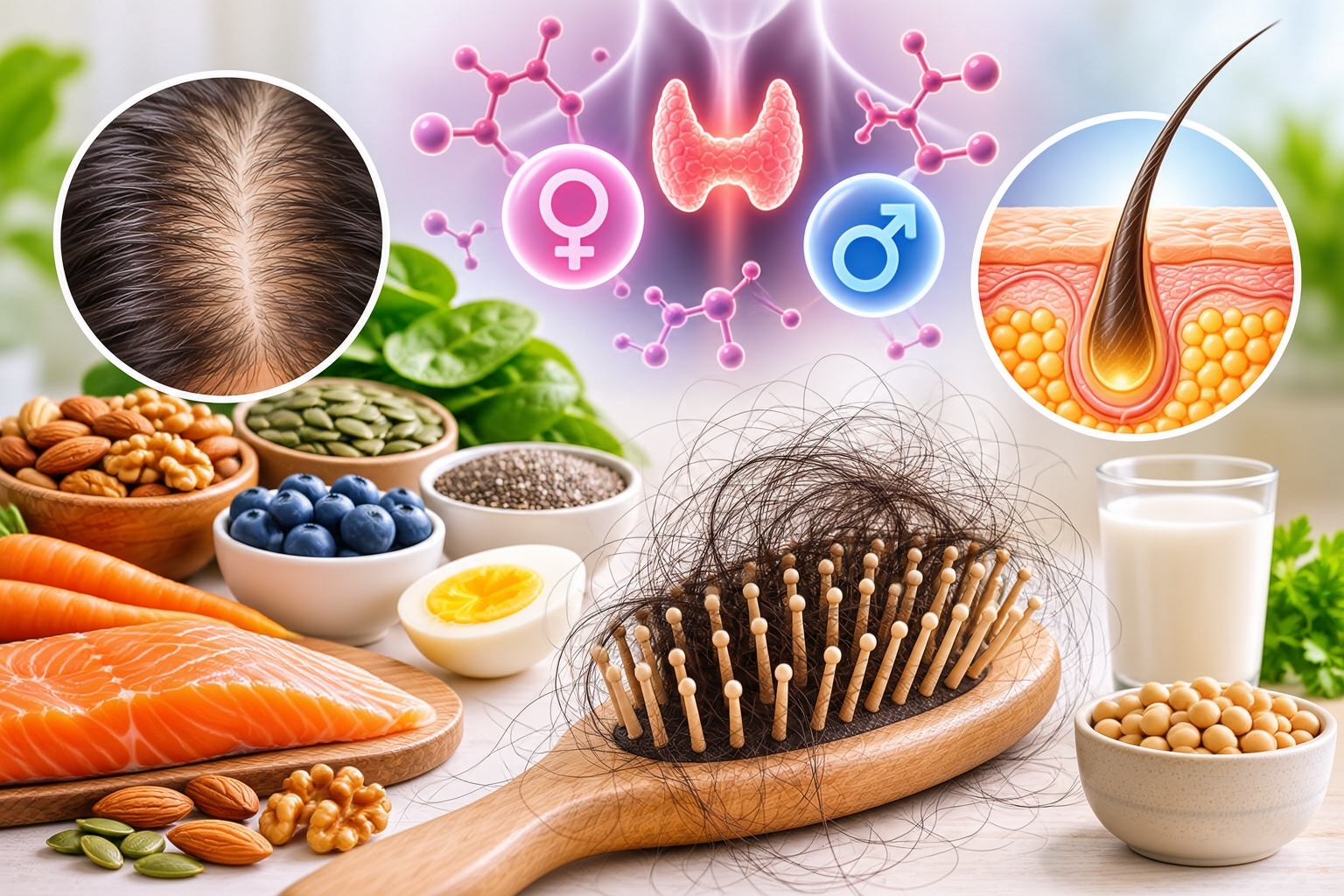
Hair shedding is normal, but persistent or noticeable hair loss may have several possible causes. Hormonal changes, genetics, nutritional deficiencies, thyroid disorders, illness, stress, rapid weight loss, and certain medications can all play a role.
For women, changes during pregnancy, after childbirth, perimenopause, and menopause can make hair health an especially important concern.
The good news is that many causes of hair loss can be identified, and some are treatable. The first step is understanding what may be happening rather than immediately turning to hair-growth supplements.
1. Understanding the hair growth cycle
Hair does not grow continuously at the same rate. Each hair follicle moves through a natural cycle.
Anagen — the growth phase: Hair actively grows from the follicle. This phase can last several years.
Catagen — the transition phase: Growth slows, and the follicle begins to shrink. This is a relatively short phase.
Telogen — the resting phase: The hair is no longer actively growing. It eventually sheds, allowing a new hair to begin its cycle.
It is normal to lose some hair every day. The amount varies between individuals and can change with washing, brushing, and hair length.
Hair loss becomes a concern when shedding increases significantly, regrowth doesn’t keep pace, hair becomes progressively thinner, or distinct bald patches appear.
Understanding the pattern is important because diffuse shedding, gradual thinning and patchy hair loss may have very different causes.
2. Common types of hair loss
Telogen effluvium: Excessive shedding
Telogen effluvium is a common cause of temporary, diffuse hair shedding. It occurs when more hair follicles than usual enter the resting phase.
It can develop a few months after a trigger such as:
- A high fever or significant illness
- Surgery or hospitalisation
- Childbirth
- Severe emotional or physical stress
- Rapid weight loss or restrictive dieting
- Iron deficiency or other nutritional problems
- Certain medications or changes in medication
People often notice more hair coming out while washing or brushing. The hair may look less dense overall rather than forming one clearly defined bald patch.
Telogen effluvium often improves when the underlying trigger resolves, although recovery takes time. The British Association of Dermatologists explains that the shedding phase commonly lasts around three to six months, with regrowth and restoration of fullness taking longer in some people.
Female pattern hair loss
Female pattern hair loss is a common form of progressive thinning. It often becomes more noticeable during midlife, although it can begin earlier.
Typical signs include:
- A widening central parting
- Reduced hair density over the top of the scalp
- A thinner ponytail
- Gradual loss of overall volume
Genetics play an important role, and hormonal factors may also contribute. It is not simply a sign that a woman has too much testosterone.
Early assessment is useful because treatment may help slow progression and improve hair density.
Alopecia areata
Alopecia areata is an autoimmune condition in which the immune system mistakenly targets hair follicles. It often causes one or more smooth, round patches of hair loss, although other patterns can occur.
It requires medical assessment. Treatment depends on the extent and pattern of hair loss.
Traction and hair breakage
Repeated pulling from tight ponytails, braids, extensions or other hairstyles can damage follicles over time. Excessive heat, chemical processing and rough handling can also cause hair breakage.
Hair breakage is not the same as hair shedding from the root, although both can make hair appear thinner.
3. Hormones and hair health
Hormones influence the hair growth cycle, follicle activity and the distribution of hair on the body.
Androgens and female pattern hair loss
Androgens are hormones that include testosterone. They are present in women as well as men and have normal roles in the body.
Genetic sensitivity of hair follicles to androgen signalling can contribute to pattern hair loss. This does not mean that every woman with thinning hair has high androgen levels.
In some women, hair thinning occurs alongside symptoms that may suggest an underlying hormonal condition, such as irregular periods, persistent acne or increased facial hair. A healthcare professional can assess whether further investigation is appropriate.
PCOS and hair changes
Polycystic ovary syndrome (PCOS) can involve higher androgen activity in some women. It may be associated with acne, increased facial or body hair and, in some cases, thinning of scalp hair in a female-pattern distribution.
Not everyone with PCOS experiences scalp hair loss, and hair loss alone cannot diagnose PCOS.
If thinning hair occurs alongside irregular menstrual cycles, acne or excess facial hair, discuss the symptoms with a qualified healthcare professional.
Thyroid hormones
Both an underactive and overactive thyroid can be associated with hair changes.
Thyroid hormones influence metabolism and many processes involved in tissue maintenance. If thyroid function is abnormal, hair may become dry, brittle or thinner, and some people experience increased shedding.
The underlying thyroid condition should be assessed and treated rather than relying on hair supplements.
Pregnancy and the postpartum period
During pregnancy, hormonal changes can alter the normal hair cycle. Some women notice thicker-looking hair because fewer hairs enter the shedding phase.
After childbirth, hormone levels change and a period of increased shedding may follow. This is commonly called postpartum telogen effluvium.
It can be distressing, but it is often temporary. If shedding is severe, prolonged or accompanied by other symptoms, seek medical advice to check for additional causes such as iron deficiency or thyroid problems.
Perimenopause and menopause
During perimenopause and menopause, changing hormone levels can coincide with changes in hair density, texture and growth.
Some women notice a widening parting or reduced volume. Ageing, genetics, thyroid function, nutritional status and other health factors may also contribute.
Hair thinning during menopause should not automatically be attributed to falling oestrogen. A proper assessment helps distinguish female pattern hair loss from other treatable causes.
4. Nutritional deficiencies that may contribute to hair loss
Hair follicles are metabolically active structures. They require adequate energy, protein, and micronutrients to support normal growth.
A deficiency does not explain every case of hair loss, but correcting a genuine deficiency may be important for recovery.
Iron
Iron is needed for oxygen transport and many cellular processes.
Iron deficiency, with or without anaemia, may be associated with diffuse hair shedding in some people. Women with heavy menstrual bleeding, low dietary iron intake, pregnancy or certain digestive conditions may be at greater risk.
Iron-rich foods include:
- Lentils, chickpeas, rajma and other pulses
- Green leafy vegetables
- Meat, fish and poultry
- Iron-fortified foods
- Nuts and seeds
Plant sources of iron are absorbed less efficiently than many animal sources. Eating vitamin C-rich foods such as amla, guava, citrus fruits or tomatoes alongside plant sources can help improve non-haem iron absorption.
If iron deficiency is suspected, a healthcare professional may recommend a blood count and iron studies, including ferritin, depending on the clinical situation.
Do not take high-dose iron simply because you are experiencing hair loss. Excess iron can be harmful.
Protein
Hair is primarily made of a structural protein called keratin. Adequate dietary protein supplies the amino acids needed for normal tissue maintenance and hair production.
Very low-protein diets, prolonged calorie restriction, and rapid weight loss can contribute to increased shedding.
Useful protein sources for Indian diets include:
- Eggs
- Fish and chicken
- Milk, curd and paneer
- Soybeans and tofu
- Dal, chana and rajma
- Nuts and seeds
If you are trying to lose weight, avoid crash diets. A balanced calorie deficit, adequate protein, and resistance training can help support muscle and overall nutritional health while reducing the risk of excessive dietary restriction.
Zinc
Zinc supports normal cell division, protein synthesis, and tissue repair. Severe zinc deficiency can be associated with hair loss.
Food sources include meat, seafood, dairy, beans, lentils, nuts, seeds, and whole grains.
Taking high-dose zinc without a clear reason is not advisable. Excessive intake can cause nausea and interfere with copper absorption.
Vitamin D
Vitamin D supports immune regulation and many other biological processes. Research has examined associations between low vitamin D levels and certain hair disorders, including alopecia areata.
However, an association does not prove that vitamin D supplementation will regrow hair in people whose levels are already adequate.
If a deficiency is suspected, testing and appropriate treatment should be guided by a healthcare professional.
Vitamin B12 and folate
Vitamin B12 and folate are involved in red blood cell formation and normal cell function. Deficiencies can occur with restricted diets, certain digestive conditions or problems with absorption.
They are not the cause of every case of hair loss, but may be considered when symptoms, dietary history or medical circumstances suggest a risk.
Sources of vitamin B12 include dairy, eggs, fish, meat and fortified foods. People following a fully plant-based diet may need a reliable fortified source or supplementation based on professional advice.
Biotin
Biotin is a B vitamin involved in normal metabolism. Biotin deficiency is uncommon, and there is little evidence that high-dose biotin improves hair growth in people who are not deficient.
Many hair supplements contain large amounts of biotin, but more is not necessarily better.
High-dose biotin can interfere with certain laboratory tests, including some thyroid hormone and other blood tests. Always tell your healthcare professional and laboratory if you take a biotin-containing supplement.
Selenium and vitamin A
Both nutrients have important functions, but excessive intake can be harmful.
Too much selenium or preformed vitamin A has been linked to hair loss. This is an important reminder that taking multiple hair-growth products together can unintentionally lead to excessive nutrient intake.
5. Can stress and poor sleep affect hair growth?
Physical and emotional stress can influence the hair cycle.
After a major stressful event, serious illness, surgery or a period of inadequate nutrition, increased shedding may appear several months later. This delayed timing can make it difficult to identify the original trigger.
Stress management does not directly treat every type of hair loss, but it can support overall health.
Consider practical habits such as:
- Maintaining a regular sleep schedule
- Walking or exercising consistently
- Including relaxation activities in your routine
- Avoiding extreme dieting
- Seeking support if stress or anxiety becomes difficult to manage
Persistent hair loss should still be assessed rather than attributed to stress alone.
6. What tests may be considered?
There is no single blood-test panel that is appropriate for everyone with hair loss.
A dermatologist or doctor will consider the pattern of hair loss, medical history, diet, medications, menstrual history, recent illness and physical examination before recommending investigations.
Depending on the circumstances, tests may include:
- Complete blood count
- Ferritin and other iron studies
- Thyroid function tests
- Vitamin B12 or folate
- Vitamin D
- Zinc, when there is a reason to suspect deficiency
- Hormonal investigations when symptoms suggest an endocrine condition
A scalp examination is also important. Some conditions can be diagnosed clinically, while others may need dermoscopy or, less commonly, a scalp biopsy.
Avoid ordering extensive tests or taking supplements without a clinical reason.
7. Nutrition strategies to support healthy hair
A varied, balanced diet is more useful than relying on a single hair-growth food.
Eat adequate protein at each main meal. Include eggs, dairy, fish, chicken, soy or pulses according to your dietary preferences.
Include iron-rich foods regularly. Combine plant-based iron sources with vitamin C-rich foods to support absorption.
Eat a variety of vegetables and fruit. These provide vitamins, minerals, antioxidants and fibre.
Include healthy fats. Nuts, seeds and suitable sources of unsaturated fats contribute to a balanced eating pattern.
Avoid crash diets. Severe calorie restriction and rapid weight loss can trigger excessive shedding.
Plan vegetarian diets carefully. People eating little or no animal food should pay particular attention to protein, iron, zinc and vitamin B12 intake.
There is no need to follow a restrictive “hair diet”. Consistency, adequate energy and nutritional variety matter more than expensive superfoods.
8. Do hair-growth supplements work?
Hair supplements are widely marketed with promises of thicker, stronger and faster-growing hair. Their value depends on the ingredients, the individual’s nutritional status and the cause of hair loss.
A supplement may be useful when it corrects a confirmed deficiency or addresses a specific nutritional need. It is unlikely to resolve genetic pattern hair loss, untreated thyroid disease or an inflammatory scalp condition on its own.
Before choosing a supplement, consider:
- Does it contain nutrients you actually need?
- Are the quantities appropriate rather than excessively high?
- Does it duplicate nutrients in other supplements you already take?
- Are the ingredients and amounts clearly disclosed?
- Is there credible quality and batch-testing information?
- Could any ingredient interact with medication or affect laboratory tests?
Be cautious with products that promise rapid regrowth, reverse greying or guarantee results.
At Fitcart, we encourage consumers to look beyond marketing claims. Transparent ingredients, responsible formulation, manufacturing quality and appropriate independent testing are important considerations. Batch testing can provide useful information about product quality, but it does not prove that a product treats hair loss.
9. Medical treatments: Why identifying the cause matters
Nutrition supports normal hair growth, but some forms of hair loss need medical treatment.
For female pattern hair loss, topical minoxidil is a commonly recommended treatment. It needs consistent use and may take several months before results can be assessed. It is not suitable for everyone, and women who are pregnant, planning pregnancy or breastfeeding should seek medical advice before considering it.
Other treatments may be appropriate depending on the diagnosis. For example, a dermatologist may consider prescription medicines for selected cases of female pattern hair loss or specific treatment for alopecia areata.
Do not start prescription hair-loss medicines without medical guidance. Treatment choices depend on the cause, health history, pregnancy plans and potential side effects.
10. Hair care habits that help protect hair
Nutrition and medical treatment are only part of the picture. Everyday hair-care habits can reduce avoidable damage.
- Avoid hairstyles that pull tightly on the scalp for long periods.
- Limit excessive heat styling and harsh chemical treatments.
- Use a suitable conditioner and handle wet hair gently.
- Avoid aggressive brushing or repeated pulling.
- Treat persistent dandruff, scalp irritation or inflammation with appropriate advice.
- Seek assessment for sudden patchy hair loss, scalp pain, redness or scarring.
Hair oils may improve the feel and manageability of hair, but they do not reliably treat hormonal or genetic hair loss. A product that reduces breakage is not necessarily stimulating new follicle growth.
When should you see a dermatologist?
Arrange an assessment if you notice sudden or rapidly worsening hair loss, distinct bald patches, scalp pain, redness, scaling or scarring, or persistent shedding that does not improve.
It is also worth seeking advice if hair loss occurs with fatigue, unexplained weight changes, heavy menstrual bleeding, irregular periods or other new symptoms.
Early assessment can help identify treatable causes and avoid unnecessary supplements or delays in treatment.
The Fitcart Takeaway
Healthy hair depends on several interacting factors: genetics, hormones, the hair growth cycle, nutrition, overall health and appropriate hair care.
Iron, protein, zinc and other nutrients support normal hair function, but supplements are most useful when an inadequate intake or deficiency has been identified. High-dose biotin, iron, vitamin A or selenium should not be taken simply because a product is marketed for hair growth.
If you are experiencing hair loss, focus on identifying the cause. Eat a balanced diet, avoid extreme weight loss, support your overall health and consult a dermatologist when shedding or thinning persists.
At Fitcart, our approach is simple: science-led nutrition, transparent supplement information and responsible choices — because healthy hair begins with looking after your health as a whole.
Medical, Nutrition & Supplement Disclaimer
This article is for general educational and informational purposes only. It is not intended to diagnose, treat, cure or prevent hair loss or any medical condition. Hair loss can have multiple causes, including genetic, hormonal, nutritional, autoimmune and medical factors. Consult a qualified dermatologist or healthcare professional for an appropriate assessment.
Do not start iron, zinc, selenium, vitamin A, biotin or other high-dose supplements without appropriate guidance. Excessive intake of certain nutrients can cause harm or worsen hair loss. Biotin may interfere with some laboratory tests; inform your healthcare professional about any supplements you take.
Do not stop prescribed medication or begin topical or oral hair-loss treatment without discussing it with a qualified healthcare professional. Supplement quality testing and certification do not establish clinical effectiveness or guarantee suitability for every individual.
Follow us on X: https://x.com/fitcartofficial and Instagram: https://www.instagram.com/fitcartofficial/ for the latest updates, health insights, and exclusive content.
Follow Smart Nutrition India X: https://x.com/SmartNutrition1 and Instagram: https://www.instagram.com/smartnutritionindia/ for trusted sports nutrition, supplement education, wellness tips, and the latest news from the world of health and performance.
Fitcart believes in True Play and Clean Sport
#trustedbrandsbetterhealth