


Fitcart Editorial Team Ritu Makhija.
Why muscle mass, strength, function, and muscle quality may tell us more about health than body weight alone.
For decades, the bathroom scale has been one of the simplest ways people have monitored their health.
Lose weight, and it is considered progress.
Gain weight and alarm bells can start ringing.
But there is a problem with using body weight as the primary measure of health:
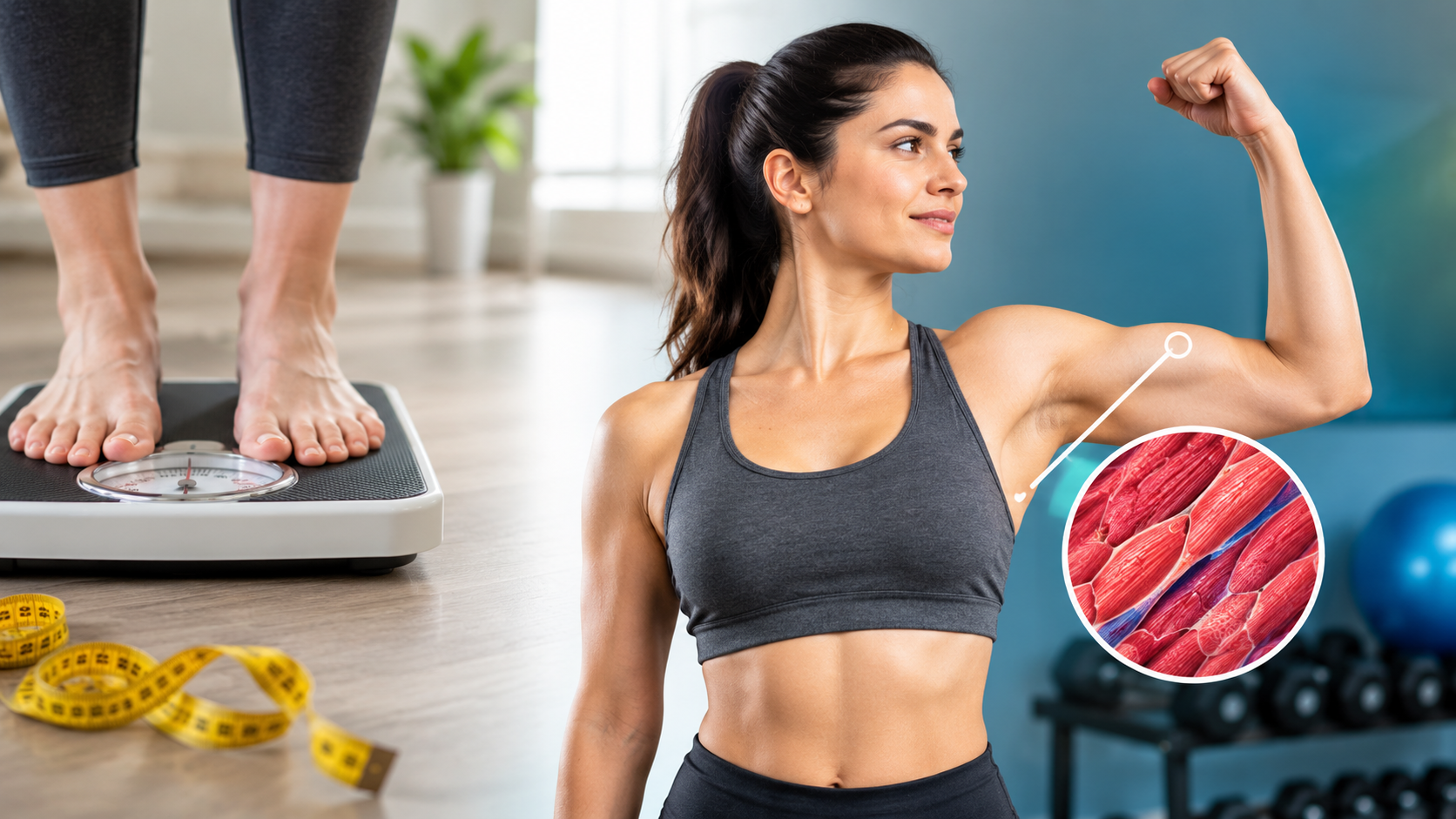
The scale cannot tell you what the weight is made of.
It cannot distinguish muscle from fat.
It cannot tell you whether you are getting stronger.
It cannot tell you how well your muscles function.
And it certainly cannot tell you how much fat is stored within your muscles.
This is why the conversation around healthy ageing, fitness and metabolic health is increasingly moving beyond body weight toward muscle health.
The emerging picture involves several different measurements:
- Muscle mass
- Muscle strength
- Muscle power
- Physical function
- Muscle quality
- Intramuscular fat
- Fitness and performance
And for athletes, this is particularly important.
A lower number on the scale is not automatically better performance.
A higher number is not automatically worse health.
What matters is what that weight represents—and what the body can do with it.
Muscle Is More Than a “Bodybuilding” Issue
Muscle is sometimes discussed primarily in terms of appearance.
Bigger arms. Visible abs. Lower body fat. A particular body composition.
But skeletal muscle is much more important than aesthetics.
Muscle contributes to:
- Movement
- Strength
- Balance
- Power
- Glucose disposal
- Physical independence
- Exercise capacity
- Recovery
- Athletic performance
As people age, preserving muscle strength and physical function becomes particularly important.
And in sport, muscle function can directly influence an athlete’s ability to accelerate, jump, sprint, change direction, produce force and recover between efforts.
A 2026 American College of Sports Medicine position stand, based on an overview of 137 systematic reviews involving more than 30,000 participants, found that resistance training improves muscle strength, hypertrophy, power, endurance and multiple measures of physical function.
The message is straightforward: Muscle health is functional health.
Muscle Mass Isn’t the Whole Story
It is tempting to assume that more muscle automatically means better muscle health.
But muscle quantity and muscle quality are not the same thing.
Two people can have a similar amount of muscle but very different levels of:
- Strength
- Power
- Fitness
- Physical function
- Fat infiltration
- Muscle composition
This is why researchers are increasingly interested in muscle quality.
In simple terms, muscle quality considers how well muscle performs relative to its quantity and composition.
An athlete might have substantial muscle mass but poor endurance.
An older adult might retain reasonable muscle mass but lose strength.
Another person might have apparently normal body weight while accumulating more fat within muscle tissue.
The scale doesn’t reveal these differences.
What Is Intramuscular Fat?
One emerging area of research is intramuscular fat, sometimes referred to as fat infiltration within muscle.
This is different from simply having body fat underneath the skin.
Fat can also accumulate within and around skeletal muscle.
Researchers are interested in whether this type of muscle composition is associated with:
- Muscle function
- Metabolic health
- Mobility
- Physical performance
- Musculoskeletal conditions
Recent research has particularly examined the relationship between thigh-muscle fat and knee osteoarthritis.
What Does Ultra-Processed Food Have to Do With Muscle?
A 2026 study published in Radiology examined dietary intake and thigh-muscle composition using MRI in people at risk for knee osteoarthritis.
The researchers reported that greater consumption of ultra-processed foods was associated with greater amounts of fat stored within thigh muscles, even after accounting for factors including calorie intake, fat intake, physical activity and sociodemographic factors.
This is an interesting finding. But it needs to be interpreted correctly.
It does NOT prove that ultra-processed foods cause muscle fat.
The study was observational/cross-sectional.
That means researchers identified an association between dietary intake and muscle composition at a particular point in time.
It cannot establish that eating more ultra-processed food caused the increase in intramuscular fat.
This distinction matters because nutrition headlines can easily turn:
“associated with”
into:
“causes.”
The science is not saying that yet.
Why Muscle Quality Could Become a Bigger Health Metric
Traditionally, health conversations have focused heavily on:
Weight → BMI → body fat
But a more comprehensive picture could eventually look like:
Body composition + muscle mass + strength + fitness + function + metabolic health
This is particularly relevant as populations age.
Someone may have a “normal” BMI but have low muscle strength.
Another person may have a higher body weight because they carry more muscle.
A third person may have a relatively healthy body weight but low physical fitness.
These people can have very different health and performance profiles.
This is why body weight alone is an incomplete measure of health.
Strength May Tell Us More Than the Scale
One of the simplest ways to think about muscle health is:
Can you use your muscle effectively?
Strength is therefore extremely important.
For the general population, this could mean being able to:
- Carry groceries
- Climb stairs
- Get up from a chair
- Lift objects
- Walk efficiently
- Maintain balance
For athletes, the requirements are considerably greater.
Strength can influence:
- Sprint acceleration
- Jump performance
- Throwing
- Tackling
- Change of direction
- Force production
- Injury resilience
- Training capacity
Resistance training is one of the most direct ways to improve these characteristics.
The 2026 ACSM position stand found broad benefits from resistance training across muscle strength, size, power and physical function.
Muscle Power Is Different From Muscle Strength
This distinction is particularly important for athletes.
Strength is the ability to produce force.
Power is the ability to produce force quickly.
An athlete can be strong without being exceptionally powerful.
For example:
A footballer needs strength—but also the ability to apply that force rapidly when accelerating.
A sprinter needs strength—but needs to express it extremely quickly.
A basketball player needs strength—but also explosive power for jumping.
Therefore, athlete muscle health should not be reduced to:
“How much muscle do you have?”
It should include:
How much force can you produce?
and
How quickly can you produce it?
Nutrition Is Part of Muscle Health
Muscle does not respond to training in isolation.
Training provides the stimulus.
Nutrition provides the raw materials and energy required for adaptation and recovery.
For athletes, important foundations include:
Adequate energy
Consistently under-fuelling can compromise training, recovery and physiological function.
Protein
Protein provides amino acids required for muscle repair and adaptation.
Carbohydrate
For many sports, carbohydrate availability is important for training quality and performance.
Hydration
Fluid and electrolyte needs vary according to exercise duration, sweat rate, climate and sport.
Micronutrients
Iron, vitamin D, calcium, vitamin B12 and other nutrients can be important depending on the individual’s diet and circumstances.
The important point is:
Muscle nutrition isn’t simply about protein powder.
How Much Protein Does an Athlete Need?
There is no single protein number that applies to every athlete.
Requirements can vary depending on:
- Body size
- Training type
- Training volume
- Energy availability
- Age
- Training status
- Goals
- Overall diet
Resistance-trained athletes may benefit from distributing protein across meals rather than consuming almost all of it at one sitting.
For people ageing, maintaining adequate protein intake becomes increasingly relevant because muscle becomes less responsive to small amounts of protein with age—a phenomenon often referred to as anabolic resistance.
But more protein isn’t automatically better.
The goal should be:
Adequate protein + appropriate resistance training + sufficient energy + overall nutritional quality.
What About Creatine?
Creatine is one of the most extensively studied sports-nutrition supplements.
It has particularly strong evidence for supporting high-intensity exercise capacity and adaptations to resistance training.
It is also increasingly being studied in the context of ageing and muscle preservation.
But this doesn’t mean everyone needs creatine.
A useful Fitcart approach is to ask:
What is the goal?
For an athlete:
Strength, power and repeated high-intensity performance
may provide a clear rationale.
For an older adult:
Supporting resistance-training adaptations and maintaining muscle function
may be the relevant question.
The decision should still take into account the individual’s health circumstances, diet, medications and professional advice where appropriate.
Supplements Should Support Muscle Nutrition—Not Replace It
There is a temptation in the modern fitness industry to solve every problem with another product.
Low protein? Protein powder.
Poor recovery? Recovery supplement.
Poor sleep? Sleep stack.
Weakness? Creatine.
Low energy? Pre-workout.
But muscle health is built from several interacting components:
Resistance training + nutrition + protein + energy + sleep + recovery + progressive overload + consistency
Supplements can sometimes help. They don’t replace the foundation.
The Athlete’s Muscle-Health Checklist
For athletes, a practical muscle-health strategy could include:
Training
Progressive resistance training appropriate to the sport.
Protein
Adequate daily protein distributed across the day.
Carbohydrate
Enough carbohydrate to support the demands of the sport.
Energy
Avoid chronic under-fuelling.
Hydration
Match fluid and electrolyte intake to training conditions.
Recovery
Prioritise sleep and recovery between demanding sessions.
Monitoring
Track meaningful performance measures rather than body weight alone.
These might include:
- Strength
- Power
- Sprint times
- Jump performance
- Training loads
- Recovery
- Endurance
- Body composition
- Functional performance
What About Body Fat?
Body fat isn’t automatically unhealthy.
Some body fat is essential for normal physiological function.
And for athletes, the ideal body composition varies significantly between sports.
A marathon runner, rugby player, swimmer, gymnast and heavyweight strength athlete should not be expected to have the same body composition.
This is another reason why simplistic weight-loss messaging can be problematic for athletes.
The goal is not necessarily the lowest possible body weight.
The goal is an appropriate body composition that supports:
Health + performance + recovery + hormonal and physiological function.
Don’t Chase “Lean” at the Expense of Muscle
One of the biggest risks of excessive weight-focused training is that athletes can become overly focused on reducing body weight or body fat. This can potentially result in:
- Inadequate energy intake
- Poor recovery
- Reduced training quality
- Loss of lean mass
- Nutritional deficiencies
- Hormonal disturbances
For athletes, being lighter isn’t automatically being fitter.
The appropriate target depends on the sport, the athlete and the performance objective.
Muscle Health and Healthy Ageing
The muscle-health conversation becomes even more important as we age.
Loss of muscle strength and physical function can affect independence and quality of life.
This is why resistance training deserves a much bigger role in healthy ageing.
It isn’t just about building bigger muscles.
It is about maintaining the ability to:
Lift → carry → climb → walk → balance → react → move
throughout life.
And this is where sports science and longevity science increasingly overlap.
The same principles that help an athlete develop and preserve functional muscle can also help an older person maintain physical capacity.
What Should We Actually Measure?
The future of health monitoring may therefore involve a broader dashboard.
Instead of asking only:
“What do I weigh?”
consider:
Body composition
How much muscle and fat do I have?
Strength
How strong am I?
Power
How quickly can I produce force?
Cardiorespiratory fitness
How well can my cardiovascular system support exercise?
Physical function
Can I move efficiently and independently?
Recovery
Am I recovering adequately from training?
Nutrition
Am I meeting my energy and nutrient requirements?
Muscle quality
What is the composition and functional quality of my muscle?
The exact tests appropriate for an individual will vary. Some measures, such as MRI-based muscle composition, are primarily research or clinical tools rather than something everyone needs routinely.
And What About Supplements for Athletes?
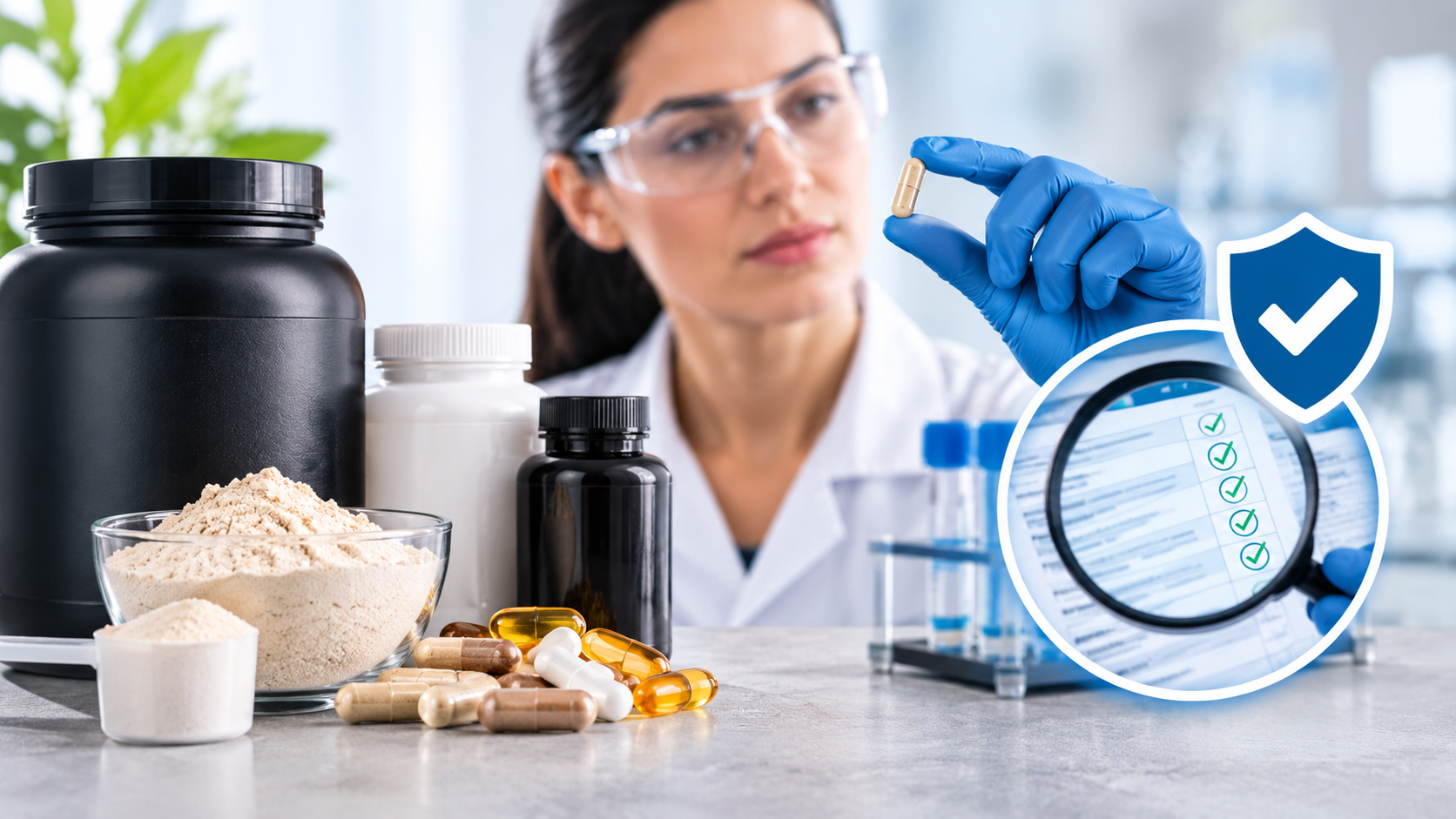
This is where Fitcart’s emphasis on quality, transparency, and batch testing becomes especially important.
Athletes subject to anti-doping rules have an additional risk that ordinary consumers may not face.
A supplement can contain a prohibited substance because of:
- Manufacturing contamination
- Cross-contamination
- Incorrect labelling
- Undeclared ingredients
- Ingredient substitution
- Poor manufacturing controls
Sport Integrity Australia states that no supplement is completely risk-free for athletes and recommends independently batch-tested products if athletes choose to use supplements.
UK Anti-Doping similarly warns that contamination and inaccurate labelling can occur and recommends checking the actual batch number of a batch-tested product.
Therefore:
Don’t rely only on the front of the bottle.
Look for:
Transparent ingredients → appropriate quality controls → independent testing → batch/lot verification
And remember:
“Natural” does not automatically mean “safe for sport.”
Batch Testing Is Particularly Important for Performance Supplements
Athletes should be especially cautious with products such as:
- Pre-workouts
- Fat burners
- Muscle-building products
- Hormone-related products
- Complex proprietary blends
- Products making aggressive performance claims
Some categories have a greater contamination or adulteration risk.
Independent batch testing can reduce—but cannot eliminate—the risk.
And anti-doping organisations do not “approve” supplements.
The athlete remains responsible for what enters their body under applicable anti-doping rules.
This is why Fitcart’s tested-clean sports nutrition philosophy is about more than simply finding a product with an attractive label.
The Bigger Picture: Muscle May Be the Missing Piece
For years, health conversations have focused heavily on:
Weight loss.
The next stage may be more sophisticated.
Instead of simply asking:
“How much weight did you lose?”
we may increasingly ask:
“How much muscle did you preserve?”
“Did your strength improve?”
“Did your fitness improve?”
“Can you move better?”
“Is your muscle composition healthy?”
“Are you ageing with functional capacity?”
That is a much more meaningful conversation.
The Fitcart Takeaway
The bathroom scale isn’t useless. But it is only one measurement.
A person’s weight doesn’t tell the whole story of their health, fitness or athletic potential.
Muscle mass, muscle strength, muscle power, physical function and muscle quality provide additional pieces of the picture.
The emerging research on intramuscular fat and ultra-processed-food intake is particularly interesting, but it should be interpreted carefully. The 2026 research found an association—it did not prove that ultra-processed foods cause fat infiltration in muscle.
For athletes, the message is even clearer:
Don’t train simply to become lighter. Train to become stronger, fitter and more capable.
Build your nutrition around adequate energy, protein, carbohydrates, micronutrients and hydration.
Use supplements when there is a clear evidence-based reason.
And when supplements are used in competitive sport, make quality, transparency and batch testing part of the decision.
The future of health may not be about weighing less.
It may be about maintaining more of what matters.
More muscle.
More strength.
More function.
More fitness.
More healthy years.
Fitcart — Evidence. Quality. Smarter Sports Nutrition.
Fitcart Health, Nutrition & Supplement Disclaimer
Information published by Fitcart is intended for general educational and informational purposes only and should not be considered medical advice, diagnosis or treatment. Individual nutritional, exercise and supplement requirements vary according to age, sex, diet, training status, health conditions, medications, goals and other factors.
The information in this article should not be used as a substitute for advice from a qualified healthcare professional, sports physician, registered dietitian or sports nutrition professional.
Athletes should not use supplements simply because they are marketed for muscle growth, recovery, performance or healthy ageing. Supplements should be considered only where there is an appropriate rationale and after considering the individual’s nutritional needs and circumstances.
For athletes subject to anti-doping rules, supplement use carries additional risks. No supplement can be guaranteed completely free of prohibited substances. Where a supplement is used, athletes should consider batch-tested products independently and verify the specific product and batch/lot number through the relevant certification system before use.
Third-party testing can reduce contamination risk but cannot eliminate it. Athletes remain responsible for substances found in their bodies under applicable anti-doping regulations.
Fitcart supports evidence-based nutrition, transparent ingredient information, responsible supplement use, appropriate quality controls, and independent/batch testing where available.
Follow us on X: https://x.com/fitcartofficial and Instagram: https://www.instagram.com/fitcartofficial/ for the latest updates, health insights, and exclusive content.
Follow Smart Nutrition India X: https://x.com/SmartNutrition1 and Instagram: https://www.instagram.com/smartnutritionindia/ for trusted sports nutrition, supplement education, wellness tips, and the latest news from the world of health and performance.
Fitcart believes in True Play and Clean Sport
#trustedbrandsbetterhealth