



Suggested reading time: 8-10 minutes.
Author: Ritu Makhija.
Co-Founder, Fitcart.com.
Head of Editorial Team, Fitcart Blog.
Intermittent fasting has become increasingly popular as a way to manage body weight, improve metabolic health, and support better blood glucose control.
But can fasting really reverse type 2 diabetes?
Research suggests that certain intermittent fasting approaches can help some people improve blood glucose levels, reduce body weight and, in selected circumstances, achieve type 2 diabetes remission. However, the results depend on the individual, the dietary approach, the duration of the intervention, and medical supervision.
The important distinction is that improving blood sugar is not necessarily the same as reversing diabetes.
Let’s look at what happens inside the body and how nutrition, exercise, and supplements fit into the picture.

1. What is intermittent fasting?
Intermittent fasting is an eating pattern that alternates periods of eating with periods of reduced calorie intake or fasting.
Unlike conventional diets, which often focus on what you eat, intermittent fasting also focuses on when you eat. There are several approaches:
Time-restricted eating
- Eating within a daily window, such as 8–10 hours.
- Fasting for the remaining hours of the day.
- Often easier to incorporate into everyday routines.
The 5:2 approach
- Eating normally on five days of the week.
- Reducing calorie intake significantly on two days, generally around 500–600 calories.
Alternate-day fasting
- Alternating between regular eating days and fasting or substantially reduced-calorie days.
- Some versions allow a small amount of food on fasting days.
These approaches are not interchangeable, and their suitability varies between individuals.
2. How does fasting affect blood sugar and insulin?
After eating, carbohydrates are broken down into glucose, which enters the bloodstream.
The pancreas releases insulin, a hormone that helps move glucose into cells where it can be used for energy or stored.
In people with insulin resistance, the body’s cells do not respond as effectively to insulin. The pancreas may initially compensate by producing more insulin, but blood glucose can eventually become elevated.
This is an important feature of type 2 diabetes.
Intermittent fasting may influence several metabolic processes:
- Lower overall calorie intake: May support weight reduction.
- Reduced liver fat: Weight loss can help reduce excess fat stored in the liver.
- Improved insulin sensitivity: Losing excess body fat may help cells respond better to insulin.
- Improved glucose regulation: Some people experience improvements in fasting glucose and HbA1c.
- Reduced waist circumference: Changes in abdominal fat can contribute to improved metabolic health.
However, fasting itself is not a guaranteed way to improve insulin sensitivity. Overall nutrition, physical activity, body composition, and long-term consistency remain important.
3. Can intermittent fasting actually reverse type 2 diabetes?
A randomised controlled trial published in the Journal of Clinical Endocrinology & Metabolism in 2023 investigated a structured intermittent calorie-restricted Chinese Medical Nutrition Therapy programme in people with type 2 diabetes.
The study involved 72 participants.
Following a three-month intervention and a further three-month follow-up:
- 47.2% of participants in the intervention group achieved diabetes remission.
- The control group had a remission rate of 2.8%.
- Participants in the intervention group also experienced meaningful weight reduction.
Importantly, the study’s remission definition required HbA1c below 6.5% for at least three months after stopping glucose-lowering medication.
This was a structured medical nutrition intervention, not proof that simply fasting every other day reverses diabetes in five weeks.
It is also important to remember that this was a relatively small study, and its findings should not be assumed to apply to everyone.
4. Why muscle mass matters for blood sugar regulation
One of the most overlooked aspects of metabolic health is skeletal muscle.
Muscle is an important site for glucose uptake. When muscles contract during exercise, they can take up glucose from the bloodstream, including through pathways that do not rely entirely on insulin.
Maintaining healthy muscle mass is therefore important for metabolic health.
This is particularly relevant when people use fasting or calorie-restricted diets for weight loss.
Losing weight too quickly, eating insufficient protein or neglecting resistance training can contribute to the loss of lean muscle mass.
A better approach combines sensible nutrition with regular physical activity.

Exercise that supports metabolic health
A balanced fitness programme can include:
Resistance training
- Weight training two to three times per week, according to individual ability.
- Squats, lunges, resistance bands and controlled weight exercises.
- Focus on maintaining and gradually building muscle.
Walking and aerobic exercise
- Brisk walking.
- Cycling.
- Swimming.
- Other activities that increase cardiovascular fitness.
Movement after meals
A short walk after eating can help reduce post-meal glucose excursions in some people.
The general physical activity target for adults is at least 150 minutes of moderate-intensity aerobic activity each week, alongside muscle-strengthening activity on at least two days.
Exercise programmes should be adapted to individual fitness levels and medical needs.
5. What should you eat when following an intermittent fasting approach?
Fasting is only one part of the equation. The quality of food consumed during eating periods is equally important.
A nutrient-rich eating pattern can support blood glucose management, muscle maintenance and overall health.
Foods to prioritise
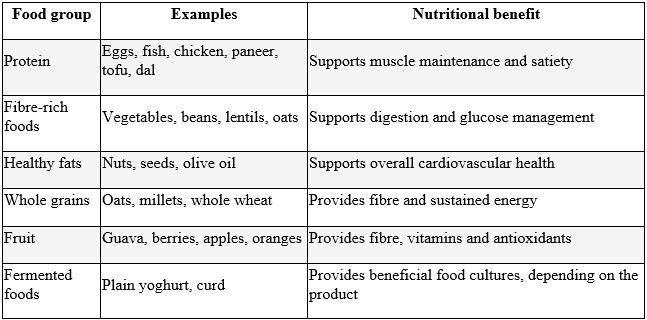
An example of a balanced Indian eating pattern
- Breakfast: Eggs or paneer with vegetables and wholegrain toast.
- Lunch: Dal, vegetables, salad and a sensible portion of brown rice or roti.
- Snack: Plain yoghurt, nuts or a piece of whole fruit.
- Dinner: Fish, chicken, tofu or paneer with vegetables and a fibre-rich carbohydrate source.
Portion sizes and carbohydrate intake should be individualised, particularly for people managing diabetes.
The aim is not to compensate for fasting by eating excessively during the eating window. It is to provide the body with adequate protein, fibre, vitamins, minerals and energy.
6. Do supplements help with blood sugar and metabolic health?
Supplements are frequently marketed for blood sugar regulation, fat loss and insulin sensitivity. However, it is important to distinguish between nutritional support and proven diabetes treatment.
No supplement has been established as a replacement for diabetes medication or a clinically supervised nutrition programme.
Some important considerations:
Protein supplements
Whey, casein and plant-based protein powders can help people meet their protein requirements, particularly when resistance training or managing calorie intake. They are convenient sources of protein, not diabetes treatments.
Fibre supplements
Psyllium husk can help increase dietary fibre intake and may support improvements in certain blood glucose and cholesterol measures. It should be introduced with adequate water and checked for suitability alongside medications.
Magnesium
Magnesium is involved in many metabolic processes. Supplementation may be appropriate when an individual has an established deficiency or a specific clinical need, but it should not be promoted as a treatment for diabetes.
Omega-3
Omega-3 fatty acids support cardiovascular health, particularly in appropriate clinical settings. They should not be marketed as a supplement that reverses insulin resistance or diabetes.
Vitamin D
Vitamin D is important for bone and general health. Supplementation is appropriate when deficiency or another clinical indication is identified, not as routine diabetes treatment.
Important supplement guidance
The American Diabetes Association’s 2026 Standards of Care do not recommend routine vitamin, mineral, or herbal supplementation, including magnesium, chromium, and cinnamon, for glycaemic benefits in people without an established indication.
When choosing supplements, prioritise transparent ingredients, appropriate dosages, reliable manufacturing standards and independently verified batch testing where available.
7. Who should be careful about intermittent fasting?
Intermittent fasting is not suitable for everyone.
People with diabetes should speak to their treating doctor before changing meal timings or restricting calories.
Particular caution is needed for:
- People taking insulin.
- People taking sulfonylurea medications, which can cause low blood sugar.
- People taking SGLT2 inhibitors, because fasting and dehydration can increase the risk of complications, including ketoacidosis in susceptible circumstances.
- People with a history of severe hypoglycaemia.
- Pregnant or breastfeeding women.
- People who are underweight, frail or at risk of muscle loss.
- Individuals with a history of eating disorders.
Medication doses must never be reduced or stopped independently to accommodate fasting.
People with diabetes may need glucose monitoring, medication adjustments and an individualised fasting plan supervised by their healthcare team.
8. The Fitcart approach: Think beyond fasting
Intermittent fasting can be a useful nutritional strategy for some people, but it is not a shortcut to metabolic health.
A sustainable approach should combine:
- Balanced nutrition with adequate protein and fibre.
- Regular resistance training to maintain muscle mass.
- Daily walking and cardiovascular activity.
- Healthy body composition and waist management.
- Adequate sleep and stress management.
- Regular monitoring of blood glucose and HbA1c where clinically indicated.
- Medical guidance when using fasting alongside diabetes medication.
The goal should be to improve metabolic health while maintaining strength, nutritional adequacy and overall wellbeing.
The Fitcart Takeaway
Rather than focusing on how long you can go without eating, focus on how well you nourish, fuel and train your body.
Better metabolic health is built through consistent lifestyle choices, evidence-based nutrition and appropriate medical care — not extreme fasting or quick-fix supplements.
Important health disclaimer
Intermittent fasting is not a cure for diabetes and should not be used as a replacement for prescribed treatment.
Diabetes remission is different from a permanent cure. Blood glucose can rise again, and ongoing monitoring and medical follow-up remain important.
People with type 1 or type 2 diabetes, particularly those taking glucose-lowering medication, should consult their treating doctor before starting any fasting programme.
Nutritional and supplement information in this article is provided for general educational purposes only. Supplements are not intended to diagnose, treat, cure or prevent diabetes or any other medical condition. Individual nutritional requirements vary. Always seek advice from a qualified healthcare professional before starting supplements or changing medication.
Follow us on X: https://x.com/fitcartofficial and Instagram: https://www.instagram.com/fitcartofficial/ for the latest updates, health insights, and exclusive content.
Follow Smart Nutrition India X: https://x.com/SmartNutrition1 and Instagram: https://www.instagram.com/smartnutritionindia/ for trusted sports nutrition, supplement education, wellness tips, and the latest news from the world of health and performance.
Fitcart believes in True Play and Clean Sport
#trustedbrandsbetterhealth