


Reading Time: 6-7 minutes.
Author: Ritu Makhija.
Co-Founder, Fitcart.com.
Head of Editorial Team, Fitcart Blog.
Introduction: Train Your Body and Challenge Your Brain
Exercise is widely recognised for its benefits to cardiovascular health, mobility, muscle strength and general wellbeing. But could activities that challenge both the body and the brain also help support cognitive function as we age?
Research into mild cognitive impairment (MCI) is exploring how physical activity, cognitive exercises and mind-body practices may influence memory, attention and thinking skills.
MCI describes measurable difficulties with cognitive abilities that are greater than expected for a person’s age but do not necessarily prevent independent daily living. It is not the same as dementia, and its causes and progression vary.
A growing body of research suggests that exercise can be a useful component of a broader approach to brain health. However, no exercise programme can guarantee that cognitive decline will be prevented or reversed.
What Does the Research Suggest?
A systematic review and network meta-analysis published in iScience examined 16 trials involving people with mild cognitive impairment. It compared different exercise approaches and reported that combined physical and cognitive training ranked favourably, with Tai Chi also performing well in the analysis.
Other reviews have found potential cognitive benefits from multicomponent exercise, resistance training and mind-body activities. Findings vary by cognitive outcome, the people studied and the type and duration of intervention.
These comparisons can help researchers identify promising approaches, but rankings do not automatically prove that one programme is best for everyone. Trial quality, differences between interventions and the size and certainty of observed effects all matter.
Research context: Research on Tai Chi and cognitive function in mild cognitive impairment.
Why Might Physical and Cognitive Training Work Well Together?
1. Movement supports overall brain health
Regular physical activity supports cardiovascular fitness and blood flow and can improve sleep, mood and metabolic health. These are all relevant to healthy ageing.
Walking, cycling, swimming and appropriately prescribed resistance exercise can help people maintain fitness and independence. The best routine is one that matches a person’s health, mobility and current fitness level.
2. Cognitive challenges engage attention and coordination
Activities that involve remembering sequences, responding to cues, learning skills or making decisions require attention and mental engagement.
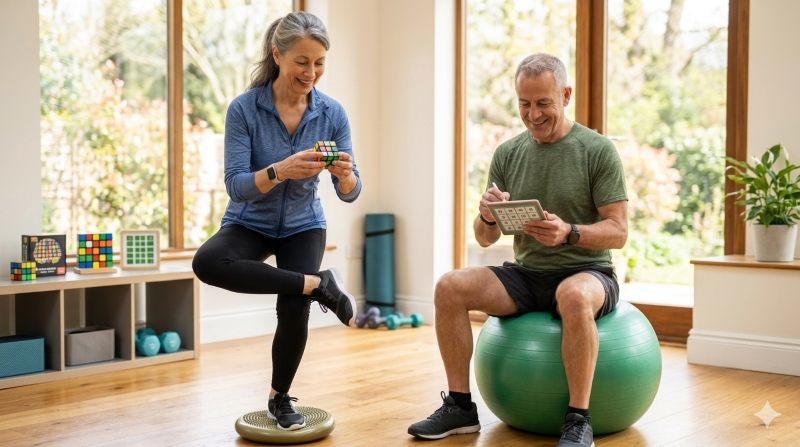
Examples include learning a dance routine, practising a new sport, following a movement sequence or performing supervised exercises that require changes of direction.
These activities are not proven cures for cognitive impairment, but they can make exercise more engaging and provide opportunities to practise coordination and concentration.
3. Mind-body practices combine several skills
Tai Chi incorporates controlled movement, balance, attention and breathing. These characteristics make it an interesting area of research for older adults and people concerned about mobility or cognitive function.
People with balance difficulties or medical conditions should choose an appropriate class and seek professional guidance when needed.
A Practical Fitcart Brain-and-Body Routine
The following is a general example for an otherwise healthy adult. It should be adapted to individual ability and medical advice.
Begin with simple, sustainable activities:
- Walking: Start with a comfortable walk and gradually build duration according to your fitness.
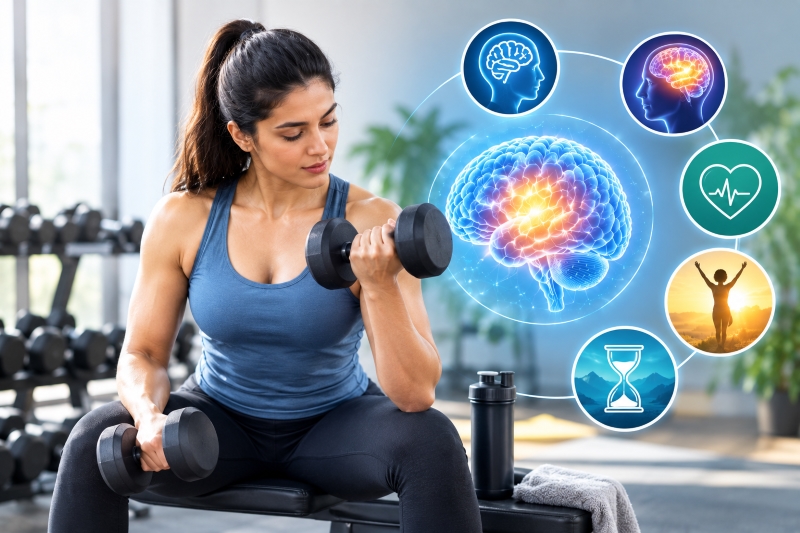
- Resistance exercise: Include appropriate strength exercises for the major muscle groups, progressing gradually.
- Balance and coordination: Practise supported balance movements or beginner-level Tai Chi if suitable.
- Learning something new: Try a dance sequence, a new movement pattern, a musical skill or a mentally engaging hobby.
- Recovery: Prioritise sleep, regular meals, social connection and recovery between demanding sessions.
Combining these activities throughout the week may be more practical than trying to fit every element into one workout.
If a person has diagnosed MCI, a history of falls or a neurological condition, an exercise plan should be individualised with guidance from their clinician or a qualified physiotherapist.
Where Does Nutrition Fit Into Brain Health?
The brain requires energy, essential fatty acids, vitamins, minerals and adequate hydration. A varied dietary pattern can help provide these nutrients.
Build meals around vegetables, fruit, whole grains, legumes, nuts and seeds, and suitable protein sources such as eggs, dairy, fish, poultry, soy or other pulses. Include healthy fats and address any diagnosed nutritional deficiencies with professional guidance.
Certain nutrients are essential for normal neurological function, but that does not mean taking more than the recommended amount will improve memory.
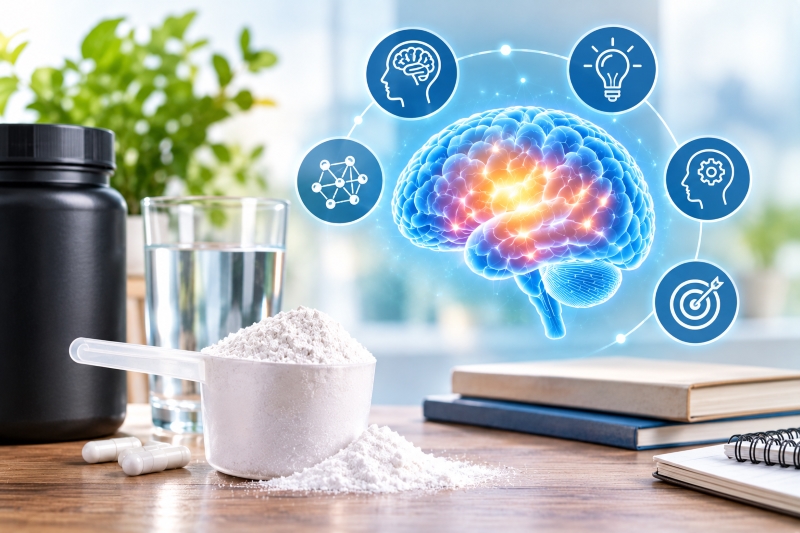
Can supplements improve memory?
Some supplements may be appropriate when a deficiency or specific clinical need has been identified. For example, vitamin B12 deficiency can cause neurological symptoms and requires appropriate assessment and treatment.
Evidence does not support treating all cognitive concerns with a generic brain-health supplement. Claims that a product prevents dementia, reverses ageing or guarantees better memory should be approached cautiously.
Fitcart’s approach is to prioritise evidence, transparent ingredients, appropriate use and quality assurance. Supplements should complement—not replace—medical assessment, exercise, nutrition and sleep.
The Bottom Line
Combining physical activity with mentally engaging movement is a promising area of brain-health research. Walking, strength training, balance exercises, Tai Chi and learning new skills can all form part of a healthy ageing routine.
The objective is not to find a single miracle exercise, but to maintain movement, challenge the mind, eat well and seek timely medical advice when cognitive changes arise.
Brain Health and Supplement Disclaimer
This article is for educational purposes only and does not diagnose, treat, prevent or cure mild cognitive impairment, dementia, or any neurological condition. New or worsening memory problems require assessment by a qualified healthcare professional, as some causes may be treatable. Exercise should be adapted for medical conditions, mobility limitations and fall risk. Dietary supplements are not proven substitutes for clinical care and should be used with professional advice when appropriate, particularly alongside medication or in the presence of chronic illness.
Follow us on X: https://x.com/fitcartofficial and Instagram: https://www.instagram.com/fitcartofficial/ for the latest updates, health insights, and exclusive content.
Follow Smart Nutrition India X: https://x.com/SmartNutrition1 and Instagram: https://www.instagram.com/smartnutritionindia/ for trusted sports nutrition, supplement education, wellness tips, and the latest news from the world of health and performance.
Fitcart believes in True Play and Clean Sport
#trustedbrandsbetterhealth