


Fitcart Sports News Blog.
October 5, 2026 · Raj Makhija, CEO, Fitcart.com and Smart Nutrition India.
Reading time: 8 minutes.
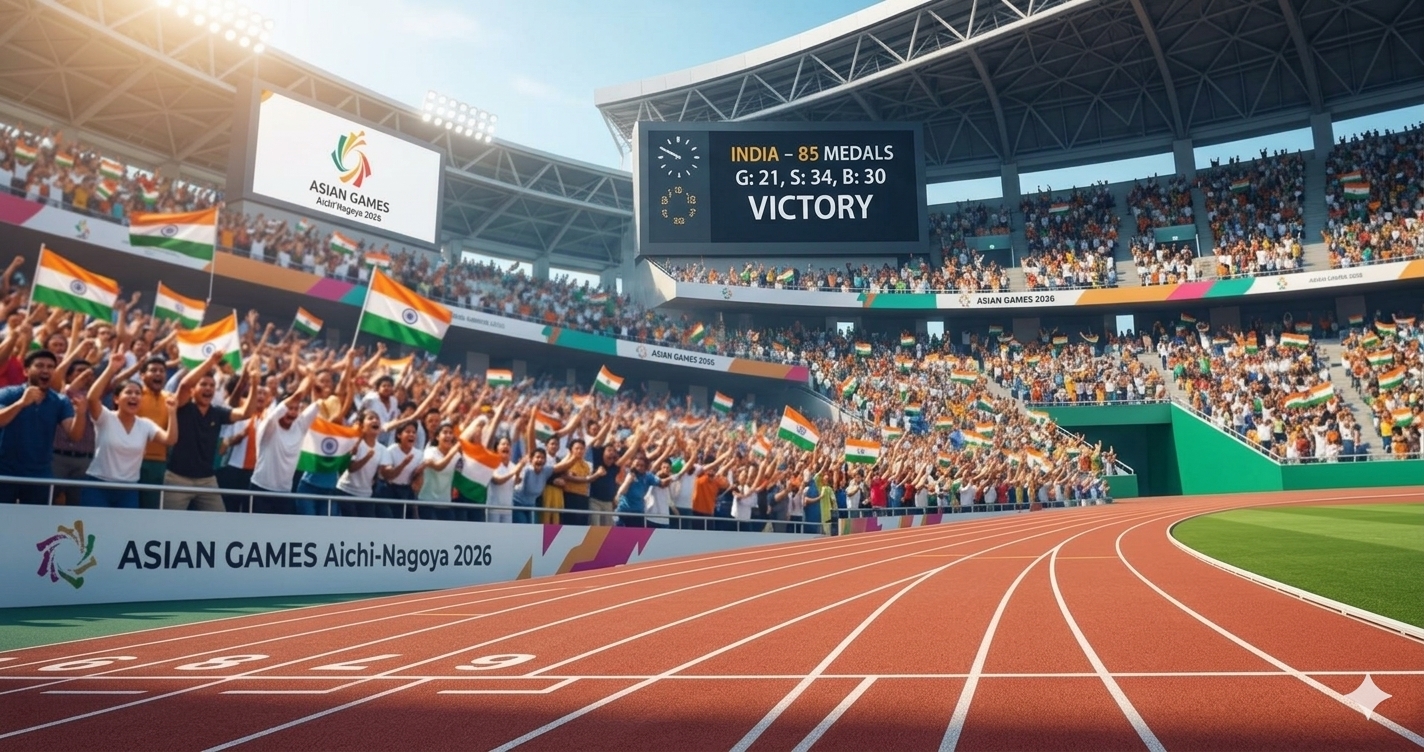
India has finished fourth at the Aichi-Nagoya 2026 Asian Games, returning from Japan with 85 medals — 21 gold, 27 silver and 37 bronze.
The total fell short of India’s record-breaking performance at Hangzhou, where the country won 106 medals. But the headline number doesn’t tell the whole story.
A 17-year-old archer made history. Indian women won 11 of the country’s 21 gold medals. A golfer delivered India’s first women’s individual golf gold at the Asian Games. The women’s hockey team ended a 44-year wait for gold. India also swept gold in men’s and women’s cricket, hockey and kabaddi.
And perhaps most importantly, a new generation of Indian athletes showed that the country’s sporting ambitions are becoming broader, more competitive, and more scientifically driven.
At Fitcart, we look beyond the medal table.
Because behind every medal is a system: training, nutrition, hydration, recovery, sleep, strength, mental preparation and, increasingly, responsible supplement use.
So what can Aichi-Nagoya teach us about what it takes to win?
The Scoreboard
India’s final tally:
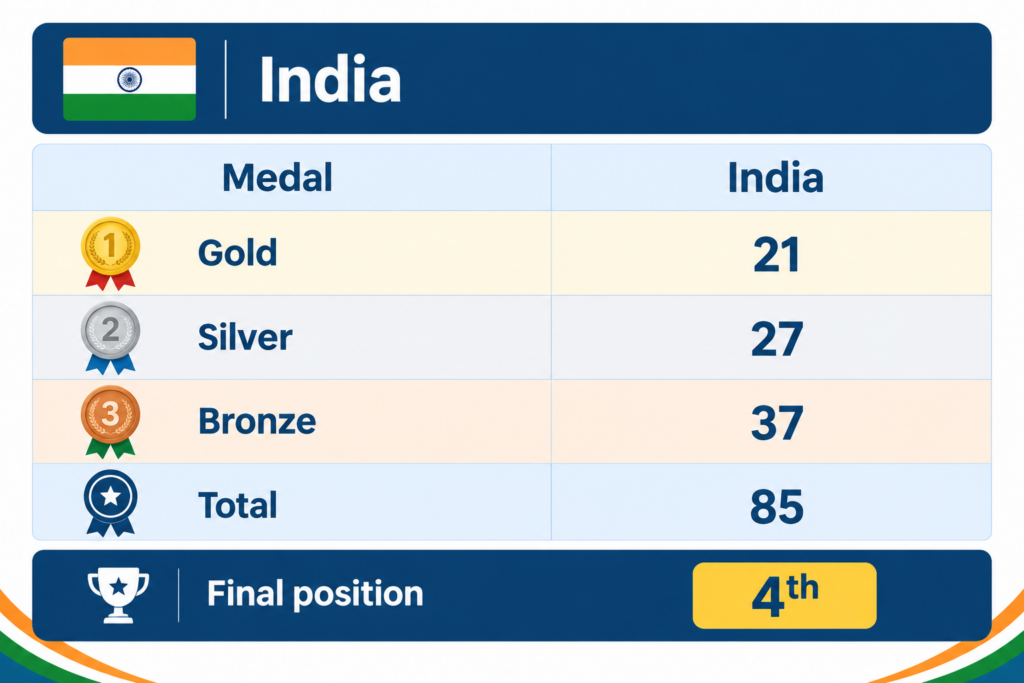
China topped the standings, followed by Japan and South Korea, with India finishing fourth. India’s 85-medal haul remains its second-best Asian Games performance, despite falling short of Hangzhou.
But medal totals alone don’t measure progress.
India’s medal-winning performances came across a wide range of disciplines — from archery and shooting to athletics, wrestling, boxing, hockey, cricket, kabaddi, golf, squash and other emerging sports.
That breadth matters.
A strong sporting nation isn’t built around one or two superstars. It is built when multiple sporting systems begin producing athletes capable of competing for medals.
Where India Won
Archery: Five Golds
Archery was one of India’s standout sports in Aichi-Nagoya, producing nine medals, including five golds.
The biggest story was Kumkum Mohod, who became the first Indian woman to win an individual recurve gold at the Asian Games. At just 17, she also contributed to the women’s recurve team gold and won mixed-team silver.
For a precision sport like archery, performance isn’t simply about physical strength.
It requires:
Focus → fine motor control → stable energy → hydration → recovery → mental composure.
The ability to reproduce the same movement under enormous pressure is a performance skill in itself.
Hockey: Two Golds and a 44-Year Wait Ends
Indian hockey produced another major highlight.
The women’s team won Asian Games gold for the first time since 1982, ending a 44-year wait. The men’s team successfully defended its title, while both teams secured qualification for the Los Angeles 2028 Olympics.
For team sports, tournament nutrition is particularly important.
Athletes aren’t simply preparing for one match. They may need to:
- refuel rapidly between games
- replace fluids and electrolytes
- maintain carbohydrate availability
- support muscle recovery
- manage fatigue across a long tournament
- sleep and recover between matches
In elite sport, recovery between competitions can be as important as preparation for the next one.
Boxing Delivers Three Golds
India’s boxing campaign produced three gold medals, with Lovlina Borgohain, Parveen Hooda and Ankush Panghal winning their respective categories.
Boxing presents a unique nutritional challenge.
Athletes must balance:
Body composition + weight management + training energy + hydration + recovery.
Weight-class athletes should never rely on extreme or poorly supervised approaches to making weight.
Adequate protein, carbohydrate availability around training, hydration and carefully planned recovery are fundamental.
The objective isn’t simply to make weight.
It is to arrive at competition strong, fuelled and ready to perform.
Wrestling: Strength, Power and Recovery
India won six wrestling medals, including golds for Aman Sehrawat and Sujeet Kalkal. It was India’s best Asian Games wrestling tally since 1962.
Wrestling places enormous demands on the body.
Training involves repeated high-intensity efforts, strength, power, grip endurance and rapid recovery.
That makes the basics particularly important:
Protein → carbohydrates → hydration → electrolytes → sleep → strength and conditioning → recovery.
Supplements may have a role in an athlete’s programme, but they should sit on top of these fundamentals — not replace them.
Athletics: The Biggest Medal Haul, But Room to Improve
Athletics produced India’s largest overall medal contribution, with 24 medals, although only one was gold — the women’s 4x400m relay.
Distance runner Gulveer Singh was one of the standout performers, collecting three medals.
His performance highlights something important about endurance sport:
The final result may be decided in the last few minutes of competition, but the preparation takes place over thousands of kilometres, hundreds of training sessions and years of disciplined recovery.
For endurance athletes, nutrition isn’t simply about eating enough.
It involves:
- carbohydrate availability
- hydration
- electrolytes
- adequate protein
- iron and other nutrient considerations where relevant
- recovery nutrition
- appropriate fuelling before and during competition
For athletes training at high volumes, nutritional deficiencies can have consequences for performance and recovery.
That is why individual assessment matters.
Shooting: Plenty of Medals, Fewer Golds
India still performed strongly in shooting, winning 15 medals, although the gold tally fell compared with Hangzhou.
One of the stars was Neeru Dhanda, who won two trap golds and a team silver.
Shooting also demonstrates that elite performance isn’t always about maximal physical output.
Precision athletes require:
concentration, consistency, controlled breathing, hydration, sleep and psychological resilience.
The goal isn’t necessarily more stimulation.
Sometimes the better strategy is a stable routine that minimises distractions.
A New Generation Is Emerging
Perhaps the most exciting story from Aichi-Nagoya is the number of young athletes beginning to make their mark.
Kumkum Mohod is the obvious example.
At 17, she has already experienced the pressure of an Asian Games final and emerged with multiple medals.
Other performances across archery, athletics, boxing, wrestling and shooting also demonstrate the growing depth of India’s sporting pipeline.
This is important because elite performance isn’t created overnight.
Today’s teenage medalist may be tomorrow’s Olympic contender.
The next three years could therefore be critical.
India’s Women Athletes Deserve Special Recognition
One of the defining stories of Aichi-Nagoya was India’s female athletes.
Indian women won 11 of India’s 21 gold medals, accounting for more than half of the country’s gold tally. They also contributed 37 of India’s 85 total medals.
From Kumkum Mohod in archery and Pranavi Urs in golf to Lovlina Borgohain and Parveen Hooda in boxing, India’s women athletes were central to the country’s fourth-place finish.
This matters beyond the medal table.
It reflects the growing depth of women’s sport in India and the importance of providing young female athletes with access to:
quality coaching + sports science + nutrition + strength training + recovery + appropriate healthcare + safe, tested sports nutrition.
What Does It Take to Build a Medal?
A medal is visible. The preparation behind it isn’t.
An elite athlete’s performance may depend on hundreds of small decisions made over months and years.
Training
Progressive, sport-specific training develops strength, speed, power, endurance and skill.
Nutrition
Adequate energy, protein, carbohydrates, fats, micronutrients and hydration provide the raw materials for training and recovery.
Recovery
Sleep, rest days, mobility and recovery strategies allow the body to adapt to training.
Mental preparation
Competition requires focus, confidence, emotional control and the ability to perform under pressure.
Monitoring
Coaches and sports-science teams increasingly use performance data, training load, body composition, blood markers and other measures to individualise programmes.
Supplement strategy
When supplements are genuinely useful, they should be selected based on the athlete’s needs — rather than simply following trends.
From “More Supplements” to “Better Supplementation”
One of the biggest changes in sports nutrition is the move away from simply taking a long list of products.
A better approach is:
Goal → Diet → Training → Recovery → Individual needs → Deficiencies → Evidence → Product → Dose → Testing
For an elite athlete, supplement quality is particularly important.
Athletes can be held responsible for substances found in their bodies, including substances that may have entered through contaminated supplements.
That makes testing and traceability an important part of sports nutrition.
A supplement label alone should not be treated as proof of purity.
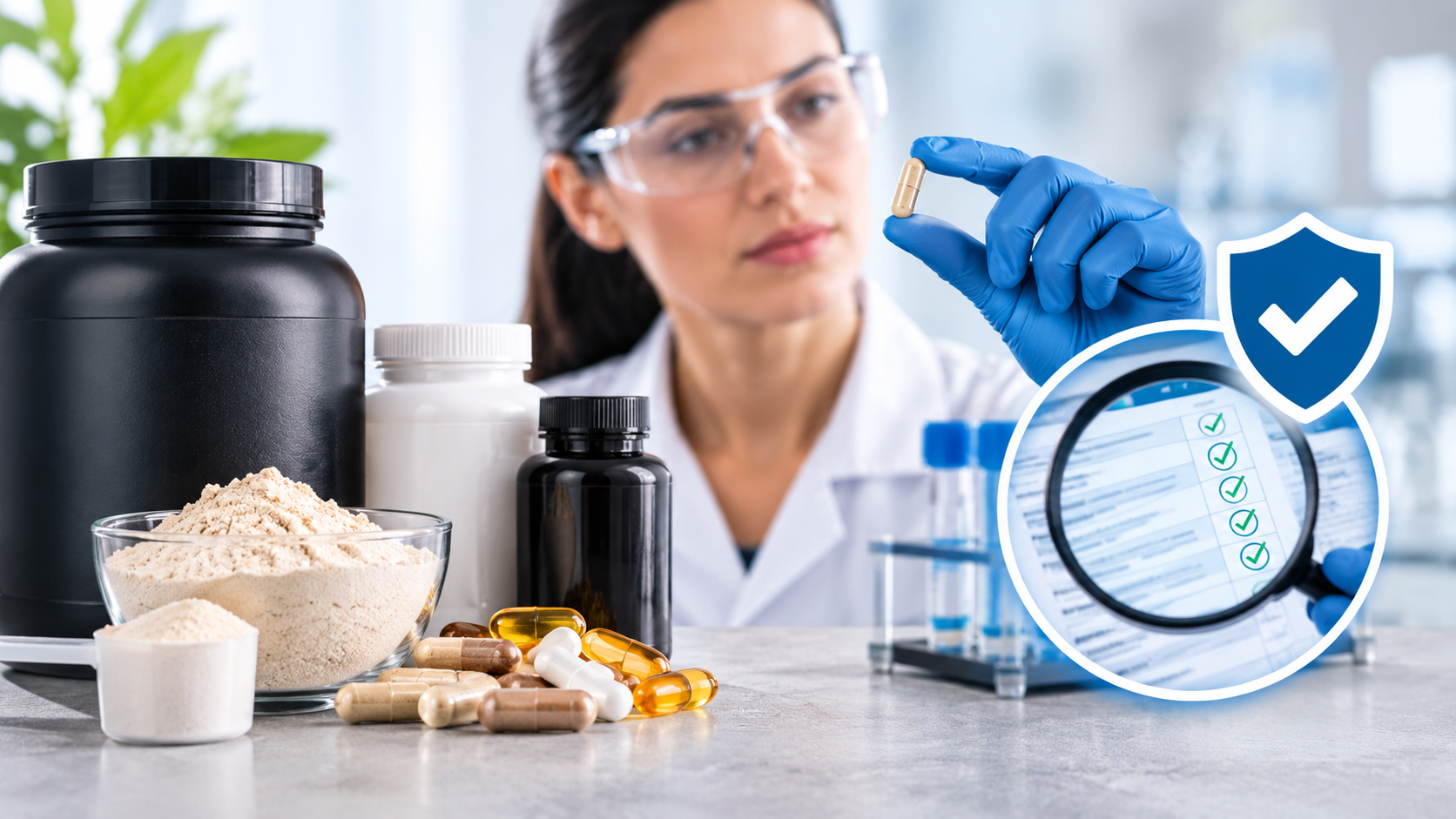
Where appropriate, athletes should look for products supported by recognised quality systems, independent testing and relevant sport-certification programmes, and should verify the specific product and batch/lot where a certification database provides that information.
Fitcart: Tested. Trusted. Certified.
This is where our philosophy at Fitcart comes in.
We believe athletes deserve more than attractive packaging and marketing claims.
They deserve confidence in what they are putting into their bodies.
Through our sports nutrition approach, Fitcart focuses on:
Tested products
Transparent ingredients
Recognised quality standards
Batch-level testing where applicable
Responsible sports nutrition guidance
Education around supplement safety
Our partnership and work with independent testing and certification organisations is part of this commitment.
For competitive athletes, supplement selection isn’t simply about finding the product with the longest ingredient list.
It is about asking:
What do I actually need?
Is there evidence for it?
Is the dose appropriate?
Is the product manufactured properly?
Has the product or batch been independently tested where appropriate?
Can I verify what I’m taking?
That is the standard we believe serious sports nutrition should move toward.
The Road to Los Angeles 2028
Aichi-Nagoya wasn’t the destination. For many athletes, it was another step toward LA 2028.
The men’s and women’s hockey teams secured Olympic qualification, while Indian athletes across several sports now have the next Olympic cycle to develop further.
For young athletes such as Kumkum Mohod, the next three years could be transformative.
The challenge now is to convert Asian Games success into sustained international performance.
That requires investment not only in athletes, but also in:
coaching
sports science
strength and conditioning
nutrition
recovery
mental performance
injury prevention
safe and tested sports nutrition
Fitcart Podium: Supporting India’s Next Generation
At Fitcart, we believe the future of Indian sport isn’t just about celebrating medals.
It is about helping create the environment in which the next medal becomes possible.
Fitcart Podium is our athlete-focused platform designed to support emerging Indian athletes with access to certified sports nutrition, expert guidance, and greater visibility.
Because the next Olympic champion may not yet be a household name.
They may be a 17-year-old athlete competing in their first major international event.
They may be training quietly at an academy.
They may be the athlete who finishes fourth today and stands on the podium in 2028.
Our role is to help support that journey.
What Aichi-Nagoya 2026 Tells Us
India’s 85 medals may not have broken the previous record.
But records aren’t the only measure of progress.
The real story is the depth, diversity and emergence of new talent.
A 17-year-old archer.
A breakthrough women’s golf champion.
A women’s hockey team ending a 44-year wait.
Strong performances in boxing and wrestling.
A new generation of endurance athletes.
And Indian women contributing more than half of the country’s gold medals.
These are signs of a sporting ecosystem that is continuing to evolve.
The next challenge is to make those breakthroughs sustainable.
Because winning once is extraordinary.
Building a system that keeps producing winners is the real ambition.
Congratulations to every member of India’s Aichi-Nagoya contingent.
85 medals. 21 golds. A new generation coming through.
Now, the road to LA begins.
Fitcart Health, Sports Nutrition & Supplement Disclaimer
The information in this article is provided for general educational, sports nutrition and wellness purposes only. It is not intended to diagnose, treat, cure or prevent any disease, medical condition or injury and should not replace individual advice from a qualified doctor, sports physician, registered dietitian, sports nutritionist or other healthcare professional.
Sports nutrition requirements vary according to the athlete, sport, training load, age, sex, body composition, health status, competition schedule and individual goals.
Supplements should not replace a balanced diet, appropriate hydration, training, recovery or adequate sleep. Before using supplements, athletes should consider their individual nutritional requirements and, where appropriate, professional assessment and blood testing.
Supplement Safety for Athletes
Athletes should take particular care when selecting supplements because they may be responsible for prohibited substances found in their bodies.
A product label, marketing claim or brand reputation alone should not be considered sufficient assurance that a product is free from prohibited or undeclared substances.
Where relevant, athletes should choose products manufactured to appropriate quality standards and consider independent, sport-specific and/or batch testing through recognised certification programmes. Where a certification database is available, athletes should verify the specific product and batch/lot number rather than relying solely on a logo or general brand claim.
Always check current anti-doping requirements and applicable prohibited-substance rules, including those of WADA and the relevant sporting federation, before using a supplement in competition.
Individuals taking medication, managing a medical condition, pregnant or breastfeeding, or undergoing treatment should seek appropriate professional advice before using supplements.
Fitcart promotes informed, evidence-aware sports nutrition and a stronger culture of testing, transparency, and responsible supplement use.
Sources: Indian Express, NDTV Sports, News On AIR, Business Standard and other reporting on the Aichi-Nagoya 2026 Asian Games and India’s medal tally.
Fitcart — Trusted Brands. Better Health.
Follow us on X: https://x.com/fitcartofficial and Instagram: https://www.instagram.com/fitcartofficial/ for the latest updates, health insights, and exclusive content.
Follow Smart Nutrition India X: https://x.com/SmartNutrition1 and Instagram: https://www.instagram.com/smartnutritionindia/ for trusted sports nutrition, supplement education, wellness tips, and the latest news from the world of health and performance.
Fitcart believes in True Play and Clean Sport
#trustedbrandsbetterhealth