


Fitcart Editorial Team Ritu Makhija.
Artificial Intelligence is no longer limited to chatbots, automation, or smart assistants. One of the most exciting transformations is happening in the world of nutrition and healthy eating. AI-powered ingredient management and personalized meal planning are beginning to reshape how people understand food, cook meals, and maintain long-term health.
For Indian consumers especially, this shift could become revolutionary.
India has one of the world’s most diverse food cultures, but it also faces growing health concerns such as obesity, diabetes, hypertension, heart disease, and nutritional deficiencies. The future of AI in nutrition may help solve these problems by teaching people how every ingredient in a dish directly impacts the body.
Instead of simply counting calories, AI systems are evolving to understand complete nutritional ecosystems — from proteins and micronutrients to cooking oils, spices, fiber, sugar content, and glycemic response.
What Is AI-Based Ingredient Management?
AI-based ingredient management refers to intelligent systems that analyze ingredients used in meals and determine their nutritional impact.
Future AI-powered food systems will be able to:
- Analyze ingredients in real time
- Suggest healthier substitutions
- Balance nutrients automatically
- Reduce excess sugar, sodium, and unhealthy fats
- Create personalized meal recommendations
- Predict nutritional deficiencies
- Generate healthy recipes using available ingredients
Imagine preparing a simple Indian meal like rajma chawal, dosa, biryani, poha, or paneer curry. AI systems could instantly analyze:
- Protein quality
- Fiber levels
- Carbohydrate load
- Vitamin and mineral balance
- Oil quantity
- Portion size
- Glycemic impact
The system may then suggest small improvements that significantly enhance nutritional value. For example:
- Replacing refined oil with cold-pressed oils
- Increasing protein portions
- Adding fiber-rich vegetables
- Reducing excess sodium
- Balancing carbohydrates with healthy fats
These micro-adjustments can dramatically improve long-term health outcomes.
Why This Matters for Indian Consumers
Indian diets are highly ingredient-sensitive.
A small change in:
- Cooking oil
- Spice quantity
- Rice portion
- Flour quality
- Sugar levels
- Cooking method
can significantly alter the nutritional value of a meal.
However, most consumers are not educated about how ingredient combinations affect metabolism, digestion, energy levels, blood sugar, or chronic disease risk.
This is where AI becomes powerful — not just as a recommendation engine, but as an educational nutrition guide.
How AI Will Educate Consumers About Food
One of the biggest opportunities in India is nutritional awareness.
Most people know whether a dish tastes good. Very few understand:
- How ingredients interact biologically
- Which foods spike blood sugar
- Which oils increase inflammation
- Which combinations improve nutrient absorption
- How portion balance affects energy and weight
AI systems can simplify this education in real time.
For example, future nutrition apps may explain:
- Why pairing dal with rice creates a complete protein
- How curd improves gut health
- Why fiber slows glucose absorption
- How turmeric and black pepper work together
- Why excess refined carbohydrates increase insulin spikes
This transforms AI from a simple calorie tracker into a personalized nutrition educator.
For Indian households, this could lead to:
- Better family eating habits
- Healthier children
- Improved elderly nutrition
- Reduced lifestyle diseases
- Smarter grocery buying decisions
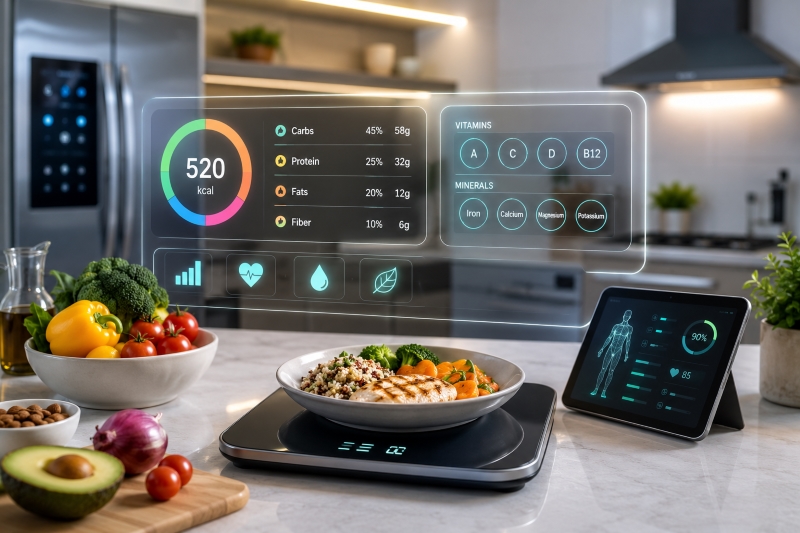
Smart Kitchens and AI-Powered Meal Planning
The kitchens of the future may become intelligent nutrition hubs.
Smart AI systems integrated with:
- Refrigerators
- Grocery apps
- Wearable fitness devices
- Health trackers
- Mobile cameras
will help consumers make healthier choices daily.
Imagine this scenario: A family has:
- Paneer
- Spinach
- Tomatoes
- Brown rice
- Lentils
The AI system could generate multiple healthy Indian meal options optimized for:
- Weight loss
- Diabetes management
- High-protein diets
- Child nutrition
- Heart health
It may also recommend:
- Ingredient quantities
- Cooking methods
- Portion control
- Meal timing
This creates personalized nutrition without requiring expert-level dietary knowledge.
AI and Indian Lifestyle Diseases
India is often called the “diabetes capital of the world.” According to health studies, rising consumption of:
- Ultra-processed foods
- Refined sugars
- Excess oils
- High-carb diets
- Sedentary lifestyles
has contributed to a major increase in metabolic disorders.
AI-driven nutrition platforms could help reverse this trend through predictive meal planning. Future systems may:
- Detect unhealthy eating patterns
- Predict blood sugar spikes
- Suggest lower glycemic alternatives
- Recommend balanced ingredient combinations
- Monitor nutritional deficiencies over time
For example:
- Replacing white rice portions strategically
- Adding protein to breakfast
- Improving iron intake naturally
- Optimizing hydration and electrolytes
These small ingredient-level changes may have massive long-term health benefits.
The Rise of Food Recognition AI
Computer vision technology is also evolving rapidly. Soon, users may simply photograph a meal to instantly receive:
- Calorie estimates
- Protein count
- Fat breakdown
- Fiber analysis
- Micronutrient insights
Researchers are already developing AI systems capable of analyzing Indian thalis and mixed dishes — one of the most complex challenges in food technology because of India’s culinary diversity.
This could make nutritional tracking easier for millions of Indian consumers who traditionally find calorie counting difficult.
Personalized Nutrition Is the Future
No two people respond to food the same way. The future of nutrition will likely combine:
- AI
- Genetic insights
- Wearable health trackers
- Gut microbiome analysis
- Blood glucose monitoring
to create fully personalized diets.
In the future, your meals may adapt daily based on:
- Sleep quality
- Stress levels
- Physical activity
- Hormonal changes
- Health conditions
AI may eventually become a real-time health companion helping consumers optimize food choices continuously.
Challenges That Still Exist
While the future is exciting, challenges remain:
- Food recognition accuracy
- Regional recipe diversity
- Data privacy concerns
- Accessibility for rural populations
- Need for medically validated recommendations
However, rapid progress in AI and health technology suggests these systems will become more accurate, affordable, and accessible over time.
Final Thoughts
The future of AI in nutrition is not just about automation — it is about awareness.
For Indian consumers, AI-powered ingredient management could become one of the most important health education tools of the next decade.
By helping people understand:
- What they eat
- Why ingredients matter
- How food affects the body
- Which combinations improve health
AI has the potential to transform everyday meals into intelligent wellness decisions.
Healthy eating may soon become less confusing, more personalized, and far more accessible.
The future kitchen will not simply cook food — it will help build healthier lives.
Follow us on X: https://x.com/fitcartofficial and Instagram: https://www.instagram.com/fitcartofficial/ for the latest updates, health insights, and exclusive content.
Follow Smart Nutrition India X: https://x.com/SmartNutrition1 and Instagram: https://www.instagram.com/smartnutritionindia/ for trusted sports nutrition, supplement education, wellness tips, and the latest news from the world of health and performance.
Fitcart believes in True Play and Clean Sport
#trustedbrandsbetterhealth