



Fitcart Editorial Team Ritu Makhija.
The search for healthy aging has never been more exciting. While longevity supplements such as Urolithin A, Spermidine, NMN, Nicotinamide Riboside (NR), and Omega-3s continue to gain attention, new research suggests that one simple food found in many kitchens may also play a role—probiotic yogurt.
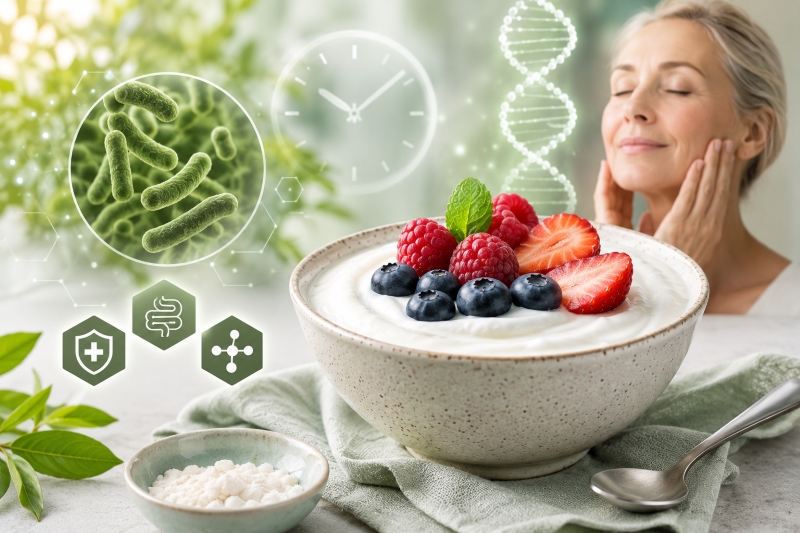
A recent clinical study has found that consuming probiotic yogurt daily, alongside healthy lifestyle habits, may positively influence markers associated with biological aging. Although the findings are promising, researchers stress that probiotic yogurt is not a miracle anti-aging food. Instead, it may become another valuable piece of the healthy aging puzzle.
Biological Age vs Chronological Age
Everyone has a chronological age—the number of years since birth.
Biological age, however, reflects how well your body is functioning based on factors such as:
- Cellular health
- Inflammation
- Immune function
- Metabolic health
- Lifestyle habits
- Nutrition
- Physical activity
- Sleep quality
- Stress levels
Two people of the same chronological age can have very different biological ages depending on how they live.
Modern longevity research is increasingly focused on improving healthspan—the number of years we remain healthy, active, and independent—not simply extending lifespan.
What Did the Study Find?
Researchers investigated whether consuming a probiotic yogurt every day, combined with healthy dietary and lifestyle changes, could influence biological aging markers.
Participants who regularly consumed the probiotic yogurt showed modest improvements in biomarkers linked with healthy aging over the course of the study.
While these findings are encouraging, scientists note that:
- The study duration was relatively short.
- More large-scale research is needed.
- The benefits were observed as part of an overall healthy lifestyle—not from yogurt alone.
This reinforces an important message: there are no shortcuts to healthy aging.
Why Gut Health Matters
Your digestive system is home to trillions of microorganisms collectively known as the gut microbiome.
The microbiome plays an important role in:
- Supporting immune function
- Digesting food
- Producing beneficial compounds
- Helping regulate inflammation
- Influencing metabolism
- Supporting communication between the gut and brain
When the gut microbiome is diverse and balanced, it may contribute to better overall health throughout life.
What Makes Probiotic Yogurt Different?
Unlike ordinary yogurt, probiotic yogurt contains live beneficial bacteria that may survive digestion and support microbial diversity.
Common probiotic strains include:
- Lactobacillus acidophilus
- Lactobacillus rhamnosus
- Bifidobacterium lactis
- Lactobacillus casei
Different strains perform different functions, which is why no single probiotic works for every health goal.
Can Probiotics Reduce Inflammation?
Chronic low-grade inflammation is considered one of the hallmarks of aging.
Emerging evidence suggests that certain probiotic strains may help:
- Support gut barrier integrity
- Reduce digestive inflammation
- Improve microbial balance
- Produce beneficial short-chain fatty acids
- Support immune regulation
These mechanisms may contribute to healthier aging, although further human studies are still required.
Probiotics and the Gut-Brain Connection
Scientists now recognize a strong communication pathway known as the gut-brain axis.
A healthier gut microbiome has been associated with:
- Better mood
- Reduced stress response
- Improved sleep quality
- Enhanced cognitive function
- Better overall wellbeing
While research is still evolving, maintaining gut health may benefit both body and mind.
Building a Gut-Friendly Lifestyle
Rather than relying on one food, experts recommend combining several habits:
Eat More Fermented Foods
- Probiotic yogurt
- Kefir
- Kimchi
- Sauerkraut
- Miso
- Tempeh
Feed Your Good Bacteria
Beneficial microbes also need nourishment from prebiotics, including:
- Oats
- Bananas
- Garlic
- Onion
- Asparagus
- Chicory root
- Apples
- Whole grains
- Legumes
Increase Fibre Intake
Aim for a variety of colourful fruits, vegetables, whole grains, nuts, and seeds to support microbial diversity.
Exercise Regularly
Regular physical activity has been associated with a healthier and more diverse gut microbiome.
Prioritise Sleep
Poor sleep can negatively affect both gut bacteria and overall health.
Manage Stress
Long-term stress may alter gut bacteria through the gut-brain axis, making stress management an important part of digestive health.
Should You Take a Probiotic Supplement?
Not everyone requires a probiotic supplement, but supplementation may be useful in certain situations, including:
- After a course of antibiotics
- Frequent digestive discomfort
- Irritable bowel symptoms (under medical guidance)
- Travelling
- Individuals with limited fermented food intake
The effectiveness of a probiotic depends on the specific strain, dose, and intended health benefit.
Always choose products from trusted manufacturers with transparent labeling and quality testing.
Beyond Probiotics: The Rise of Tribiotics
Nutrition science is moving beyond probiotics alone.
Researchers are increasingly exploring tribiotics, formulations that combine:
- Probiotics – beneficial live microorganisms
- Prebiotics – fibres that nourish beneficial bacteria
- Postbiotics – beneficial compounds produced by probiotic bacteria
This next generation of gut-health nutrition aims to support digestion, immunity, metabolic health, and healthy aging more comprehensively.
The Fitcart.com Perspective
Healthy aging is not driven by a single food or supplement—it is built through consistent daily habits.
A balanced diet rich in fibre, fermented foods, regular exercise, quality sleep, effective stress management, and evidence-based supplementation where appropriate provides the strongest foundation for lifelong health.
For those who enjoy yogurt, choosing a quality probiotic variety may be a simple and enjoyable way to support gut health as part of an overall healthy lifestyle.
As longevity research continues to evolve, one thing remains clear: caring for your gut today may help support your health for years to come.
Key Takeaways
- Probiotic yogurt may support healthy aging when combined with a healthy lifestyle.
- Gut health plays an important role in immunity, metabolism, inflammation, and brain function.
- Biological age can often be influenced by nutrition and lifestyle choices.
- Eating a wide variety of fibre-rich and fermented foods helps maintain a healthy microbiome.
- There is no single anti-aging food—consistency across diet, exercise, sleep, and recovery remains the most effective approach.
Frequently Asked Questions (FAQs)
1. Can probiotic yogurt really slow down aging?
Current research suggests that consuming probiotic yogurt as part of a healthy lifestyle may positively influence certain markers of biological aging. However, it is not a standalone anti-aging solution, and more long-term studies are needed to confirm these findings.
2. What is the difference between biological age and chronological age?
Chronological age is the number of years you have lived, while biological age reflects how well your body is functioning based on factors such as nutrition, exercise, sleep, stress, inflammation, and overall health.
3. How does probiotic yogurt support gut health?
Probiotic yogurt contains beneficial live bacteria that help maintain a balanced gut microbiome. A healthy microbiome supports digestion, immune function, nutrient absorption, and may help reduce inflammation.
4. Which probiotic strains are commonly found in yogurt?
Common strains include Lactobacillus acidophilus, Lactobacillus casei, Lactobacillus rhamnosus, and Bifidobacterium lactis. Different strains provide different health benefits, so it’s important to choose products with clearly listed live cultures.
5. Is probiotic yogurt better than taking a probiotic supplement?
Not necessarily. Probiotic yogurt provides beneficial bacteria along with high-quality protein, calcium, and other nutrients. Supplements may deliver higher doses or specific strains for targeted health needs. The best option depends on your dietary preferences and individual health goals.
6. Can probiotics improve immunity?
Around 70% of the body’s immune cells are associated with the gut. A healthy gut microbiome helps support normal immune function, although probiotics should complement—not replace—a balanced diet, regular exercise, adequate sleep, and good hygiene.
7. What foods naturally support a healthy gut microbiome?
A gut-friendly diet includes:
- Probiotic yogurt
- Kefir
- Kimchi
- Sauerkraut
- Miso
- Whole grains
- Oats
- Garlic
- Onions
- Bananas
- Apples
- Legumes
- Colourful fruits and vegetables
8. What are prebiotics, probiotics, and postbiotics?
- Probiotics are live beneficial bacteria.
- Prebiotics are dietary fibres that feed those beneficial bacteria.
- Postbiotics are beneficial compounds produced when probiotics ferment fibre in the gut.
Together, they work to support digestive health, immunity, and overall wellbeing.
9. Is probiotic yogurt suitable for everyone?
Most healthy adults can enjoy probiotic yogurt as part of a balanced diet. However, individuals with severe immune disorders, milk allergies, or certain medical conditions should consult a healthcare professional before increasing probiotic intake.
10. What else can I do to support healthy aging?
Healthy aging is built through consistent lifestyle habits, including:
- Eating a nutrient-rich, balanced diet
- Staying physically active with regular strength and cardiovascular exercise
- Prioritising 7–9 hours of quality sleep
- Managing stress effectively
- Avoiding smoking and excessive alcohol intake
- Maintaining a healthy body weight
- Considering evidence-based supplements where appropriate under professional guidance
Disclaimer
The information provided in this article is for educational and informational purposes only and is not intended as medical advice. It should not be used as a substitute for consultation with a qualified healthcare professional. Always seek the advice of your physician or other qualified health provider with any questions you may have regarding a medical condition, diet, or lifestyle changes. Individual results may vary, and the benefits discussed are based on general research findings and may not apply to everyone.
Follow us on X: https://x.com/fitcartofficial and Instagram: https://www.instagram.com/fitcartofficial/ for the latest updates, health insights, and exclusive content.
Follow Smart Nutrition India X: https://x.com/SmartNutrition1 and Instagram: https://www.instagram.com/smartnutritionindia/ for trusted sports nutrition, supplement education, wellness tips, and the latest news from the world of health and performance.
Fitcart believes in True Play and Clean Sport
#trustedbrandsbetterhealth