



Fitcart Editorial Team Ritu Makhija.
For years, whey protein has been the undisputed king of sports nutrition. Walk into any gym, and you’ll find athletes, fitness enthusiasts, and weekend warriors reaching for a whey protein shake after their workout.
More recently, collagen protein has emerged as one of the fastest-growing supplements in the wellness industry. From skin health and healthy aging to joint support and recovery, collagen has attracted attention from everyone from athletes to beauty enthusiasts.
The question many people are now asking is: do you need whey protein or collagen protein?
The answer may surprise you.
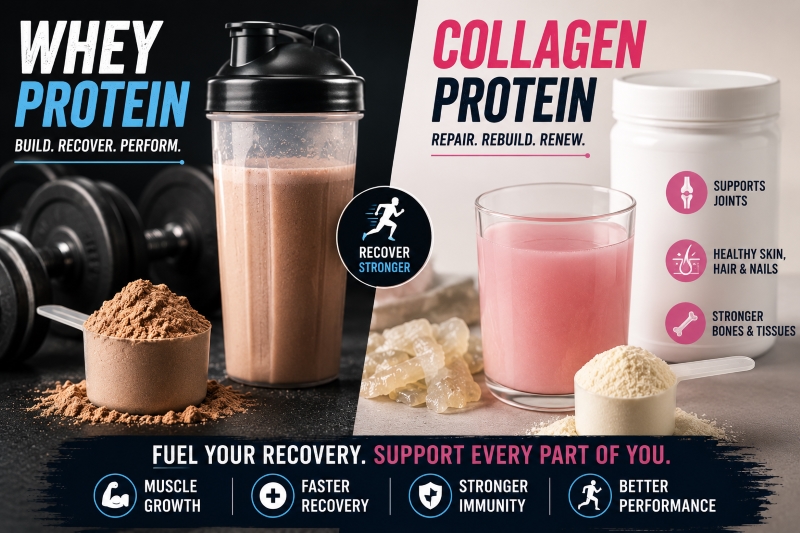
Rather than choosing one over the other, many nutrition experts believe these proteins can work exceptionally well together because they support different functions within the body. While whey focuses on muscle repair and growth, collagen helps support the connective tissues that keep us moving, recovering, and performing at our best.
When combined, they offer a more complete approach to recovery and overall wellness.
Understanding the Role of Whey Protein
Whey protein is derived from milk and is widely regarded as one of the highest-quality protein sources available. It contains all nine essential amino acids and is particularly rich in leucine, an amino acid known for its role in stimulating muscle protein synthesis.
This is one of the reasons whey protein has become a staple among athletes and active individuals. After exercise, muscles require amino acids to repair and rebuild. Whey delivers these building blocks quickly, making it an ideal post-workout supplement.
Whether your goal is building lean muscle, supporting recovery, maintaining strength as you age, or simply meeting your daily protein needs, whey protein remains one of the most researched and effective nutritional tools available.
Where Collagen Fits Into the Picture
While whey protein gets most of the attention in fitness circles, collagen plays a very different but equally important role.
Collagen is the most abundant protein in the human body and serves as a key structural component of skin, tendons, ligaments, cartilage, bones, and connective tissues. In many ways, collagen acts as the body’s framework, helping provide strength, flexibility, and resilience.
The challenge is that natural collagen production begins to decline with age. Over time, this decline can affect everything from skin elasticity to joint comfort and mobility.
Collagen supplements provide specific amino acids such as glycine and proline that help support the body’s collagen-building processes. This is why collagen has become increasingly popular among individuals looking to support joint health, healthy aging, recovery, and even skin wellness.
Why One Protein Doesn’t Replace the Other
A common misconception is that collagen can replace whey protein for muscle growth.
In reality, the two proteins serve different purposes.
Whey protein is considered a complete protein because it contains all essential amino acids needed to support muscle development. Collagen, while beneficial for connective tissues, does not provide the same amino acid profile required for optimal muscle protein synthesis.
Think of it this way.
Whey helps build and maintain muscle.
Collagen helps support the structures that connect, stabilize, and protect those muscles.
Both are important. Together, they create a more comprehensive recovery strategy.
The Benefits of Combining Whey and Collagen
When people think about recovery, they often focus solely on muscles.
But every workout also places stress on tendons, ligaments, joints, fascia, and other connective tissues. Whether you’re lifting weights, running, playing sports, or simply staying active, these structures absorb significant physical demands.
This is where the combination of whey and collagen becomes particularly valuable.
Whey supports muscle repair following training, while collagen may help support the connective tissues that contribute to mobility, stability, and long-term physical resilience.
For athletes, this can mean a more holistic approach to recovery.
For active adults, it may help support both performance and longevity.
For individuals focused on healthy aging, it offers support for maintaining strength and mobility over time.
More Than Just Fitness
One reason collagen has become so popular is that its benefits extend beyond athletic performance.
Many individuals take collagen supplements to support skin health, hair quality, nail strength, and overall appearance. As a result, the combination of whey and collagen appeals to a much broader audience than traditional sports nutrition alone.
Today, wellness consumers are increasingly interested in products that support both how they feel and how they age.
The growing popularity of whey-and-collagen blends reflects this shift toward a more complete view of health and performance.
Who Can Benefit from This Combination?
The beauty of combining whey and collagen is that it isn’t limited to elite athletes.
Gym-goers can use it to support training and recovery. Runners and endurance athletes may appreciate the additional connective tissue support. Busy professionals can use it as a convenient way to increase daily protein intake while supporting overall wellness.
Even adults who are simply looking to stay active, maintain muscle mass, and support healthy aging may find value in incorporating both proteins into their routine.
In many ways, this combination bridges the gap between sports nutrition and everyday wellness.
Quality Matters More Than Ever
As protein supplements become increasingly popular, consumers are faced with more choices than ever before. Unfortunately, not all protein products are created equal.
When choosing whey protein, collagen protein, or a combination formula, it is important to look beyond marketing claims and focus on transparency and quality. Understanding where ingredients are sourced, where products are manufactured, and whether they undergo rigorous testing can help ensure you’re making an informed decision.
High-quality brands are typically transparent about their ingredient sourcing and manufacturing practices. They often provide information about independent batch testing, quality-control standards, and ingredient traceability.
This is particularly important because protein supplements are products you may consume daily for months or even years.
Choosing products from reputable companies that prioritize safety, purity, and transparency is one of the smartest investments you can make in your health.
The Future of Protein Nutrition
The protein category is evolving.
Consumers are no longer looking solely for products that help build muscle. They are increasingly seeking solutions that support recovery, mobility, appearance, performance, and healthy aging all at once.
The combination of whey protein and collagen protein represents this evolution.
Rather than focusing on a single outcome, it recognizes that health and performance are interconnected. Strong muscles matter, but so do healthy joints, resilient connective tissues, recovery, and long-term wellness.
Final Thoughts
Whey protein and collagen protein aren’t competitors. They are complementary nutritional tools that support different aspects of the body’s performance and recovery systems.
Whey provides the amino acids needed to build and maintain muscle, while collagen supports the connective tissues that help keep the body strong, mobile, and resilient.
For those looking to optimize recovery, support active living, and invest in long-term health, combining the two may offer a smarter and more complete approach than relying on either one alone.
As fitness and wellness continue to merge, this powerful protein combination is quickly becoming one of the most effective strategies for supporting health from the inside out.
FitCart Advisory
Before purchasing any protein supplement, take the time to understand exactly what you’re buying. Look for products from trusted brands that are transparent about their ingredient sourcing, manufacturing processes, and quality standards. Whenever possible, choose supplements that undergo batch testing and are produced in facilities that follow strict quality-control protocols.
Knowing where your whey is sourced, where your collagen originates, and where the final product is packaged can provide greater confidence in the quality of the supplement you’re consuming. When it comes to your health, transparency and trust are just as important as the ingredients listed on the label.
Follow us on X: https://x.com/fitcartofficial and Instagram: https://www.instagram.com/fitcartofficial/ for the latest updates, health insights, and exclusive content.
Follow Smart Nutrition India X: https://x.com/SmartNutrition1 and Instagram: https://www.instagram.com/smartnutritionindia/ for trusted sports nutrition, supplement education, wellness tips, and the latest news from the world of health and performance.
Fitcart believes in True Play and Clean Sport
#trustedbrandsbetterhealth