


Suggested reading time: 8–10 minutes.
Fitcart Healthy Eating Series.
Author: Ritu Makhija.
Co-Founder, Fitcart.com.
Head of Editorial Team, Fitcart Blog.
A healthy lunch should do more than satisfy hunger. It should provide a combination of protein, fibre, complex carbohydrates, healthy fats, vitamins and minerals to support energy, digestion, muscle health and overall wellbeing.
Indian cuisine offers an enormous variety of nutritious lunch options, from dal, rajma and chole to paneer, fish, chicken, vegetables and traditional millet-based meals. The secret is not to eliminate familiar foods or follow restrictive diets, but to combine them thoughtfully.
For many people, lunch is also an opportunity to improve protein intake. Meals based mainly on rice, roti or other cereals can be relatively low in protein unless accompanied by adequate pulses, dairy, eggs, fish, chicken or other protein-rich foods.
At Fitcart, we believe that healthy eating should be practical, enjoyable and backed by nutritional science. Here are ten balanced Indian lunch ideas that can be adapted to different lifestyles and dietary preferences.
What makes a balanced lunch?
A balanced lunch should ideally include four key elements:
1. Protein: Dal, beans, chickpeas, paneer, tofu, curd, eggs, fish or chicken help provide the amino acids needed for tissue repair and muscle maintenance.
2. Fibre-rich carbohydrates: Whole wheat roti, brown rice, millets, oats and other whole grains provide energy and fibre. Pulses also contribute both protein and carbohydrates.
3. Vegetables: Include a variety of colourful vegetables and leafy greens for fibre, vitamins, minerals and beneficial plant compounds.
4. Healthy fats: Nuts, seeds and moderate amounts of suitable cooking oils contribute essential fatty acids and help with the absorption of fat-soluble vitamins.
The ICMR-NIN Dietary Guidelines recommend variety across food groups, vegetables and leafy greens, whole grains, pulses and beans, alongside nuts and seeds.
Harvard’s Healthy Eating Plate also offers a useful visual guide: make vegetables and fruit a substantial part of the meal, include whole grains and add a good source of protein.
There is no need to follow exact plate proportions at every meal. Your requirements will depend on your activity, appetite, body size and health goals.
10 balanced Indian lunches to try
Protein estimates are approximate and depend on the recipe, ingredients, and serving sizes. They are illustrative rather than prescribed targets.
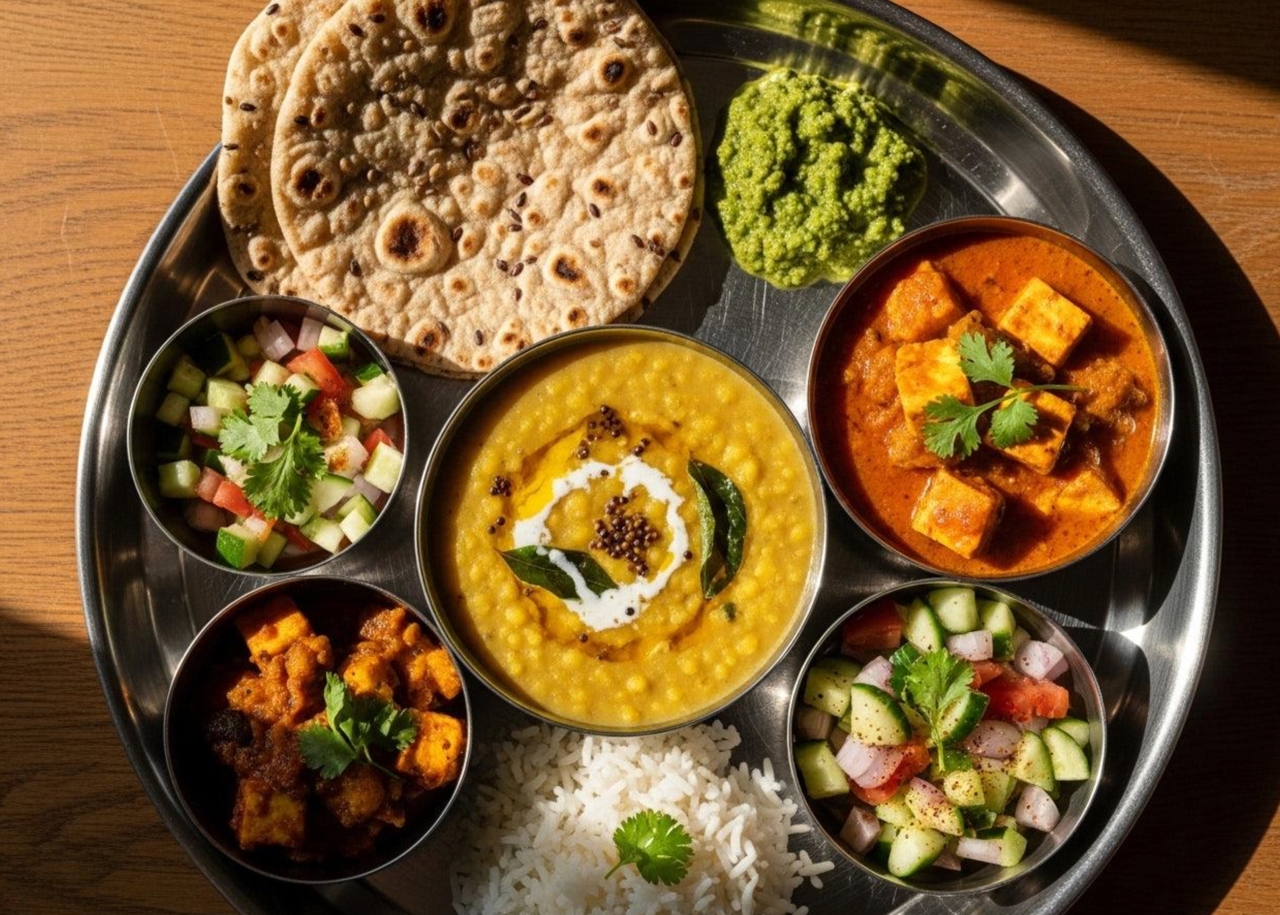
1. Dal, whole wheat roti, seasonal vegetables and curd
A traditional Indian combination that can provide a good nutritional foundation.
Dal supplies plant protein, fibre and minerals, while whole wheat roti provides energy and additional fibre. Add a generous serving of seasonal vegetables and plain curd for a more complete meal.
For variety, rotate moong, masoor, toor and urad dal. Combining cereal-based foods with pulses is a practical way to improve the overall protein quality of a predominantly plant-based diet.
Why it works: A combination of protein, complex carbohydrates, fibre, and micronutrients.
Approximate protein: 18–25 g.
2. Rajma with brown rice and cucumber salad
Rajma is a popular source of plant protein, fibre, potassium and other minerals. Pair it with a moderate serving of brown rice or another whole grain, alongside cucumber, tomatoes, onions and lemon.
The combination provides both protein and carbohydrates, making it useful for people with active lifestyles.
For better meal balance, make the rajma the main protein component rather than relying on a very large portion of rice.
Why it works: Pulses provide protein and fibre, while whole grains and vegetables add nutritional variety.
Approximate protein: 17–22 g.
3. Chole with whole wheat roti and vegetable salad
Chickpeas provide plant protein, fibre and complex carbohydrates. A home-cooked chole preparation can be a nutritious lunch when prepared with moderate oil and salt.
Serve with whole wheat roti, a large salad and plain yoghurt. Adding yoghurt can increase the meal’s protein content.
Chickpeas also contain fermentable fibres that can be used by gut microbes. Increase pulse intake gradually if you are not accustomed to eating them, as a sudden increase may cause bloating.
Why it works: A satisfying combination of plant protein, fibre and vegetables.
Approximate protein: 18–24 g.
4. Paneer or tofu bhurji with millet roti and vegetables
For a vegetarian meal with a stronger protein focus, paneer or tofu bhurji is an excellent option.
Cook paneer or firm tofu with tomatoes, onions, capsicum, spinach, turmeric and spices. Serve with jowar, bajra or whole wheat roti and a side of vegetables.
Paneer provides complete dairy protein, while tofu is a versatile soy-based protein source. If you are managing saturated fat intake, lower-fat paneer or tofu may be suitable alternatives.
Why it works: Provides protein alongside vegetables and fibre-rich grains.
Approximate protein: 22–30 g.
5. Grilled chicken with brown rice and sautéed vegetables
For non-vegetarians, grilled or home-cooked chicken provides high-quality complete protein, including essential amino acids.
Combine chicken breast or another suitable lean cut with brown rice, broccoli, carrots, beans or other seasonal vegetables. Use herbs, spices, lemon and a moderate amount of oil for flavour.
This is a convenient option for people who strength train or participate in regular sport and want to support muscle repair and maintenance.
Why it works: A protein-rich meal with carbohydrates for energy and vegetables for fibre and micronutrients.
Approximate protein: 30–40 g.
6. Fish curry with rice and leafy greens
Fish provides complete protein, and oily fish such as salmon, sardines and mackerel can also provide omega-3 fatty acids.
A home-cooked fish curry with a moderate serving of rice and leafy greens makes a balanced lunch. Choose different fish varieties according to availability, dietary preferences and local food-safety guidance.
Remember that not every fish provides the same amount of omega-3. Oily fish are generally better sources of EPA and DHA than lean white fish.
Why it works: Provides complete protein, with omega-3 benefits when oily fish is selected.
Approximate protein: 25–35 g.
7. Egg curry with whole wheat roti and vegetable sabzi
Eggs are a convenient source of complete protein and provide nutrients such as vitamin B12, selenium and choline.
Prepare an egg curry using boiled eggs, tomatoes, onions and spices. Serve with whole wheat roti and a vegetable sabzi.
For people with higher protein needs, additional egg whites or a side of curd can increase the meal’s protein content.
Why it works: A practical, nutrient-rich meal that combines complete protein, vegetables and whole grains.
Approximate protein: 20–27 g.
8. Vegetable and dal khichdi with curd and salad
Khichdi can be a balanced one-pot meal when it contains a good proportion of dal, vegetables and whole grains.
Try moong dal with rice or millets, carrots, beans, peas, spinach and spices. Add plain curd and a fresh salad alongside.
For a higher-protein version, increase the dal component or serve with tofu, paneer or an additional protein-rich side.
Why it works: Easy to prepare, adaptable and useful for combining grains, pulses and vegetables.
Approximate protein: 15–22 g.
9. Soya chunk and vegetable pulao with raita
Soya chunks are a concentrated plant-protein option and can help people following vegetarian diets increase their protein intake.
Prepare a pulao with rehydrated soya chunks, peas, carrots, beans and spices. Use a moderate amount of oil and serve with plain yoghurt or raita.
Soy is a complete protein source, containing all nine essential amino acids. It is a useful alternative to animal-based protein for many people.
Why it works: A convenient vegetarian meal with substantial protein potential, fibre and carbohydrates.
Approximate protein: 25–32 g.
10. Grilled fish or tofu salad bowl with quinoa or millet
A salad bowl can be much more than a side dish. When planned properly, it can become a complete lunch.
Combine grilled fish or tofu with quinoa, foxtail millet or another grain. Add cucumber, tomatoes, leafy greens, carrots, peppers, seeds and a lemon-based dressing.
Choose fish for complete animal protein and potentially omega-3 fats, or tofu for a plant-based alternative.
Why it works: Combines protein, fibre, healthy fats and a variety of colourful vegetables.
Approximate protein: 22–32 g, depending on the protein source and portion.
How to build a lunch that supports muscle health
Protein is important for maintaining and repairing muscle tissue, but eating protein alone will not build or preserve muscle.
Muscle health depends on several interconnected factors:
- Adequate daily protein: Include protein-containing foods across meals rather than relying on one large serving.
- Resistance training: Regular strength training provides the stimulus needed to maintain and build muscle.
- Sufficient energy: Very restrictive diets can make it harder to maintain lean muscle, particularly when combined with exercise.
- Recovery: Sleep, rest, and appropriate training volume all matter.
- Consistency: A sustainable routine is more valuable than occasional perfect meals.
For people who exercise regularly, protein requirements may be higher than the basic needs of sedentary adults. The appropriate amount depends on body weight, training, age and health status.
How a balanced lunch can support gut health
Your gut microbiome is influenced by your overall dietary pattern, including the amount and variety of fibre-rich foods you consume.
Pulses, whole grains, vegetables, fruits, nuts and seeds contain different types of dietary fibre. Some fibres are fermented by gut bacteria, producing short-chain fatty acids such as acetate, propionate and butyrate.
These compounds are involved in several aspects of gut and metabolic health, although the effects depend on the overall diet and individual microbiome.
To support a diverse dietary pattern:
- Rotate different pulses, beans, and vegetables.
- Include whole grains and millets regularly.
- Add seasonal fruit.
- Include plain curd or other fermented foods if tolerated.
- Increase fibre intake gradually and drink adequate water.
No single food or probiotic product can guarantee a healthy microbiome. Dietary variety over time is more important than relying on one so-called superfood.
What about weight management?
A balanced lunch can help support weight management by providing protein, fibre and satisfying portions of food.
However, weight loss depends on the overall balance between energy intake and energy expenditure over time. No particular lunch combination automatically causes fat loss.
A few practical habits can make a difference:
- Include a protein source at lunch.
- Choose whole grains more often than refined grains.
- Fill a substantial part of the meal with vegetables.
- Be mindful of cooking oil, creamy gravies, and large portions.
- Limit sugary drinks and frequent highly processed snacks.
- Combine a balanced diet with regular physical activity and resistance training.
Avoid eliminating rice, roti or other carbohydrate sources unnecessarily. Carbohydrates are an important energy source, and the quality, quantity and overall balance of the diet matter.
Do you need supplements with lunch?
Most people should aim to meet their nutritional requirements through a varied diet. Supplements may be useful when dietary intake is inadequate, requirements are increased, or a deficiency has been identified.
Depending on individual needs, products such as whey protein, plant protein, vitamin D, vitamin B12 or omega-3 may be considered. They are not universally necessary, and supplementation should be based on dietary assessment, relevant testing and professional advice where appropriate.
For people who struggle to meet protein requirements through meals, a suitable protein powder can be a convenient addition to a snack or meal. It should complement rather than replace whole foods.
Fitcart’s approach is to prioritise science and evidence-based formulas, clean and transparent ingredients, and appropriate product quality testing. Athletes should look for relevant independent sport certification and verify the specific batch where possible.
The Fitcart Takeaway
Healthy Indian eating does not require giving up traditional foods. Dal, rajma, chole, roti, rice, curd, vegetables, paneer, eggs, fish and chicken can all form part of a balanced diet.
The most important principle is to build meals around variety, adequate protein, fibre-rich carbohydrates, vegetables and appropriate portions.
At Fitcart, we believe nutrition should be practical, evidence-based and sustainable. Small improvements made consistently can support energy, digestive health, muscle maintenance and long-term wellbeing.
Explore more from the Fitcart Healthy Eating Series
Continue building healthier everyday meals with our related articles:
[10 High-Protein Breakfasts for Energy, Muscle Health and Weight Management]
Together, these articles offer practical ways to improve the nutritional quality of meals throughout the day.
Health and Supplement Disclaimer
This article is intended for general educational purposes only and is not a substitute for individual medical, dietetic or nutritional advice. Nutritional requirements vary according to age, body weight, activity level, health status, and personal goals.
People with diabetes, kidney disease, gastrointestinal conditions, food allergies or other medical concerns may require individual dietary guidance. Anyone considering significant dietary changes or supplements should consult an appropriately qualified healthcare professional.
Protein values are estimates and will vary according to ingredients, brands, preparation methods and serving sizes. Supplements should be used responsibly and should not replace a balanced diet, appropriate exercise or medical treatment. Athletes should check product- and batch-specific certification where relevant.
Follow us on X: https://x.com/fitcartofficial and Instagram: https://www.instagram.com/fitcartofficial/ for the latest updates, health insights, and exclusive content.
Follow Smart Nutrition India X: https://x.com/SmartNutrition1 and Instagram: https://www.instagram.com/smartnutritionindia/ for trusted sports nutrition, supplement education, wellness tips, and the latest news from the world of health and performance.
Fitcart believes in True Play and Clean Sport
#trustedbrandsbetterhealth