


Reading time: 10–12 minutes.
Author: Ritu Makhija.
Co-Founder, Fitcart.com.
Head of Editorial Team, Fitcart Blog.
Why a Bowl of Soup Can Be So Good for You
A warm bowl of soup can be much more than a comforting meal. When prepared with the right ingredients, it can be an excellent way to increase your intake of vegetables, fibre, protein, vitamins, minerals and fluids.
From traditional Indian lentil soups to Mediterranean vegetable soups, Japanese miso soup and protein-rich chicken broth, different soups offer different nutritional benefits.
They can support a balanced diet, contribute to hydration, provide important nutrients, support digestive health and help people manage their overall calorie intake.
Soups are particularly useful because they are versatile. You can make them vegetarian, vegan, dairy-free, high-protein, low-calorie or more substantial by adding legumes, whole grains, fish, chicken or tofu.
However, not all soups are equally nutritious. Cream-heavy restaurant soups, instant soup mixes and commercially prepared soups can contain considerable amounts of salt, saturated fat and added ingredients.
At Fitcart, we believe that everyday nutrition should be practical, enjoyable and science-backed.
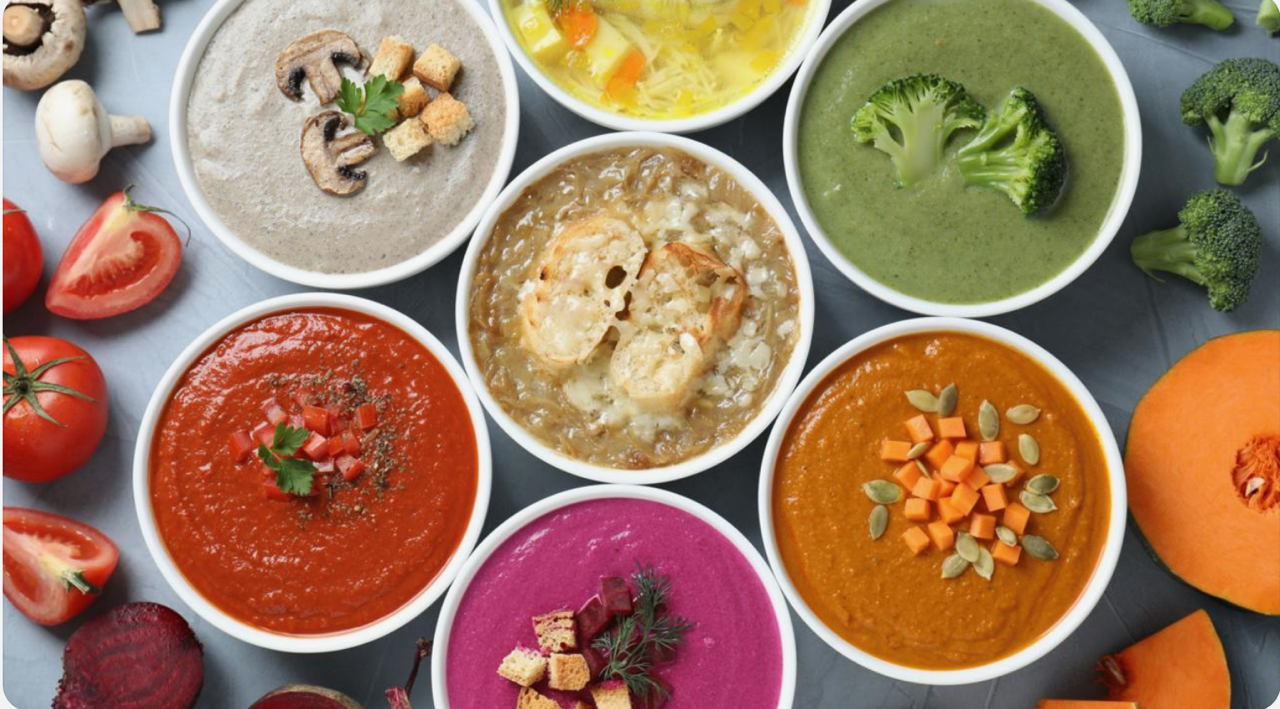
Let’s explore 12 nutritious soups, their health benefits, the ingredients that make them valuable, and how to incorporate them into a healthy lifestyle.
1. Tomato Soup: Rich in Lycopene and Antioxidants
Tomatoes are an excellent source of lycopene, a naturally occurring carotenoid that gives them their red colour.
Lycopene has antioxidant properties and has been widely studied for its potential role in cardiovascular and cellular health.
Interestingly, cooking tomatoes can increase the bioavailability of lycopene, meaning that the body may absorb it more readily from certain cooked tomato preparations than from raw tomatoes.
Nutritional benefits
- Provides lycopene and other carotenoids.
- Contains vitamin C and potassium.
- Contributes to vegetable intake.
- Provides fluid and can be relatively low in calories.
- Supplies antioxidant plant compounds.
How to make it healthier
Prepare tomato soup using fresh tomatoes, garlic, onions, black pepper, herbs and a little olive oil.
Avoid excessive cream, butter and added sugar.
For a more filling meal, add red lentils or white beans for protein and fibre.
Fitcart tip: Tomato soup paired with a protein-rich meal can make a satisfying lunch or light dinner.
2. Broccoli Soup: A Nutrient-Rich Cruciferous Vegetable
Broccoli belongs to the cruciferous vegetable family, which also includes cauliflower, cabbage, kale and Brussels sprouts.
It provides vitamin C, vitamin K, folate, fibre and several naturally occurring plant compounds.
One particularly interesting compound is glucoraphanin, which can be converted into sulforaphane through enzymatic activity.
Sulforaphane has attracted scientific interest because of its role in cellular defence and antioxidant-response pathways. However, research on specific health outcomes in humans is still developing.
Nutritional benefits
- Vitamin C supports normal immune function.
- Vitamin K contributes to normal blood clotting and bone health.
- Fibre supports digestive health.
- Contains glucosinolates and other plant compounds.
- Provides a nutrient-dense way to increase vegetable consumption.
How to make it healthier
Blend lightly cooked broccoli with garlic, onion, vegetable stock and black pepper.
Add Greek yoghurt or unsweetened fortified soy milk for creaminess instead of relying on large quantities of cream. For additional protein, add tofu or white beans.
3. Carrot and Ginger Soup: Beta-Carotene and Digestive Comfort
Carrots are particularly rich in beta-carotene, which the body can convert into vitamin A.
Vitamin A is essential for normal vision, immune function and the maintenance of healthy skin and mucous membranes.
Ginger contains naturally occurring compounds called gingerols, which have been investigated for their digestive and anti-inflammatory properties.
Nutritional benefits
- Beta-carotene supports vitamin A requirements.
- Vitamin A contributes to normal immune function.
- Ginger adds flavour without requiring excessive salt.
- Vegetables provide fibre and beneficial plant compounds.
- A warm ginger preparation may be soothing for some people experiencing mild digestive discomfort.
How to make it healthier
Cook carrots with fresh ginger, onions, garlic and low-sodium vegetable stock.
Blend until smooth and add a little olive oil.
For additional protein, include red lentils before blending.
Fitcart tip: This is an excellent way to combine vegetables, fibre and plant-based nutrients in one easy meal.
4. Pumpkin Soup: Fibre, Potassium and Vitamin A Precursors
Pumpkin is a nutritious vegetable that provides beta-carotene, potassium and fibre.
Its naturally creamy texture makes it particularly useful for preparing soups without adding large quantities of cream.
Nutritional benefits
- Beta-carotene contributes to vitamin A production.
- Potassium supports normal muscle and nerve function.
- Fibre supports digestive health.
- Provides a relatively low-energy-density base.
- Contains beneficial carotenoids and other plant compounds.
How to make it healthier
Combine pumpkin with onions, garlic, black pepper, cinnamon and vegetable stock.
Blend until smooth.
Add roasted pumpkin seeds for texture and healthy fats.
You can also add lentils, chickpeas or tofu to increase the protein content.
5. Spinach and Green Vegetable Soup: A Source of Folate, Vitamin K and Magnesium
Leafy green vegetables are important components of a balanced diet.
Spinach contains folate, vitamin K, magnesium, potassium and carotenoids such as lutein and beta-carotene.
These nutrients contribute to several important physiological processes.
Nutritional benefits
- Folate contributes to normal cell division and blood formation.
- Vitamin K supports normal blood clotting and bone health.
- Magnesium contributes to normal muscle and nerve function.
- Carotenoids support normal eye health.
- Fibre contributes to digestive health.
How to make it healthier
Combine spinach with peas, broccoli, garlic and onions.
Cook gently and blend with low-sodium vegetable stock.
Add tofu, white beans or Greek yoghurt for additional protein.
Important: Spinach is naturally high in oxalates. People with certain types of kidney stones may need individual dietary advice regarding high-oxalate foods.
6. Lentil Soup (Dal Soup): A Protein and Fibre Powerhouse
Lentils are among the most valuable ingredients in a nutritious soup.
They are rich in plant protein, dietary fibre, folate, iron, potassium and other important minerals.
Traditional Indian dal soups can be particularly nutritious when prepared with a variety of lentils and vegetables.
Nutritional benefits
- Plant protein supports muscle maintenance and repair.
- Fibre supports digestive health and bowel regularity.
- Soluble fibre can help improve blood cholesterol levels.
- Iron contributes to normal oxygen transport.
- Folate supports normal cell division.
- Lentils provide slow-digesting carbohydrates.
How to make it healthier
Prepare soup using moong dal, masoor dal or a combination of lentils.
Add tomatoes, spinach, carrots, turmeric, cumin, ginger and garlic.
Use a modest amount of oil and avoid excessive salt.
For a more substantial meal, add vegetables and a small portion of brown rice or quinoa.
Fitcart nutrition perspective: Lentil soup is particularly useful for vegetarians looking to increase their protein and fibre intake. However, people with higher protein requirements may need additional protein sources alongside it.
7. Chicken Soup: High-Quality Protein and Hydration
Chicken soup is a popular comfort food across many cultures.
It can provide high-quality protein, B vitamins, minerals and fluids.
Chicken contains all nine essential amino acids required for normal growth, repair and maintenance of body tissues.
Nutritional benefits
- Complete protein supports muscle repair and maintenance.
- Provides vitamin B6 and niacin.
- Contributes to fluid intake.
- Can be a useful meal during periods of reduced appetite.
- Vegetables added to chicken soup contribute additional vitamins and fibre.
Chicken soup is often associated with relief from colds and respiratory symptoms.
Warm fluids may help soothe the throat and provide temporary comfort, while the protein and fluids support general nutritional intake during illness.
However, chicken soup is not a cure for infections and does not replace appropriate medical treatment.
How to make it healthier
Use skinless chicken breast or other lean chicken portions.
Add carrots, celery, onions, garlic, spinach and herbs.
Include barley, brown rice or whole-wheat noodles if you need a more substantial meal.
Choose a lower-sodium stock and season with herbs, lemon and pepper.
8. Mushroom Soup: B Vitamins and Unique Bioactive Compounds
Mushrooms are interesting nutritional foods because they provide B vitamins, selenium, potassium and naturally occurring compounds such as beta-glucans.
Some mushroom varieties also contain vitamin D2, particularly when exposed to ultraviolet light.
Nutritional benefits
- B vitamins support energy metabolism.
- Selenium contributes to normal immune function and protection against oxidative stress.
- Potassium supports normal muscle function.
- Certain mushroom compounds are being studied for immune and metabolic effects.
- Mushrooms add flavour and texture without requiring large amounts of fat.
How to make it healthier
Use fresh mushrooms, garlic, onions, black pepper and low-sodium vegetable stock.
Blend some of the mushrooms while leaving the remainder whole for texture.
Add milk, Greek yoghurt or a little unsweetened soy milk if you prefer a creamy consistency.
Mushrooms alone are not a substantial protein source, so consider adding tofu, beans or another protein-rich food.
9. Beetroot Soup: Nitrates and Cardiovascular Health
Beetroot contains naturally occurring dietary nitrates, which the body can convert into nitric oxide through several biological pathways.
Nitric oxide helps regulate blood vessel function and blood flow.
Dietary nitrate has been studied in relation to blood pressure, exercise performance and cardiovascular function.
Nutritional benefits
- Provides dietary nitrates.
- Contains folate and potassium.
- Provides betalains, which have antioxidant properties.
- Contributes to vegetable and fibre intake.
- May be a useful addition to a varied diet supporting cardiovascular health.
How to make it healthier
Combine beetroot with carrots, tomatoes, ginger and onions.
Cook and blend until smooth.
Add lemon juice, black pepper and a little olive oil.
Avoid adding excessive cream or sugar.
Fitcart sports nutrition connection: Beetroot juice and concentrated nitrate products have also been studied in sports nutrition for their potential effects on exercise efficiency and endurance. However, a bowl of beetroot soup should not be assumed to provide the same nitrate dose as a standardised sports nutrition product.
10. Vegetable Minestrone: A Complete Fibre-Rich Meal
Minestrone is a traditional Italian vegetable soup that commonly includes tomatoes, beans, vegetables and pasta or other grains.
It is an excellent example of how a soup can become a balanced meal.
Nutritional benefits
- Beans provide plant protein and soluble fibre.
- Tomatoes provide lycopene.
- Vegetables contribute vitamins and minerals.
- Whole-grain pasta or grains add complex carbohydrates.
- Fibre supports digestive and cardiovascular health.
How to make it healthier
Use tomatoes, carrots, celery, courgettes, beans, onions and spinach.
Add whole-wheat pasta or barley.
Use herbs such as basil, oregano and parsley instead of relying on salt for flavour.
Minestrone is a particularly good option for people looking for a filling vegetarian meal.
11. Miso Soup: Fermented Soy and Gut Health
Miso is a traditional Japanese fermented soybean paste.
Depending on the preparation, it may contain fermented soy components and beneficial microorganisms.
However, whether live microorganisms remain in the finished soup depends on the product and cooking method.
Nutritional benefits
- Provides plant-derived compounds from soy.
- Contains some protein.
- Can contribute to dietary variety.
- Fermentation produces compounds that are being studied for potential health effects.
- Can be combined with tofu and seaweed for additional nutrients.
How to make it healthier
Prepare a broth using a modest amount of miso paste.
Add tofu, mushrooms, spring onions and seaweed.
Avoid boiling the miso paste for prolonged periods if retaining live cultures is important, although not every miso product contains live cultures by the time it reaches the consumer.
A word about sodium: Miso is naturally salty, so portion size and overall sodium intake matter.
12. Fish Soup: Protein, Omega-3 and Essential Nutrients
Fish soup can be a highly nutritious meal, particularly when prepared using oily fish.
Fish provides high-quality protein, while oily varieties such as salmon, sardines and mackerel contain EPA and DHA omega-3 fatty acids.
These fatty acids contribute to normal cardiovascular function.
Fish also provides important micronutrients, depending on the species.
Nutritional benefits
- Complete protein supports muscle maintenance.
- EPA and DHA contribute to normal heart function.
- Provides vitamin B12.
- Certain varieties provide vitamin D and selenium.
- Can be a useful alternative to red or processed meat.
How to make it healthier
Use fish such as salmon or other locally available suitable varieties.
Prepare a broth using tomatoes, onions, garlic, ginger, vegetables and herbs.
Add the fish towards the end of cooking to avoid overcooking.
Avoid heavy cream-based preparations if you are looking for a lighter meal.
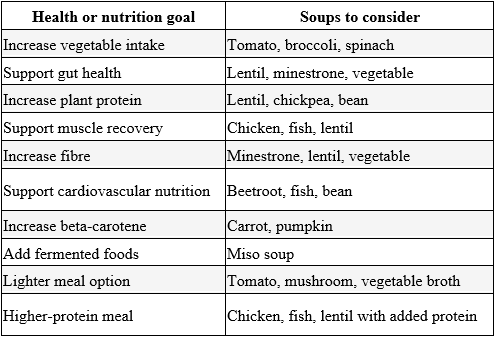
Which Soup Is Best for Your Health Goals?
Different soups offer different nutritional advantages. The best choice depends on your dietary requirements and what you want your meal to provide.
How to Make Your Soup a Complete and Balanced Meal
One of the biggest mistakes people make is assuming that all vegetable soups provide sufficient nutrition for a complete meal.
A bowl of blended tomato or pumpkin soup may provide vitamins and fluids, but it may not contain enough protein or energy to meet your needs.
For a more balanced meal, consider four components.
1. Vegetables
Include different colours and varieties:
- Carrots.
- Tomatoes.
- Broccoli.
- Spinach.
- Pumpkin.
- Mushrooms.
- Peas.
2. Protein
Add:
- Chicken.
- Fish.
- Lentils.
- Chickpeas.
- Beans.
- Tofu.
- Greek yoghurt.
3. Healthy fats
Use modest amounts of:
- Olive oil.
- Nuts.
- Seeds.
- Pumpkin seeds.
- Flaxseeds.
4. Complex carbohydrates
Depending on your nutritional requirements, include:
- Quinoa.
- Barley.
- Brown rice.
- Oats.
- Whole-wheat pasta.
- Sweet potato.
This combination can create a much more satisfying and nutritionally complete meal.
Soups for Weight Management: Can They Help You Lose Weight?
Soups can be useful for people trying to manage their weight, but no particular soup burns fat or independently causes weight loss.
There are several reasons why well-prepared soups can be helpful.
1. High water content
Broth-based soups contain considerable amounts of water, which can contribute to meal volume without necessarily adding many calories.
2. Vegetable and fibre content
Vegetable, bean and lentil soups can provide fibre, which supports satiety and digestive health.
3. Portion awareness
A nutritious soup can help form part of a structured meal and make it easier to manage overall food portions.
4. Protein intake
Adding chicken, fish, lentils, beans or tofu can improve protein content and help preserve muscle during weight management.
5. Reduced reliance on processed meals
Homemade soups allow greater control over ingredients, salt, added fats and portion sizes.
For sustainable weight management, soup should be incorporated into a balanced diet with sufficient protein, appropriate energy intake and regular physical activity.
Avoid replacing all meals with low-calorie soups. Excessively restrictive diets can compromise protein intake, muscle mass and nutritional adequacy.
Homemade vs Restaurant and Instant Soups: What Should You Choose?
Homemade soups generally offer greater control over ingredients and preparation.
Restaurant and instant soups can still be convenient, but their nutritional composition varies considerably.
Things to watch include:
- High sodium content.
- Excessive cream and butter.
- Added sugar.
- Refined starches.
- Low protein content.
- Large amounts of flavour enhancers and seasoning.
When buying packaged soup, examine the nutrition information per serving rather than relying on claims such as light, healthy or reduced sodium.
Look for products with a useful amount of vegetables, fibre and protein and a sensible sodium level.
Harvard Health recommends paying particular attention to sodium, especially in commercially prepared soups.
Can You Add Protein Powder or Supplements to Soup?
This is an interesting option for people who struggle to meet their daily protein requirements.
An unflavoured protein powder may sometimes be incorporated into a suitable soup, depending on the formulation and manufacturer’s instructions.
However, it is important to consider texture, heat stability, flavour and individual tolerance.
Whey protein can be stirred into a cooled or moderately warm preparation rather than boiled directly.
Other useful options include:
- Adding lentils or chickpeas.
- Using tofu.
- Adding shredded chicken.
- Including Greek yoghurt.
- Using an appropriate unflavoured plant protein.
For people undertaking resistance training, adequate total daily protein is important for muscle repair and maintenance.
Protein supplements are convenient, but whole-food protein sources should remain an important part of the diet.
The Fitcart Perspective: Everyday Nutrition Is the Foundation of Good Health
At Fitcart, we believe that good health begins with consistent nutritional choices rather than complicated diets or unnecessary supplementation.
Soups are a practical example of how everyday foods can provide a wide variety of nutrients.
A bowl of lentil soup can provide protein and fibre. Tomato soup can provide lycopene. Broccoli soup contributes vitamin C and other plant compounds. Fish soup provides protein and omega-3 fatty acids.
The key is variety. Combine nutritious foods with regular physical activity, resistance training, sufficient sleep and appropriate recovery.
For those using supplements, ingredient transparency, product authenticity, and appropriate testing are equally important.
Fitcart focuses on connecting Indian consumers with trusted international health, wellness, fitness and sports nutrition brands, with an emphasis on science-backed products and responsible supplementation.
Fitcart – Fuel Your Health. Nourish Your Body. Live Better.
Health, Nutrition and Food Disclaimer
This article is intended for general educational and informational purposes only. It does not constitute medical advice, diagnosis or treatment.
The nutritional composition and potential health benefits of soups depend on their ingredients, preparation methods, portion sizes and overall dietary context. No individual soup can prevent, treat or cure disease, detoxify the body or guarantee improved immunity, weight loss or other health outcomes.
People with diabetes, hypertension, kidney disease, food allergies, digestive disorders or other medical conditions may require individual dietary adjustments. Particular attention should be given to sodium, potassium, oxalates, carbohydrates and protein where medically relevant.
Nutritional requirements vary between individuals. Consult a qualified healthcare professional or registered dietitian before making significant dietary changes, particularly if you have an existing medical condition or take medication.
Supplements and protein powders are not substitutes for a balanced diet or medical treatment. Use supplements according to individual requirements and professional advice. Choose products with transparent ingredient information and appropriate quality and testing standards.
Food safety is also important. Use fresh ingredients, cook animal products thoroughly, refrigerate leftovers promptly and follow appropriate food storage guidance.
Follow us on X: https://x.com/fitcartofficial and Instagram: https://www.instagram.com/fitcartofficial/ for the latest updates, health insights, and exclusive content.
Follow Smart Nutrition India X: https://x.com/SmartNutrition1 and Instagram: https://www.instagram.com/smartnutritionindia/ for trusted sports nutrition, supplement education, wellness tips, and the latest news from the world of health and performance.
Fitcart believes in True Play and Clean Sport
#trustedbrandsbetterhealth