


Reading time: 7–9 minutes
Author: Ritu Makhija.
Co-Founder, Fitcart.com.
Head of Editorial Team, Fitcart Blog.
Introduction: Your Spine Was Designed to Move
Hours spent sitting at a desk, looking down at a phone, travelling, or working in the same position can leave your back feeling stiff and your shoulders rounded. Over time, you may become more aware of poor posture, reduced flexibility and difficulty moving comfortably.
The good news is that gentle movement, mobility exercises and appropriate strengthening can help you maintain a healthy, functional spine.
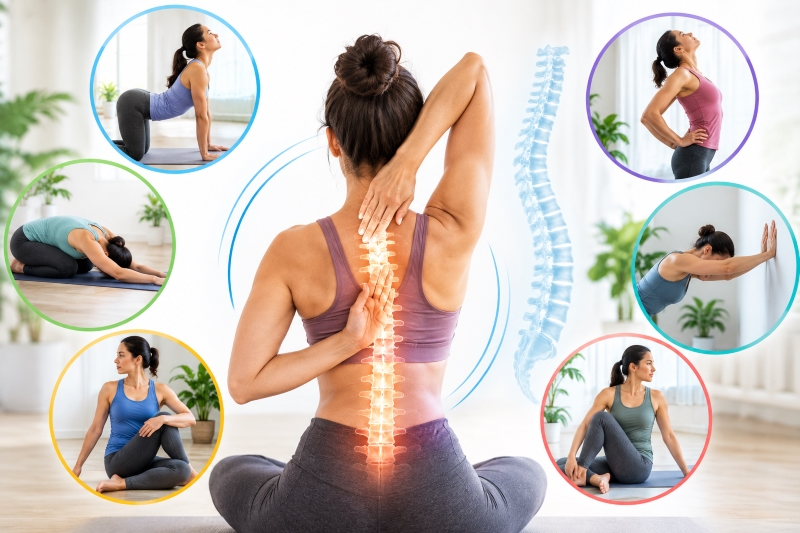
One simple exercise to start with is the cat–cow stretch, a gentle movement that takes the spine through controlled flexion and extension. Other useful exercises include the child’s pose, thoracic rotations, pelvic tilts, wall angels and bird-dog exercises.
At Fitcart, we believe that mobility is an important part of a broader approach to fitness, healthy ageing and everyday wellbeing. You don’t need an elaborate gym routine to start looking after your back. A few minutes of suitable movement, performed consistently and comfortably, can be a practical starting point.
However, posture isn’t about maintaining one rigid, perfect position all day. It is about having the strength, mobility and movement options to sit, stand, walk and carry out everyday activities comfortably.
Why Is Spinal Mobility Important?
The spine provides structural support, protects the spinal cord and allows the body to bend, rotate and move. It works together with the muscles of the abdomen, back, hips and shoulders to support everyday movement.
Spinal mobility refers to the ability to move the different regions of the spine through an appropriate range of motion. It is influenced by joint function, muscles, connective tissues, physical activity, age and individual health conditions.
Maintaining suitable mobility can help with everyday activities such as turning to look behind you, reaching overhead, bending down, and changing positions comfortably.
The connection between mobility and posture
Posture is influenced by more than the position of your spine. Muscle strength, joint mobility, movement habits, fatigue, pain, and individual anatomy all play a role.
For example, spending prolonged periods sitting may make some people feel stiff through the hips or upper back. Gentle movement breaks and exercises that develop mobility and strength may help them feel more comfortable.
However, there is no single ideal posture that everyone must maintain. A comfortable, varied movement routine is generally more useful than constantly trying to hold your shoulders back or pull your spine into a rigid position.
The Fitcart principle: Move regularly, build strength gradually and choose exercises that suit your body.
7 Spine Mobility Exercises to Try at Home
The following routine is designed for generally healthy adults who can perform gentle floor-based or standing movements comfortably. Start slowly, breathe normally, and work within a pain-free or comfortably tolerable range.
1. Cat–Cow Stretch: Gentle Movement for the Spine
The cat–cow stretch is one of the simplest ways to introduce controlled spinal movement into your daily routine.
It alternates between rounding the back and gently extending it, while encouraging coordinated breathing and awareness of spinal movement.
How to do it:
- Begin on your hands and knees, with your hands approximately under your shoulders and knees under your hips.
- Inhale gently as you tilt your pelvis and lift your chest, allowing your back to move into a comfortable, gentle arch. This is the cow position.
- Exhale as you tuck your pelvis and round your back towards the ceiling, allowing your head to relax without forcing your chin towards your chest. This is the cat position.
- Continue moving slowly between the two positions, following your natural breathing rhythm.
Suggested starting point: 6–10 slow repetitions.
Potential benefits: Encourages spinal movement, helps develop body awareness and may ease feelings of stiffness associated with prolonged inactivity.
Important: Move through a comfortable range. Do not force your lower back into a deep arch or aggressively round your spine. If kneeling hurts your knees or wrists, use a supported alternative or seek guidance from a physiotherapist.
2. Child’s Pose: A Gentle Stretch for the Back
Child’s pose is a yoga position that may provide a comfortable stretch through the back and hips for some people.
How to do it:
- Begin on your hands and knees.
- Slowly move your hips towards your heels, only as far as comfortable.
- Extend your arms forward and allow your torso to settle gently towards the floor.
- Breathe normally and relax without forcing the stretch.
Suggested starting point: Hold for 15–30 seconds, repeating once or twice if comfortable.
Potential benefits: May help some people feel less tension through the back, shoulders and hips.
Modification: Place a cushion between your hips and heels, or under your chest, for support. Skip the position if it causes knee pain, hip discomfort or an increase in back symptoms.
3. Thoracic Rotation: Improve Upper-Back Mobility
The thoracic spine is the middle portion of your spine, where the ribs attach. Comfortable rotation through this region helps with activities that involve turning your upper body.
How to do it:
- Lie on your side with your knees comfortably bent and your arms extended in front of you.
- Keeping your knees together, slowly open your upper arm towards the opposite side, rotating your upper torso.
- Turn only as far as comfortable, without forcing your shoulder towards the floor.
- Return slowly to the starting position and repeat on the other side.
Suggested starting point: 5–8 repetitions per side.
Potential benefits: Encourages upper-back rotation and may help people who feel stiff after long periods at a desk.
Important: Keep the movement controlled and avoid forcing the lower back or shoulder into an uncomfortable position.
4. Pelvic Tilts: Build Awareness of Lower-Back Movement
Pelvic tilts help you practise gentle movement around the pelvis and lower back.
How to do it:
- Lie on your back with your knees bent and feet flat on the floor.
- Gently tilt your pelvis so that your lower back moves slightly towards the floor.
- Relax and return to your comfortable starting position.
- Continue slowly, without pushing hard or holding your breath.
Suggested starting point: 8–12 repetitions.
Potential benefits: Helps develop awareness and control of pelvic and lower-back movement.
Pelvic tilts are not a universal treatment for back pain, but they can be a useful introductory exercise when appropriate.
5. Wall Angels: Support Shoulder Mobility and Posture Awareness
Wall angels encourage controlled shoulder movement and awareness of upper-body positioning. They may be useful for people who spend much of the day working at a computer.
How to do it:
- Stand with your back near a wall, feet a short distance forward if needed.
- Keep your ribs relaxed rather than forcing your lower back flat against the wall.
- Position your arms in a comfortable bent-elbow shape.
- Slowly slide your arms upwards, then return them downwards, within your available range.
- Repeat without straining your neck or shoulders.
Suggested starting point: 6–10 repetitions.
Potential benefits: Encourages shoulder mobility and upper-body control.
Not everyone will be able to keep their arms or back in contact with the wall throughout the movement. That is fine. Work within your natural range rather than forcing a textbook position.
6. Bird-Dog: Strengthen the Muscles That Support the Spine
Mobility is only one part of spinal health. The muscles around the trunk, hips and back also help control movement and support everyday activities.
The bird-dog exercise combines gentle trunk stabilisation with coordinated arm and leg movement.
How to do it:
- Begin on your hands and knees, with your spine in a comfortable neutral position.
- Slowly extend one arm forward while extending the opposite leg behind you.
- Keep your pelvis relatively level and avoid arching your lower back.
- Return to the starting position and repeat on the opposite side.
Suggested starting point: 5–8 repetitions per side, using a brief comfortable hold.
Potential benefits: Develops coordination and trunk control while challenging the muscles that help stabilise the spine.
Modification: Begin by moving only one arm or one leg at a time if the full exercise is difficult.
7. Hip-Flexor Stretch: Address Tightness Around the Front of the Hips
The hip flexors help move the thigh towards the torso. Spending long periods sitting can leave some people feeling stiff around the front of the hips.
Hip-flexor stretches may improve comfortable hip extension when limited mobility is present. They do not automatically correct posture or resolve lower-back pain.
How to do it:
- Kneel on a soft mat with one foot in front, forming a comfortable half-kneeling position.
- Keep your torso upright and gently tighten your abdominal muscles.
- Move your pelvis forward slightly until you feel a mild stretch at the front of the hip of the kneeling leg.
- Hold while breathing normally, then change sides.
Suggested starting point: Hold for 15–30 seconds on each side.
Potential benefits: May improve hip-extension mobility and make standing or walking feel more comfortable for some people.
Use a cushion under the knee, hold a stable support if needed, and avoid pushing into a deep lunge.
A Simple 8–10 Minute Fitcart Spine Mobility Routine
You can combine these exercises into a short movement break. The times below are suggestions, not a requirement to complete every exercise daily.
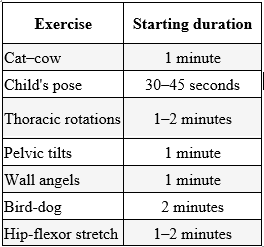
Adjust the routine to your ability. You can select three or four exercises rather than completing all seven.
For desk workers, short movement breaks throughout the day can also help reduce the discomfort associated with remaining in one position for too long. You do not need to wait for a dedicated workout to move your body.
How Often Should You Perform Spine Mobility Exercises?
For generally healthy adults, a short, gentle routine can be performed most days if it feels comfortable and does not aggravate symptoms.
A practical approach is to begin with a few minutes and increase gradually as you become familiar with the movements.
Remember these principles:
- Consistency matters more than intensity. Gentle, regular movement is a sensible starting point.
- Do not force flexibility. Stretching should not produce sharp pain, tingling or numbness.
- Include strengthening. Mobility exercises alone do not develop all the strength needed for physical function.
- Vary your positions. Alternate sitting, standing, walking and other comfortable movements.
- Pay attention to your response. Stop or modify an exercise if symptoms worsen.
Adults should also aim to meet appropriate physical activity recommendations, including aerobic activity and muscle-strengthening exercise, adapted to their health and fitness level.
Can These Exercises Correct Poor Posture?
This is an important distinction.
Spine mobility exercises may help improve movement, flexibility, postural awareness and comfort. Strengthening exercises can help develop the capacity to maintain different positions and perform everyday activities.
However, posture is influenced by many factors, including anatomy, strength, mobility, habits, pain and underlying health conditions. These exercises cannot guarantee that a rounded upper back, scoliosis or another structural condition will be corrected.
Rather than trying to maintain one perfect posture all day, aim to build the ability to move comfortably and change positions regularly.
If you have persistent discomfort, marked postural changes or difficulty carrying out everyday activities, a qualified physiotherapist or healthcare professional can help assess the cause and recommend an appropriate programme.
Nutrition, Hydration and Spinal Health
Movement is central to mobility, but nutrition supports the muscles, bones and connective tissues involved in physical activity.
A balanced diet should provide adequate protein, calcium, vitamin D, magnesium and other essential nutrients. These nutrients contribute to normal muscle function and bone health, but they do not directly correct spinal alignment.
Include a variety of protein sources, vegetables, fruit, whole grains, nuts, seeds and other suitable foods. Maintain adequate hydration, particularly in hot weather or when exercising.
Supplements may be useful when dietary intake is insufficient or a deficiency has been identified. However, no supplement can replace appropriate exercise, individualised rehabilitation or medical assessment when needed.
At Fitcart, we encourage consumers to prioritise evidence-based nutrition and select supplements according to their individual requirements, transparent ingredient information and appropriate quality testing.
The Bottom Line: Move Your Spine, Build Strength and Stay Consistent
The cat–cow stretch is a simple starting point for gentle spinal mobility. Combined with thoracic rotations, pelvic tilts, wall angels, bird-dog exercises and appropriate hip mobility work, it can form part of a practical home routine.
The aim is not to force your body into a perfect posture. It is to maintain comfortable movement, develop strength, reduce avoidable stiffness and support an active lifestyle.
Start gently, progress gradually and choose movements that suit your body. If pain persists or symptoms are unusual, seek professional advice rather than trying to stretch through them.
Health and Exercise Disclaimer
This article is for general educational and informational purposes only and is not a substitute for individual medical advice, diagnosis, physiotherapy or treatment. Exercise suitability varies according to age, mobility, fitness, medical history and the cause of any back or neck symptoms. Stop an exercise if it causes sharp or worsening pain, numbness, tingling, weakness or other concerning symptoms. Seek prompt medical assessment for new or progressive limb weakness, difficulty walking, loss of bladder or bowel control, numbness around the groin or saddle area, or severe back pain following significant trauma. If you have osteoporosis, a spinal condition, recent surgery, a significant injury or persistent pain, consult a qualified healthcare professional before beginning a new routine. Supplements should not be used as a substitute for appropriate medical assessment or treatment.
Follow us on X: https://x.com/fitcartofficial and Instagram: https://www.instagram.com/fitcartofficial/ for the latest updates, health insights, and exclusive content.
Follow Smart Nutrition India X: https://x.com/SmartNutrition1 and Instagram: https://www.instagram.com/smartnutritionindia/ for trusted sports nutrition, supplement education, wellness tips, and the latest news from the world of health and performance.
Fitcart believes in True Play and Clean Sport
#trustedbrandsbetterhealth