




Current sports nutrition guidelines recommend that athletes performing moderate to high-intensity exercise lasting 1-2 hours (like football, rugby, or netball) consume 60g of carbohydrates per hour during exercise to optimise performance. However, most players fail to meet these targets. A key reason is fuelling preference, as players commonly rely on carbohydrate-containing fluids that also support hydration. This creates a gap: fluid-based fuelling is the preference, but traditional sports drinks typically don’t provide enough carbohydrate, meaning players often under-fuel in comparison to their needs.
Article by Science in Sport & Dr. Marc Fell
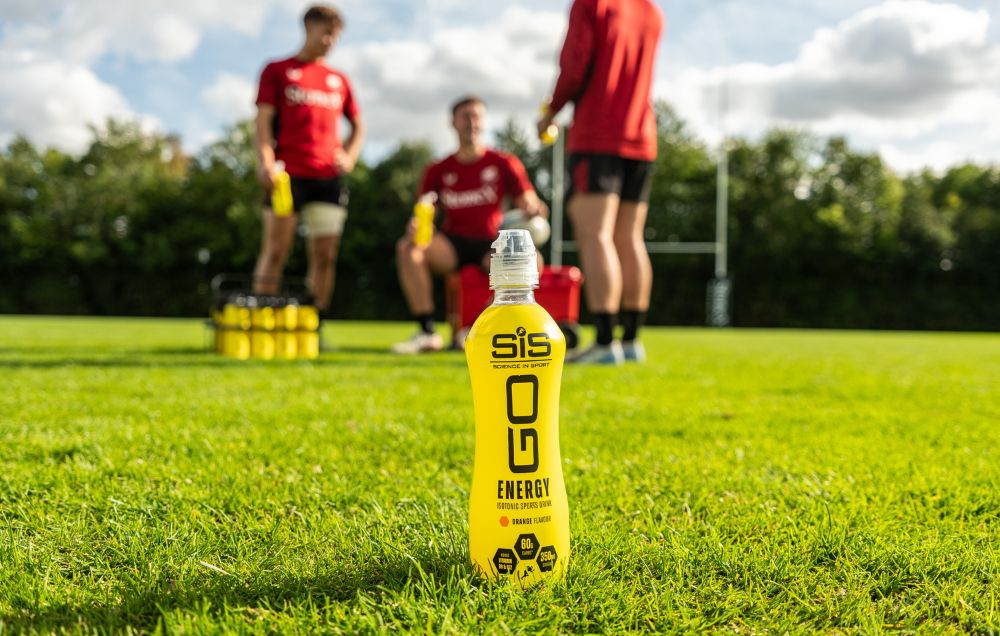
SiS’s GO Energy Isotonic Sports Drink addresses this gap. Standard sports drinks typically contain around 30g of carbohydrates per 500ml, SiS GO Sports Drink delivers twice that amount – a full 60g per 500ml. This creates more efficient fuelling, less fluid to the stomach, and reduced risk of bloating or discomfort, as players meet the guidelines with just one drink per hour instead of two. With its concentrated, easily digested and rapidly utilised isotonic formulation, SiS GO Energy Isotonic Sports Drink is a smarter, more practical, and science-led solution to help you stay energised and perform at your peak.
The Power of Carbohydrates
Team sports place unique demands on players, requiring explosive actions with minimal recovery time while also demanding quick decisions under pressure. Sustaining both the physical and mental aspects of play relies heavily on carbohydrates, which are stored as glycogen in the muscles and liver, serving as the body’s primary energy source.
When glycogen stores run low, fatigue sets in, limiting both physical and technical performance. Research shows significant reductions in glycogen within just 1-2 hours of play. To stop this from happening, athletes should start matches with full glycogen stores by strategically tailoring their total daily and meal-by-meal carbohydrate intake to match training or competitive demands.
In high-intensity sports like football, rugby, or netball, consuming carbohydrates during gameplay is recommended to prevent physical and technical declines in performance by providing additional substrate for energy production. This will help sustain carbohydrate availability, stabilise plasma glucose, and provide a continuous supply of fuel to the working muscles.
In short, maintaining carbohydrate availability during play will keep players performing at their best for longer.
The Importance of Hydration Status
Hydration is essential for sustaining performance. During match play, players can lose significant amounts of water and electrolytes, particularly sodium, through sweat. If these losses are not properly replaced, they risk entering a state of hypohydration (low body water levels). Current sports nutrition guidelines advise drinking enough fluid to limit body mass loss to less than 2%, as greater dehydration is associated with declines in endurance, strength, and technical skill.
Replacing both fluids and electrolytes, particularly sodium, during high-intensity exercise offers multiple benefits, like restoring sodium balance, improving fluid absorption, and promoting fluid retention. This helps keep the body cool and supports physical and mental function during games.
How Does SiS GO Sports Drink Help Elite Footballers?
Football is a prime example of a sport where nutrition can be the difference between winning and losing. Matches are often decided in the final minutes, exactly when players are most vulnerable to fatigue and declines in performance. As previously mentioned, this drop-off in performance is strongly linked to the depletion of muscle glycogen, the body’s key energy store.
To offset this, UEFA consensus sport nutrition guidelines recommend that players consume up to 60 grams of carbs per hour during a match. However, meeting this target is challenging and is easier said than done. Pre-match nerves, reduced appetite, and limited chances to eat or drink during games make it difficult for footballers to fuel effectively when they need it most. Research shows that even English Premier League players fall short of the recommended intake, consuming an average of just 17 grams/hour (1).
The SiS GO Energy Isotonic Sports Drink offers a solution and helps close this gap. Each 500ml bottle provides 60g of single-source carbohydrate and 350mg of sodium. A simple, practical strategy is to sip one-third of a bottle roughly every 20 minutes, delivering 20 grams of carbohydrate per serving.
FUELLING GUIDE:
- During warm-up: sip 1/3 of a bottle to top up carbohydrate availability before kick-off.
- In the first half: consume another 1/3 during natural pauses.
- At half-time: finish the remainder to restore energy and hydration ahead of the second half.
- Late game: have an extra bottle available for sipping on during breaks in play during the second half, when fatigue and glycogen depletion are most likely to affect performance.
Beyond match play, it can also be integrated into the wider match-day routine. For example, consuming it the day before a match supports carbohydrate intake and glycogen loading, while drinking it immediately post-match accelerates recovery by stimulating glycogen resynthesis and rehydration.
While football provides a clear example, the same nutritional principles apply across a wide range of team sports such as rugby, netball, and hockey, where high-intensity bursts of activity are sustained over long periods and demand both technical and tactical skill.
Sustain energy levels, sharpen technical aspects, and delay fatigue with the SiS GO Energy Isotonic Sports Drink.
Fitcart believes in True Play and Clean Sport
#trustedbrandsbetterhealth