



Fitcart Editorial Team Ritu Makhija.
The Fat-Loss Debate: Cardio or Weights?
For decades, cardio has been considered the go-to exercise for losing weight. Whether it’s running, cycling, or spending time on the treadmill, many people associate sweating and elevated heart rates with burning fat.
But modern exercise science is changing the conversation.
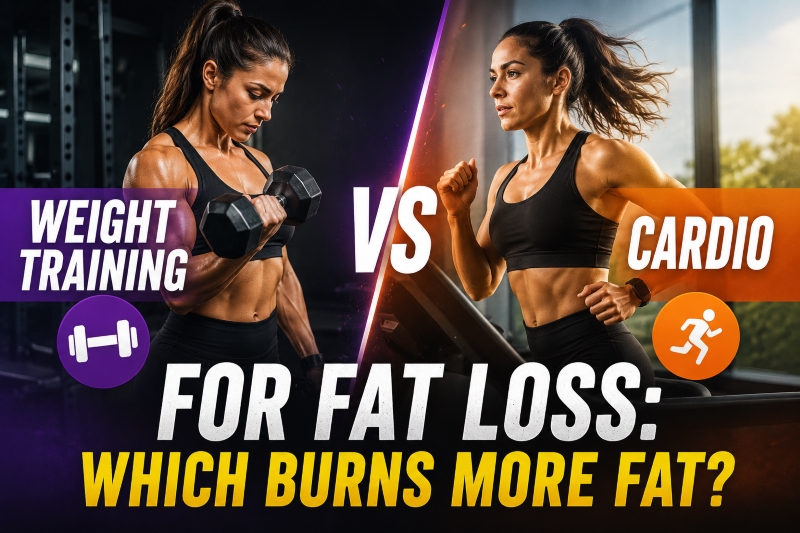
Research increasingly shows that for long-term body composition and sustainable fat loss, a short weight-training session may be more effective than an equivalent amount of cardio.
While cardio burns calories during exercise, resistance training continues working long after the workout ends, helping the body burn more energy, preserve muscle, and improve metabolic health.
Understanding Fat Loss vs Weight Loss
Many people focus solely on the number on the scale. However, successful body transformation is less about losing weight and more about reducing body fat while maintaining or increasing lean muscle mass.
Two people may weigh the same, yet one may carry significantly less body fat and have a healthier metabolism.
This is where weight training provides a unique advantage.
The Hidden Fat-Burning Power of Weight Training
A 20-minute resistance-training workout may not appear as intense as a run or spin class, but significant metabolic changes occur behind the scenes.
When you challenge your muscles through resistance training, the body must repair and rebuild muscle tissue after exercise. This process requires energy and can elevate calorie expenditure for hours after the workout has ended.
Scientists refer to this as Excess Post-Exercise Oxygen Consumption (EPOC), often called the “afterburn effect.”
In simple terms, your body continues burning calories while recovering from the workout.
Why Cardio Stops Working When You Stop Moving
Traditional steady-state cardio burns calories primarily during the activity itself.
Once the workout ends, calorie expenditure typically returns close to baseline levels relatively quickly.
While cardio certainly contributes to cardiovascular health and calorie burning, its effects on resting metabolism are generally smaller than those achieved through resistance training.
This doesn’t mean cardio is ineffective—it simply means that strength training creates additional opportunities for the body to use energy throughout the day.
Muscle: The Engine That Burns Calories
One of the greatest benefits of resistance training is its ability to build and preserve lean muscle mass.
Muscle tissue is metabolically active, meaning it requires energy even while resting.
The more lean muscle an individual carries, the more calories their body burns throughout the day.
This creates a powerful long-term advantage for fat loss.
Cardio can help create a calorie deficit, but excessive cardio combined with inadequate nutrition may sometimes contribute to muscle loss, particularly during aggressive dieting.
Weight training helps protect the very tissue responsible for maintaining a healthy metabolism.
Why Short Weight Workouts Can Be Highly Effective
Many people believe they need to spend hours in the gym to see results.
In reality, a focused 20-minute strength-training session targeting multiple muscle groups can stimulate significant metabolic activity.
Compound exercises such as:
- Squats
- Deadlifts
- Lunges
- Push-ups
- Rows
- Shoulder presses
Engage large muscle groups simultaneously, increasing energy expenditure and creating a strong training stimulus.
The result is a workout that continues influencing calorie burn long after the final repetition.
Better Body Composition, Not Just Weight Loss
Research consistently shows that individuals who combine resistance training with proper nutrition often achieve superior body composition outcomes compared with those relying solely on cardio.
Benefits may include:
- Reduced body fat percentage
- Increased lean muscle mass
- Improved strength
- Better insulin sensitivity
- Higher resting metabolic rate
- Enhanced physical performance
Rather than simply becoming lighter, individuals become leaner, stronger, and metabolically healthier.
The Hormonal Advantage
Resistance training also influences several hormones involved in body composition and recovery.
Strength training may support:
- Healthy insulin function
- Improved glucose utilization
- Growth hormone production
- Muscle protein synthesis
These physiological adaptations help create an environment that supports fat loss while preserving valuable muscle tissue.
The Perfect Fat-Loss Formula: Weights Plus Cardio
The debate between cardio and weights often misses an important point: the most effective fitness plans include both.
Weight training builds and preserves muscle while supporting metabolism.
Cardio improves cardiovascular fitness, endurance, and overall calorie expenditure.
Together, they create a powerful combination for long-term health and body composition.
For many people, a weekly routine that prioritizes resistance training and includes moderate amounts of cardio delivers the best overall results.
Nutrition Still Determines Success
No exercise program can compensate for poor nutrition.
To maximize fat loss, focus on:
- Adequate protein intake
- Whole-food nutrition
- Proper hydration
- Quality sleep
- Consistent exercise habits
Supplements can support these goals, but they should complement—not replace—a balanced nutrition plan.
Supplements That May Support Training and Recovery
Individuals engaged in regular resistance training often consider evidence-based supplements such as:
When used alongside proper nutrition and training, these supplements may support recovery, muscle maintenance, and overall performance.
The Bottom Line
While 20 minutes of cardio can certainly burn calories, 20 minutes of weight training may provide greater long-term fat-loss benefits by preserving muscle, increasing resting metabolism, and creating an afterburn effect that continues after the workout is finished.
The goal shouldn’t simply be to burn calories during exercise—it should be to build a body that burns more calories all day long.
For sustainable fat loss, improved body composition, and long-term metabolic health, resistance training deserves a central place in every fitness program.
Scientific & Educational Disclaimer
The information provided in this article is intended for educational and informational purposes only and is based on current scientific research and evidence available at the time of publication. Individual results may vary depending on age, genetics, training status, nutrition, lifestyle, and overall health.
This content is not intended to diagnose, treat, cure, or prevent any disease and should not be considered medical advice. Readers should consult a qualified healthcare professional or certified fitness practitioner before beginning any new exercise, nutrition, or supplementation program.
Fitcart Supplement Quality Advisory
fitcart.com recommends choosing sports nutrition products that are manufactured in certified facilities, undergo independent third-party or batch testing, and provide transparent ingredient labeling. Batch-tested supplements help verify purity, potency, and quality, allowing consumers to make informed decisions about the products they use to support their health and performance goals.
Follow us on X: https://x.com/fitcartofficial and Instagram: https://www.instagram.com/fitcartofficial/ for the latest updates, health insights, and exclusive content.
Follow Smart Nutrition India X: https://x.com/SmartNutrition1 and Instagram: https://www.instagram.com/smartnutritionindia/ for trusted sports nutrition, supplement education, wellness tips, and the latest news from the world of health and performance.
Fitcart believes in True Play and Clean Sport
#trustedbrandsbetterhealth