



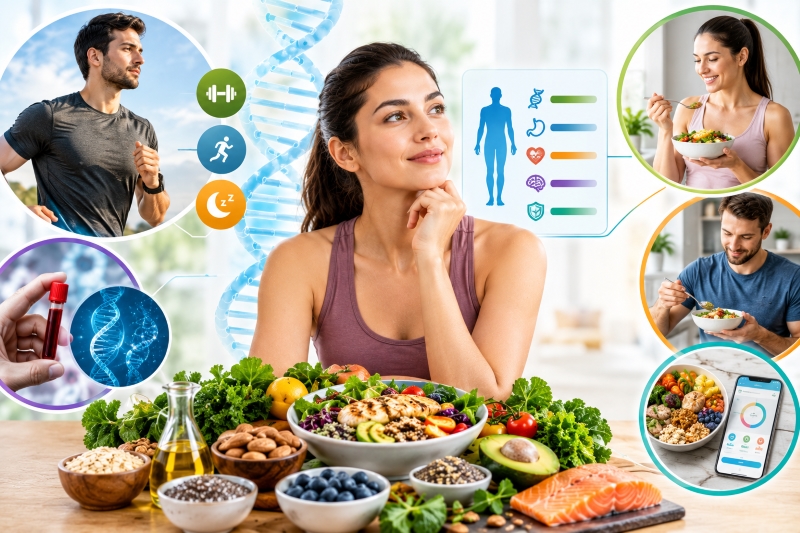
Beyond calories: How your biology, lifestyle, gut microbiome, and individual nutritional needs may shape your response to food.
Reading time: 9–11 minutes.
Author: Ritu Makhija.
Co-Founder, Fitcart.com.
Head of Editorial Team, Fitcart Blog.
Introduction: Is There Really One Perfect Diet for Everyone?
Why can two people eat almost identical meals, follow similar exercise routines and still experience different results in weight management, energy levels, blood sugar responses, and body composition?
One person may feel satisfied after a particular breakfast, while another becomes hungry soon afterwards. A meal that produces a relatively modest rise in blood glucose in one individual may cause a larger response in another. Two people following the same weight-loss plan may also experience different changes in appetite, weight and fitness.
These differences have helped drive interest in a growing area of nutritional science: precision nutrition.
Traditional nutrition advice often focuses on general recommendations about calories, protein, carbohydrates, fats, vitamins and minerals. These recommendations remain important, but precision nutrition asks a further question: how can nutritional advice be adapted to an individual’s biology, health, lifestyle and goals?
Research into genetics, metabolism, the gut microbiome, continuous glucose monitoring and digital health technologies is helping scientists investigate why people respond differently to food.
For Fitcart readers, this is an exciting development. It points towards a more thoughtful approach to nutrition, in which dietary choices and supplementation are based on individual needs and credible evidence rather than trends, generic diet plans or unnecessary products.
However, precision nutrition is still developing. Not every technology is clinically useful, and not everyone needs genetic testing, microbiome analysis or expensive blood panels to eat well.
The real opportunity is to combine established nutritional principles with relevant individual information to make better decisions.
1. What Is Precision Nutrition?
Precision nutrition is an approach that aims to tailor dietary advice to an individual’s characteristics, nutritional needs, health status, lifestyle, and goals.
Rather than asking only, “What is a healthy diet?”, it also asks, “What dietary pattern is appropriate for this person, at this stage of life, given their circumstances?”
Factors that may influence an individual’s nutritional needs include:
- Age and life stage: Nutritional requirements can change during adolescence, pregnancy, menopause and older age.
- Body composition and activity: A competitive athlete, a sedentary office worker and an older adult trying to preserve muscle have different nutritional priorities.
- Dietary habits: Existing food choices influence protein, fibre, vitamin and mineral intake.
- Health history: Certain medical conditions can affect nutritional requirements, absorption or dietary suitability.
- Sleep and stress: These can influence appetite, food choices, recovery and metabolic health.
- Medications: Some medicines affect appetite, nutrient absorption or the suitability of particular supplements.
- Biomarkers and clinical findings: When appropriate, laboratory results and clinical assessments can help identify specific nutritional concerns.
Precision nutrition does not mean that everyone needs a unique diet. Many fundamental principles remain consistent across populations: eat a varied, nutrient-rich diet, obtain adequate protein and fibre, limit excessive intake of less nutritious foods, stay physically active and get sufficient sleep.
The personalisation comes from determining how best to apply these principles to an individual.
2. Why Do People Respond Differently to the Same Food?
Individual differences in blood glucose responses
After eating carbohydrate-containing foods, blood glucose typically rises and subsequently falls. The size and timing of this response can differ between individuals and may also vary within the same person on different occasions.
Factors that influence the response include:
- The type and quantity of carbohydrate consumed.
- Whether the meal contains protein, fat and fibre.
- Physical activity before or after eating.
- Sleep, stress and the timing of the meal.
- Individual metabolic health and medication use.
Research projects such as the PREDICT studies have investigated how people respond differently to standardised meals, including differences in post-meal glucose and blood triglycerides.
These findings have helped researchers explore whether individual response patterns could improve dietary recommendations.
However, a larger glucose rise after one meal does not automatically mean that a food is unhealthy for everyone or that an individual has a medical condition. The overall dietary pattern and clinical context matter.
Appetite, fullness and energy intake
People also differ in hunger, satiety and their responses to food environments.
A meal containing adequate protein, fibre and minimally processed foods may help many people feel fuller for longer. However, appetite is also influenced by sleep, stress, habitual eating patterns, physical activity and individual biology.
Precision nutrition may help identify which sustainable eating patterns support an individual’s appetite management and goals, without requiring rigid restrictions or the elimination of entire food groups.
Weight loss and body composition
Two people following the same calorie-controlled diet may experience different outcomes because of differences in starting body composition, energy expenditure, adherence, appetite, activity levels and other biological factors.
This does not mean calories are irrelevant. Energy balance remains central to changes in body weight, but accurately estimating energy intake and expenditure can be difficult in everyday life.
A personalised approach can help establish a realistic nutritional plan, monitor progress and adjust food intake or activity when necessary.
The goal should be a sustainable improvement in health and body composition, rather than the pursuit of a supposedly perfect metabolic response to every meal.
3. The Gut Microbiome: Could Your Gut Bacteria Influence Your Diet?
The gut microbiome consists of microorganisms living in the digestive tract. These microorganisms interact with components of our diet and produce substances that may influence digestion, intestinal function and other aspects of human physiology.
Dietary fibre is particularly important because certain gut microbes ferment it, producing short-chain fatty acids and other metabolites that researchers are studying for their roles in health.
The composition and activity of the gut microbiome vary among individuals. Diet, medication use, environment, age, and other factors can contribute to these differences.
This has led to growing interest in microbiome-informed nutrition: could knowledge of a person’s gut microbial characteristics help determine which dietary choices are most beneficial?
The research is promising, but important limitations remain.
Commercial microbiome tests do not yet provide a universally validated way to prescribe an optimal diet for every person. A particular microbial profile does not necessarily establish that someone needs a specific probiotic, prebiotic or supplement.
For most people, a sensible starting point is to consume a variety of fibre-rich foods, including vegetables, fruits, legumes, whole grains, nuts and seeds, while increasing fibre gradually if current intake is low.
Fermented foods can also be included according to personal preference and tolerance.
Fitcart takeaway: Personalised gut health should begin with dietary habits, symptoms and relevant clinical considerations, not automatically with an expensive microbiome test or a collection of probiotic supplements.
4. Genetics and Nutrition: Do Your Genes Determine What You Should Eat?
Nutrigenetics examines how genetic differences may influence responses to nutrients, while nutrigenomics investigates how nutrients and dietary patterns interact with gene activity.
These fields have helped expand our understanding of the relationships between biology and diet.
Genetic differences can be relevant to particular nutritional questions. For example, genetic variants associated with lactose digestion may help explain why some adults tolerate milk differently from others. Certain inherited conditions also require specific dietary management under medical supervision.
However, the ability to identify a genetic variant does not automatically mean that a commercially available DNA test can predict the best overall diet for an individual.
For many common goals, including weight management, muscle development and healthy ageing, evidence is still insufficient to support broad genetic-test-based diet prescriptions over established, individually adapted nutritional guidance.
Genes are only one part of the picture. Diet, activity, sleep, environment, health history and behaviour also matter.
Genetic testing may be useful in selected circumstances, but it should not be treated as a prerequisite for personalising everyday nutrition.
5. Biomarkers: When Can Blood Tests Help Personalise Nutrition?
Biomarkers are measurable indicators that can provide information about aspects of health or biological function.
When there is a clinical reason to investigate a nutritional concern, appropriate tests can help guide decisions.
Examples include:
Iron status: Blood counts and iron-related tests, including ferritin when appropriate, can help assess suspected iron deficiency. Interpretation depends on the clinical context.
Vitamin B12: Testing may be appropriate when symptoms, dietary patterns or medical history suggest a possible deficiency.
Blood glucose and HbA1c: These tests can help assess glucose regulation and identify or monitor diabetes and prediabetes according to established clinical criteria.
Blood lipids: Cholesterol and triglyceride measurements can inform cardiovascular risk assessment and management.
Other tests: Additional investigations may be appropriate depending on symptoms, medical history, medications and specific nutritional concerns.
Not everyone needs all these tests. A clinician can determine which investigations are appropriate, interpret the results and recommend follow-up.
It is also important to understand that a biomarker is not always a direct measurement of dietary needs. Results can be influenced by illness, inflammation, recent food intake, medication and other factors.
Precision nutrition should therefore use tests when the results are likely to inform a meaningful decision, rather than encouraging indiscriminate testing.
6. AI, Wearables and Continuous Glucose Monitoring: The Future of Personalised Eating?
Digital health technologies are creating new opportunities to observe patterns in activity, sleep, food intake and physiological responses.
Artificial intelligence can help analyse large datasets and identify patterns that may be difficult to recognise through manual tracking alone. Food-logging applications can estimate nutrients from meals, while wearable devices can track activity, heart rate and sleep-related measures.
Continuous glucose monitors, which measure glucose in fluid beneath the skin, have also attracted interest beyond their established medical uses.
For people with diabetes, glucose-monitoring technology can play an important role in appropriate clinical management. For people without diabetes, however, the value of routine continuous glucose monitoring for improving long-term health remains less certain.
Consumer devices can produce variable estimates, and a temporary glucose spike does not necessarily indicate that a meal is harmful.
Similarly, AI-generated nutrition recommendations can be useful for organisation and education, but their accuracy depends on the quality of the data and the reliability of the underlying methods.
These technologies should support sound nutritional decisions, not replace clinical assessment or create anxiety about normal biological variation.
The most useful question is not whether we can measure everything, but whether a measurement helps us make a better decision.
7. Personalised Nutrition for Fitness, Muscle and Performance
Precision nutrition has particular relevance to people who exercise regularly, competitive athletes and individuals seeking to preserve muscle as they age.
Nutritional needs depend on the type, duration and intensity of exercise, total energy expenditure, recovery demands and individual goals.
For example:
- Strength training: Adequate total protein and sufficient energy support muscle repair and adaptation.
- Endurance exercise: Carbohydrate availability and appropriate hydration can be important for prolonged or intense training.
- Weight management: A sustainable dietary pattern that preserves nutritional adequacy and supports muscle retention may be more useful than an unnecessarily restrictive diet.
- Healthy ageing: Adequate protein, resistance exercise and attention to nutritional deficiencies can help support muscle maintenance and physical function.
Protein requirements vary with body size, activity, age, health status and goals. Rather than automatically recommending a high-protein diet to everyone, the objective should be to establish an appropriate intake for the individual.
The same principle applies to supplements. An athlete with a demanding training schedule may have different needs from someone who exercises recreationally. A person following a vegan diet may need to pay particular attention to vitamin B12, while someone with an identified deficiency may need targeted treatment.
Personalisation should be based on a clear nutritional rationale, not simply on the availability of a product.
8. Precision Supplementation: Do You Need a Different Supplement Plan?
The supplement industry often promotes products for energy, immunity, weight management, beauty, recovery and longevity. Yet the fact that a nutrient is important for health does not mean that everyone benefits from taking it in supplemental form.
A more thoughtful approach begins with a few questions:
- What is the specific goal: correcting a deficiency, meeting a dietary shortfall, supporting training or addressing another recognised need?
- Can the goal be achieved through food, lifestyle changes or another appropriate intervention?
- Is there credible human evidence that the proposed supplement helps with this goal?
- What dose and duration have been studied, and are they suitable for the individual?
- Could the product interact with medication or create risks because of an existing health condition?
- Can the ingredient identity, manufacturing quality, and relevant testing information be verified?
For example, a person with confirmed iron deficiency may require targeted treatment under medical guidance. Someone who does not consume enough protein may find a protein powder convenient. Creatine monohydrate may be useful for selected strength and high-intensity exercise goals when used appropriately.
These examples do not imply that everyone needs iron, protein powder or creatine.
Why supplement quality matters
Once a supplement has a sound rationale, quality becomes an important consideration.
Look for transparent labels, clearly stated ingredient quantities, appropriate directions, and reputable manufacturing practices. Independent third-party testing or certification can provide additional assurance about specific quality attributes.
For competitive athletes, programmes that test sports supplements for prohibited substances can help reduce contamination risk. Where batch-level verification is available, check the exact product and batch or lot number in the relevant certification database.
Testing does not guarantee zero risk, establish effectiveness for every claimed benefit or replace appropriate professional guidance.
At Fitcart, the objective should be to connect evidence-based product selection with clear information about ingredients, quality verification and responsible use.
9. A Practical Framework for Personalising Your Nutrition
You do not need to begin with expensive testing or sophisticated technology. A structured approach can make personalisation accessible.
Step 1: Define your goal
Identify what you want to achieve. It could be sustainable weight management, improved sports performance, muscle maintenance, better dietary quality or correction of a suspected nutritional deficiency.
Step 2: Review your everyday habits
Look at your usual meals, protein and fibre intake, fruit and vegetable consumption, hydration, sleep, activity and consistency.
A brief food diary can help identify patterns and potential gaps without requiring you to track every calorie indefinitely.
Step 3: Consider your individual circumstances
Take account of age, dietary preferences, cultural food habits, activity, medical history, medication and any symptoms that may require assessment.
Step 4: Use tests selectively
If symptoms, risk factors or clinical circumstances suggest a nutritional problem, seek professional advice about appropriate testing.
Do not assume that more tests automatically produce better decisions.
Step 5: Make practical changes
Build meals around a variety of nutrient-rich foods. Adjust portion sizes and meal composition to suit your needs. Establish an appropriate exercise routine and prioritise regular sleep.
If a supplement is being considered, assess the evidence and whether it addresses a genuine need.
Step 6: Monitor meaningful outcomes
Depending on your goal, progress may be reflected in strength, exercise performance, energy levels, dietary consistency, clinically relevant biomarkers or gradual changes in body composition.
Avoid judging success by a single meal, one wearable reading or a short-term fluctuation in weight.
Step 7: Review and adapt
Nutritional needs can change with age, activity, health, medication and life circumstances. Review your approach periodically and seek professional guidance when appropriate.
The aim is not to create a complicated routine, but to make informed adjustments that are practical and sustainable.
10. What Precision Nutrition Could Mean for the Future
Precision nutrition is an evolving field that brings together nutritional science, clinical medicine, genetics, microbiome research, data analysis, and digital health.
In the future, better evidence and improved tools may help clinicians and nutrition professionals identify which dietary strategies work best for particular individuals or groups.
However, several challenges remain. Researchers need to establish which measurements meaningfully improve health outcomes, how to validate recommendations across diverse populations, and whether personalised approaches offer benefits beyond well-designed standard nutritional advice.
Privacy, affordability, accessibility, and the risk of overinterpreting data are also important considerations.
The strongest model is likely to combine established nutrition science with selected individual information when that information can genuinely improve decisions.
Precision nutrition should make healthy eating clearer and more effective, not more expensive, confusing or restrictive.
The Fitcart Takeaway: Personalise the Approach, Not the Hype
The science of precision nutrition is changing how researchers think about food, metabolism and individual health. It recognises that people differ in their nutritional needs and that age, activity, sleep, health history and other factors can influence dietary responses.
But personalisation doesn’t require everyone to buy a genetic test, wear a glucose monitor, or undergo extensive blood testing.
For most people, the foundation remains a varied and balanced diet, adequate protein and fibre, regular physical activity, sufficient sleep and attention to established health needs.
From there, individual circumstances may justify targeted dietary adjustments, appropriate clinical investigations or carefully selected supplements.
At Fitcart, our approach is to connect science and practical nutrition with transparent product information and responsible supplement selection. The goal is to help people make better-informed decisions, whether they are managing their weight, improving fitness, supporting healthy ageing or addressing a specific nutritional need.
The future of nutrition is not about finding one perfect diet for everyone. It is about applying sound science to help each person find an approach that works for them.
References and Further Reading
The following research programmes and scientific resources provide useful starting points for readers who want to explore precision nutrition in greater depth:
- Zeevi D, et al. Personalized Nutrition by Prediction of Glycemic Responses. Cell. 2015;163(5):1079–1094.
- Berry SE, et al. Human postprandial responses to food and potential for precision nutrition. Nature Medicine. 2020;26:964–973.
- National Institutes of Health (NIH). Nutrition for Precision Health, powered by the All of Us Research Program.Information on the programme’s aims and research into individual responses to food.
- National Institute of Diabetes and Digestive and Kidney Diseases (NIDDK). Resources on healthy eating, metabolic health and diabetes.
- National Institutes of Health, Office of Dietary Supplements. Fact sheets on vitamins, minerals and dietary supplement safety.
Research findings should be interpreted in context. The existence of a research programme or an association between a biomarker and health does not by itself establish that a personalised intervention will improve clinical outcomes.
Health and Supplement Disclaimer
This article is for general educational and informational purposes only. It is not intended to provide medical advice, diagnose or treat a disease, or replace consultation with a qualified healthcare professional.
Nutritional requirements and appropriate dietary strategies vary between individuals. Biomarker testing, genetic testing, continuous glucose monitoring and microbiome testing are not necessary or appropriate for everyone. Consult a qualified healthcare professional before making significant dietary changes to manage a medical condition or before starting supplements, particularly if you take medication, have an existing health condition, are pregnant or breastfeeding, or suspect a nutritional deficiency.
Dietary supplements should not replace a balanced diet or prescribed treatment. Their benefits depend on the ingredient, dose, quality, individual circumstances and strength of the evidence. Excessive intake may cause harm or interact with medication.
When choosing supplements, review the ingredient label, follow the recommended directions and purchase from reputable sources. Independent testing and certification can help verify specific quality attributes, but they do not guarantee that a product is effective or completely risk-free. Athletes should consider the risk of prohibited-substance contamination and verify relevant certification and batch information where available.
Fitcart encourages evidence-based nutrition, transparent product information and responsible supplementation. Individual results may vary.
Follow us on X: https://x.com/fitcartofficial and Instagram: https://www.instagram.com/fitcartofficial/ for the latest updates, health insights, and exclusive content.
Follow Smart Nutrition India X: https://x.com/SmartNutrition1 and Instagram: https://www.instagram.com/smartnutritionindia/ for trusted sports nutrition, supplement education, wellness tips, and the latest news from the world of health and performance.
Fitcart believes in True Play and Clean Sport
#trustedbrandsbetterhealth